Artwork
Beggar (Un mendiant)
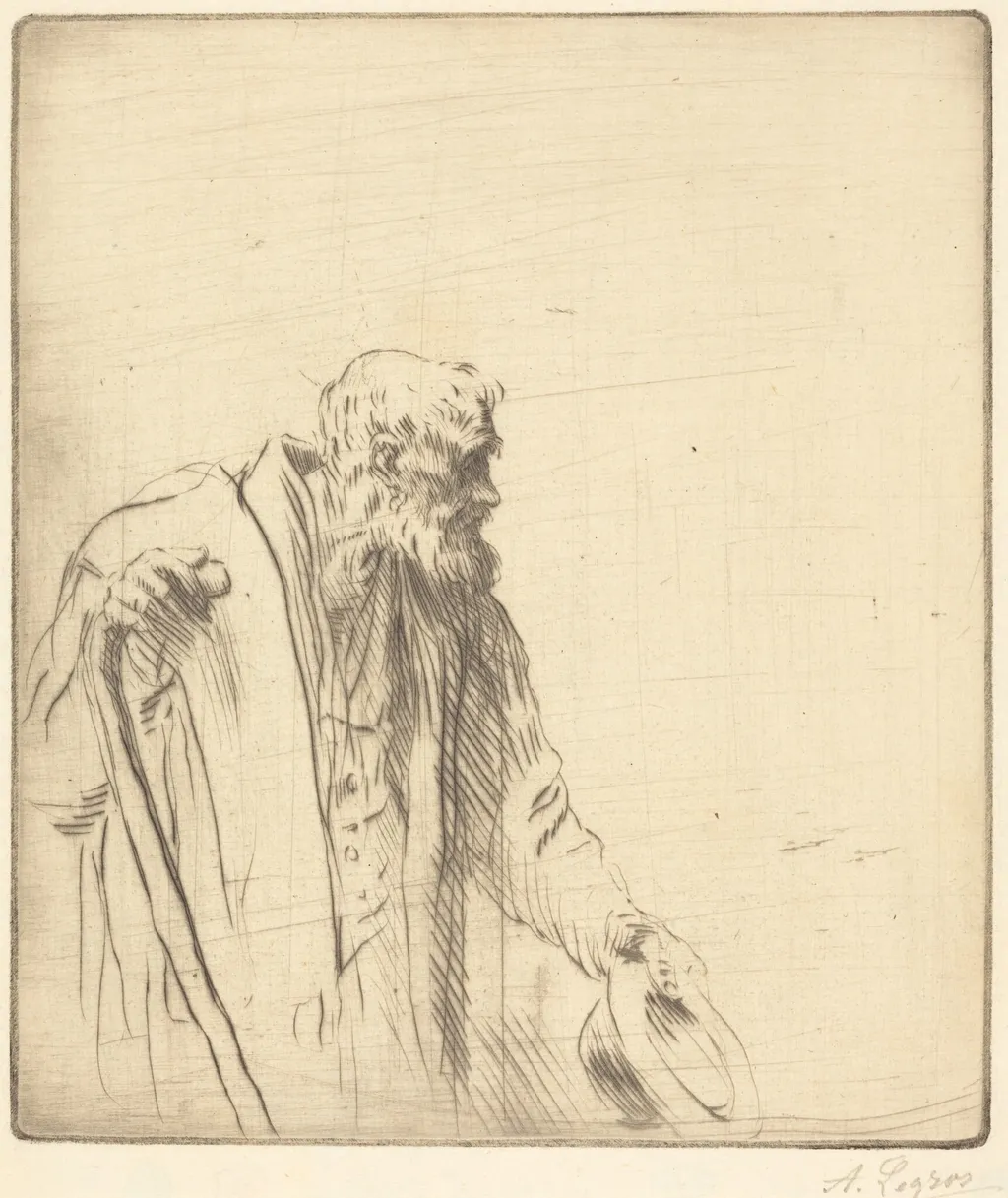
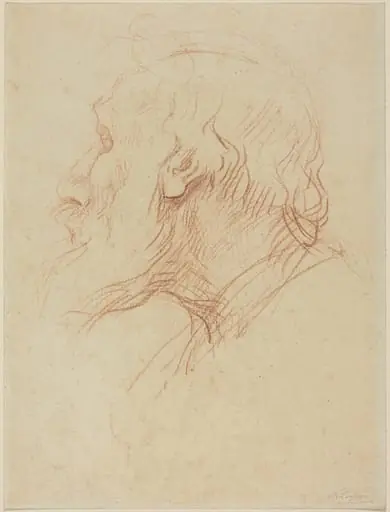
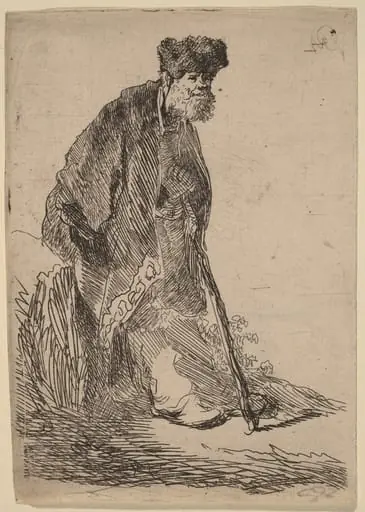
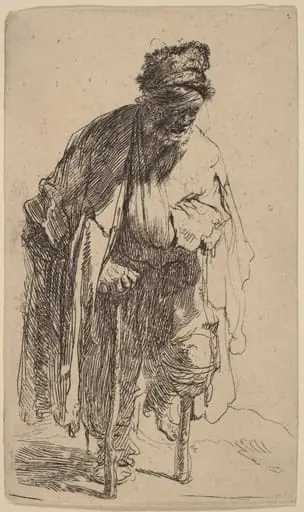
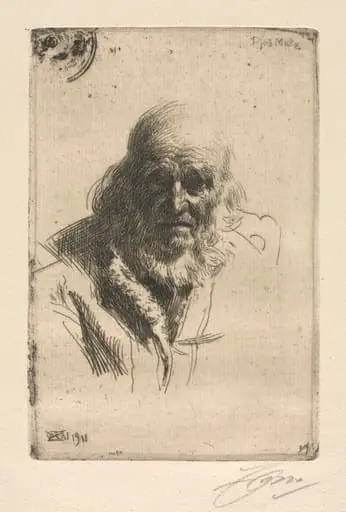
Beggar (Un mendiant) is an ink print by the Romanticist artist Alphonse Legros. It dates from 1874 and is held in the collection of the National Gallery of Art.
About this work
Overview
Beggar (Un mendiant) is a 1874 drypoint print by Alphonse Legros, a French artist based in Britain, showcasing his emphasis on human subjects through expressive, rough linework.
Subject & Meaning
Contrary to its title, the print depicts two figures walking side by side in profile. The left figure wears a loose coat with a bent arm, while the right figure sports a long, shaggy beard and carries a bag or bundle, highlighting everyday, possibly marginalized, life.
Technique & Style
Executed in drypoint, the work features scratched lines on a metal plate, resulting in a textured, scratchy appearance that conveys urgency. The quick, rough lines and partially blank areas enhance the spontaneous feel of the composition.
History & Provenance
Created in 1874, Beggar reflects Legros's role in Britain's etching revival after his 1863 relocation to London. His multifaceted career spanned painting, etching, sculpture, and medallion-making.
Context
Within Legros's oeuvre, Beggar aligns with his human-centered focus, yet its specific inspiration and the subjects' identities remain unclear, leaving interpretation open.
Legacy
While Beggar itself is not broadly renowned, it exemplifies Legros's influence on British printmaking and his preference for capturing everyday human life through expressive, spontaneous techniques.
Artist & collection

Artist
Alphonse Legros (French pronunciation: ; 8 May 1837 – 8 December 1911) was a French, later British, painter, etcher, sculptor, and medallist.