Artwork
Canal Seen by Morning Light (Le canal: Effet du matin)
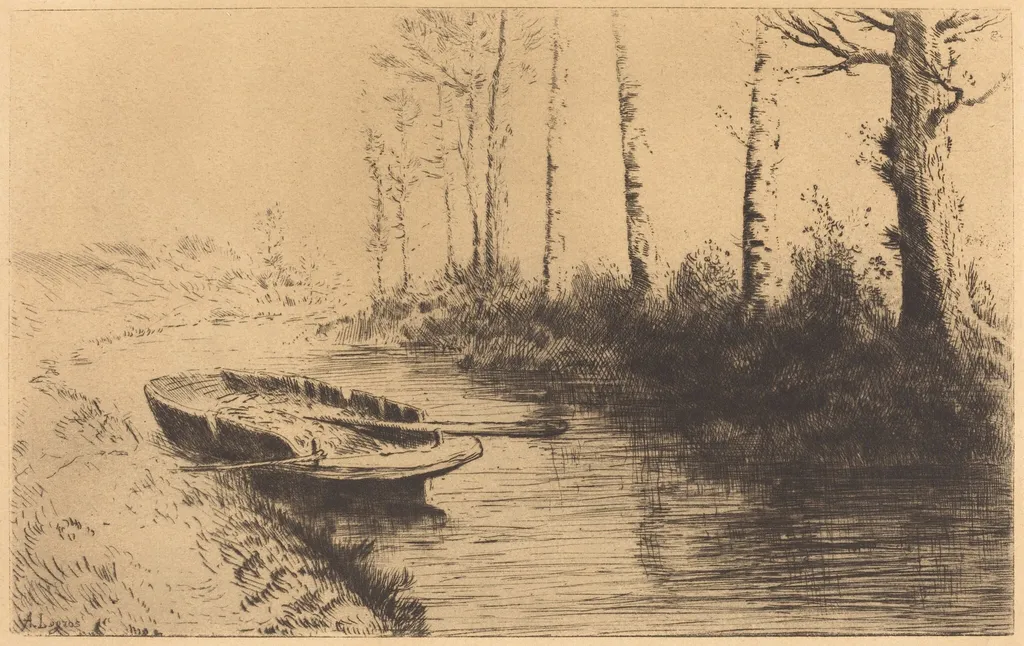
Canal Seen by Morning Light (Le canal: Effet du matin) is an ink print by the Romanticist artist Alphonse Legros. It dates from 1874 and is held in the collection of the National Gallery of Art.
About this work
Overview
The print belongs to the broader movement of the British etching revival, in which Legros played a key role.
Created in 1874, *Canal Seen by Morning Light* is a photogravure reproduction of an original etching by Alphonse Legros, a French artist who settled in Britain in 1863. The print belongs to the broader movement of the British etching revival, in which Legros played a key role. Unlike traditional paintings, this work translates the subtleties of light and texture through the tonal range achievable in photogravure, preserving the intimacy of the hand-drawn original.
Subject & Meaning
The scene captures a quiet canal at dawn, with a small boat resting along a grassy edge. Trees line the water’s banks, their reflections rippling gently on the surface. The composition avoids narrative or drama, instead emphasizing stillness and the quiet transition of morning light. The absence of human figures reinforces a sense of solitude, inviting contemplation rather than storytelling.
Technique & Style
Legros employed etching to render fine linear details and atmospheric gradations, later reproduced via photogravure to enhance tonal depth. The print’s soft contrasts between light and shadow mimic the diffused glow of early morning, with delicate lines suggesting foliage and water. His technique favors restraint over flourish, aligning with the quiet realism of his approach to landscape.
History & Provenance
Legros moved to London in 1863 and became a British citizen, influencing printmaking through his teaching at the Slade School. This photogravure was made shortly after the original etching, part of a broader effort to disseminate fine prints beyond private collections. The work reflects his dual identity as a French-trained artist embedded in the British art scene of the late 19th century.
Context
In the 1870s, British artists and collectors renewed interest in etching as a fine art form, moving away from reproductive prints toward original, expressive works. Legros, alongside figures like James McNeill Whistler, helped elevate etching’s status. His landscapes, like this one, responded to both French realism and the English tradition of tranquil rural scenes, bridging continental and British aesthetics.
Legacy
Legros’s prints, including this one, contributed to the legitimacy of etching as a medium for serious artistic expression in Britain. His emphasis on naturalism and quiet observation influenced later generations of printmakers. Though less widely known today, his work remains a quiet touchstone in the history of 19th-century print revival.
Artist & collection

Artist
Alphonse Legros (French pronunciation: ; 8 May 1837 – 8 December 1911) was a French, later British, painter, etcher, sculptor, and medallist.

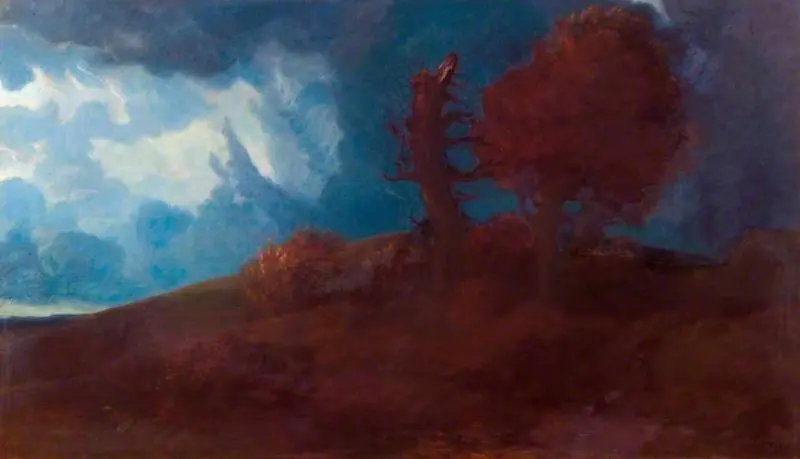
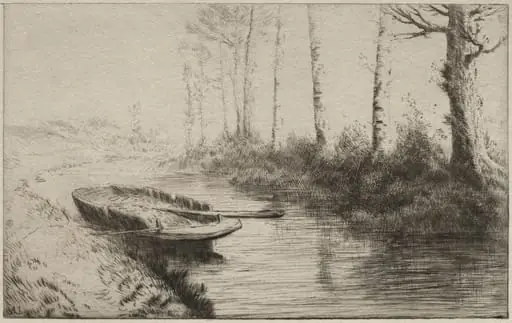 The Canal, Morning
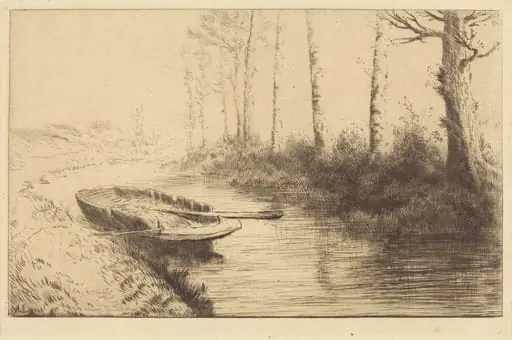 Canal Seen by Morning Light (Le canal: Effet du matin)
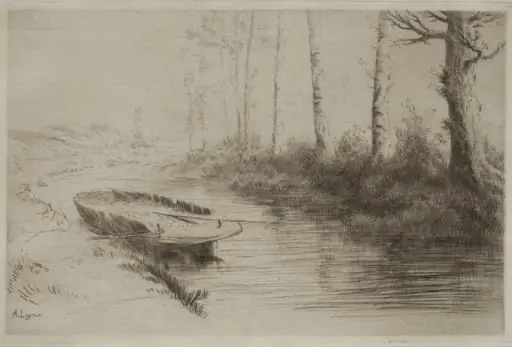 Le Canal: Effet du matin
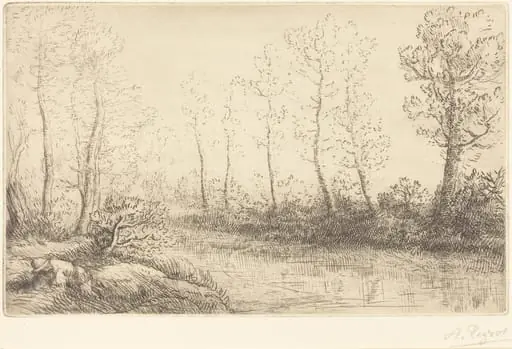 Birch Trees: Water's Edge Seen in Morning Light (Les Bouleaux: Bord de l'eau, effet du matin)
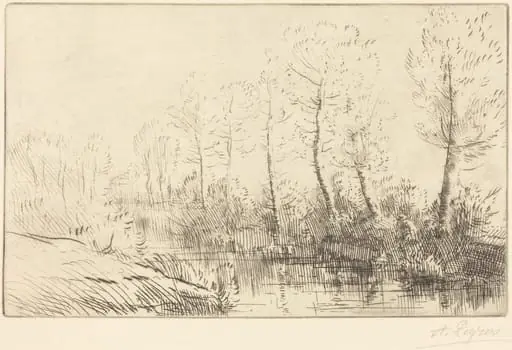 Birch Trees: Water's Edge Seen in Morning Light (Les bouleaux: Bord de l'eau, effet du matin
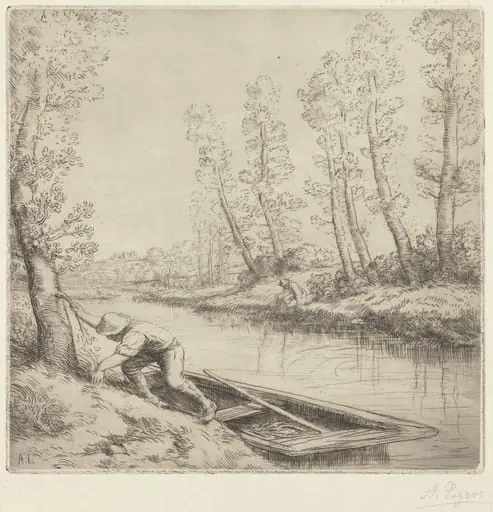 Morning along the River (La matin sur la riviere)