Artwork
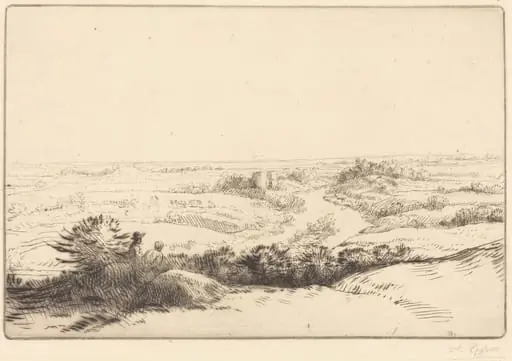
Castle in Spain (Chateau en Espagne)
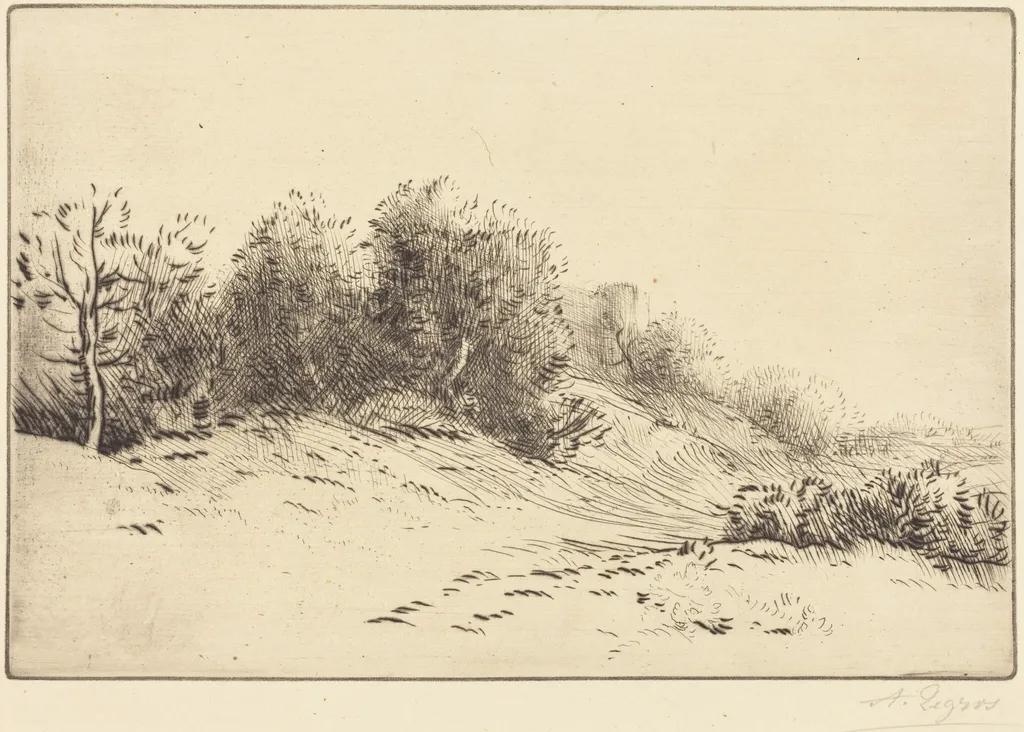
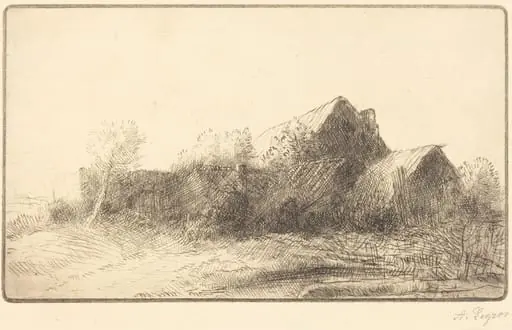
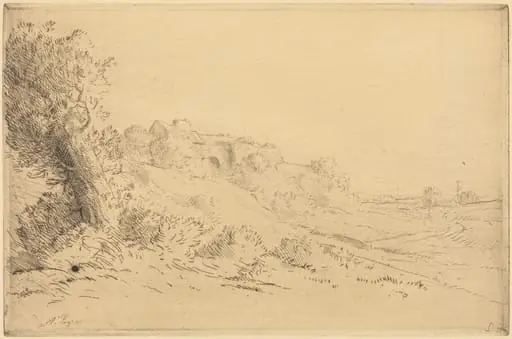
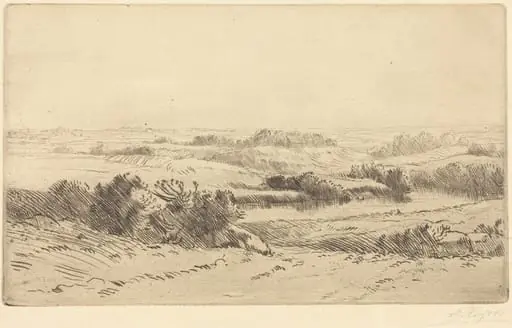
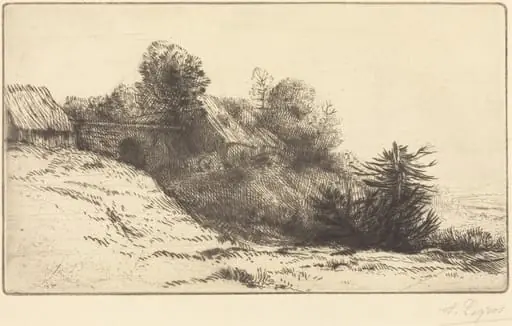
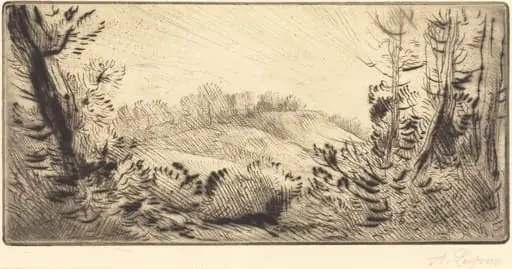
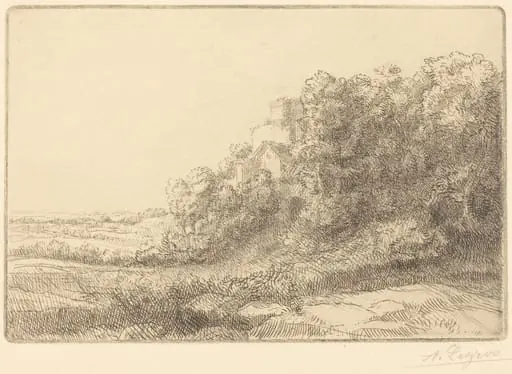
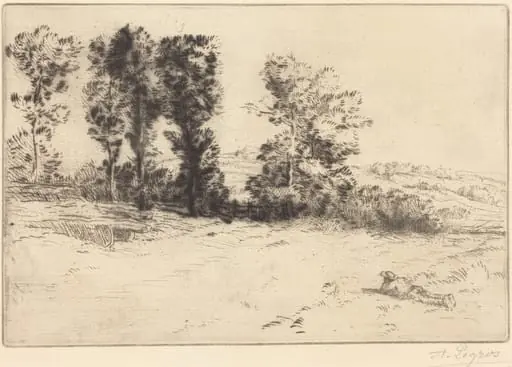
Castle in Spain (Chateau en Espagne) is an ink print by the Romanticist artist Alphonse Legros. It dates from 1874 and is held in the collection of the National Gallery of Art.
About this work
Overview
Created in 1874, *Castle in Spain* is a print by Alphonse Legros, a French artist who moved to London in 1863 and became active in the British etching revival.
Created in 1874, *Castle in Spain* is a print by Alphonse Legros, a French artist who moved to London in 1863 and became active in the British etching revival. Executed in drypoint and etching, the work belongs to a period when Legros was deeply engaged with intaglio printmaking. Unlike his painted works, this piece emphasizes texture and atmosphere through direct, hand-drawn marks on a metal plate, reflecting his interest in the expressive potential of print media.
Subject & Meaning
The image presents a solitary, distant castle nestled in a sparse, unpopulated landscape. Bare trees and a winding path lead the eye across uneven ground, suggesting a journey or passage. The absence of figures and the muted tone evoke stillness and solitude. Rather than celebrating architectural grandeur, the scene conveys quiet contemplation, as if the ruin exists outside of time, observed rather than inhabited.
Technique & Style
Legros employed drypoint to incise fine, gritty lines directly into a copper plate, creating a soft, velvety burr that holds ink and produces rich, blurred edges when printed. Combined with etching, which allowed for more controlled lines, the result is a surface of contrasting textures—sharp scratches alongside smoother, acid-bitten grooves. The sketchlike quality arises from the immediacy of the hand, favoring expressive mark-making over polished finish.
History & Provenance
The print was made during Legros’s early years in England, after his relocation from Paris. It reflects his transition from academic painting toward experimental printmaking, influenced by the growing interest in original etchings among British collectors. Though not widely exhibited at the time, it entered private collections in Britain and later found its way into institutional holdings, where it is now recognized as part of his significant contribution to 19th-century print culture.
Context
In the 1870s, a revival of interest in etching as an independent art form was underway in Britain, led by artists seeking to move beyond reproductive prints. Legros, though French by birth, became a central figure in this movement through his teaching at the Slade and his technical innovations. *Castle in Spain* aligns with this trend, embracing the intimacy and spontaneity of direct engraving over grand historical narratives.
Legacy
The work exemplifies Legros’s influence on the British etching revival by demonstrating how intaglio techniques could convey emotional depth through minimal means. His emphasis on the artist’s hand and the materiality of the plate inspired later generations of printmakers. Though less known today than his paintings, *Castle in Spain* remains a quiet testament to his commitment to print as a medium of personal expression.
Artist & collection

Artist
Alphonse Legros (French pronunciation: ; 8 May 1837 – 8 December 1911) was a French, later British, painter, etcher, sculptor, and medallist.