Artwork
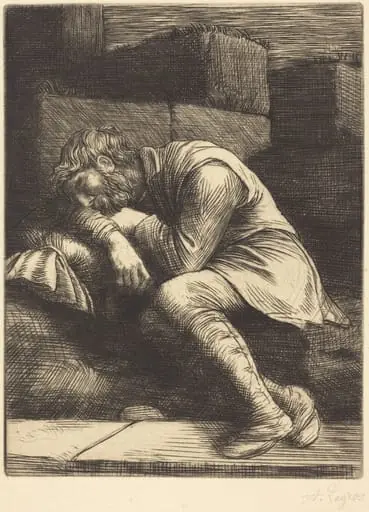
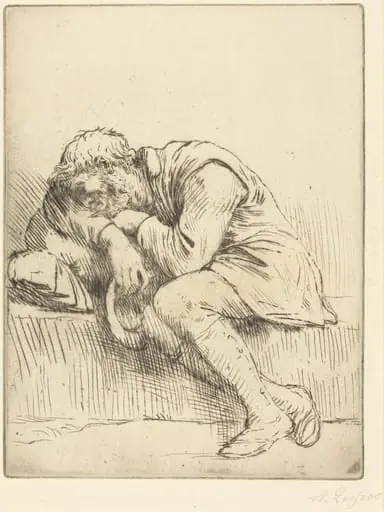
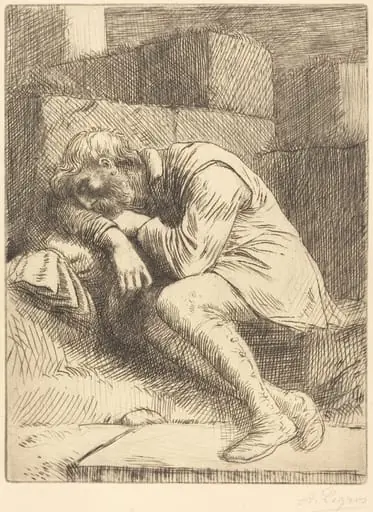
Desperate Man (Le desespere)
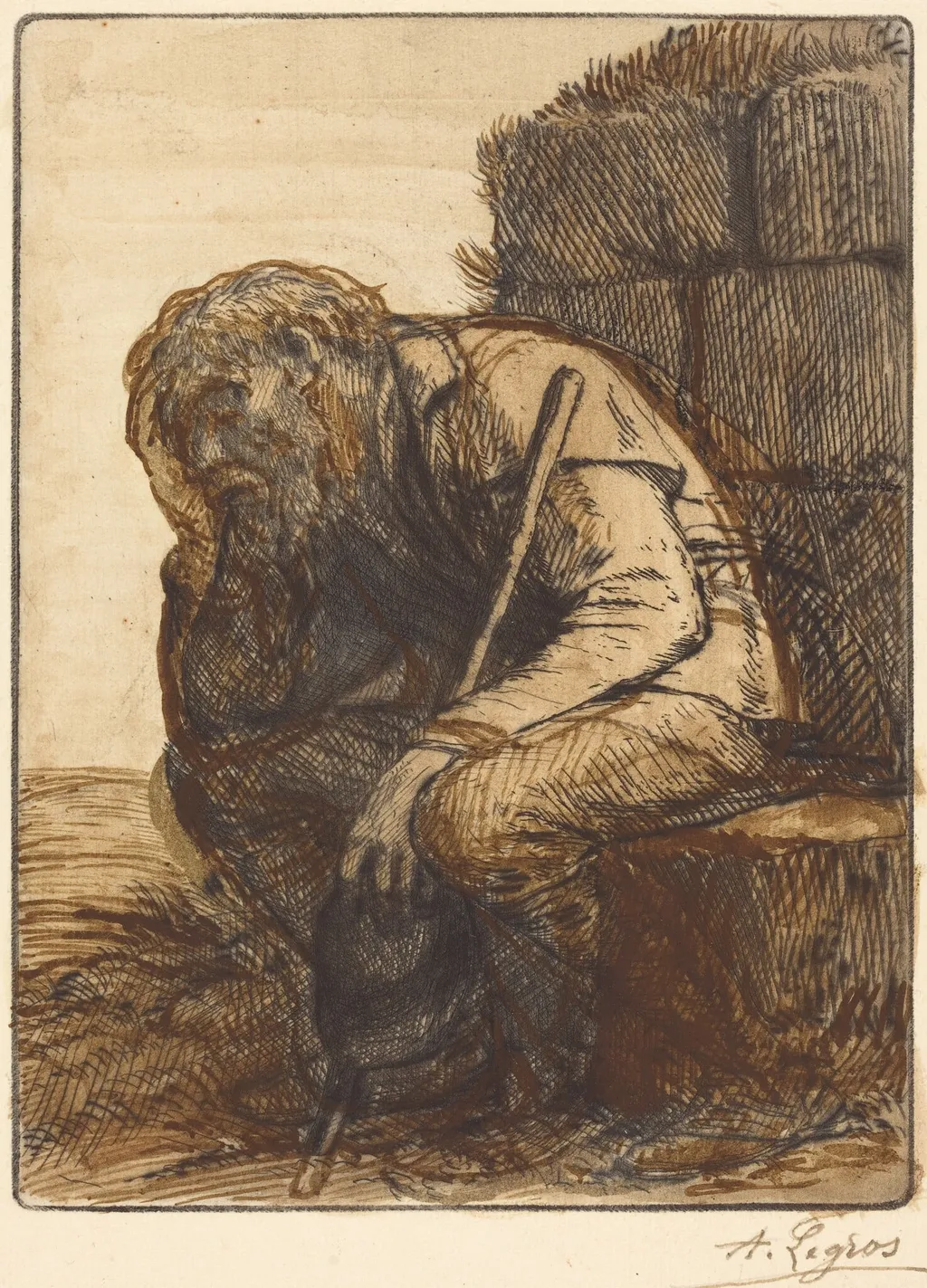
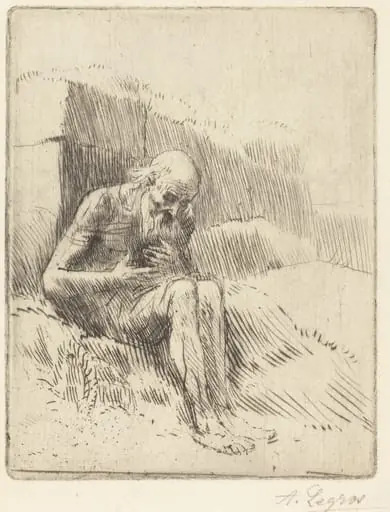
Desperate Man (Le desespere) is an ink print by the Romanticist artist Alphonse Legros. It dates from 1874 and is held in the collection of the National Gallery of Art.
About this work
Overview
Desperate Man (Le desespere), created in 1874 by Alphonse Legros, is an etching and drypoint print retouched with brown and grey ink. The work showcases Legros's technical prowess in intaglio techniques, characteristic of his contributions to the revival of etching in Britain.
Subject & Meaning
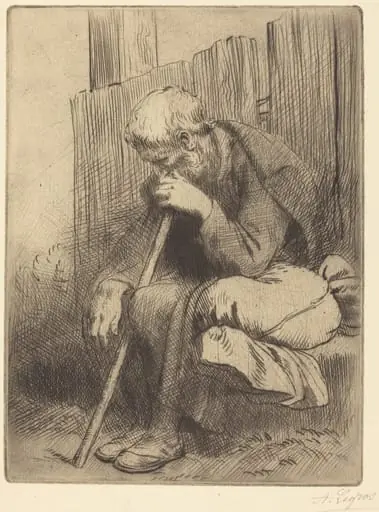
The print depicts a hunched, tormented figure clutching his head, set against a backdrop of humble, possibly cramped, rustic architecture. The composition conveys intense emotional distress or physical pain through the subject's twisted posture.
Technique & Style
Legros employed a combination of etching, drypoint, and expressive retouching in brown and grey ink. Rough, uneven linework and deliberate scratching techniques achieve a raw, urgent aesthetic, with deep shadows and textured elements heightening the scene's intensity.
History & Provenance
Created in 1874, *Desperate Man* reflects Legros's established presence in Britain, where he had relocated in 1863 and became a naturalized citizen. The work exemplifies his multifaceted artistic practice, which spanned painting, printmaking, and sculpture.
Context
Within the broader art historical context, *Desperate Man* sits at the forefront of the etching revival in late 19th-century Britain, a movement significantly influenced by Legros's teaching and artistic practice.
Legacy
Through *Desperate Man*, Legros demonstrated the expressive potential of intaglio techniques, inspiring future generations of printmakers. The work remains a testament to his impact on British art education and the revitalization of etching as a vibrant medium.
Artist & collection

Artist
Alphonse Legros (French pronunciation: ; 8 May 1837 – 8 December 1911) was a French, later British, painter, etcher, sculptor, and medallist.