Artwork
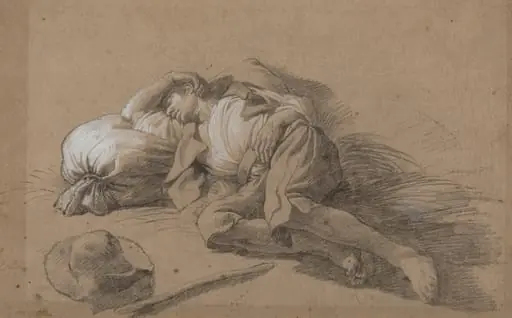
Sleeping Beggar (Mendiant endormi)
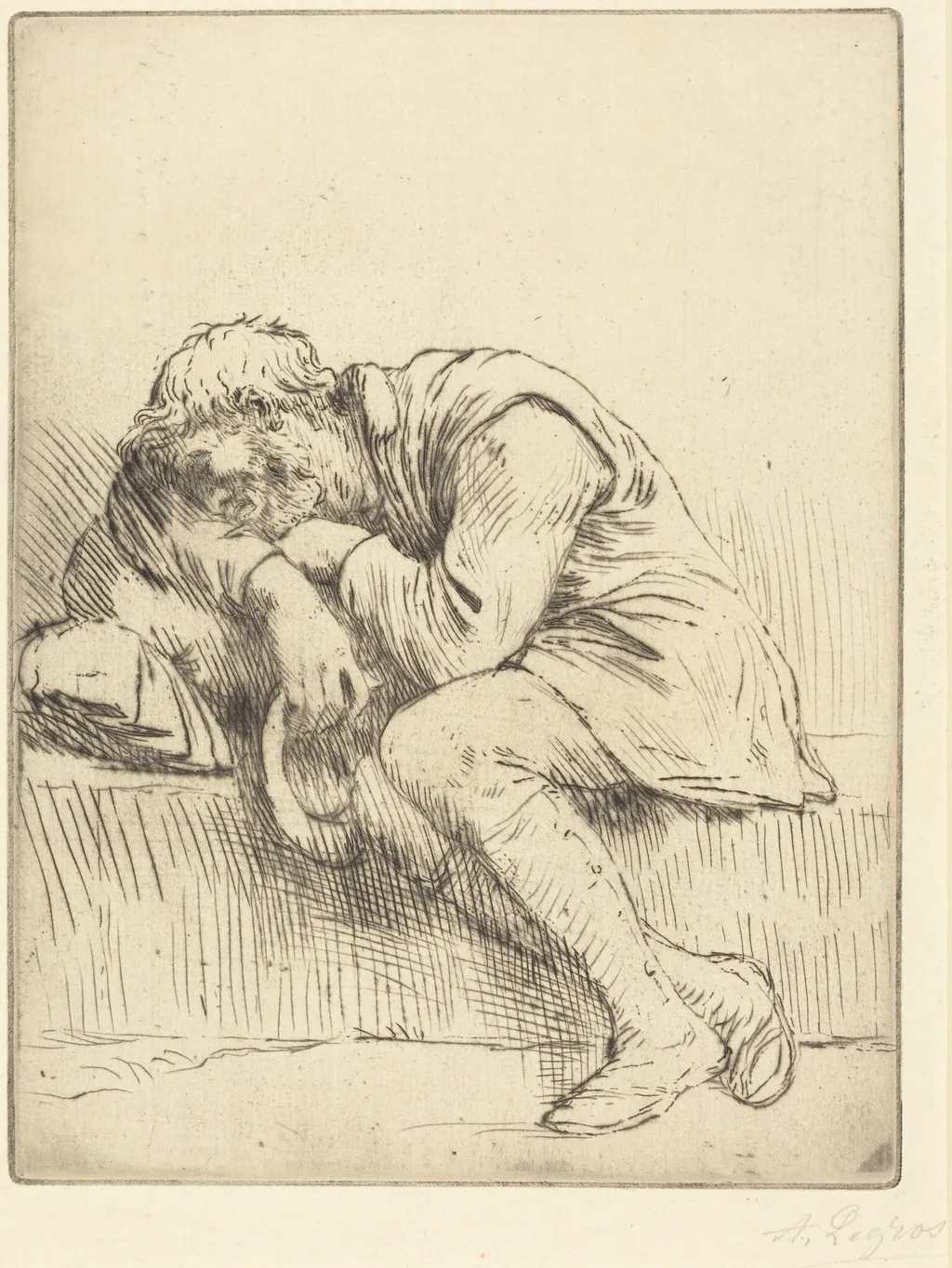
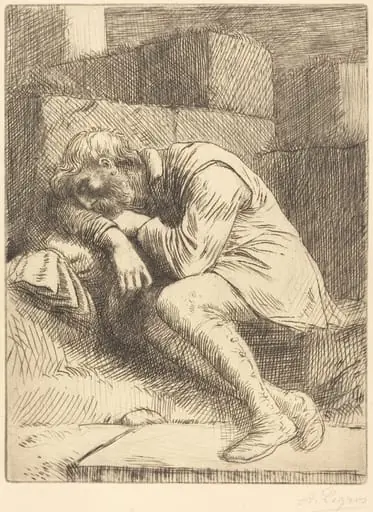
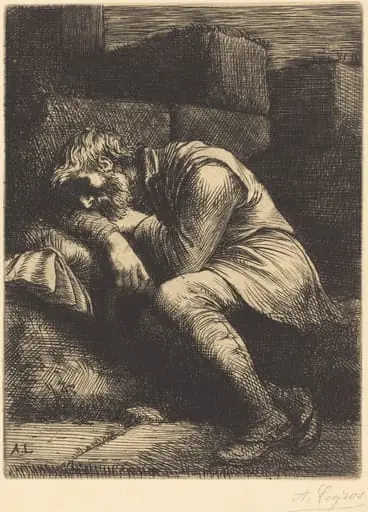
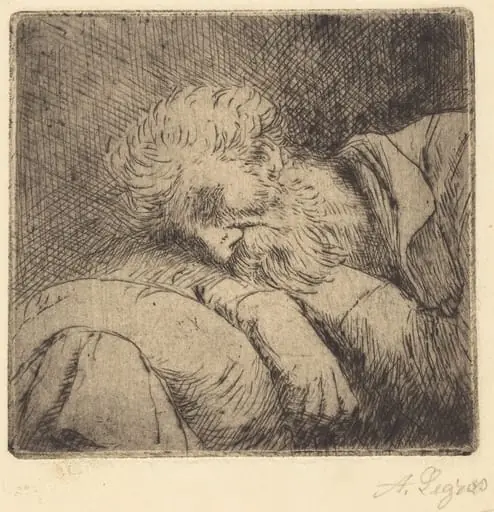
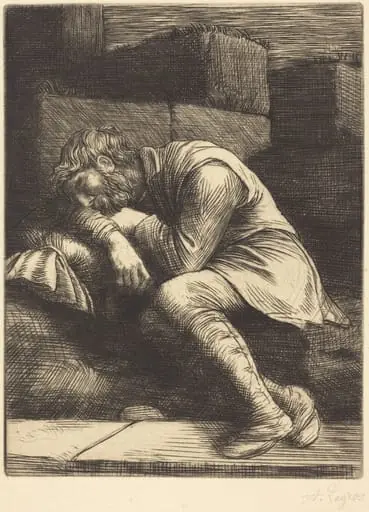
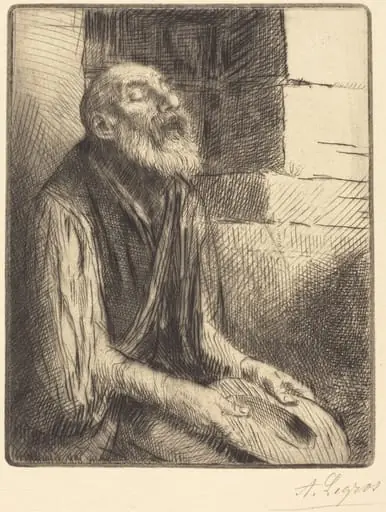
Sleeping Beggar (Mendiant endormi) is an ink print by the Romanticist artist Alphonse Legros. It dates from 1874 and is held in the collection of the National Gallery of Art.
About this work
Overview
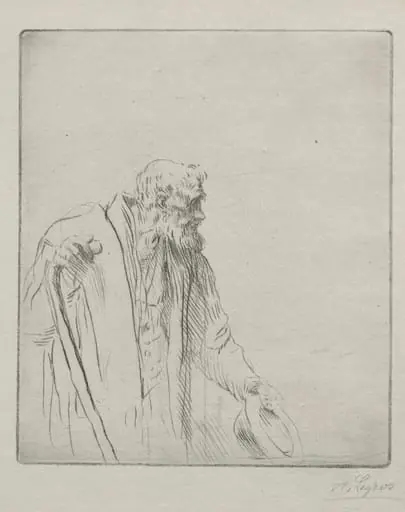
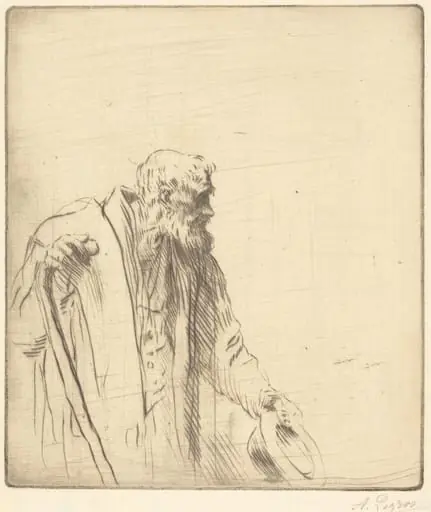
Created in 1874 by Alphonse Legros, a French artist who spent much of his career in Britain, *Sleeping Beggar (Mendiant endormi)* is an etching and drypoint print that reflects his commitment to printmaking as a serious artistic medium. Legros was instrumental in the British etching revival, and this work exemplifies his focus on everyday subjects rendered with technical precision and emotional restraint.
Subject & Meaning
The image portrays two homeless individuals curled together in sleep, their bodies entwined beneath layered blankets. The intimacy of their posture suggests mutual dependence amid hardship, without overt sentimentality. Legros avoids dramatization, instead presenting the figures with quiet dignity, inviting contemplation of their solitude and shared vulnerability.
Technique & Style
Cross-hatching and varied line weight convey the weight and folds of blankets, while the rougher marks of drypoint add depth to hair and shadowed areas.
Legros employed etching and drypoint to achieve a range of tonal textures, using fine, fluid lines to define the contours of bodies and fabric. Cross-hatching and varied line weight convey the weight and folds of blankets, while the rougher marks of drypoint add depth to hair and shadowed areas. The absence of color emphasizes the interplay of light and ink, characteristic of 19th-century printmaking practices.
History & Provenance
Executed during Legros’s time in London, where he taught at the Slade School of Art, the print was part of a broader movement to elevate printmaking beyond reproduction. Though its early ownership is undocumented, it aligns with Legros’s efforts to promote original prints as autonomous artworks, circulating among collectors and institutions committed to the medium’s artistic legitimacy.
Context
In the 1870s, European artists increasingly turned to urban poverty as subject matter, influenced by Realism and social observation. Legros’s depiction of the beggar echoes contemporaneous works by Daumier and Millet, yet avoids moralizing. His focus on quiet rest rather than distress reflects a shift toward psychological nuance in depictions of the marginalized.
Legacy
Legros’s *Sleeping Beggar* contributed to the redefinition of etching as a vehicle for personal expression rather than mere illustration. Its restrained composition and technical mastery influenced a generation of British printmakers, reinforcing the value of direct, hand-drawn marks in an age increasingly dominated by mechanical reproduction.
Artist & collection

Artist
Alphonse Legros (French pronunciation: ; 8 May 1837 – 8 December 1911) was a French, later British, painter, etcher, sculptor, and medallist.