Artwork
Edge of a Brook (Bord de ruisseau)
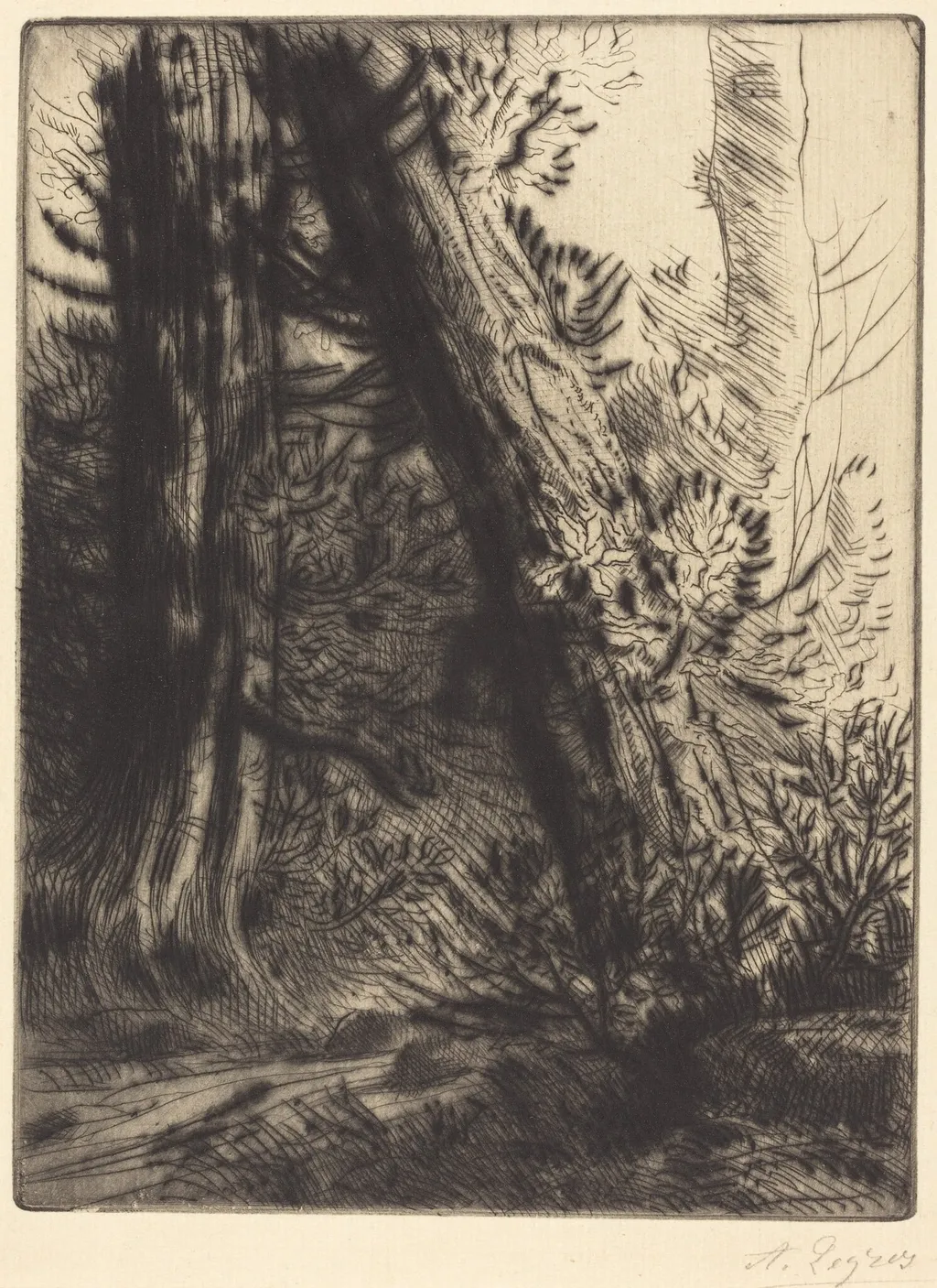
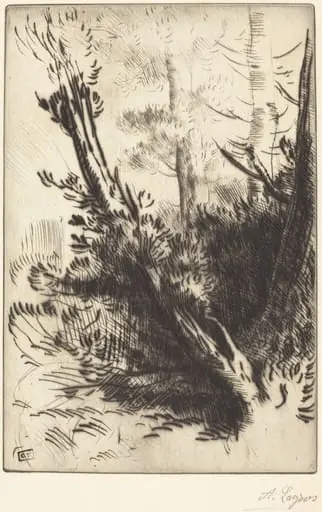
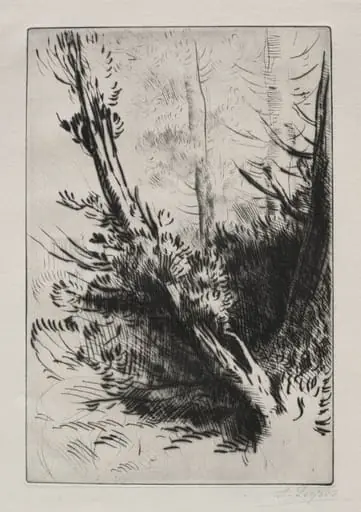
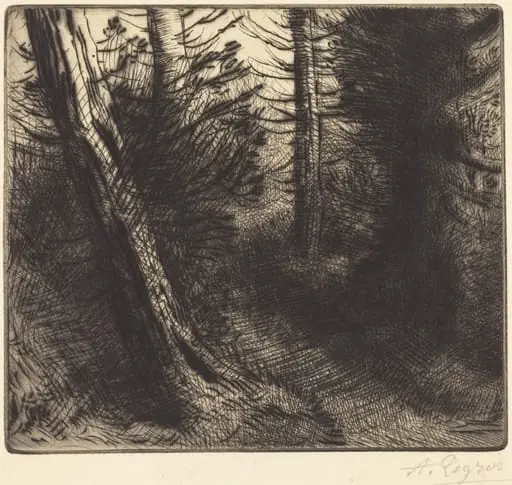
Edge of a Brook (Bord de ruisseau) is an ink print by the Romanticist artist Alphonse Legros. It dates from 1874 and is held in the collection of the National Gallery of Art.
About this work
Overview
Created in 1874, *Edge of a Brook (Bord de ruisseau)* is a drypoint print by Alphonse Legros, a French artist who relocated to London in 1863.
Created in 1874, *Edge of a Brook (Bord de ruisseau)* is a drypoint print by Alphonse Legros, a French artist who relocated to London in 1863. The work belongs to the broader revival of etching in Britain during the late nineteenth century, in which Legros played a significant role. Unlike painted landscapes, this piece relies on the tactile precision of incised lines to convey atmosphere, distinguishing it from more fluid painterly traditions.
Subject & Meaning
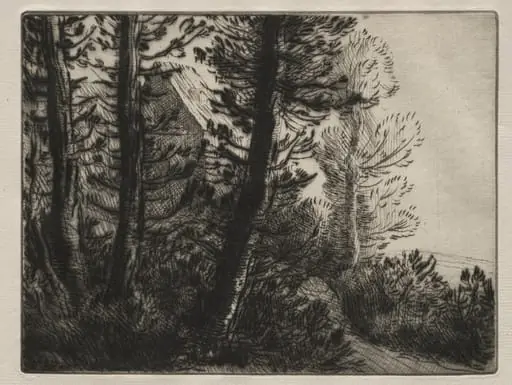
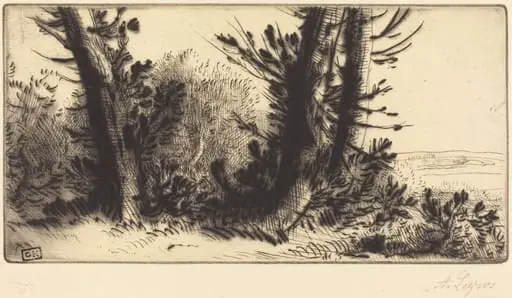
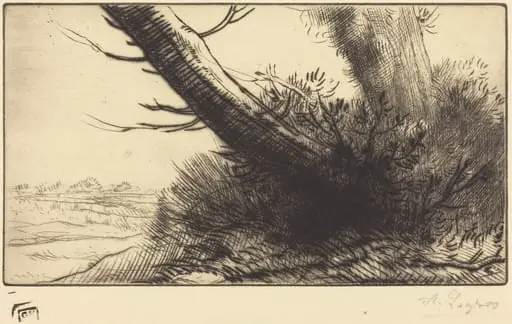
The scene captures a tranquil stretch of water bordered by overgrown vegetation and uneven earth. No figures or structures interrupt the quietude; the focus rests on the interplay between water, moss, and shadow. The absence of human presence suggests a contemplative engagement with nature, aligning with 19th-century sensibilities that valued solitude and natural observation over narrative or symbolism.
Technique & Style
Legros employed drypoint, a printmaking method involving scratching lines directly into a metal plate. The resulting burr holds ink unevenly, producing rich, velvety blacks and soft gradations. This technique enhances the texture of foliage and the reflective surface of water, lending the image a tactile, almost haptic quality. The monochrome palette intensifies the mood, emphasizing tone over color to evoke stillness.
History & Provenance
Legros produced this print during his early years in England, where he taught at the Slade School and influenced a generation of British printmakers. While the exact early ownership of this impression is undocumented, it reflects his broader commitment to reviving etching as a serious artistic medium. The work was likely circulated among collectors and artists interested in the revivalist movement of the 1870s.
Context
In the 1870s, British artists were re-engaging with printmaking as a fine art form, moving away from reproductive engraving toward original, expressive etchings. Legros, trained in France but active in London, bridged continental and British traditions. His focus on quiet, unidealized landscapes resonated with contemporaries seeking authenticity over romanticized scenery, aligning with emerging realist tendencies in visual culture.
Legacy
Legros’s drypoints, including *Edge of a Brook*, helped redefine printmaking in Britain by emphasizing personal expression and technical rigor. His influence extended through his students and his role in institutional reform at the Slade. While not widely exhibited today, his work remains a touchstone in studies of 19th-century print revival, valued for its quiet intensity and mastery of line.
Own this work as a print
Artist & collection

Artist
Alphonse Legros (French pronunciation: ; 8 May 1837 – 8 December 1911) was a French, later British, painter, etcher, sculptor, and medallist.