Artwork
Corner of a Path (Au coin d'un chemin)
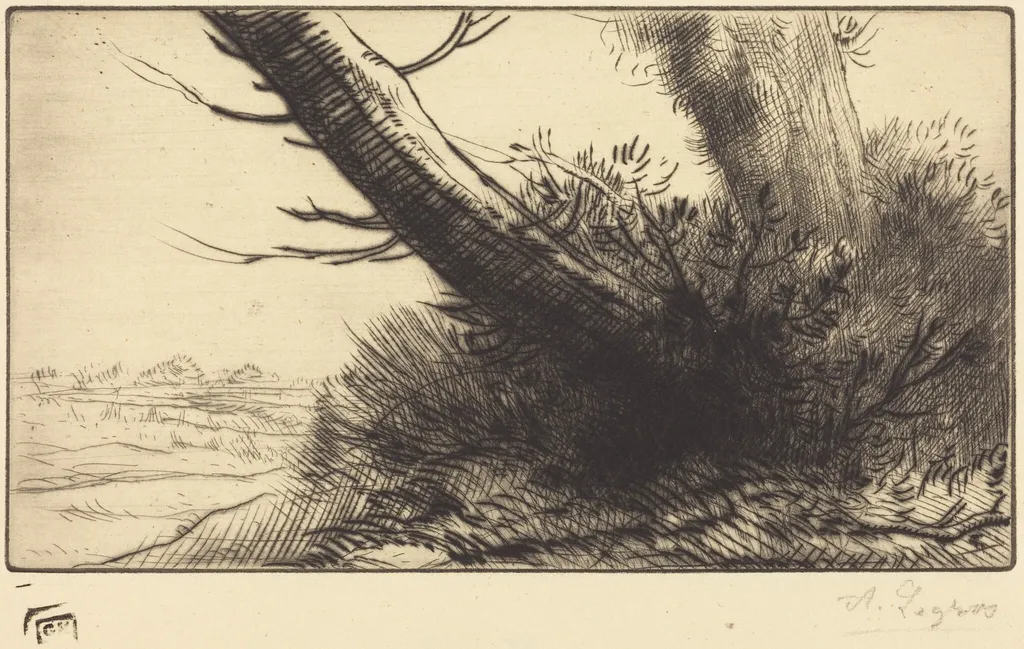
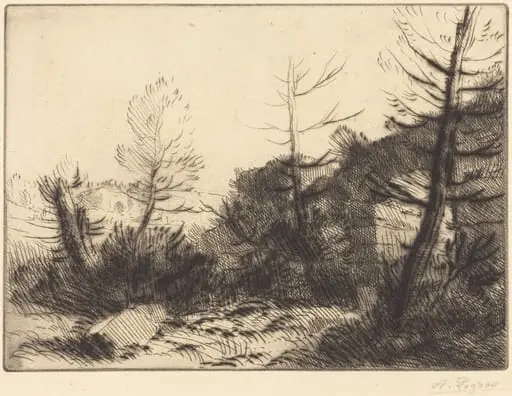
Corner of a Path (Au coin d'un chemin) is an ink print by the Romanticist artist Alphonse Legros. It dates from 1874 and is held in the collection of the National Gallery of Art.
About this work
Overview
Created in 1874, *Corner of a Path* is a drypoint print by Alphonse Legros, a French artist who relocated to London in 1863 and later became a British citizen.
Created in 1874, *Corner of a Path* is a drypoint print by Alphonse Legros, a French artist who relocated to London in 1863 and later became a British citizen. The work belongs to a body of prints that helped reinvigorate interest in etching within 19th-century Britain. Legros, known for his versatility across media, used the drypoint technique to capture subtle tonal variations and tactile surfaces, distinguishing his approach from more linear engraving traditions.
Subject & Meaning
The scene portrays a quiet rural path viewed at an oblique angle, with a gnarled tree dominating the right foreground. Bare branches stretch across the upper portion of the composition, while a distant field and low fence recede into the background. The absence of human figures and the stillness of the landscape suggest contemplation rather than narrative, inviting attention to the quiet rhythms of nature rather than dramatic event.
Technique & Style
Legros employed drypoint to generate rich, velvety lines by scratching directly into a metal plate, retaining the burr that holds ink and creates soft, blurred edges. This method enhances the texture of bark, soil, and foliage, lending the scene a tactile immediacy. The tonal gradations, achieved through dense hatching and sparse areas, guide the eye inward, reinforcing the quietude of the setting without overt sentimentality.
History & Provenance
Executed during Legros’s early years in England, the print reflects his engagement with British artistic circles and his role as a teacher at the Slade School of Art. While specific early ownership records are not widely documented, the work aligns with his broader efforts to elevate printmaking as a serious artistic medium. It was likely circulated among collectors and students who valued his technical rigor and restrained aesthetic.
Context
In the 1870s, British art was experiencing a revival of interest in etching as a fine art form, moving away from reproductive practices. Legros, influenced by French Realism and the Barbizon painters, contributed to this shift by emphasizing direct observation and atmospheric nuance. His work stood apart from both academic grandeur and overt Romantic drama, favoring understated naturalism grounded in careful study of the land.
Legacy
Legros’s prints, including *Corner of a Path*, influenced a generation of British etchers by demonstrating how technical precision could serve quiet, observational art. His teaching helped institutionalize etching in British art education, and his emphasis on the integrity of the handmade line left a lasting imprint on the medium’s development. The print remains a representative example of his commitment to modest, deeply observed landscapes.
Artist & collection

Artist
Alphonse Legros (French pronunciation: ; 8 May 1837 – 8 December 1911) was a French, later British, painter, etcher, sculptor, and medallist.

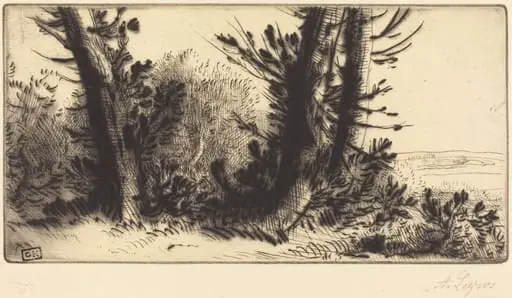 Across Country (A travers champ)
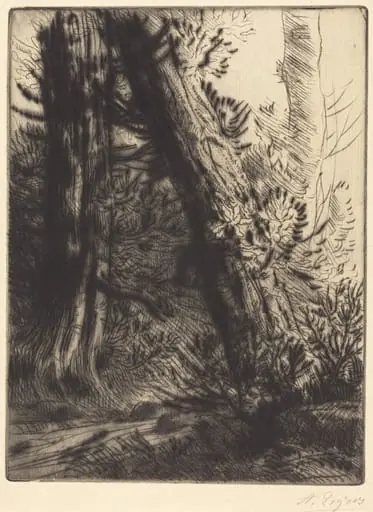 Edge of a Brook (Bord de ruisseau)
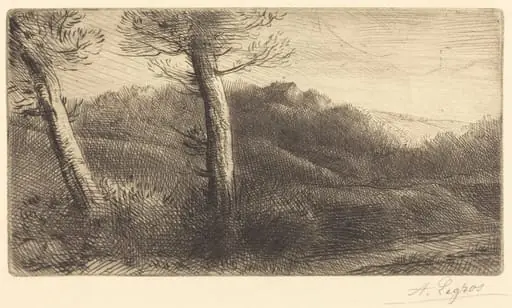 Sunset (Coucher du soleil)
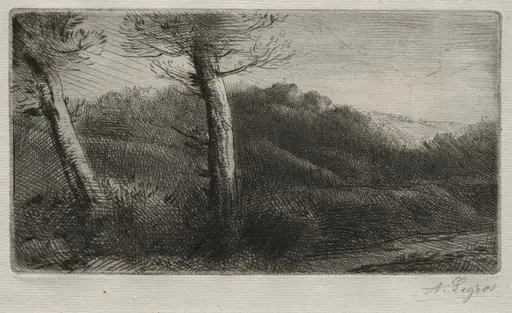 Sunset
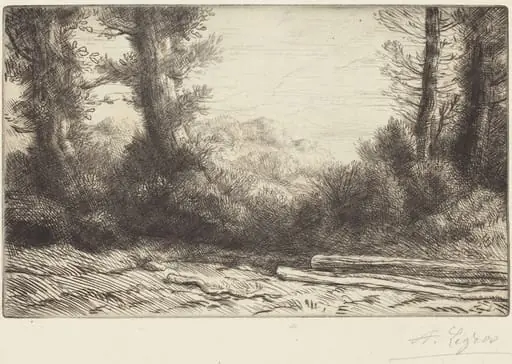 Edge of a Wood (Lisiere de bois)
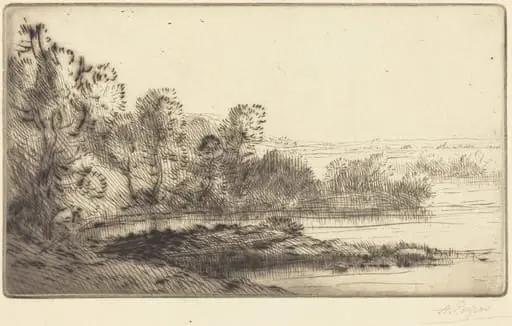 Along the Terne (Sur la terne)
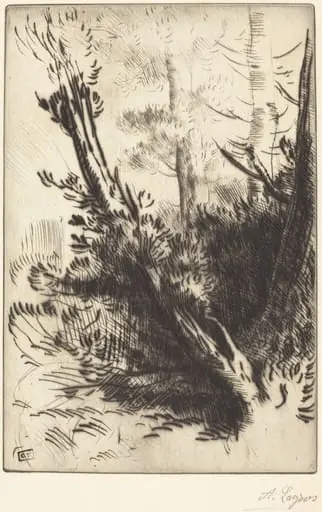 In the Woods (Dans les bois)
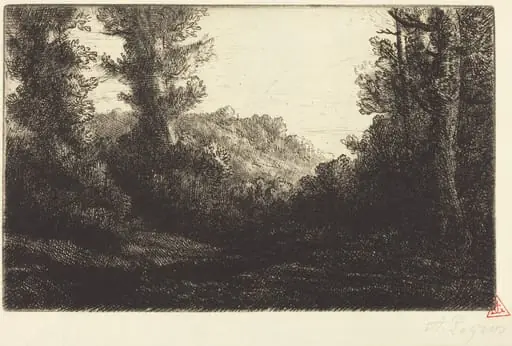 Edge of a Wood (Lisiere de bois)
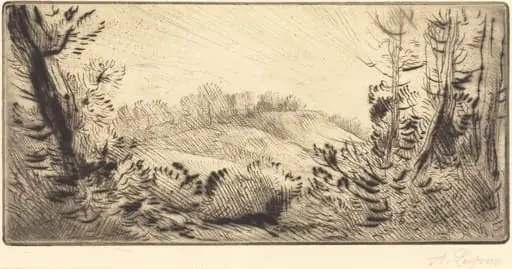 Small Hill (Le coteau)
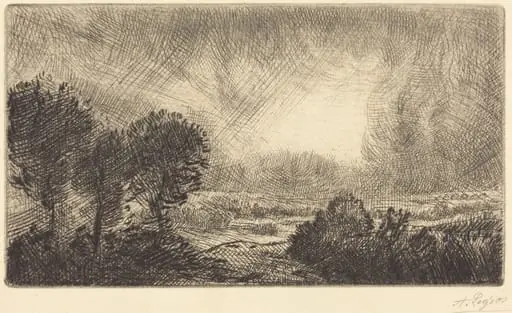 Landscape with Storm (Paysage d'orage)
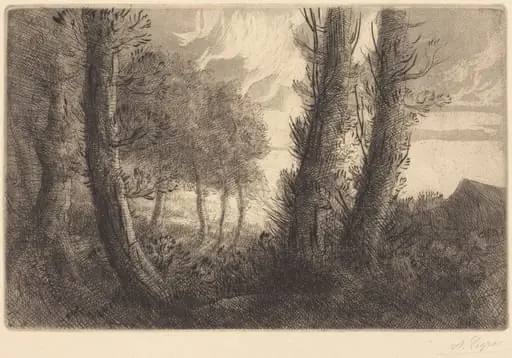 Landscape (Paysage)
 Roman Ruin (Ruine romaine)