Artwork
Egg-sellers, 1st plate (Les marchandes d'oeufs)
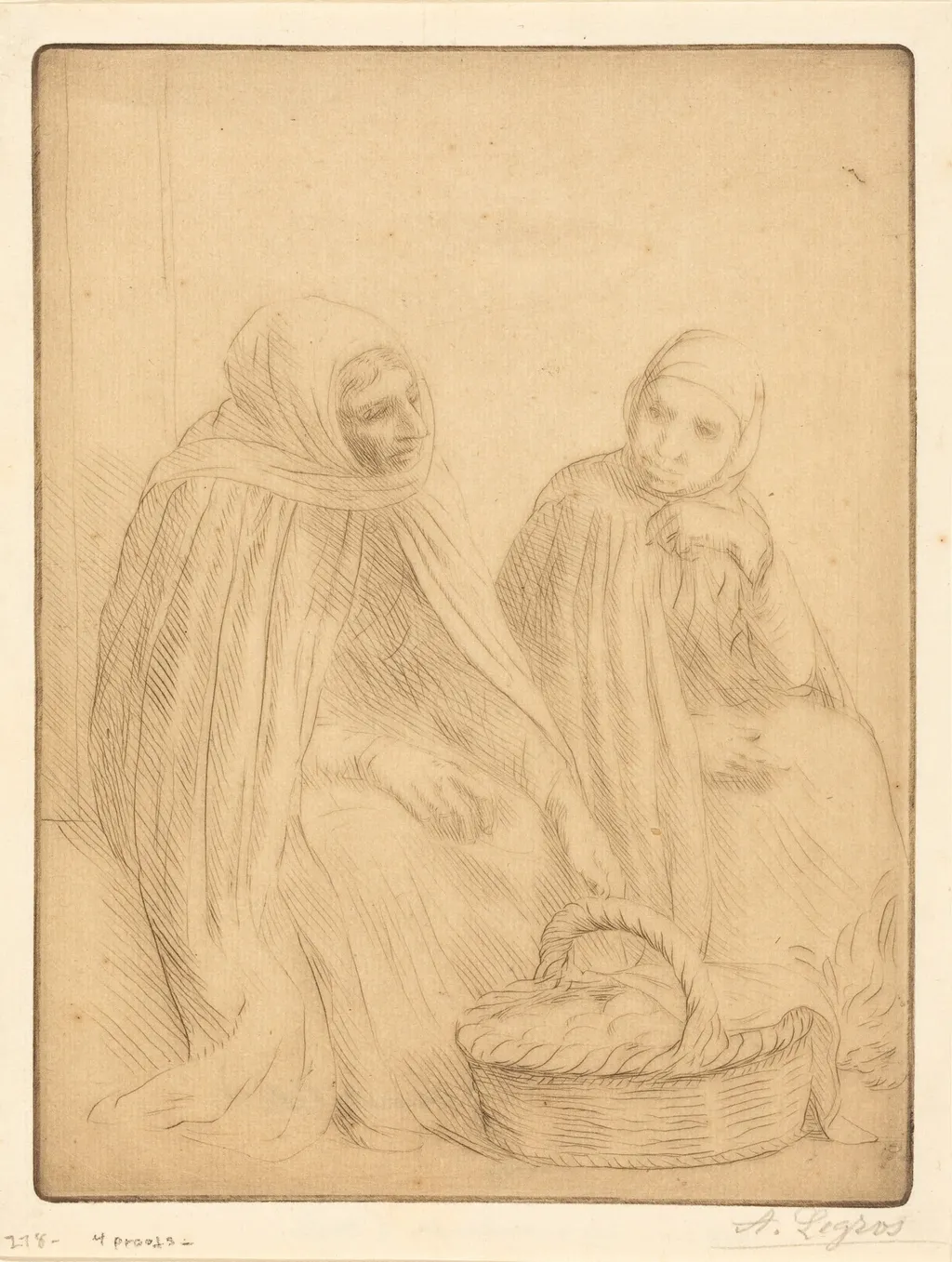
Egg-sellers, 1st plate (Les marchandes d'oeufs) is an ink print by the Romanticist artist Alphonse Legros. It dates from 1874 and is held in the collection of the National Gallery of Art.
About this work
Overview
Alphonse Legros produced the drypoint print *Egg‑sellers, 1st plate (Les marchandes d’oeufs)* in 1874. Executed in the intaglio tradition, the work records a brief street scene of two women vending eggs. The image is rendered with swift, sketch‑like lines that give the composition a spontaneous, almost observational quality.
Subject & Meaning
The composition centers on a pair of women dressed in loose, flowing garments, each with a hood covering their heads. One figure supports a basket brimming with eggs, while the other rests a hand upon it, suggesting a shared labor. The minimal background hints at a market or thoroughfare, focusing attention on the everyday act of trade.
Technique & Style
Legros employed drypoint, a form of intaglio where a needle incises the plate, leaving burrs that produce a characteristic soft, velvety line. The resulting marks resemble pencil strokes, emphasizing texture in the women’s clothing and the basket. The approach captures movement and immediacy, reflecting the artist’s interest in rapid, life‑drawing methods.
History & Provenance
Born in France, Legros moved to London in 1863 and later naturalised as a British citizen. By the 1870s he was a central figure in Britain’s etching revival, teaching at the Royal Academy and influencing a new generation of printmakers. *Egg‑sellers* belongs to the early phase of his print output, illustrating his commitment to reviving traditional intaglio techniques.
Artist & collection

Artist
Alphonse Legros (French pronunciation: ; 8 May 1837 – 8 December 1911) was a French, later British, painter, etcher, sculptor, and medallist.

 The Pigeons
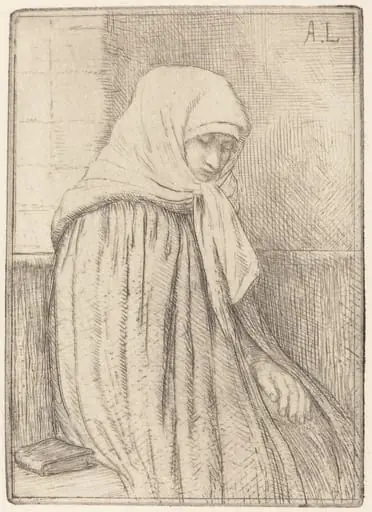 Young Peasant Seated in a Church (Jeune paysanne assise dans une eglise)
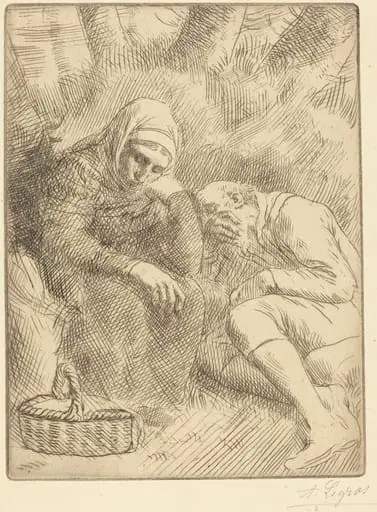 Man and Wife Seated by the Road with a Basket(Homme et femme assis au bord de la rou te aven un panier)
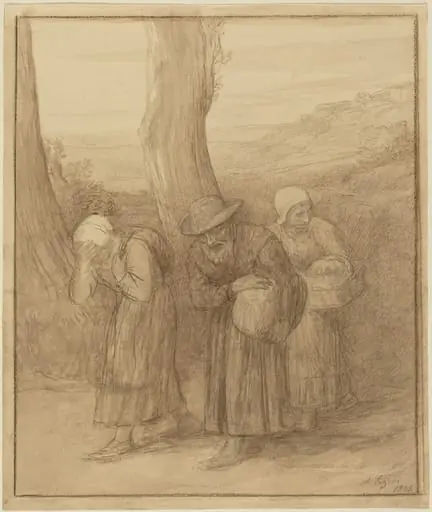 The Departure
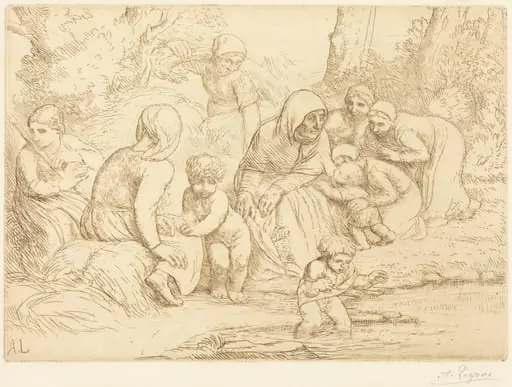 Summer (L'ete)
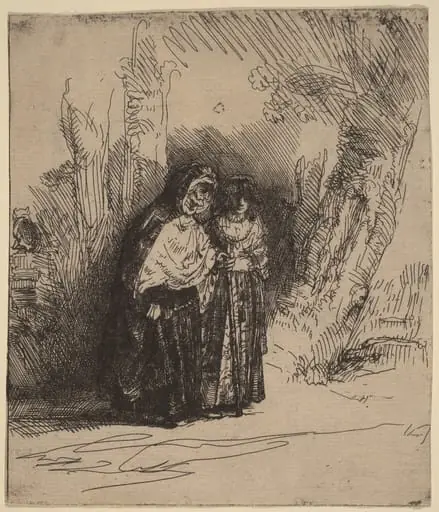 The Spanish Gypsy "Preciosa"
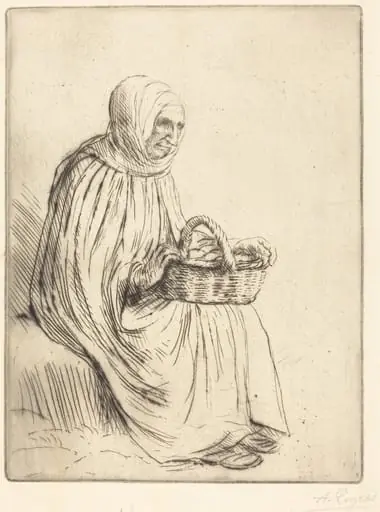 Woman of the Marketplace (Femme du marche)
 The Rest on the Flight: Lightly Etched
 Gipsy Baby