Artwork
Fagot-makers (Les faiseurs de fagots)
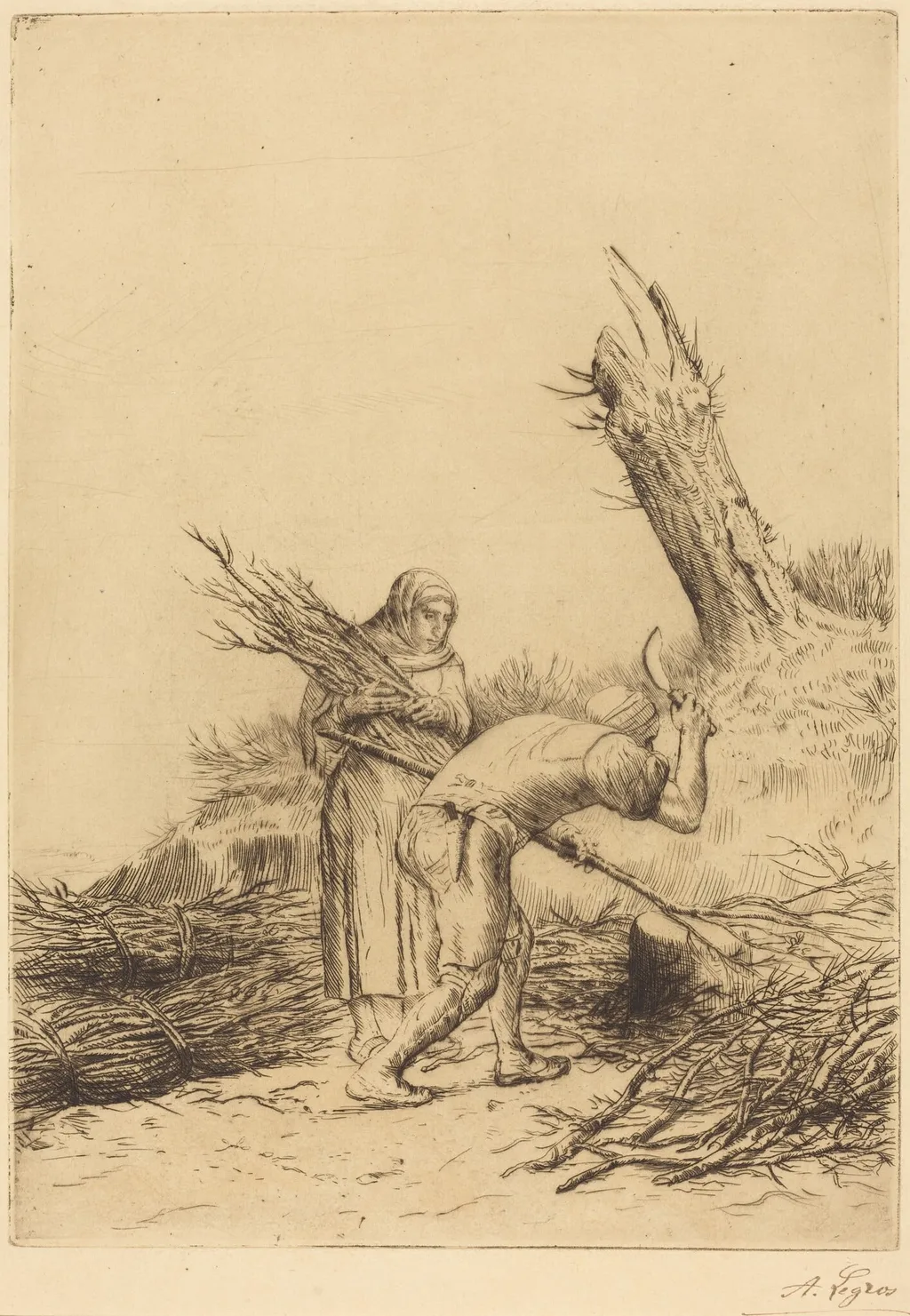
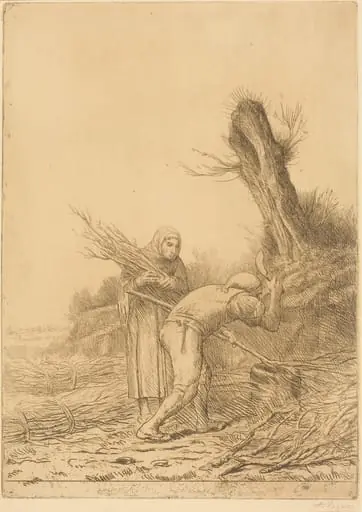
Fagot-makers (Les faiseurs de fagots) is an ink print by the Romanticist artist Alphonse Legros. It dates from 1874 and is held in the collection of the National Gallery of Art.
About this work
Overview
Created in 1874 by Alphonse Legros, *Fagot-makers (Les faiseurs de fagots)* is an etching and drypoint print that captures a moment of rural labor.
Created in 1874 by Alphonse Legros, *Fagot-makers (Les faiseurs de fagots)* is an etching and drypoint print that captures a moment of rural labor. Legros, originally French but based in London since 1863, used these intaglio techniques to explore themes of manual work. The print reflects his broader engagement with printmaking as a serious artistic medium and his influence in revitalizing etching within British art circles during the late nineteenth century.
Subject & Meaning
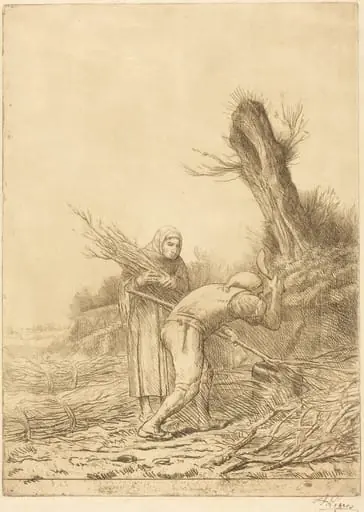
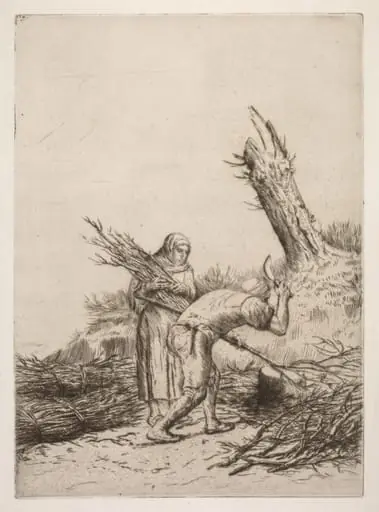
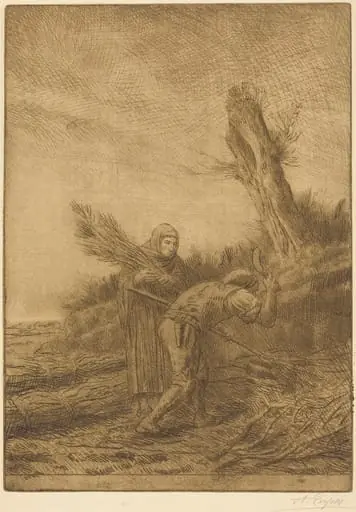
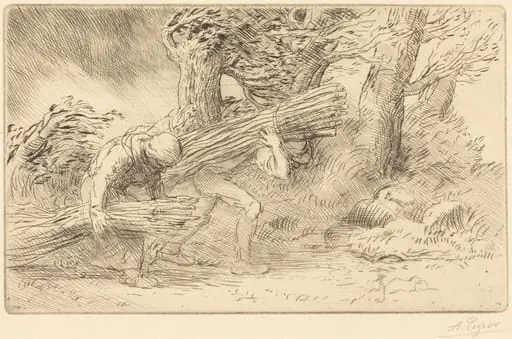
The scene portrays two figures— a woman standing behind a man bent over, gathering sticks— engaged in the quiet, repetitive task of preparing firewood. Their clothing and posture suggest rural poverty and endurance. Legros avoids sentimentality, presenting the labor as unadorned and dignified. The focus on a humble, everyday activity aligns with his interest in the dignity of craft and the rhythms of working-class life, without overt political commentary.
Technique & Style
Legros employed etching and drypoint to achieve a rich tonal range and textured surface. The dark, incised lines define the figures and bundles of sticks, while the lighter background creates contrast and spatial depth. Drypoint’s burr adds soft, fuzzy edges, enhancing the tactile quality of the scene. The composition is tightly framed, drawing attention to the figures’ gestures and the weight of their labor, with minimal environmental detail.
History & Provenance
Produced during Legros’s tenure at the Slade School of Fine Art in London, the print emerged from a period when he was actively promoting etching as a fine art form. It was likely made for private circulation or exhibition rather than mass reproduction. While specific early ownership records are sparse, the work entered institutional collections in the twentieth century, reflecting its recognition within the history of British printmaking.
Context
In the 1870s, European artists increasingly turned to scenes of rural labor as a counterpoint to industrialization. Legros’s work resonated with this trend, though his approach was less romanticized than that of some contemporaries. His focus on precise draftsmanship and material honesty aligned with the broader Realist movement, while his technical rigor distinguished him within the British etching revival led by figures like Samuel Palmer and Francis Seymour Haden.
Legacy
Legros’s *Fagot-makers* remains a significant example of late nineteenth-century British printmaking, illustrating how etching could convey both technical mastery and social observation. His pedagogical role at the Slade helped shape generations of artists who valued the discipline of printmaking. Though not widely reproduced, the work endures in museum collections as a quiet testament to the artistic potential of everyday labor.
Artist & collection

Artist
Alphonse Legros (French pronunciation: ; 8 May 1837 – 8 December 1911) was a French, later British, painter, etcher, sculptor, and medallist.