Artwork
Farm at the Monastery (La ferme de l'abbaye)
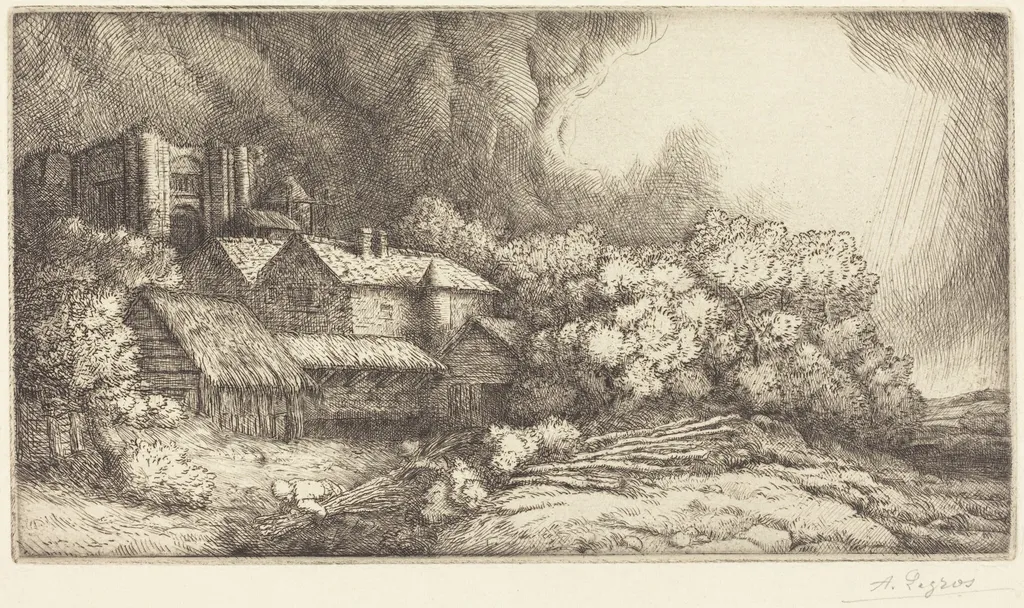
Farm at the Monastery (La ferme de l'abbaye) is an ink print by the Romanticist artist Alphonse Legros. It dates from 1874 and is held in the collection of the National Gallery of Art.
About this work
Overview
Farm at the Monastery (La ferme de l'abbaye), created by Alphonse Legros in 1874, is an etching and drypoint print depicting a serene rural scene adjacent to a monastery.
Subject & Meaning
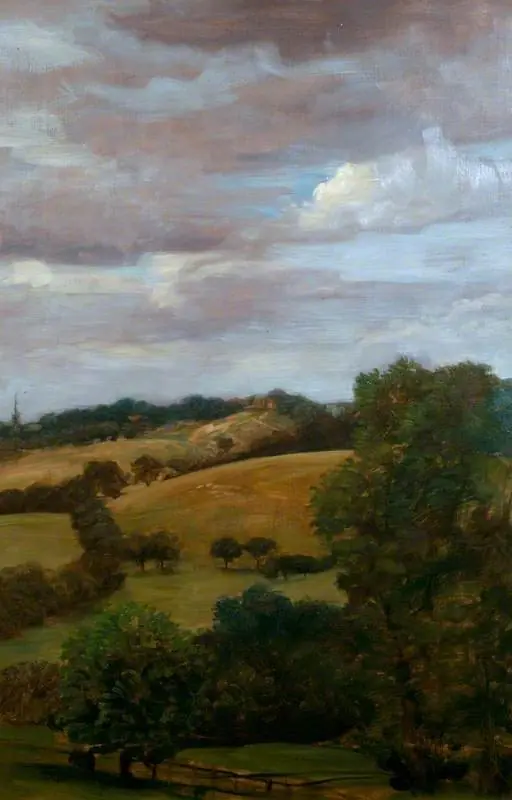
The print captures a tranquil farm setting in a wooded valley, with a group of small buildings along a riverbank. The emphasis is on evoking a mood rather than detailed representation, with expressive lines conveying natural textures and the interplay of light and shadow.
Technique & Style
Legros employed intaglio techniques, specifically etching and drypoint, to achieve a sense of vitality. Characteristic quick, rough lines suggest foliage and terrain, while sparse, expressive strokes animate elements like the glowing trees on the right, demonstrating his mastery of suggesting depth and life with minimal detail.
History & Provenance
Created in 1874 by Alphonse Legros, a French artist naturalized in Britain, this work reflects his role in the British etching revival. Legros's multifaceted career spanned painting, sculpture, and printmaking.
Context
Produced during Legros's established period in London, the piece embodies the late 19th-century interest in etching as an expressive medium, bridging French and British artistic influences.
Legacy
While specific legacy details of *Farm at the Monastery* are not highlighted, the work contributes to Legros's broader impact on revitalizing etching in Britain, influencing subsequent generations of printmakers.
Artist & collection

Artist
Alphonse Legros (French pronunciation: ; 8 May 1837 – 8 December 1911) was a French, later British, painter, etcher, sculptor, and medallist.

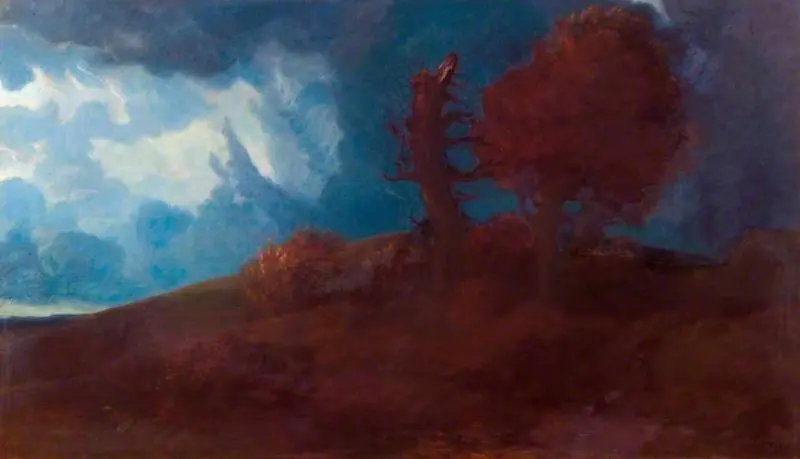
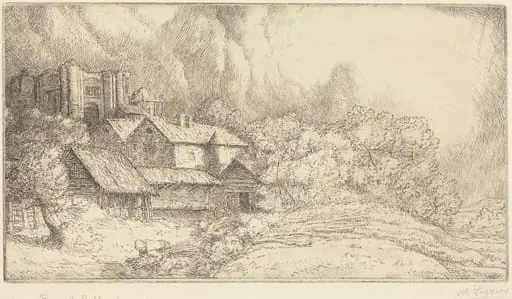 Farm at the Monastery (La ferme de l'abbaye)
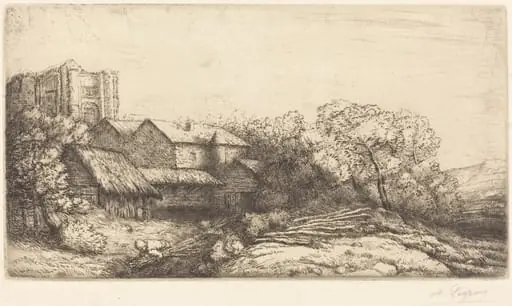 Farm at the Monastery (La ferme de l'abbaye)
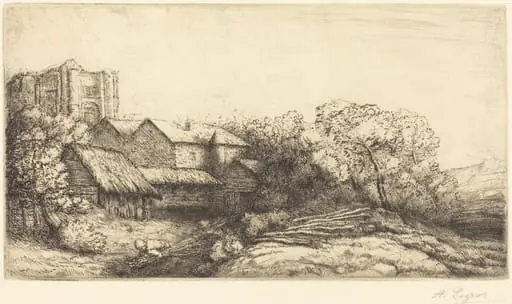 Farm at the Monastery (La ferme de l'abbaye)
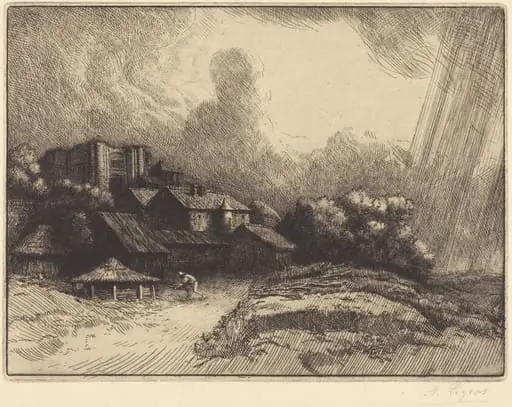 Farm at the Monastery (La ferme de l'abbaye)
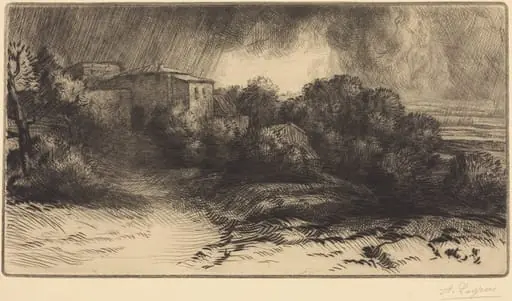 View of a Farm Seen in a Storm (La ferme de Brieux (Effet d'orage))
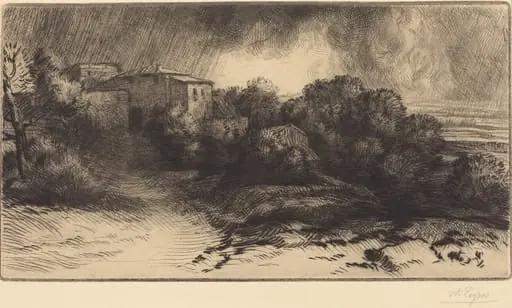 View of a Farm Seen in a Storm (La ferme de Brieux (Effet d'orage))
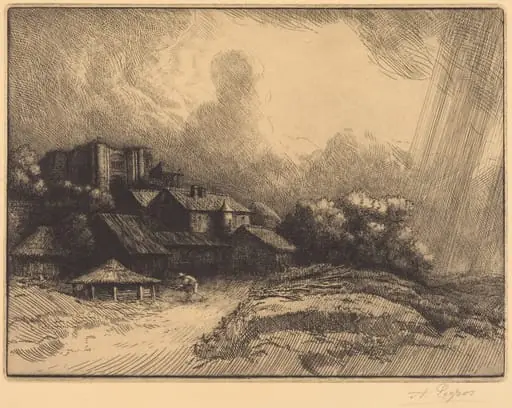 Farm at the Monastery (La ferme de l'abbaye)
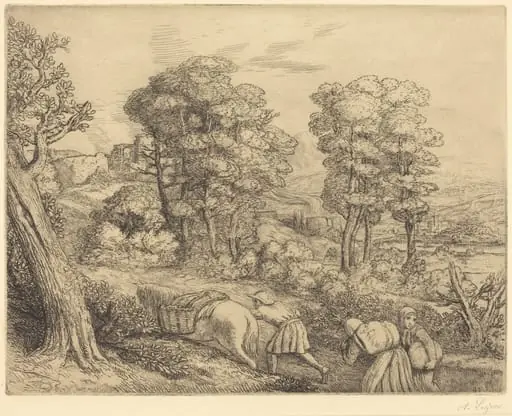 Return to the Farm (Le retour a la ferme)
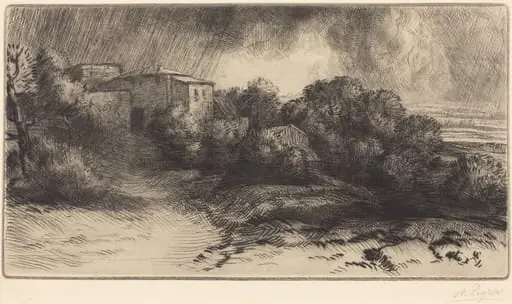 La Ferme de Brieux (Effect d'orage) (Farm at Brieux in a Storm)
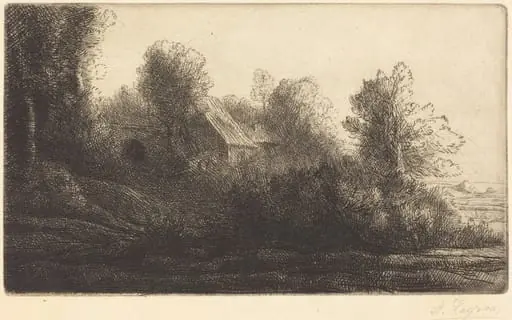 View of a Farm, 2nd plate (La ferme de Bienheureux)