Artwork
Fountain: Grotesque, Children and Basin (Une fountaine: Masque, enfants et bassin)
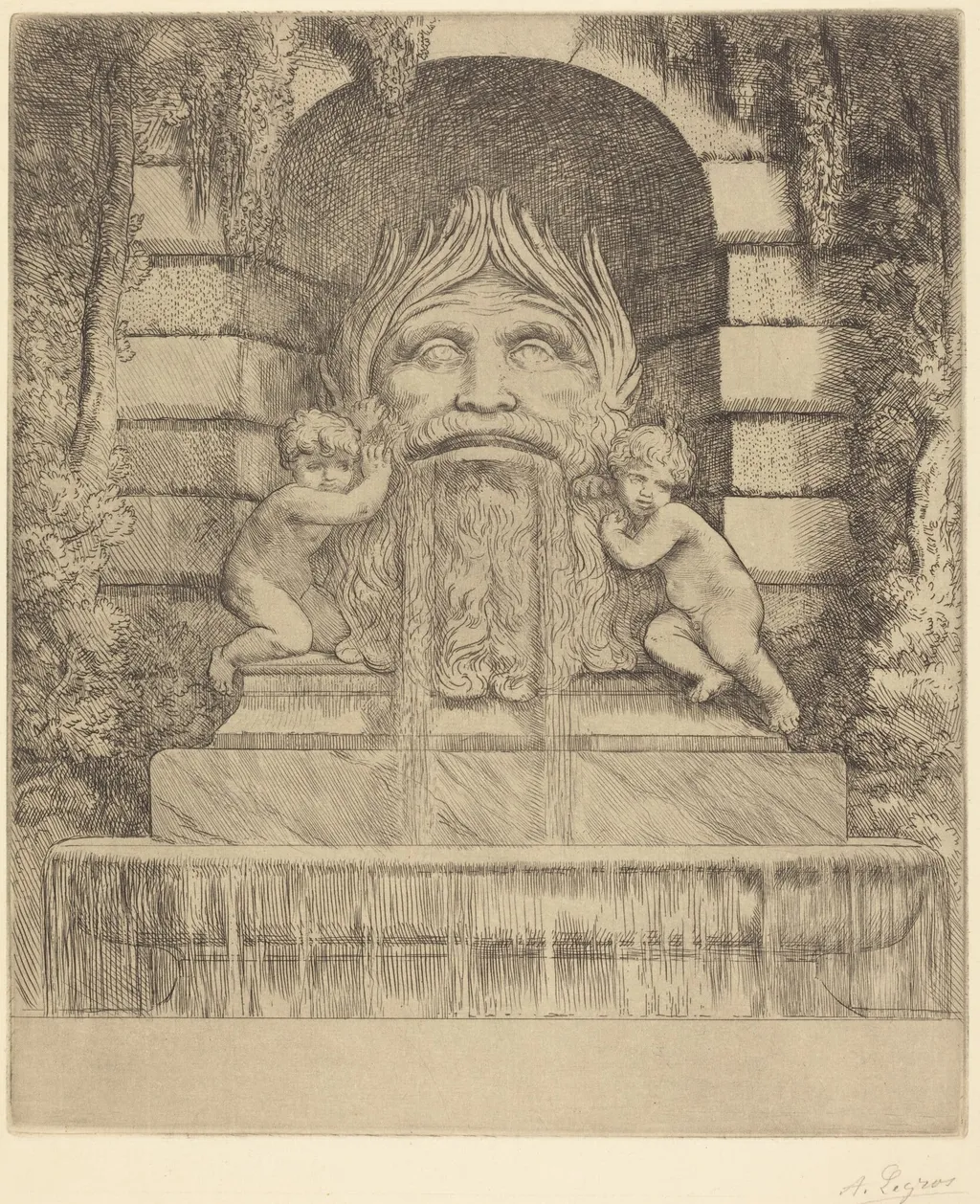
Fountain: Grotesque, Children and Basin (Une fountaine: Masque, enfants et bassin) is an ink print by the Romanticist artist Alphonse Legros. It dates from 1874 and is held in the collection of the National Gallery of Art.
About this work
Overview
Created in 1874 by Alphonse Legros, *Fountain: Grotesque, Children and Basin* is a print made using etching and drypoint techniques.
Created in 1874 by Alphonse Legros, *Fountain: Grotesque, Children and Basin* is a print made using etching and drypoint techniques. Though Legros was born in France, he spent much of his career in London after relocating in 1863 and later became a British citizen. This work exemplifies his engagement with printmaking, a medium he helped revitalize in Britain through both his practice and teaching at the Slade School of Art.
Subject & Meaning
The image portrays a stone fountain adorned with exaggerated, mask-like faces and small figures, surrounded by children in playful motion. The juxtaposition of the grotesque carvings with the innocence of the children suggests a contrast between mythic or archaic forms and everyday life. Rather than depicting a literal monument, Legros evokes a sense of layered cultural memory embedded in public sculpture.
Technique & Style
Legros employed etching and drypoint to render fine lines and rich tonal textures, capturing the roughness of carved stone and the delicate contours of the children’s forms. Drypoint’s burr created soft, velvety blacks, while etching allowed precise control over the fountain’s intricate details. The interplay of sharp and blurred lines enhances the tactile quality of the scene, emphasizing materiality over narrative clarity.
History & Provenance
The print was produced during Legros’s early years in England, when he was gaining recognition for his technical precision and revival of traditional print methods. It was likely circulated among artists and collectors interested in the resurgence of etching as a serious artistic medium. No definitive early ownership records are widely documented, but it appears in several institutional collections today, reflecting its scholarly interest.
Context
In the 1870s, British art circles were re-engaging with printmaking after decades dominated by painting and sculpture. Legros, influenced by Renaissance and Northern European precedents, promoted etching as a vehicle for expressive depth. His work responded to a broader European interest in medieval and Renaissance grotesques, reinterpreting them through a modern lens that valued craftsmanship over ornament.
Legacy
Legros’s prints, including this one, influenced a generation of British etchers who sought to elevate printmaking beyond reproduction. His emphasis on direct handwork and textual richness helped establish etching as a legitimate fine art form in Britain. Though less known today than his contemporaries, his pedagogical impact and technical rigor remain foundational to the history of 19th-century British printmaking.
Artist & collection

Artist
Alphonse Legros (French pronunciation: ; 8 May 1837 – 8 December 1911) was a French, later British, painter, etcher, sculptor, and medallist.

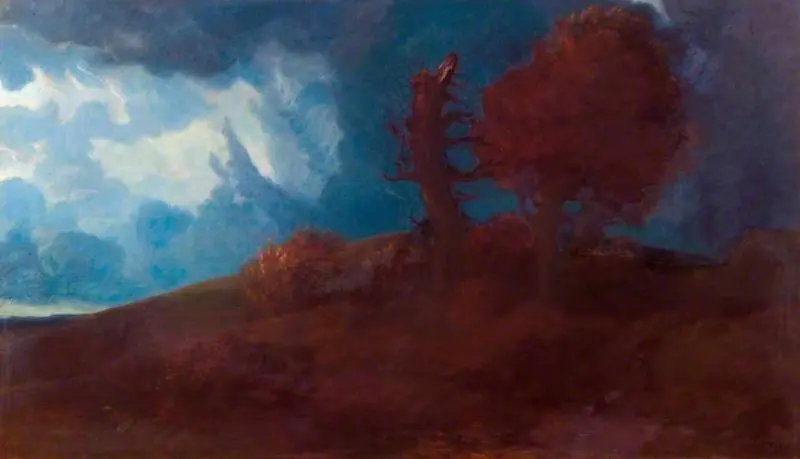
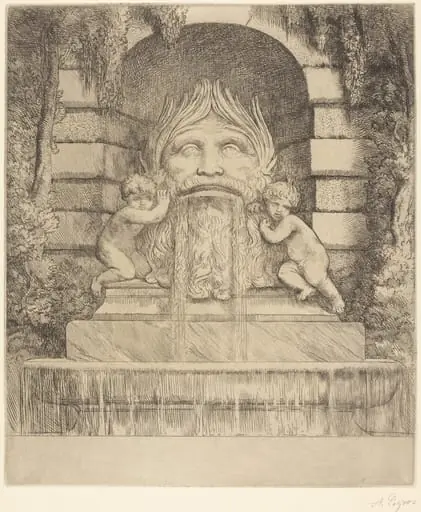 Fountain: Grotesque, Children and Basin (Une fountaine: Masque, enfants et bassin)
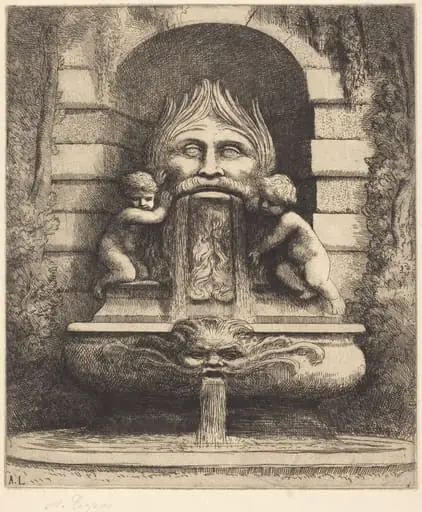 Fountain: Grotesque, Children and Basin (Une fountaine: Masque, enfants et bassin)
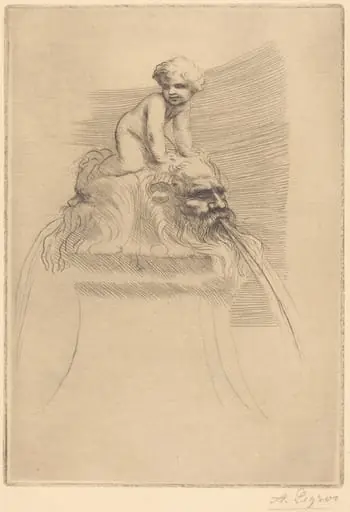 Small Fountain, Child Playing on the Grotesques (Petite fontaine, enfant qui joue surdes masques)
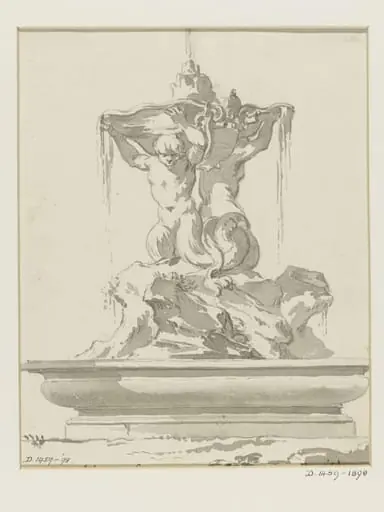 Drawing of a fountain
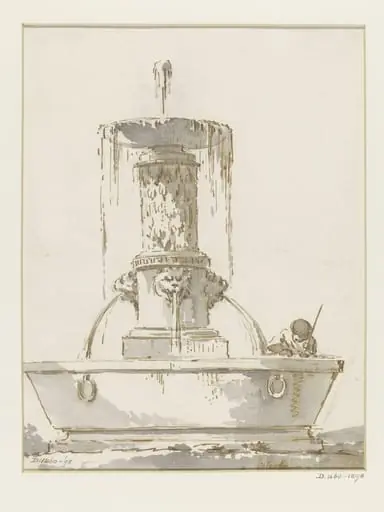 Drawing of fountain
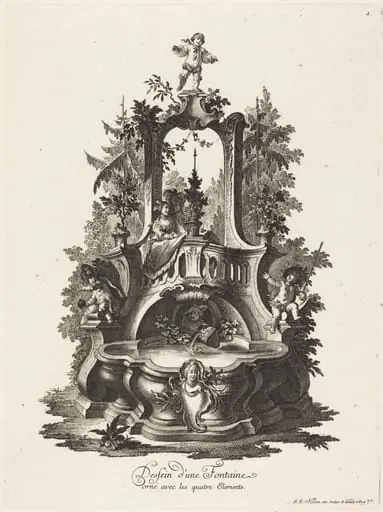 Dessein d'une Fontaine orné avec les quatre Elements (Design for a Fountain Decorated with the Four Elements)
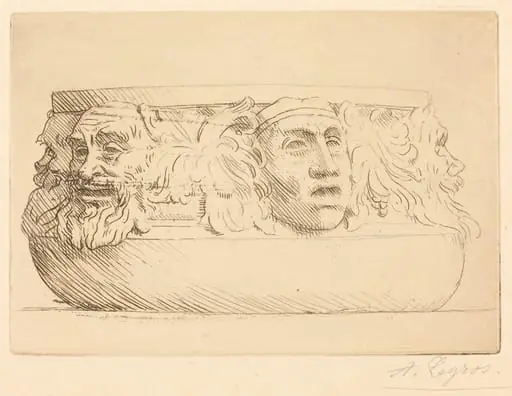 Vase with Grotesques (Le vase aux masques)