Artwork
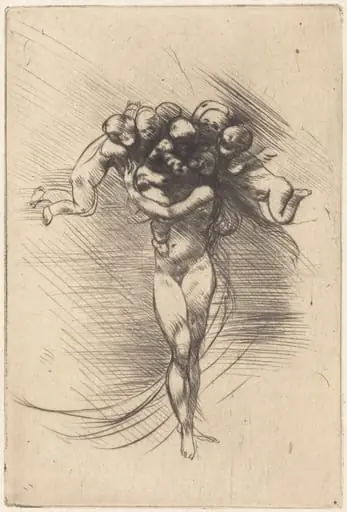
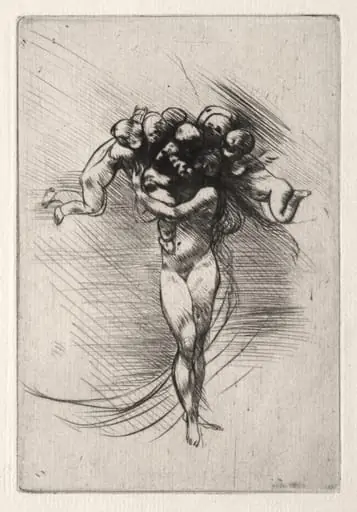
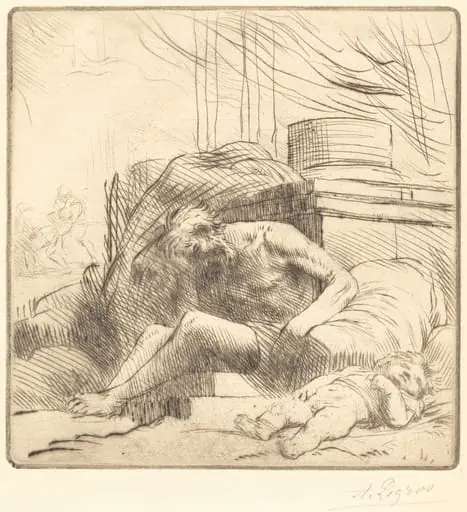
Small Fountain, Child Playing on the Grotesques (Petite fontaine, enfant qui joue surdes masques)
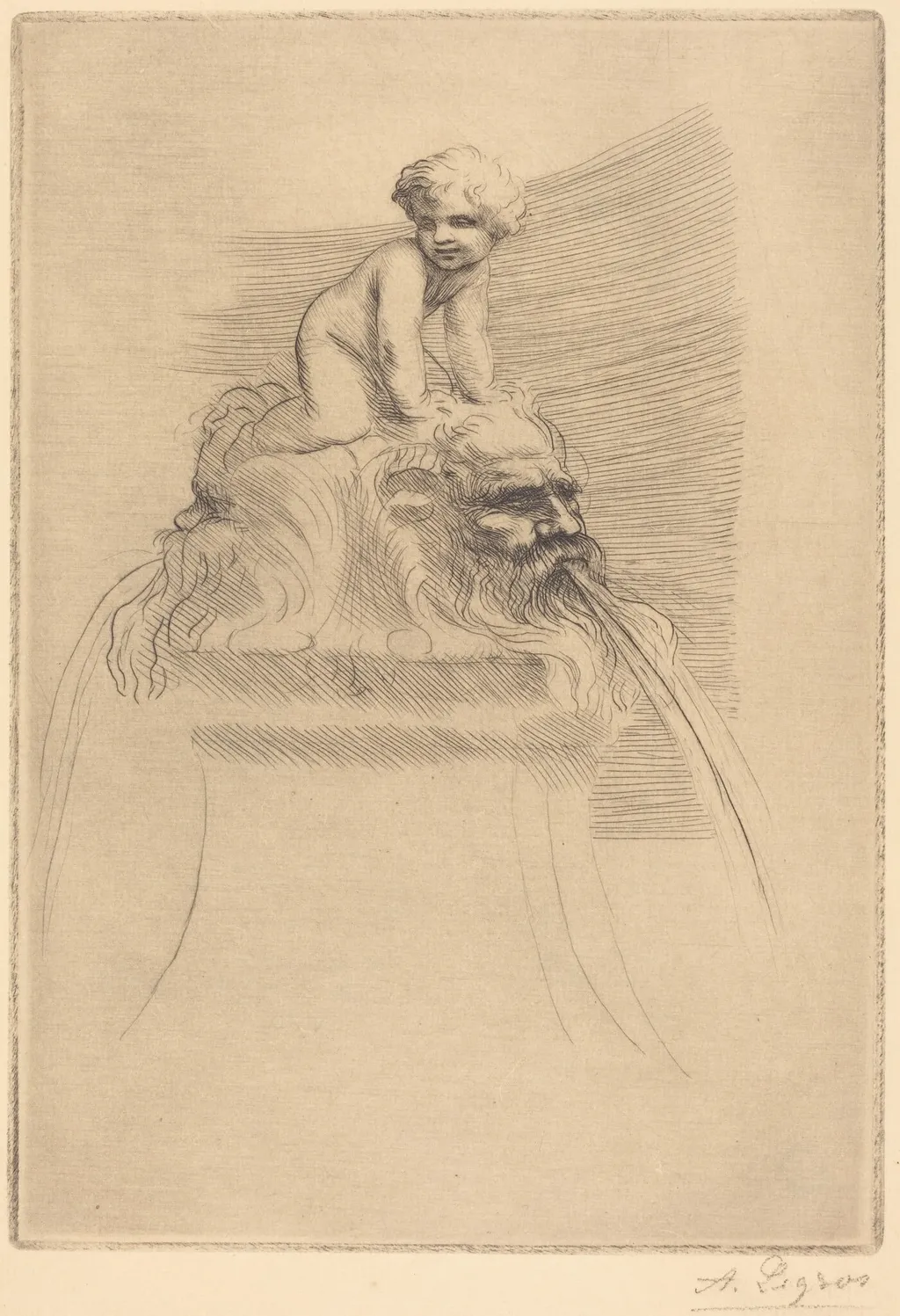
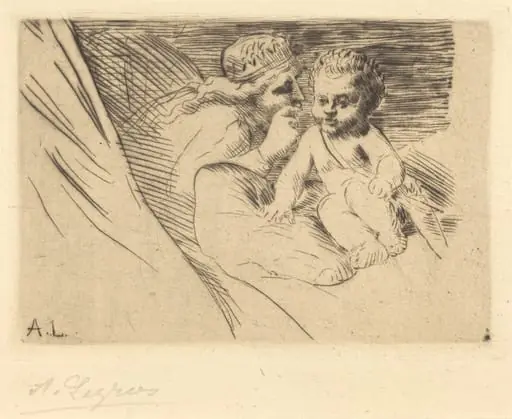
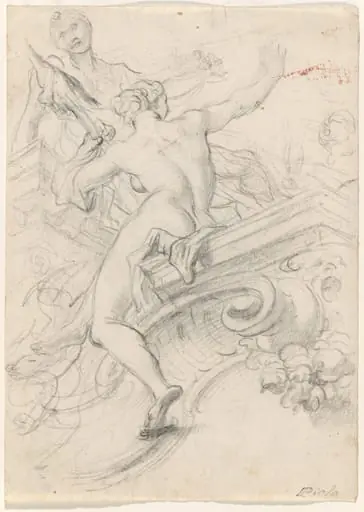
Small Fountain, Child Playing on the Grotesques (Petite fontaine, enfant qui joue surdes masques) is an ink print by the Romanticist artist Alphonse Legros. It dates from 1874 and is held in the collection of the National Gallery of Art.
About this work
Overview
Created in 1874, this etching by Alphonse Legros captures a quiet, intimate scene of a child engaging with ornamental stone masks on a modest fountain.
Created in 1874, this etching by Alphonse Legros captures a quiet, intimate scene of a child engaging with ornamental stone masks on a modest fountain. Legros, originally French but based in London since 1863, was instrumental in revitalizing etching as a serious artistic medium in Britain. This work reflects his dual focus on creative production and pedagogy during a period of renewed interest in printmaking.
Subject & Meaning
The image portrays a child interacting playfully with grotesque masks—stylized, exaggerated faces often used in Renaissance and Baroque ornamentation. Rather than evoking fear, the scene suggests innocence and curiosity, as the child treats the stone figures as part of a natural environment. The contrast between youthful spontaneity and the static, archaic masks introduces a subtle tension between life and artifice.
Technique & Style
Executed in etching, the work employs fine lines and tonal gradations to render texture and depth. Legros used acid to bite into a metal plate coated with wax, allowing precise control over line weight and shadow. The delicate rendering of the child’s form against the rougher, more angular grotesques demonstrates his mastery of contrast and his sensitivity to surface quality, characteristic of his approach to printmaking.
History & Provenance
The etching was produced during Legros’s tenure at the Slade School of Fine Art, where he influenced a generation of British artists. While specific early ownership records are sparse, the work aligns with his broader output from the 1870s, which was widely exhibited in London and Paris. It entered institutional collections in the early 20th century, reflecting its recognition within the printmaking revival movement.
Context
In the 1870s, British artists were re-engaging with etching as a medium distinct from mass-produced illustrations. Legros, trained in France and influenced by Rembrandt and 16th-century ornament, brought continental precision to this revival. His choice of a whimsical, almost folkloric subject reflected a broader interest in the symbolic potential of decorative art, bridging classical motifs with everyday observation.
Legacy
This etching exemplifies Legros’s role in elevating printmaking to the status of fine art in Victorian Britain. Though not among his most widely reproduced works, it remains a quiet testament to his ability to infuse traditional forms with psychological nuance. It continues to be studied for its technical discipline and its subtle commentary on the relationship between childhood, myth, and artistic heritage.
Artist & collection

Artist
Alphonse Legros (French pronunciation: ; 8 May 1837 – 8 December 1911) was a French, later British, painter, etcher, sculptor, and medallist.