Artwork
Harvesters Surprised by the Storm (Moissoneuses surprises par l'orage)
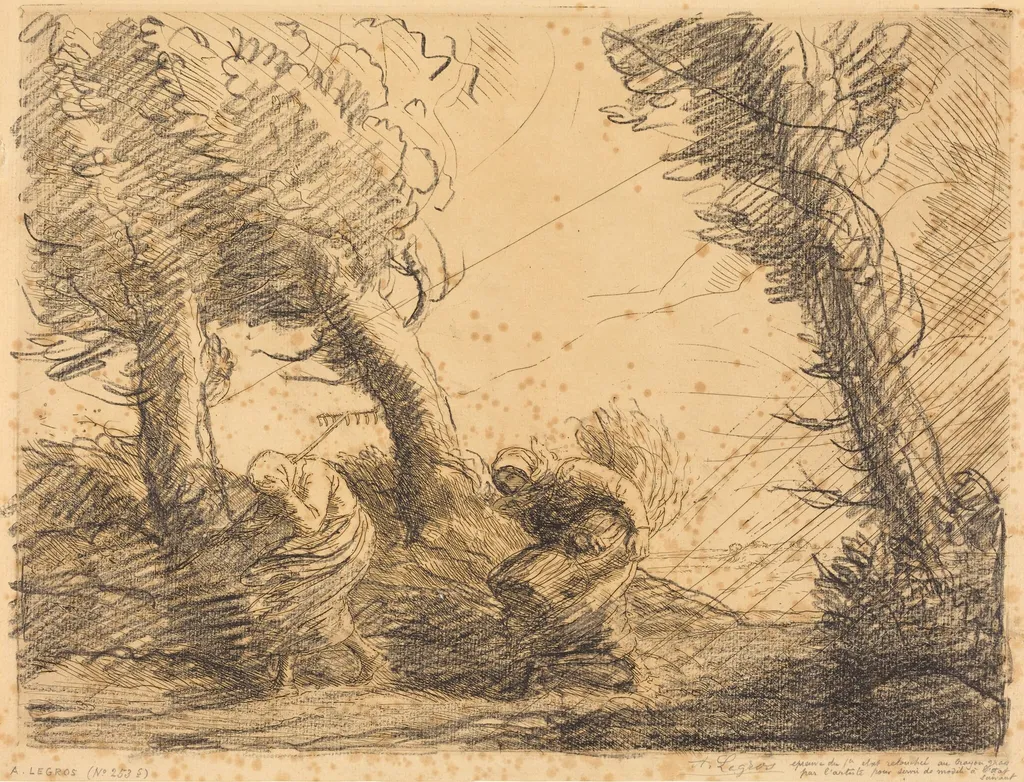
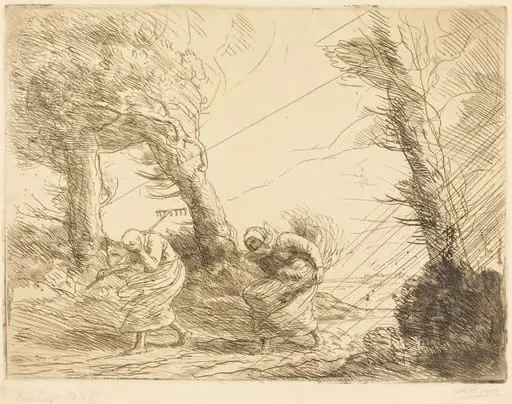
Harvesters Surprised by the Storm (Moissoneuses surprises par l'orage) is a crayon print by the Romanticist artist Alphonse Legros. It dates from 1874 and is held in the collection of the National Gallery of Art.
About this work
Overview
The work belongs to a period when Legros was instrumental in revitalizing etching as a serious artistic medium in England through his teaching and practice.
Created in 1874, *Harvesters Surprised by the Storm* is an etching with crayon retouching by Alphonse Legros, a French artist who settled in Britain in 1863 and became a naturalized British subject. The work belongs to a period when Legros was instrumental in revitalizing etching as a serious artistic medium in England through his teaching and practice. It captures a fleeting moment of rural labor interrupted by nature’s force.
Subject & Meaning
The scene portrays three laborers in a harvested field, abruptly halted by the sudden onset of a storm. Their postures—bent, tense, and burdened—convey exhaustion and urgency. Faces are obscured, emphasizing physical strain over individual identity. The storm is not merely weather but a disruptive force that underscores the vulnerability of agricultural work, grounding the image in the realities of rural life.
Technique & Style
Legros combined the precision of etching with the expressive freedom of crayon to render movement and atmosphere. Sharp, incised lines define figures and tools, while smudged crayon suggests wind, wet earth, and darkening skies. The tangled, agitated strokes of the trees and the uneven texture of the ground create a sense of chaotic energy, enhancing the emotional weight of the moment without relying on facial expression.
History & Provenance
Produced during Legros’s tenure at the Slade School of Fine Art, the print reflects his commitment to elevating printmaking as a fine art form. Though its early ownership is undocumented, it aligns with a broader 19th-century European interest in depicting peasant labor with dignity and realism. The work entered institutional collections in the early 20th century, where it was recognized for its technical innovation and social resonance.
Context
In the 1870s, European artists increasingly turned to rural life as a subject, reacting against industrialization and urban alienation. Legros, influenced by French Realism and British social concerns, avoided romanticizing labor. His focus on the physicality of harvesters and the unpredictability of nature reflects a broader artistic shift toward authenticity and the dignity of manual work in an era of rapid change.
Legacy
Legros’s use of etching and crayon in this work helped redefine printmaking’s expressive potential in Britain. His emphasis on texture, movement, and emotional tone influenced a generation of printmakers who followed. Though less known today than his contemporaries, this print remains a quiet testament to his role in bridging French and British artistic traditions through disciplined, empathetic observation.
Artist & collection

Artist
Alphonse Legros (French pronunciation: ; 8 May 1837 – 8 December 1911) was a French, later British, painter, etcher, sculptor, and medallist.

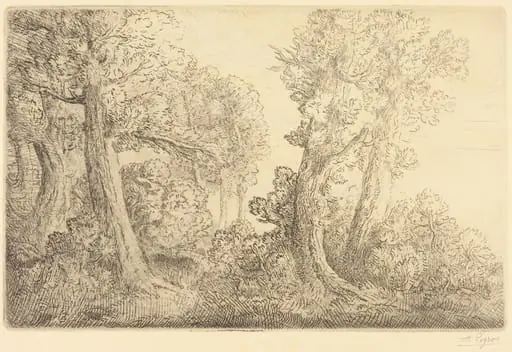 Near the Woods, Veronne (Pres du bois, Veronne)
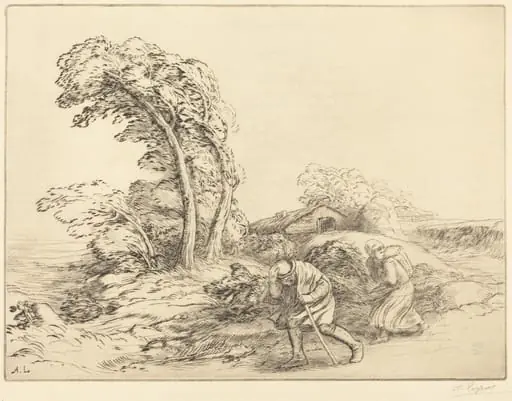 Gust of Wind (Un coup de vent)
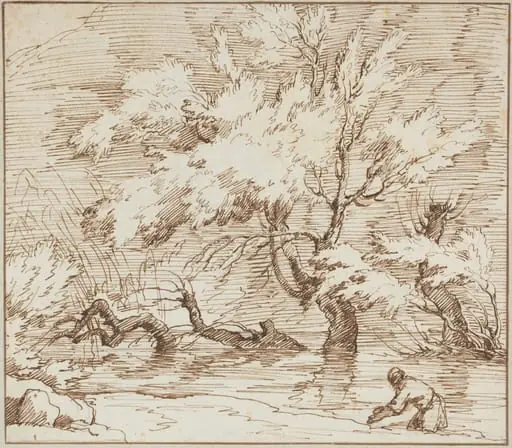 Trees Reflected in a Brook
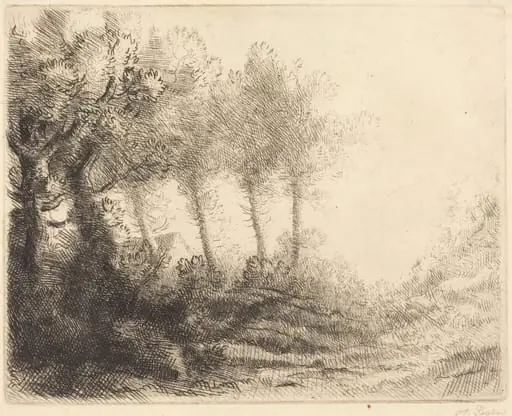 Landscape (Paysage)
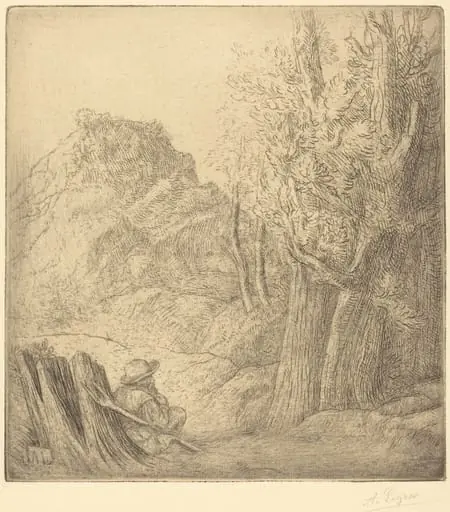 Old Village (Ville vieille)
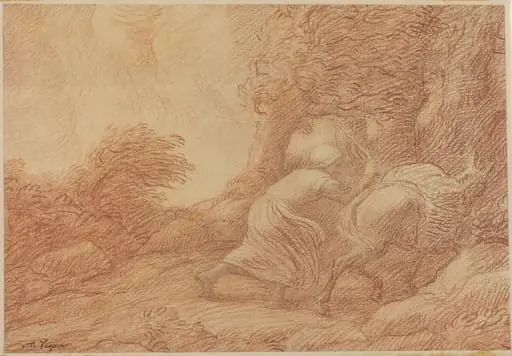 Peasant and Ass
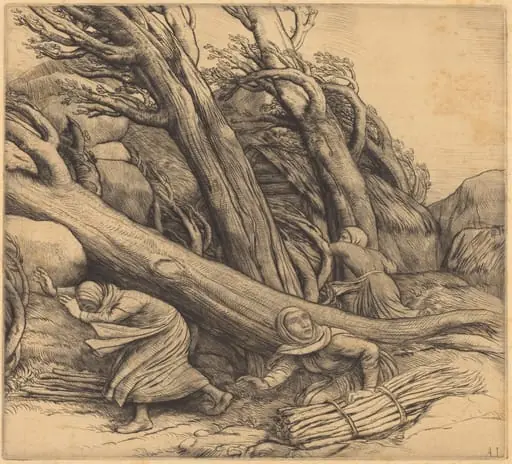 Tornado (Le typhon)
 Salmon Fisher (Le pecheur du saumon)
 View of a Farm (La ferme de Beauchamp)
 Harvesters Surprised by the Storm (Moissonneuses surprises par l'orage)