Artwork
Peasant and Ass
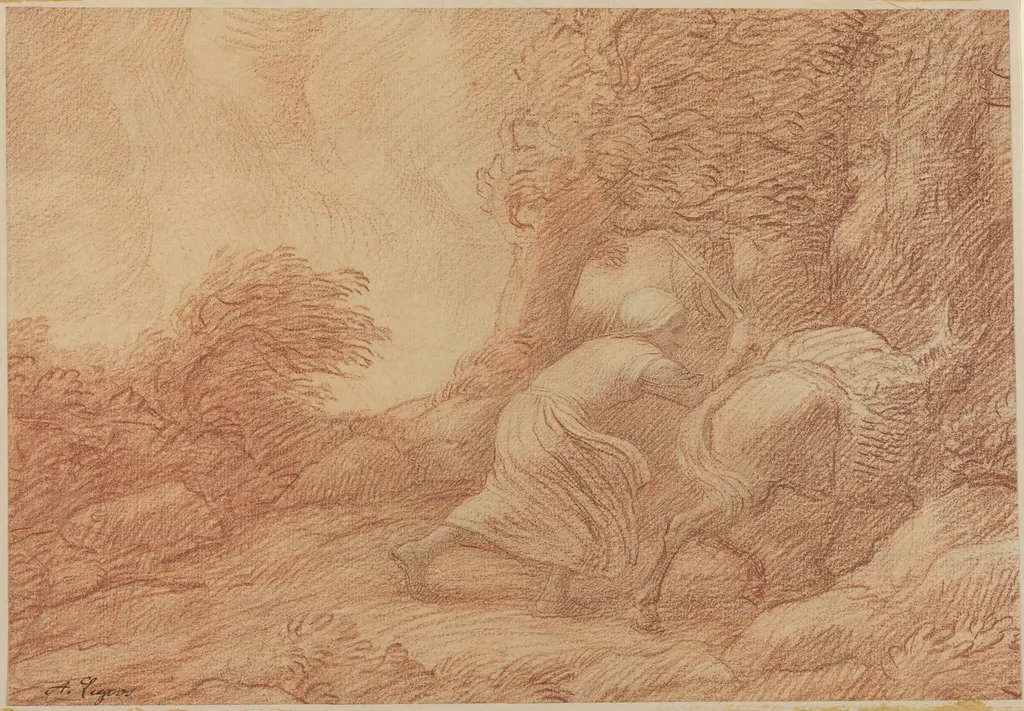
Peasant and Ass is a chalk drawing by the Romanticist artist Alphonse Legros. It dates from 1874 and is held in the collection of the National Gallery of Art.
About this work
Overview
Created in 1874, *Peasant and Ass* is a drawing by Alphonse Legros, a French artist who settled in London in 1863 and became a British citizen.
Created in 1874, *Peasant and Ass* is a drawing by Alphonse Legros, a French artist who settled in London in 1863 and became a British citizen. Executed in red chalk, the work exemplifies Legros’s interest in rural life and his mastery of linear expression. Unlike polished finished pieces, this sketch captures a fleeting moment with immediacy, reflecting his broader engagement with drawing as a direct and honest medium.
Subject & Meaning
The drawing portrays a weary peasant seated beside a donkey, both figures rendered with minimal detail but clear emotional weight. The peasant’s slumped posture and the donkey’s turned head suggest exhaustion and quiet resignation. Rather than idealizing rural labor, Legros presents it with unembellished realism, emphasizing the dignity and fatigue inherent in everyday existence without overt sentimentality.
Technique & Style
Legros employed loose, fluid strokes of red chalk to suggest form rather than define it. The absence of hard outlines and the soft blending of lines create a sense of movement and atmosphere. The warm, earthy tone of the chalk harmonizes with the subject matter, reinforcing the connection between the figures and the land. His approach prioritizes gesture and rhythm over precision, aligning with a tradition of observational drawing.
History & Provenance
Legros produced this work during his early years in England, a period when he was actively involved in the British art scene as a teacher and printmaker. Though the drawing’s early ownership is undocumented, it reflects his broader practice of sketching from life, a habit central to his teaching at the Slade School. Its survival as a standalone work underscores its value as a study in direct observation.
Context
In the 1870s, British art was increasingly turning toward realism and the depiction of ordinary life, influenced by French precedents and the rise of social consciousness. Legros’s work, though not overtly political, aligns with this shift by honoring the quiet endurance of rural laborers. His focus on unglamorous subjects stood in contrast to academic conventions, echoing broader European trends toward naturalism.
Legacy
Legros’s drawings, including *Peasant and Ass*, contributed to the revival of drawing as a serious artistic discipline in Britain. His emphasis on direct observation and expressive line influenced generations of students at the Slade. While less known today than his etchings, this work remains a quiet testament to his belief in art’s capacity to convey human experience through simplicity and restraint.
Artist & collection

Artist
Alphonse Legros (French pronunciation: ; 8 May 1837 – 8 December 1911) was a French, later British, painter, etcher, sculptor, and medallist.

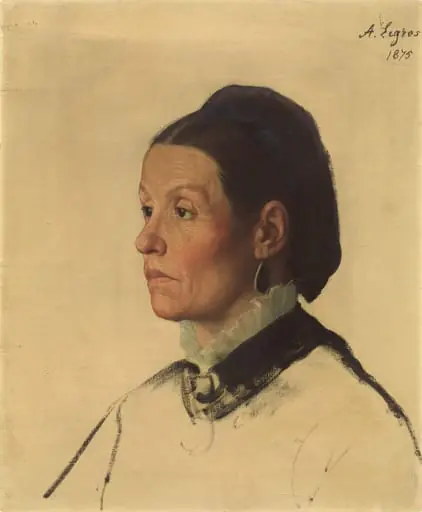
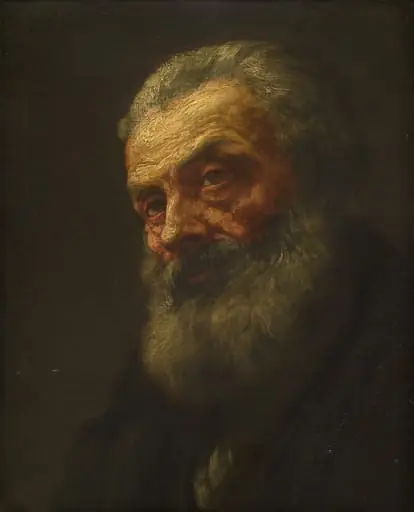
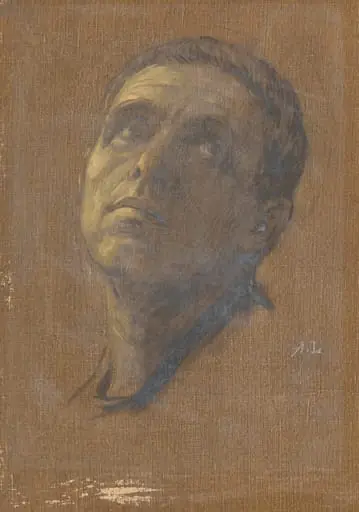
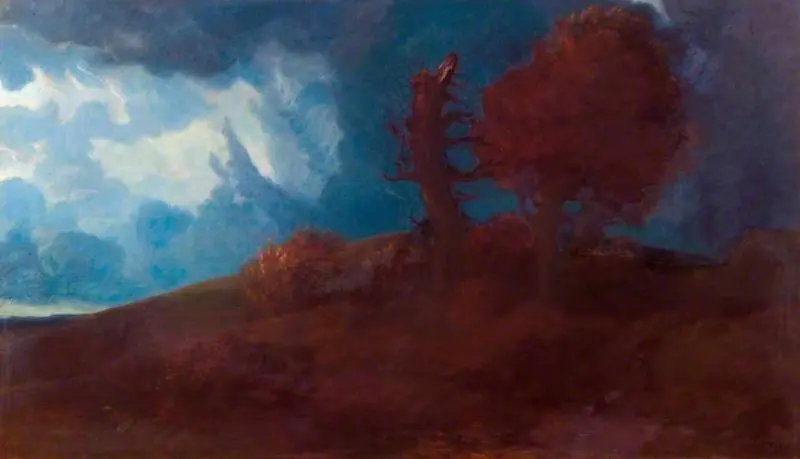
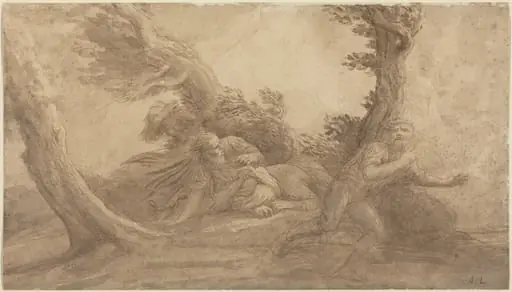 Clap of Thunder
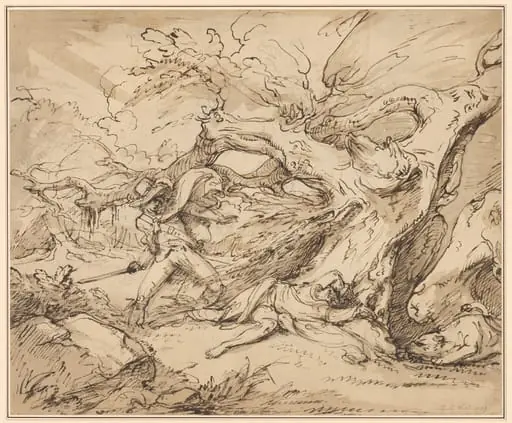 Orlando Rescuing Oliver from the Lion
![Clap of Thunder [recto], by Alphonse Legros](https://artifactworldgallery.com/img/alphonse-legros--clap-of-thunder-recto--5ebb74bfb38e66a9-w320.webp) Clap of Thunder [recto]
Clap of Thunder [recto]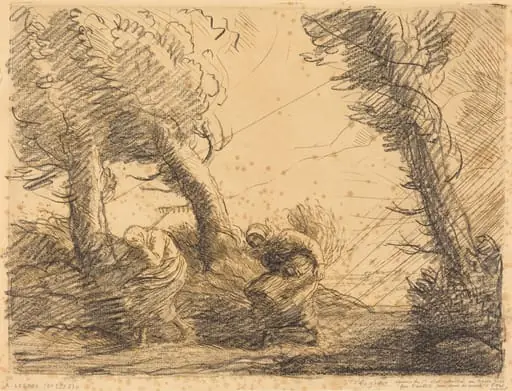 Harvesters Surprised by the Storm (Moissoneuses surprises par l'orage)
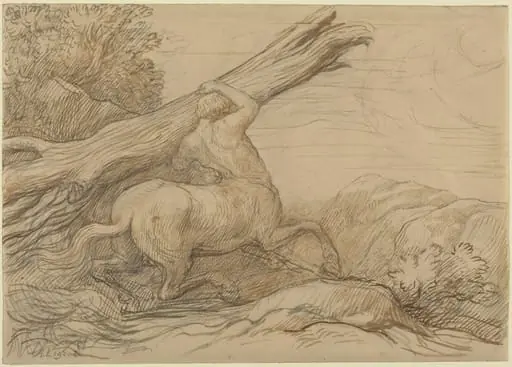 Centaur Carrying a Tree Trunk
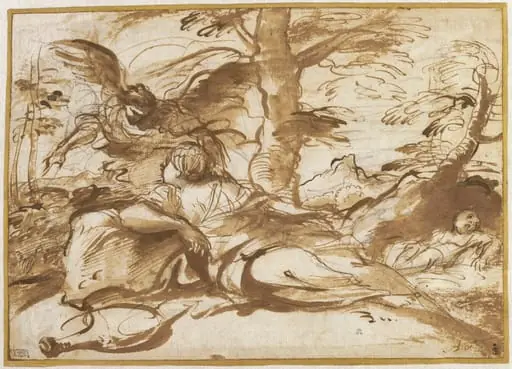 The Angel Appearing to Hagar in the Desert (recto)
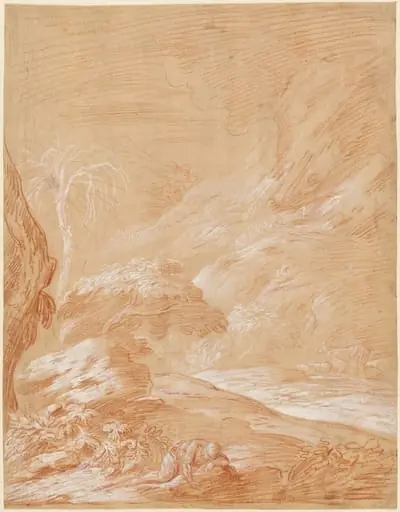 Fantastic Landscape with a Man Sleeping on a Rock
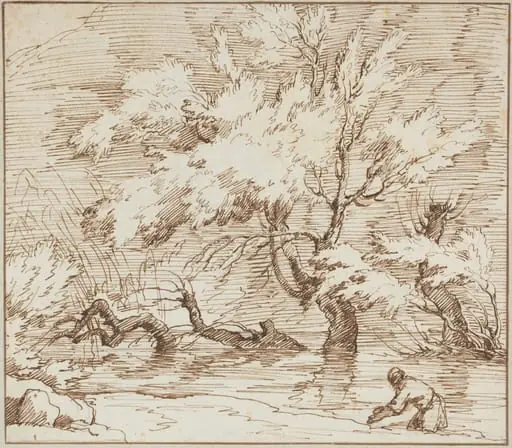 Trees Reflected in a Brook
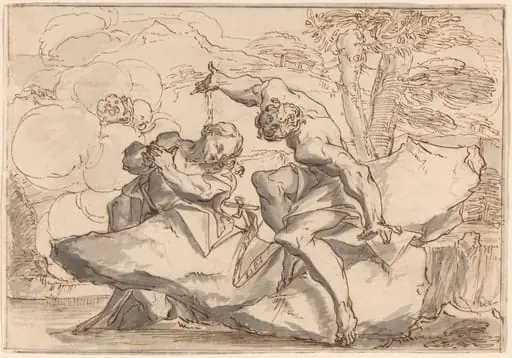 The Baptism of Christ
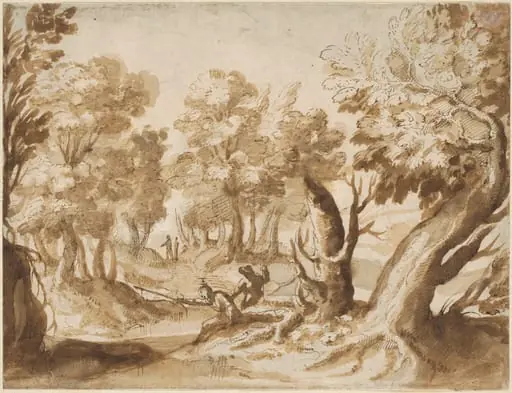 Two Figures Fishing in a Landscape
![Allegorical Female Figure in a Landscape [recto], by German 17th Century](https://artifactworldgallery.com/img/german-17th-century--allegorical-female-figure-in-a-landscape-recto--0263f304d6fc0dc9-w320.webp) Allegorical Female Figure in a Landscape [recto]
Allegorical Female Figure in a Landscape [recto]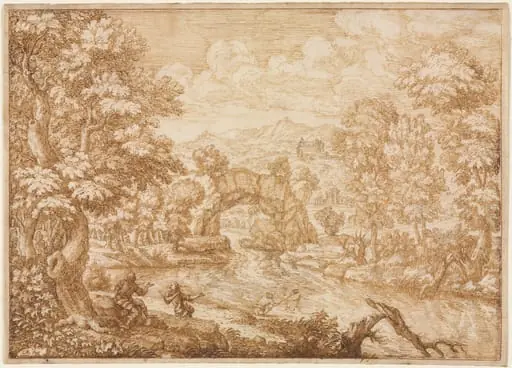 River Landscape with Arched Rock