Artwork
Head of a Man
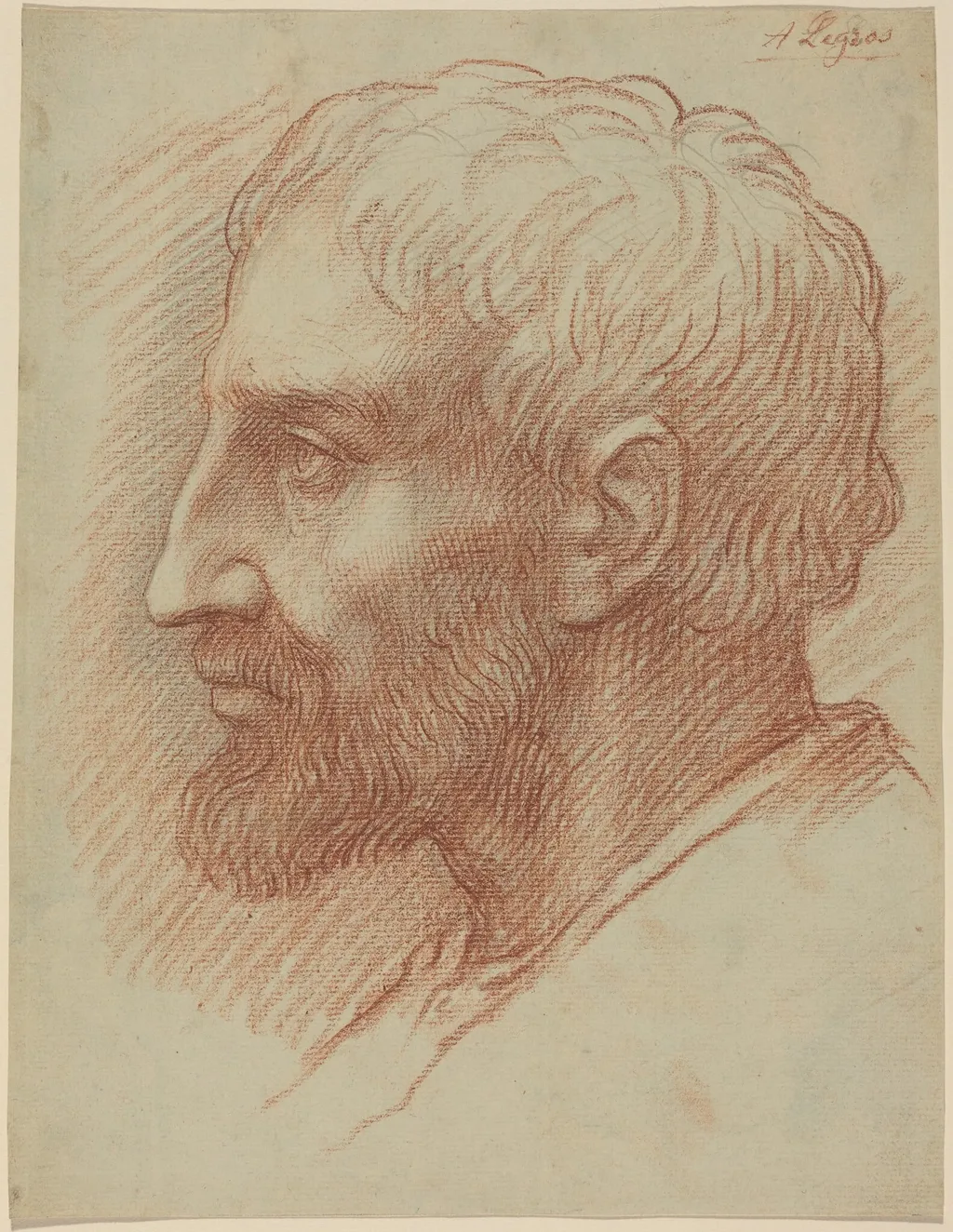
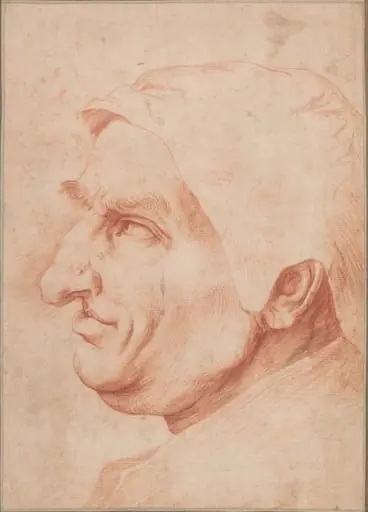
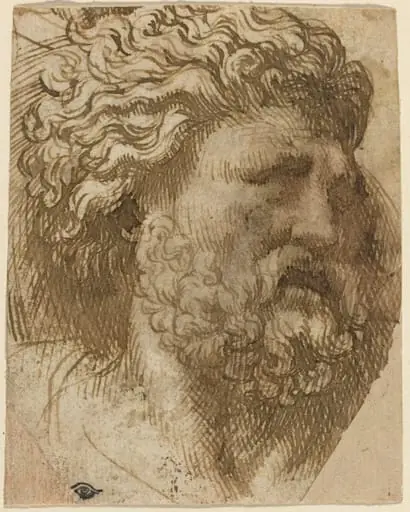
Head of a Man is a chalk drawing by the Romanticist artist Alphonse Legros. It dates from 1874 and is held in the collection of the National Gallery of Art.
About this work
Overview
The artist’s choice of medium and support emphasizes spontaneity, as the natural tone of the paper emerges between the chalk lines.
Created in 1874, this drawing by Alphonse Legros is a study in red chalk on laid paper. Though executed with swift, unpolished strokes, it captures a man’s profile with quiet intensity. The artist’s choice of medium and support emphasizes spontaneity, as the natural tone of the paper emerges between the chalk lines. Its unfinished character suggests it was made as a rapid observation rather than a polished composition.
Subject & Meaning
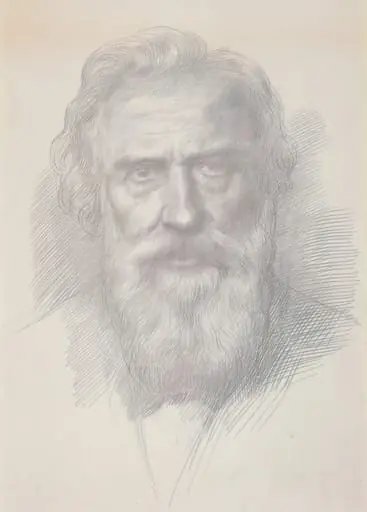
The subject is a male figure seen in profile, his eyes half-lidded and his features softened by a thick beard and curly hair. There is no indication of identity or narrative, and the lack of detail invites focus on the quiet dignity of the pose. The subdued expression and intimate scale suggest a contemplative moment, possibly drawn from life, emphasizing presence over story.
Technique & Style
Legros employed red chalk with minimal refinement, allowing the paper’s texture to contribute to the form. Lines are uneven and layered, particularly around the hair and beard, conveying motion and volume without definition. The absence of shading or outline reinforces a direct, observational approach. The medium’s warmth and the paper’s grain work together to create a tactile, immediate impression.
History & Provenance
Alphonse Legros, born in France and resident in London since 1863, became a British citizen in 1880. This drawing dates from his early years in England, a period when he was deeply engaged with drawing as a foundational practice. While no specific provenance is recorded for this piece, it aligns with his broader output of life studies made for teaching and personal exploration.
Context
In late 19th-century Britain, Legros was influential in reviving interest in precise draftsmanship and etching. This drawing reflects a shift away from idealized forms toward direct, unembellished observation. Though not overtly Romantic, its emotional restraint and focus on the individual resonate with broader 19th-century tendencies to value authenticity in portraiture.
Legacy
The drawing exemplifies Legros’s commitment to drawing as a discipline, not merely a preparatory step. Its unadorned quality influenced students at the Slade School of Art, where he taught, reinforcing the value of direct observation. Such studies helped redefine artistic training in Britain, prioritizing perceptual honesty over decorative finish.
Artist & collection

Artist
Alphonse Legros (French pronunciation: ; 8 May 1837 – 8 December 1911) was a French, later British, painter, etcher, sculptor, and medallist.

![Head of a Man [recto], by Théodore Géricault](https://artifactworldgallery.com/img/theodore-gericault--head-of-a-man-recto--d6e68ba78da40efa-w320.webp)