Artwork
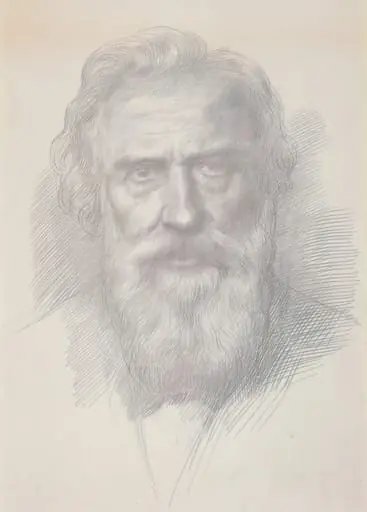
Head of a Man, Full Face
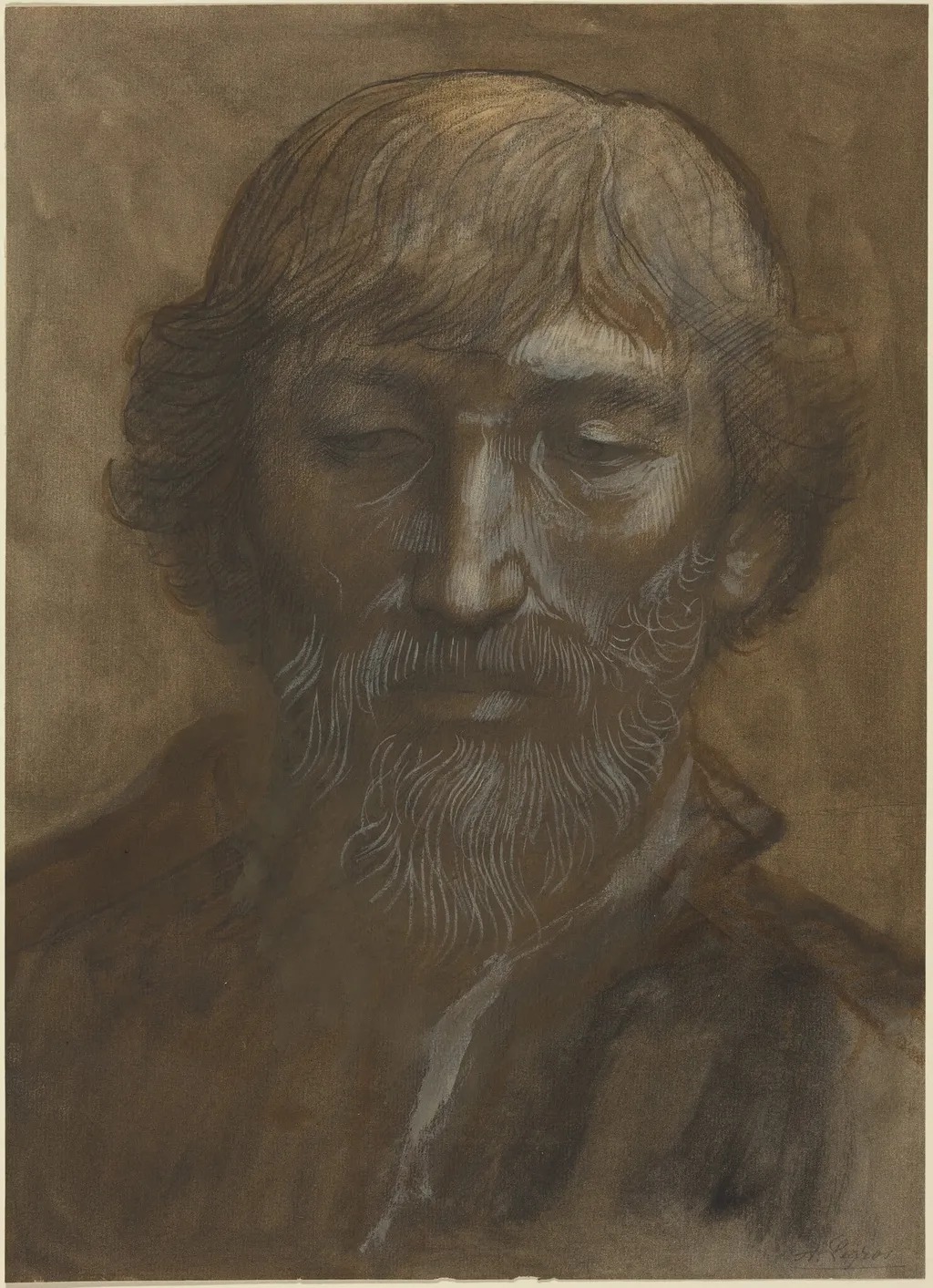
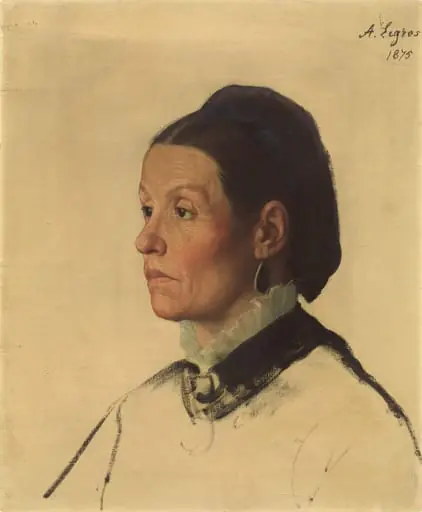
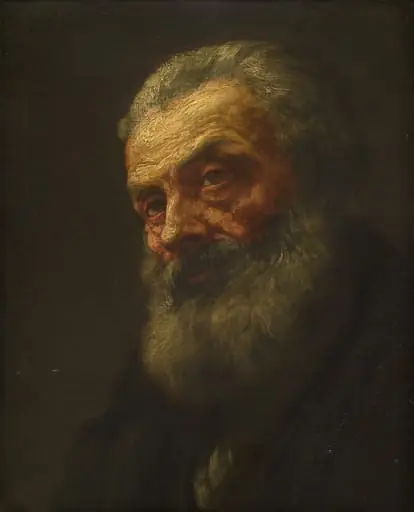
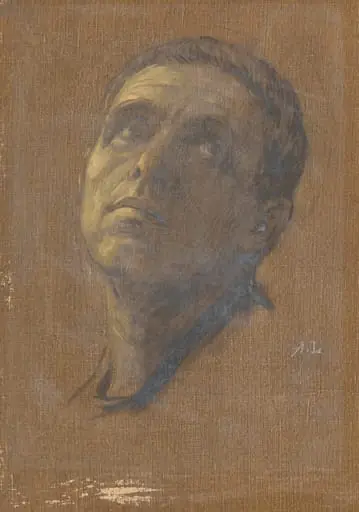
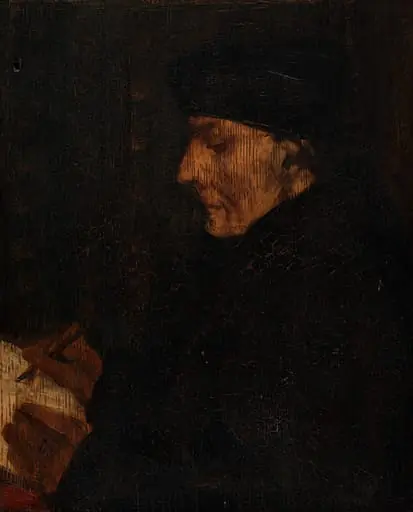
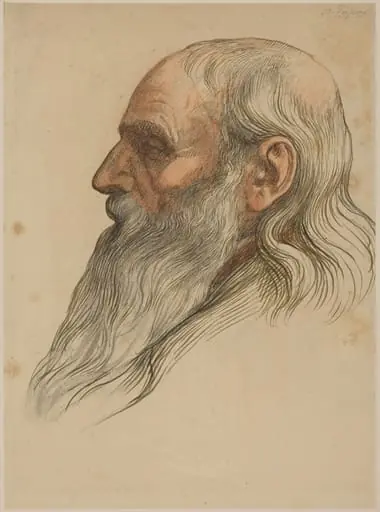
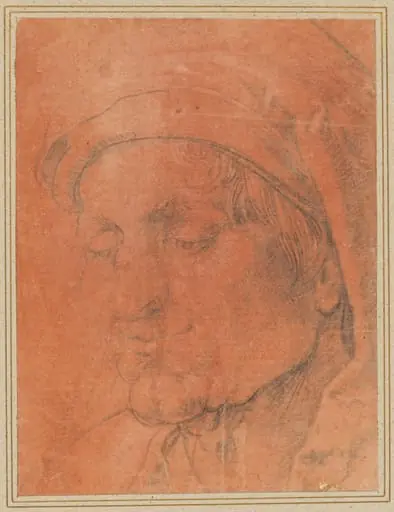
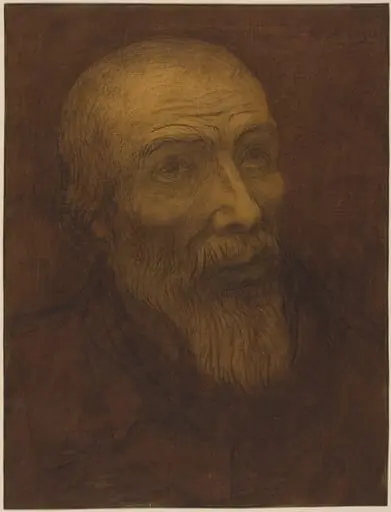
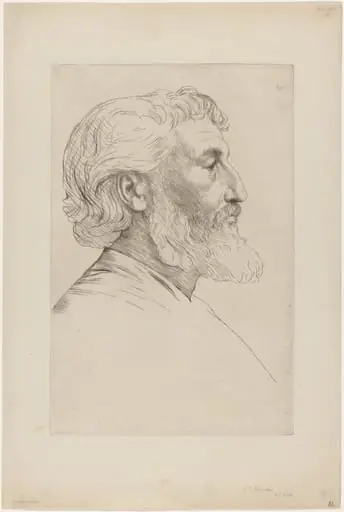
Head of a Man, Full Face is a chalk drawing by the Romanticist artist Alphonse Legros. It dates from 1874 and is held in the collection of the National Gallery of Art.
About this work
Overview
Executed in graphite, black chalk, and brown wash, with selective white highlights, it reflects the artist’s mastery of tonal modeling on laid paper.
Created in 1874, this drawing by Alphonse Legros captures a male portrait in full frontal view. Executed in graphite, black chalk, and brown wash, with selective white highlights, it reflects the artist’s mastery of tonal modeling on laid paper. Legros, originally French but based in Britain, was known for his disciplined approach to drawing and his role in revitalizing printmaking in England during the late 19th century.
Subject & Meaning
The subject is an anonymous man, rendered without idealization or narrative context. The frontal pose and neutral expression emphasize presence over personality, inviting contemplation of form and character through subtle gradations of light and shadow. The work avoids theatricality, instead focusing on the quiet dignity of the individual as a study in human anatomy and expression.
Technique & Style
Legros employed layered graphite and black chalk to define structure, augmented by translucent brown washes for depth and volume. White chalk highlights accentuate bone structure and the catch of light on skin, enhancing three-dimensionality. The use of laid paper, with its subtle texture, supports the delicate interplay of media, revealing a methodical, almost sculptural approach to drawing.
History & Provenance
The drawing was made during Legros’s tenure at the Slade School of Fine Art in London, where he taught from 1876. Though created in 1874, it aligns with his pedagogical focus on life drawing and direct observation. Its provenance traces through British institutional collections, reflecting its recognition as a significant example of academic drawing in the post-Renaissance tradition.
Context
Emerging from a period when drawing was central to artistic training, this work reflects the enduring influence of 19th-century academic ideals. While Romanticism emphasized emotion, Legros’s approach was more restrained, aligned with the realist and classical currents that valued precision and anatomical truth over expressive excess.
Legacy
Legros’s drawings, including this one, became foundational in British art education. His emphasis on careful observation and tonal control influenced generations of students at the Slade. Though less known today than his etchings or sculptures, this drawing exemplifies his quiet contribution to the revival of drawing as a serious, independent art form in Victorian Britain.
Artist & collection

Artist
Alphonse Legros (French pronunciation: ; 8 May 1837 – 8 December 1911) was a French, later British, painter, etcher, sculptor, and medallist.