Artwork
Rodin
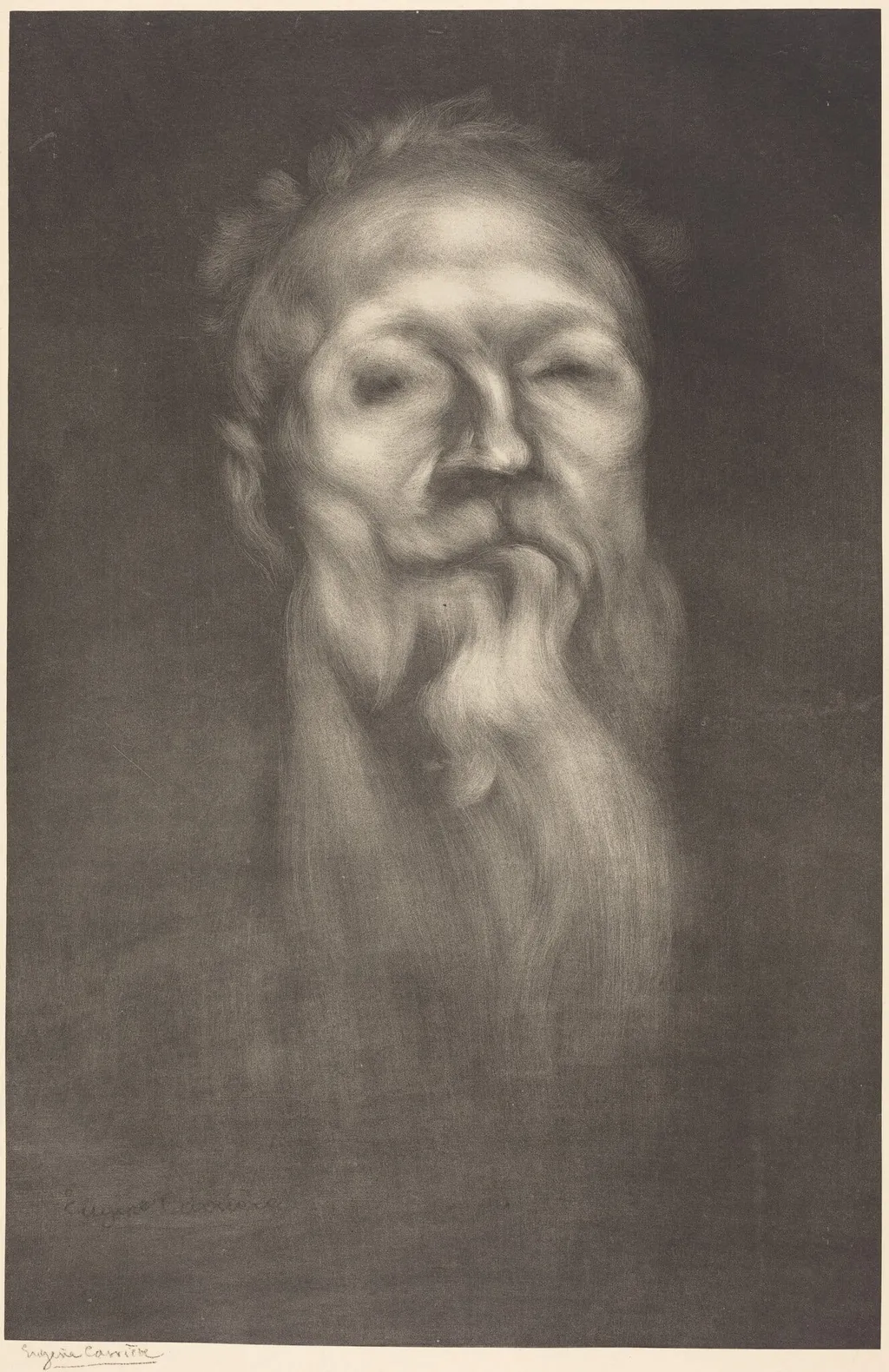
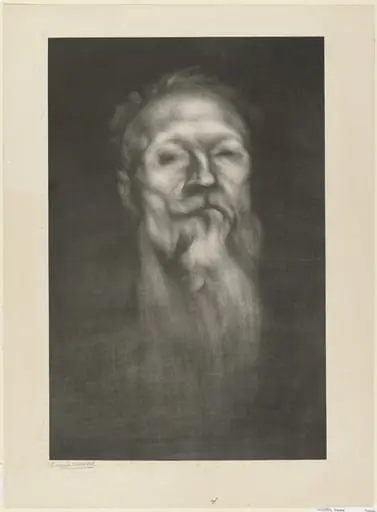
Rodin is an ink print by the Impressionist artist Eugène Carrière. It dates from 1897 and is held in the collection of the National Gallery of Art.
About this work
Overview
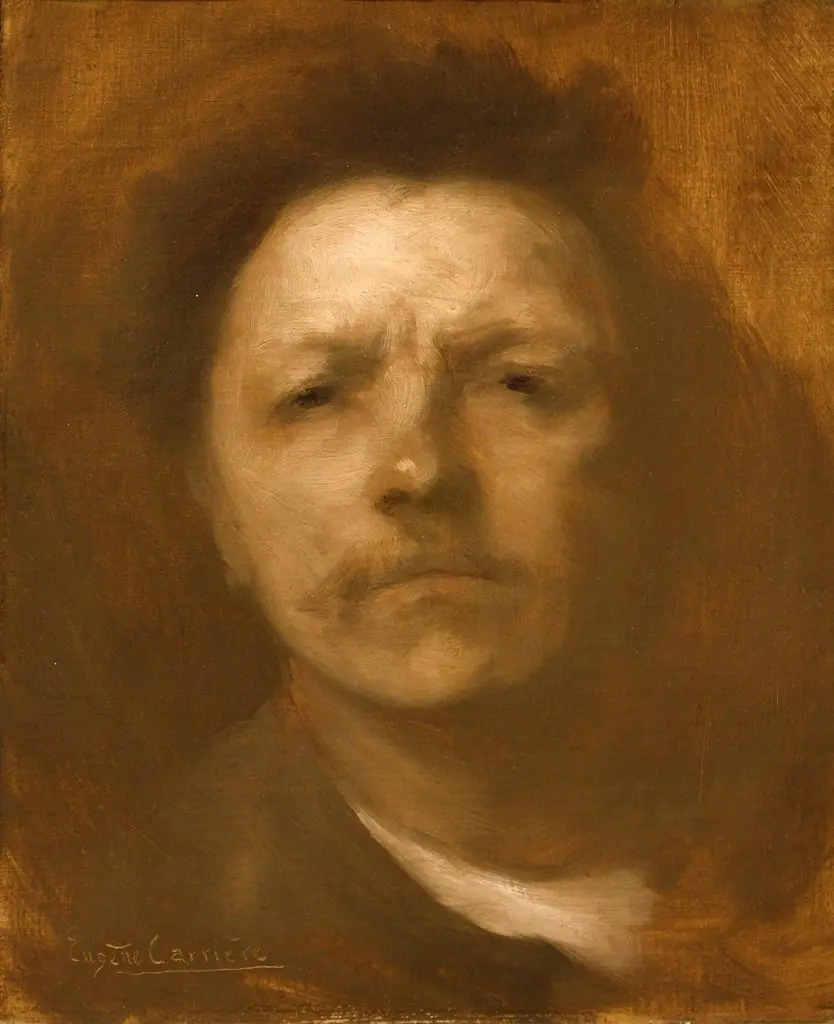
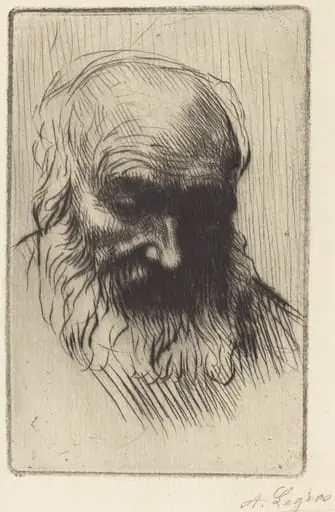
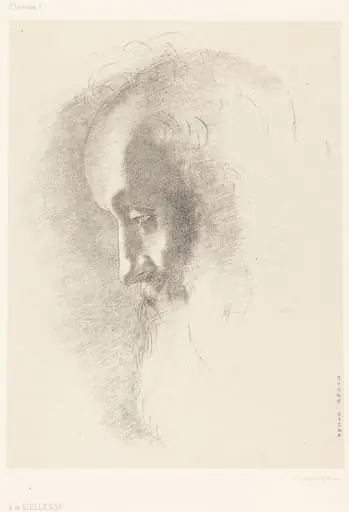
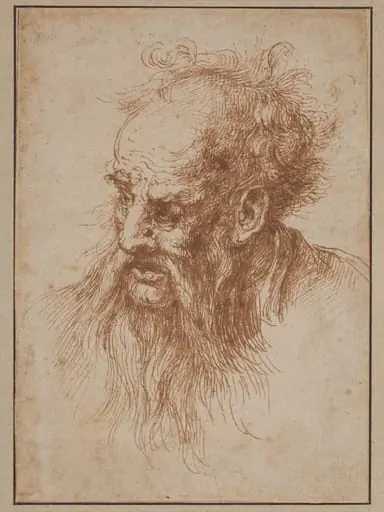
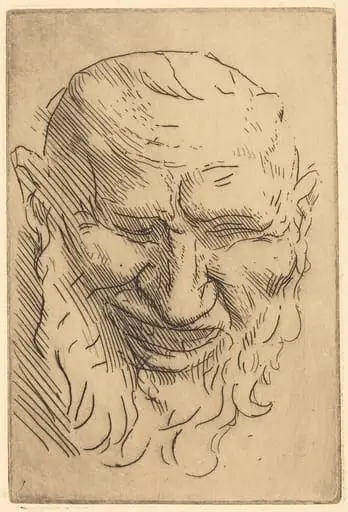
Eugène Carrière’s 1897 lithograph titled *Rodin* presents a close‑up portrait of an elderly, bearded man whose hands rest on his chin. Rendered against a plain dark backdrop, the figure emerges from deep shadows, his facial features rendered with soft, nuanced lines that emphasize texture and age.
Subject & Meaning
The sitter, identifiable by his long white beard and contemplative pose, is likely a reference to the sculptor Auguste Rodin, a close friend of Carrière. The work’s introspective mood and subdued expression suggest a meditation on artistic legacy and the passage of time.
Technique & Style
Carrière employed lithographic processes to achieve his characteristic near‑monochrome brown palette, allowing delicate tonal gradations across the surface. The print’s soft, almost dreamlike modeling of wrinkles and skin texture reflects his Symbolist inclination toward atmospheric, rather than strictly realistic, representation.
History & Provenance
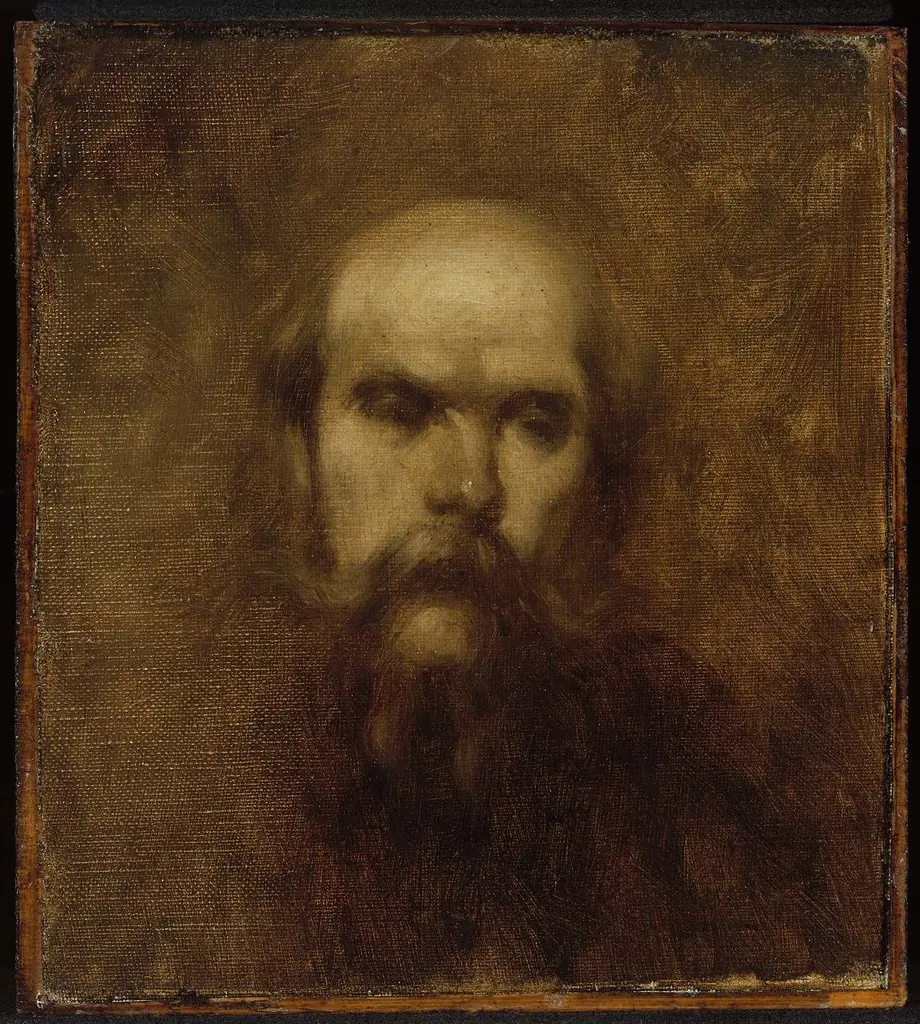
Created in 1897, the lithograph emerged during Carrière’s mature period, when he was actively engaged with literary and artistic figures such as poet Paul Verlaine. The work has remained within collections that focus on late‑19th‑century French printmaking, illustrating Carrière’s role in the Symbolist network.
Context
Carrière’s *Rodin* belongs to a broader trend among Symbolist artists to explore psychological depth through muted palettes and intimate portraiture. The piece aligns with his broader oeuvre of ethereal, brown‑toned compositions that prioritize mood over overt narrative detail.
Artist & collection

Artist
Eugène Anatole Carrière was a French Symbolist artist of the fin-de-siècle period.