Artwork
Head of an English Laborer (Tete d'ouvrier anglais (Le berger))
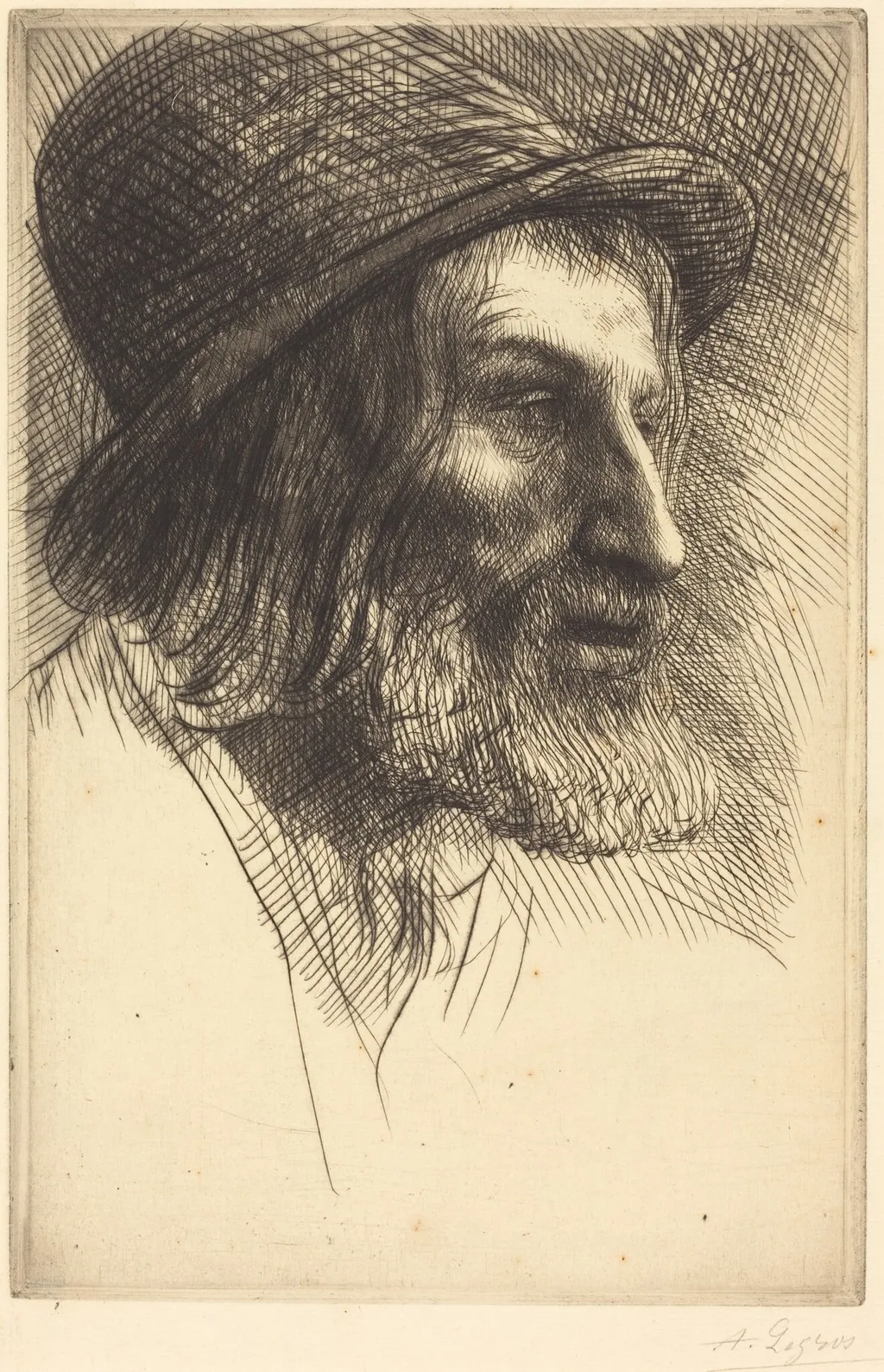
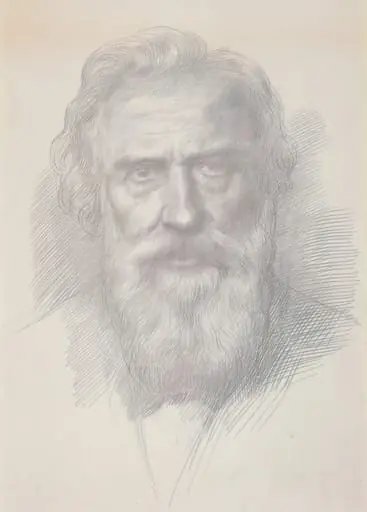
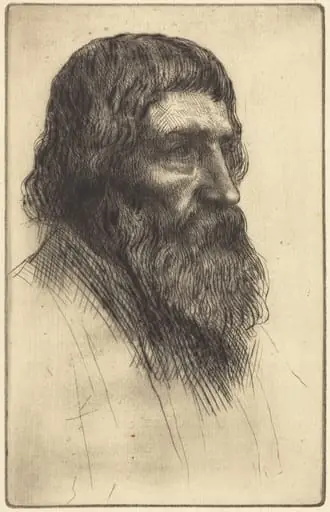
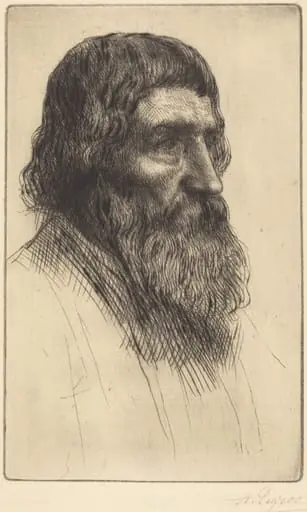
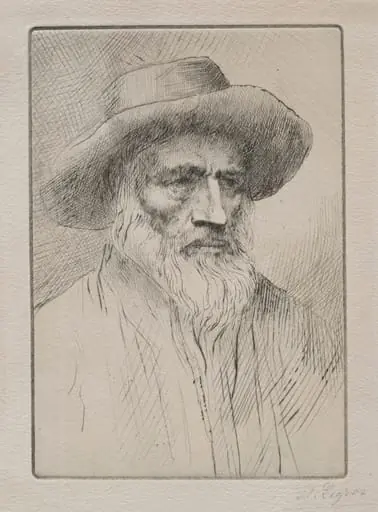
Head of an English Laborer (Tete d'ouvrier anglais (Le berger)) is an ink print by the Romanticist artist Alphonse Legros. It dates from 1874 and is held in the collection of the National Gallery of Art.
About this work
Overview
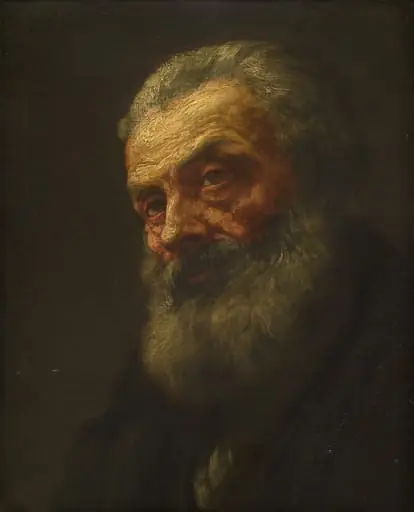
Alphonse Legros produced the print *Head of an English Laborer* in 1874. Executed with both etching and drypoint, the work presents a close‑up of a working‑class man’s face, rendered without decorative embellishment. The composition centers the sitter’s features, allowing the viewer to focus on his expression and the subtle modeling of light and shadow.
Subject & Meaning
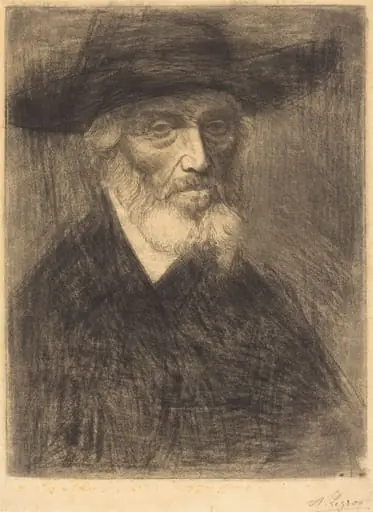
The image portrays a bearded laborer wearing a hat, his gaze turned to the right. His serious expression and distant look suggest contemplation, inviting reflection on the dignity of everyday work. By avoiding idealisation, Legros underscores the individuality of the sitter, aligning the portrait with realist concerns about social representation.
Technique & Style
Legros combined traditional etching with drypoint, the latter providing the rich, velvety lines that define the beard and facial folds. The muted palette of browns and grays emerges from the ink’s tonal range, while the drypoint’s burr creates a tactile quality that conveys texture. The overall effect balances precise draftsmanship with a slightly romantic atmosphere.
History & Provenance
Born in France, Legros settled in London in 1863 and later naturalised as a British citizen. His teaching at the Royal Academy of Arts contributed significantly to the revival of etching in Britain during the late nineteenth century. This print reflects his dual cultural background and his role in advancing printmaking practices across the UK.
Artist & collection

Artist
Alphonse Legros (French pronunciation: ; 8 May 1837 – 8 December 1911) was a French, later British, painter, etcher, sculptor, and medallist.