Artwork
Jules Dalou, 2nd plate
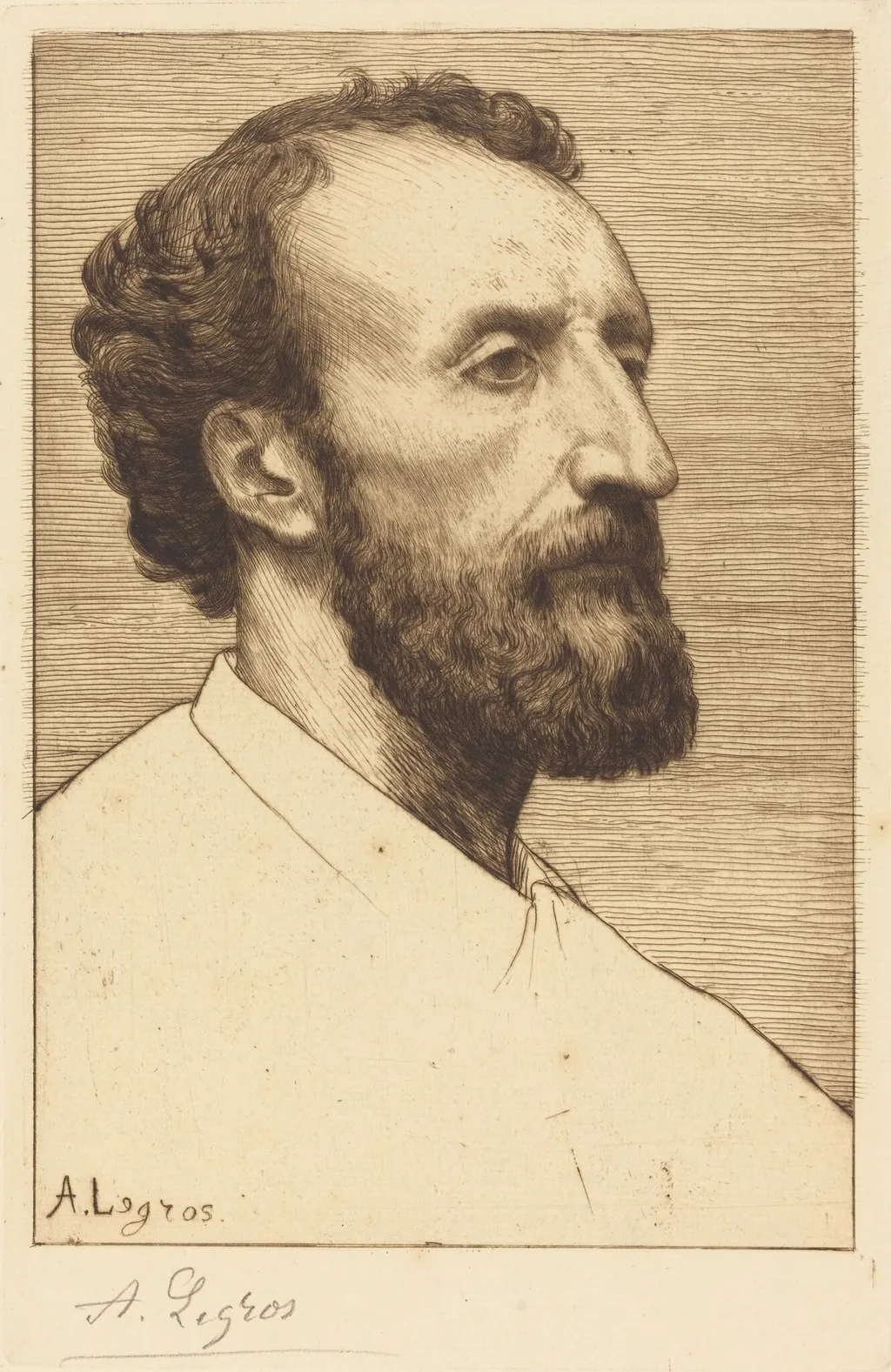
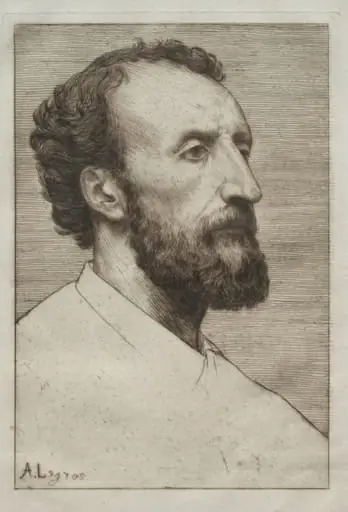
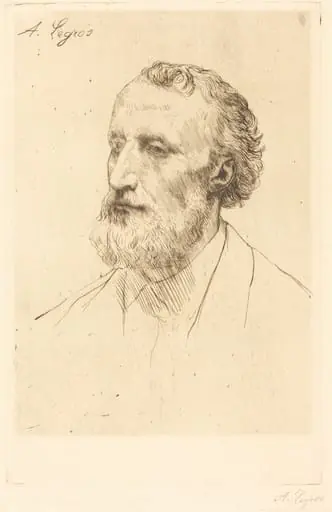
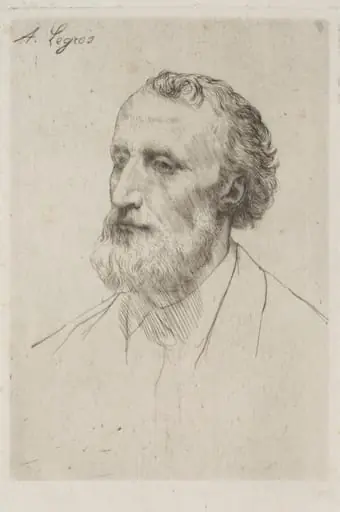
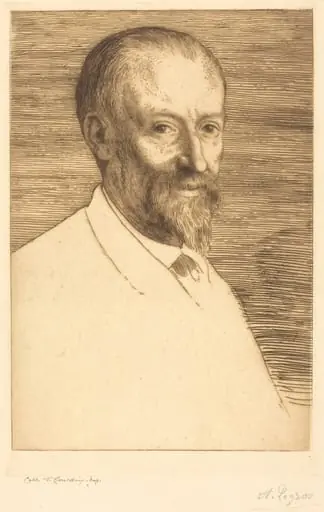
Jules Dalou, 2nd plate is an ink print by the Romanticist artist Alphonse Legros. It dates from 1874 and is held in the collection of the National Gallery of Art.
About this work
Overview
Jules Dalou, 2nd plate is an etching and drypoint print created by Alphonse Legros in 1874, portraying the French sculptor Jules Dalou. The work showcases Legros's dual expertise in painting and printmaking during a pivotal period in his career.
Subject & Meaning
The print depicts Jules Dalou with meticulous attention to detail, capturing his dark, curly hair, full beard, and attire. The subject's contemplative gaze to the right invites the viewer to ponder his character.
Technique & Style
Legros employed etching and drypoint to achieve depth and texture, emphasizing Dalou's face and clothing against a subtle, striped background. The techniques contribute to an overall atmosphere of quiet reflection.
History & Provenance
Created in 1874, this work reflects Legros's active contribution to the British etching revival, a movement he influenced as both a practitioner and a teacher.
Context
This portrait was made during Legros's London period, after his 1863 relocation and eventual British citizenship, highlighting his cross-cultural artistic contributions.
Legacy
While the specific legacy of *Jules Dalou, 2nd plate* is not broadly outlined in available information, it stands as a testament to Legros's impact on British printmaking and his skill in capturing likeness and character through portraiture.
Artist & collection

Artist
Alphonse Legros (French pronunciation: ; 8 May 1837 – 8 December 1911) was a French, later British, painter, etcher, sculptor, and medallist.