Artwork
Landscape (Paysage)
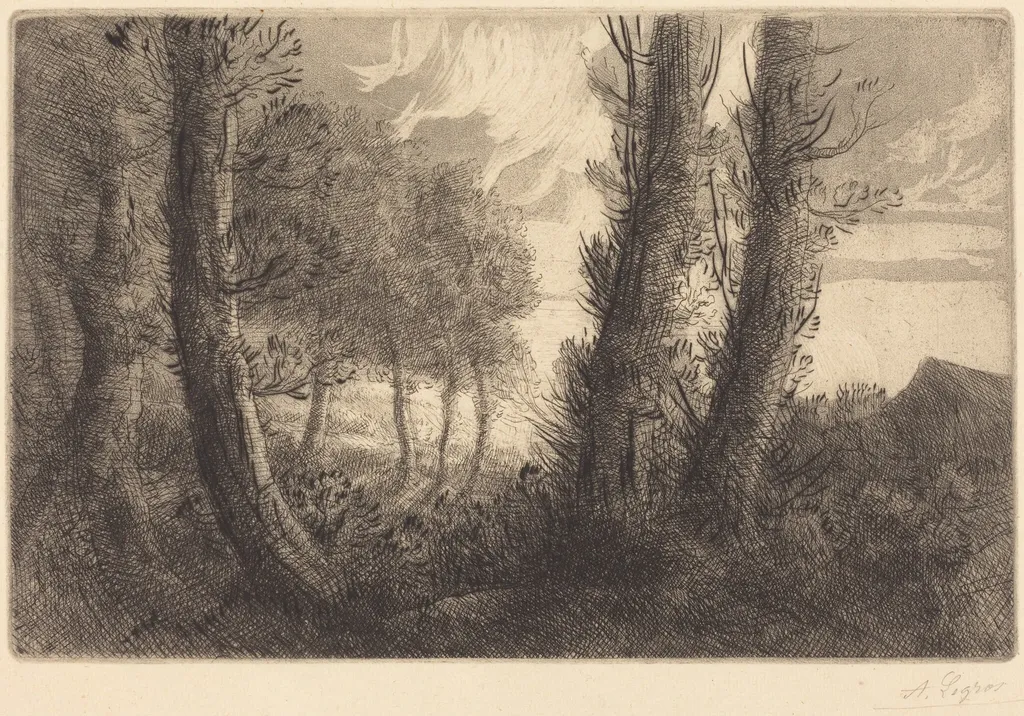
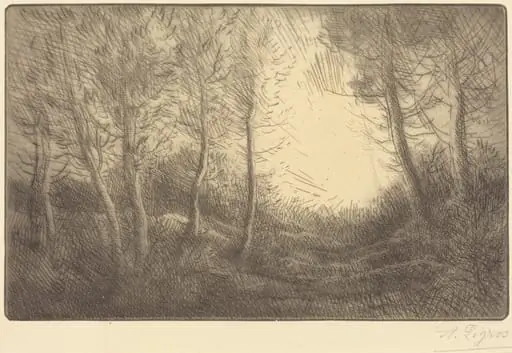
Landscape (Paysage) is an ink print by the Romanticist artist Alphonse Legros. It dates from 1874 and is held in the collection of the National Gallery of Art.
About this work
Overview
Landscape (Paysage) is a print created by Alphonse Legros in 1874, combining etching, drypoint, and aquatint techniques. This intaglio work exemplifies Legros's role in the British etching revival, showcasing his dual interest in printmaking as an artistic expression and educational tool.
Subject & Meaning
The print depicts a dense, dramatic forest with twisted, towering trees and heavy shadows. A distant, faint path suggests a space beyond the immediate, foreboding woodland. The composition reflects a Romantic inclination towards wild, intense natural scenes.
Technique & Style
Legros utilized fine lines and nuanced shading to convey the rough, dynamic texture of the trees, imbuing them with a sense of vitality and struggle. The integration of etching, drypoint, and aquatint achieved deep, expressive textures characteristic of the period's printmaking innovations.
History & Provenance
Created in 1874 by Alphonse Legros, a French artist based in London, Landscape (Paysage) is part of his contributions to the late 19th-century British etching revival. Specific provenance details are not provided.
Context
The work's emphasis on dramatic naturalism aligns with Romantic-era aesthetics, which often emphasized the sublime and emotional power of wilderness. Legros's use of multiple intaglio techniques was also reflective of the era's printmaking advancements.
Legacy
While specific legacy details of Landscape (Paysage) are not outlined, the piece contributes to the broader recognition of Legros's influence on the British etching revival and the continued appreciation of 19th-century printmaking techniques.
Own this work as a print
Artist & collection

Artist
Alphonse Legros (French pronunciation: ; 8 May 1837 – 8 December 1911) was a French, later British, painter, etcher, sculptor, and medallist.

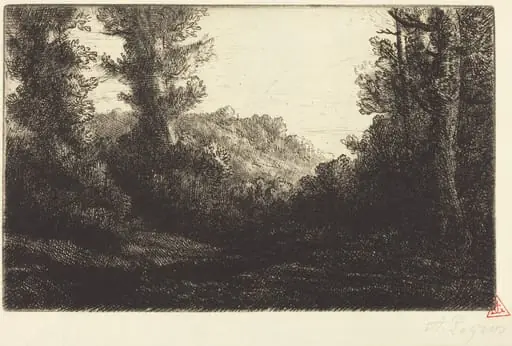 Edge of a Wood (Lisiere de bois)
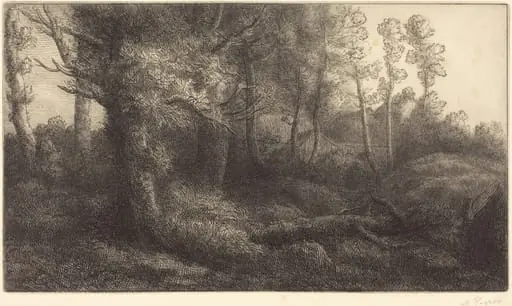 In the Forest (Lisiere de foret)
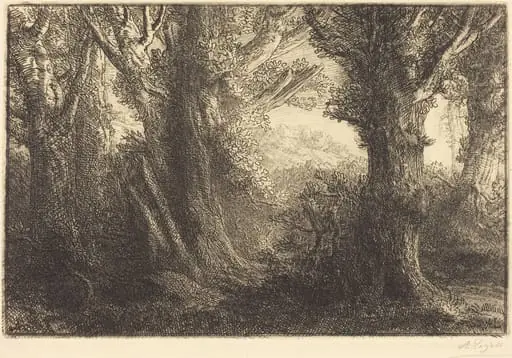 In the Forest of Conteville (Dans la foret de Conteville)
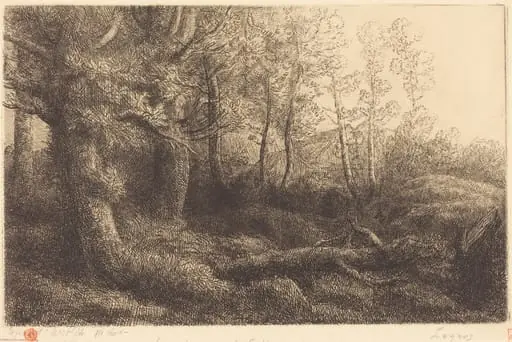 In the Forest (Lisiere de foret)
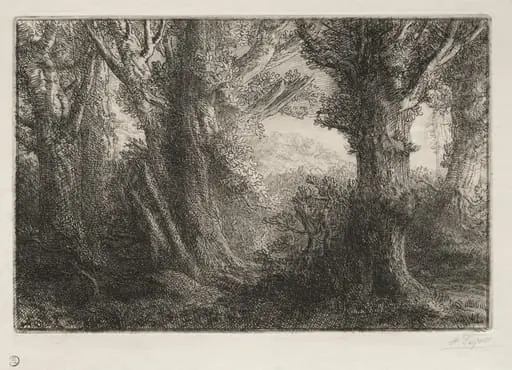 In the Forest at Conteville
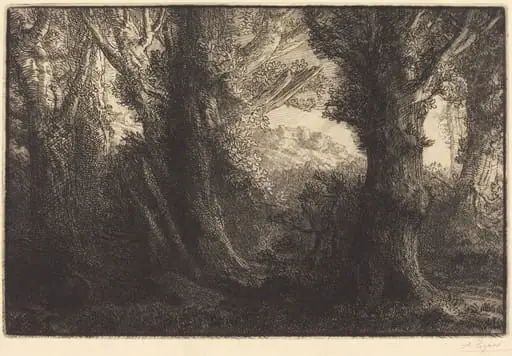 In the Forest of Conteville (Dans la foret de Conteville)
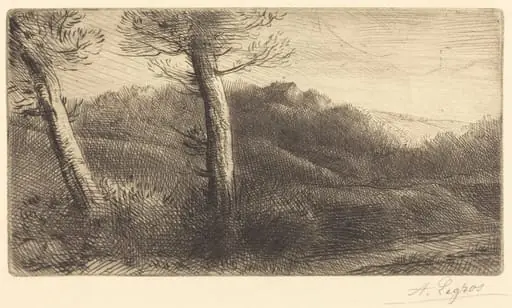 Sunset (Coucher du soleil)
 Sunrise, Woods of Clamard (Lever du soleil, bois de Clamard)