Artwork
Landscape (Paysage)
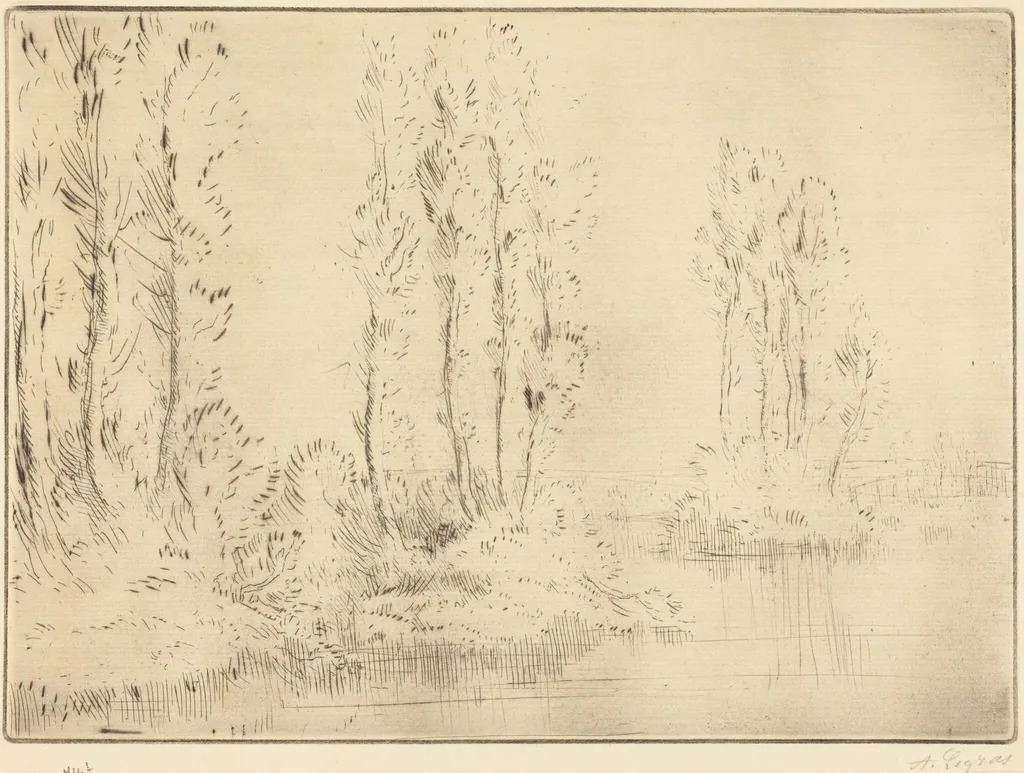
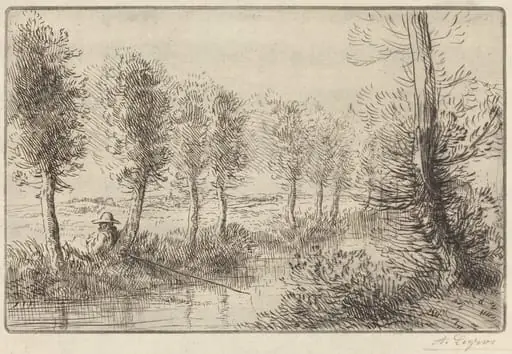
Landscape (Paysage) is an ink print by the Romanticist artist Alphonse Legros. It dates from 1874 and is held in the collection of the National Gallery of Art.
About this work
Overview
Created in 1874, *Landscape (Paysage)* is an etching and drypoint by Alphonse Legros, a French artist who moved to London in 1863.
Created in 1874, *Landscape (Paysage)* is an etching and drypoint by Alphonse Legros, a French artist who moved to London in 1863. The work exemplifies his dedication to printmaking as a serious artistic medium. Legros contributed significantly to the revival of etching in Britain, moving beyond mere reproduction to explore expressive potential through direct, hand-worked plates. This piece reflects his commitment to the technical and aesthetic possibilities of the medium.
Subject & Meaning
The image depicts a sparse, windswept natural scene dominated by slender, angular trees and uneven terrain. There is no human presence or narrative; the focus lies in the raw structure of the landscape. The jagged lines and textured ground suggest elemental forces—wind, erosion, growth—rather than idealized beauty. The work conveys a quiet, almost austere reverence for nature’s unembellished forms.
Technique & Style
Legros employed etching and drypoint to create dense, tactile surfaces. Drypoint’s burr produced soft, velvety darks, while etched lines offered sharp definition. The contrast between bare paper and inked areas heightens the sense of light and space. The marks are deliberate yet immediate—scratched, bitten, and worn into the plate—resulting in a hybrid of control and spontaneity that gives the scene its visceral quality.
History & Provenance
Made during Legros’s early years in Britain, the print emerged from a period when he was actively shaping the British printmaking scene. He taught at the Slade School and influenced a generation of artists to treat etching as a fine art form rather than a reproductive tool. While the specific provenance of this impression is not documented, it aligns with his broader output from the 1870s, when he refined his personal style in landscape printmaking.
Context
In the 1870s, European artists were reevaluating the role of printmaking in the age of photography. Legros resisted mechanical reproduction, emphasizing the artist’s hand. His landscapes responded to French Realism and English Romantic traditions, yet avoided sentimentality. This work sits at the intersection of these influences, grounded in direct observation and a belief in the expressive power of the printed line.
Legacy
Legros’s *Landscape (Paysage)* exemplifies his lasting impact on British print culture. His technical rigor and rejection of decorative conventions helped elevate etching to the status of original art. Later artists, including those in the Etching Revival movement, looked to his work as a model of integrity and craftsmanship. The print remains a quiet but significant document of 19th-century printmaking’s artistic renaissance.
Artist & collection

Artist
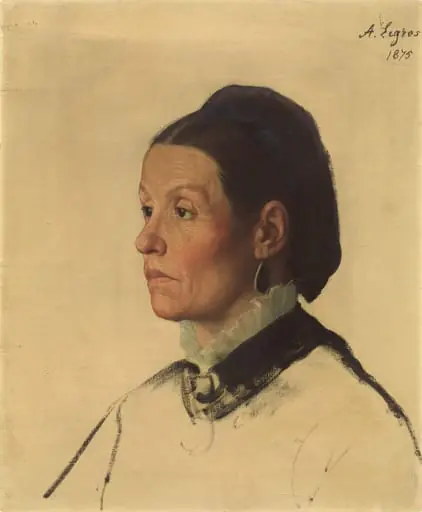
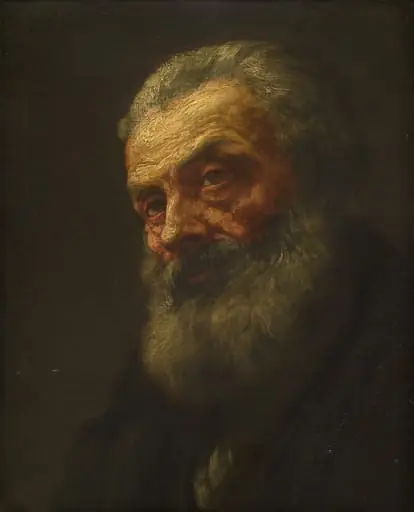
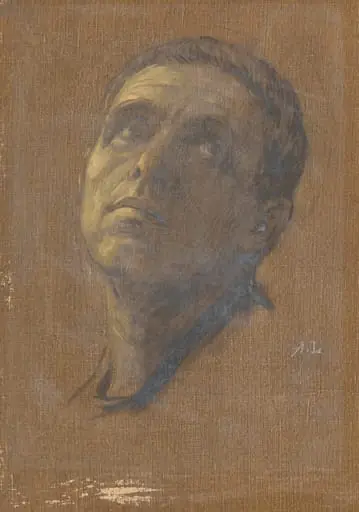
Alphonse Legros (French pronunciation: ; 8 May 1837 – 8 December 1911) was a French, later British, painter, etcher, sculptor, and medallist.

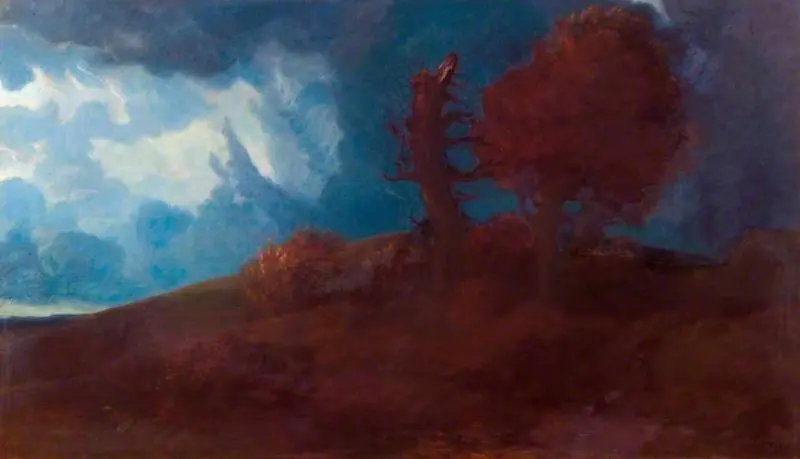
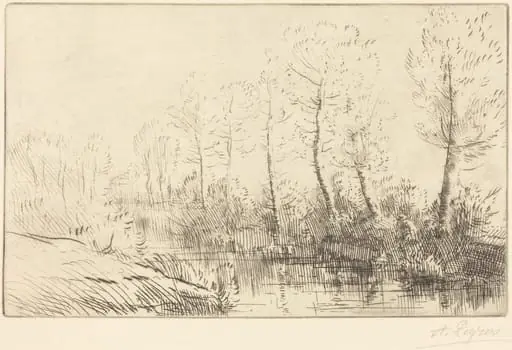 Birch Trees: Water's Edge Seen in Morning Light (Les bouleaux: Bord de l'eau, effet du matin
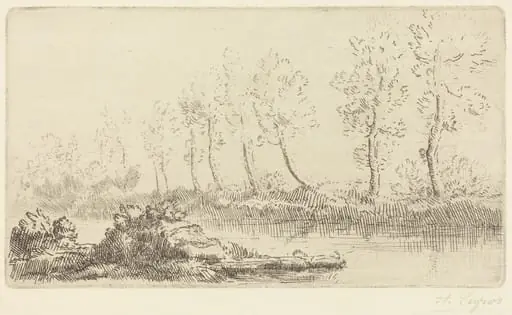 Banks of the Adour (Bord de l'Adour)
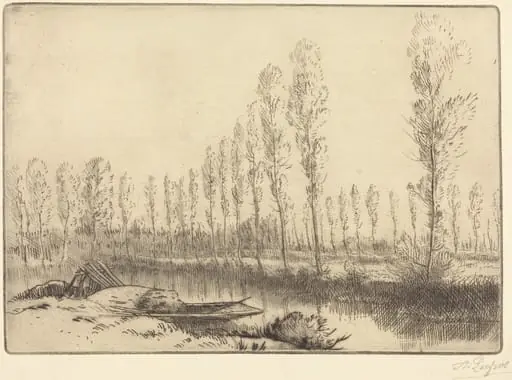 Poplars near Amiens (Pres d'Amiens, les tourbieres)
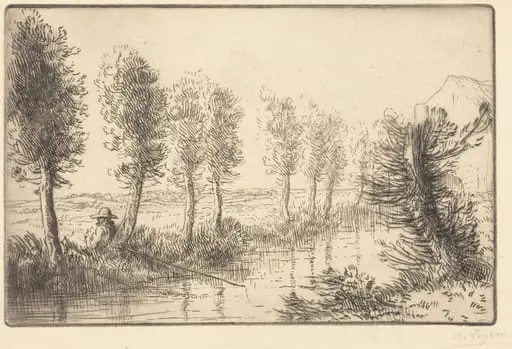 Near the Mill (Pres du moulin)
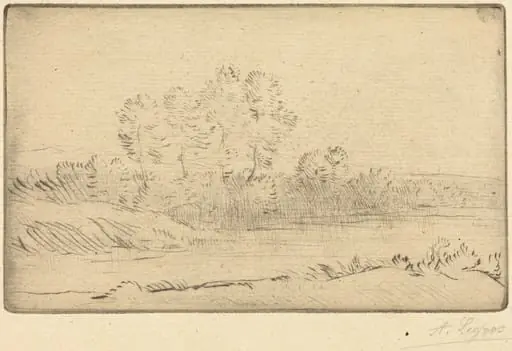 Near Nordkerque (Pres de Nordkerque)
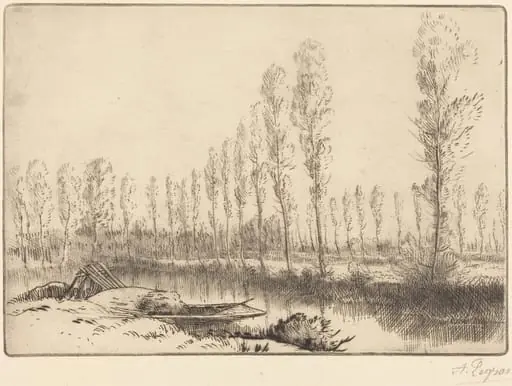 Poplars near Amiens (Pres d'Amiens, les tourbieres)
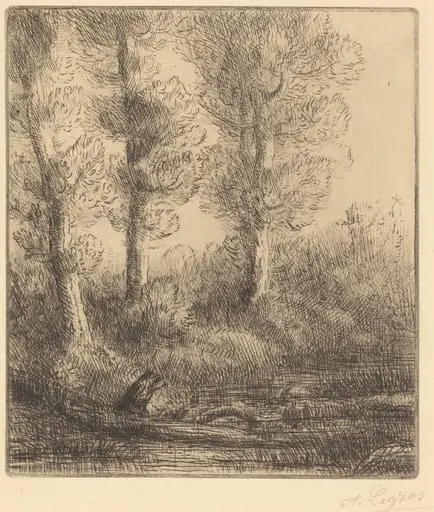 Banks of the Saint-Pre (Rive du Saint-Pre)
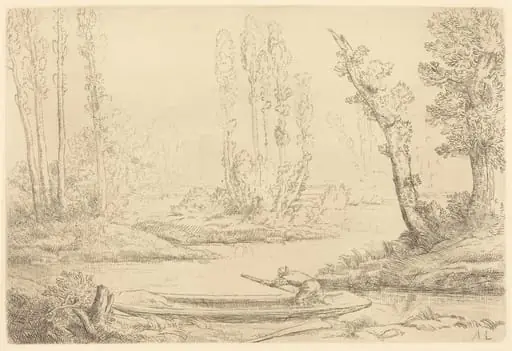 Banks of the Somme near Amiens (Bord de la Somme pres d'Amiens)
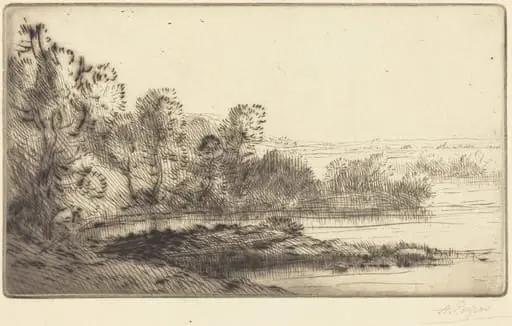 Along the Terne (Sur la terne)
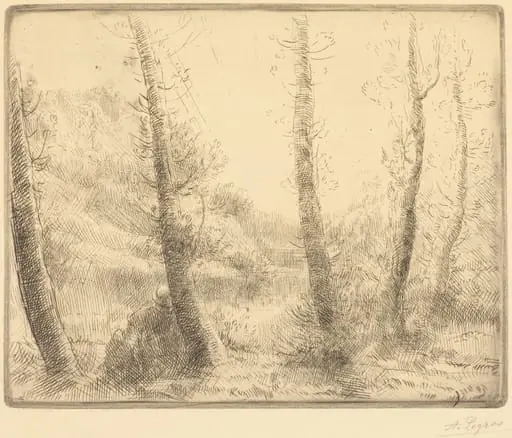 Small Lake (Le petit lac)
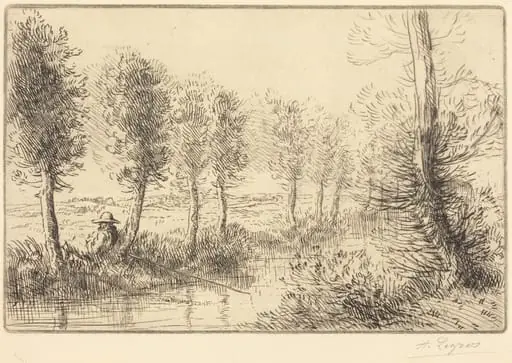 Near the Mill (Pres du moulin)
 Near the Mill (Pres du moulin)