Artwork
Near the Mill (Pres du moulin)
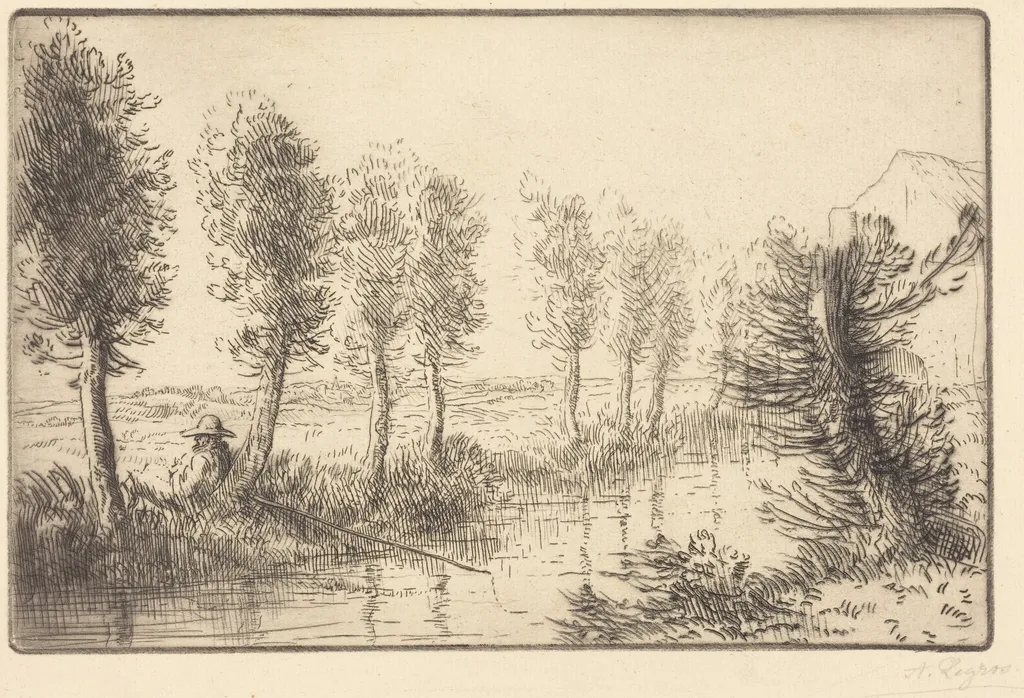
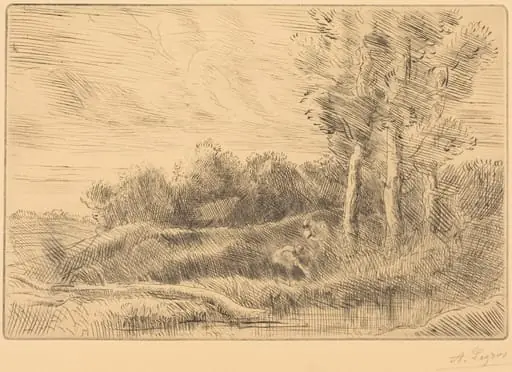
Near the Mill (Pres du moulin) is an ink print by the Romanticist artist Alphonse Legros. It dates from 1874 and is held in the collection of the National Gallery of Art.
About this work
Overview
The work belongs to a period when Legros was deeply engaged in printmaking and teaching, helping to rekindle interest in these techniques among British artists.
Alphonse Legros, a French artist who moved to London in 1863 and later became a British citizen, produced the print Near the Mill in 1874 using etching and drypoint. The work belongs to a period when Legros was deeply engaged in printmaking and teaching, helping to rekindle interest in these techniques among British artists. Unlike his paintings and sculptures, this piece emphasizes tonal nuance and quiet observation over grandeur.
Subject & Meaning
The scene depicts a tranquil rural landscape near a mill, with a winding path guiding the viewer’s gaze through dense foliage toward the distant structure. The mill is not rendered in detail but suggested through subtle contours and the lay of the land. The absence of figures and the muted atmosphere convey a sense of stillness, reflecting Legros’s interest in everyday rural life rather than idealized or dramatic narratives.
Technique & Style
Legros employed etching and drypoint to achieve fine gradations of tone and texture. The drypoint’s burr creates soft, velvety shadows, while etched lines define the path and tree trunks with precision. The interplay of light and dark, particularly in the foliage, enhances spatial depth without relying on perspective alone. His approach favors intimacy and tactile richness over bold graphic contrast.
History & Provenance
Created during Legros’s tenure at the Slade School of Art, the print reflects his influence on British printmaking circles. It was likely produced for private circulation or small exhibitions, consistent with the revivalist ethos of the time. No documented early ownership is widely recorded, but the work entered institutional collections in the 20th century as interest in 19th-century British etchings grew.
Context
In the 1870s, British artists were re-engaging with etching as a serious medium, moving away from reproductive prints toward original, expressive work. Legros, trained in France and immersed in the Barbizon tradition, brought a continental sensibility to this movement. His focus on quiet, unembellished landscapes aligned with broader European trends favoring realism and atmospheric observation over romanticism.
Legacy
Near the Mill exemplifies Legros’s role in elevating etching as a medium for personal expression in Britain. His technical rigor and restrained aesthetic influenced a generation of students and printmakers. Though less known today than his contemporaries, his prints remain important for their quiet mastery and contribution to the revival of original printmaking in the late 19th century.
Artist & collection

Artist
Alphonse Legros (French pronunciation: ; 8 May 1837 – 8 December 1911) was a French, later British, painter, etcher, sculptor, and medallist.

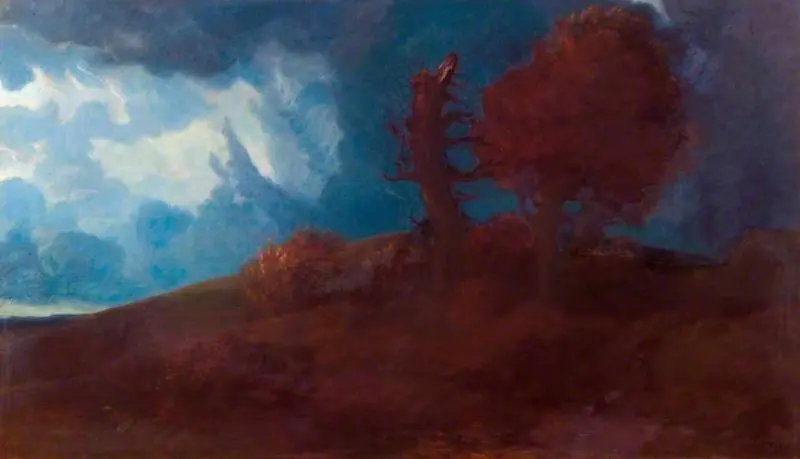
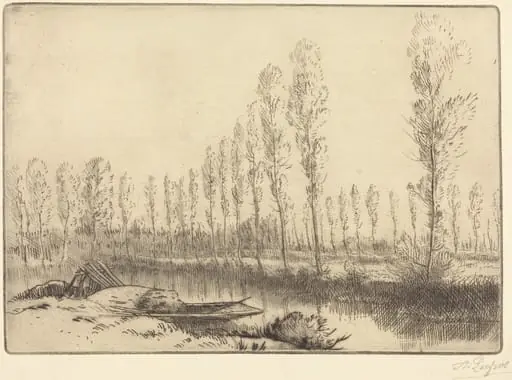 Poplars near Amiens (Pres d'Amiens, les tourbieres)
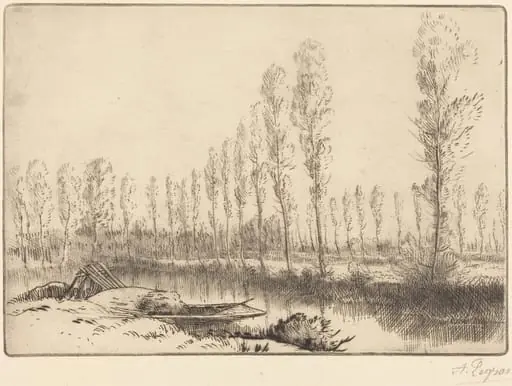 Poplars near Amiens (Pres d'Amiens, les tourbieres)
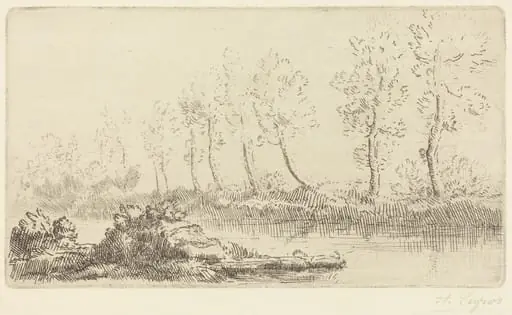 Banks of the Adour (Bord de l'Adour)
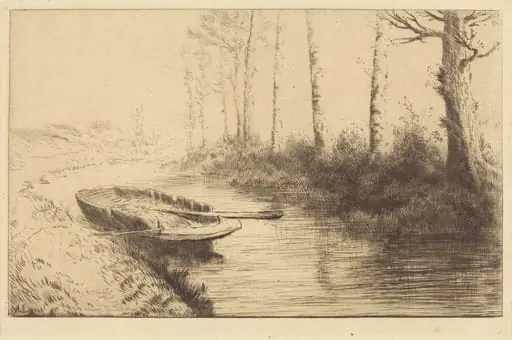 Canal Seen by Morning Light (Le canal: Effet du matin)
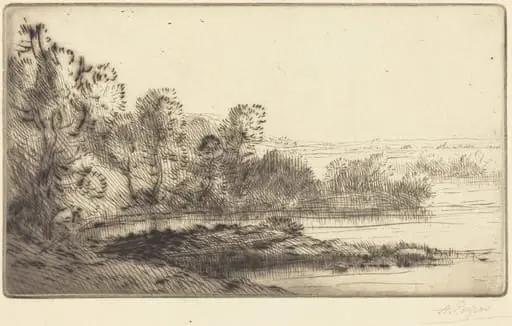 Along the Terne (Sur la terne)
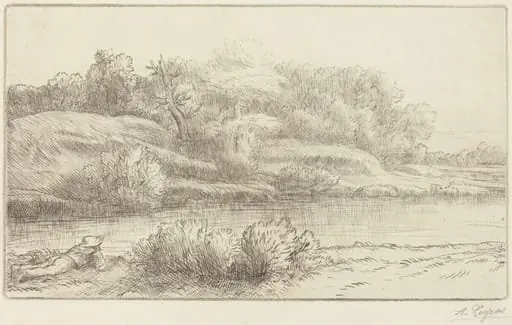 Banks of the Venelle (Bord de la Venelle)
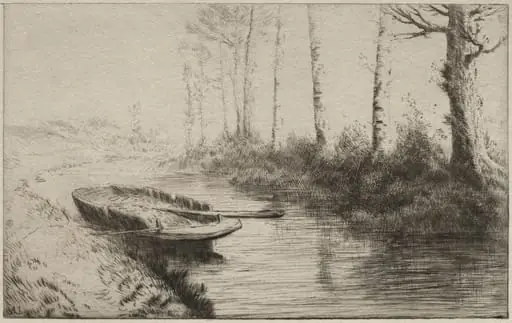 The Canal, Morning
 The House of the Well (La maison du puits)