Artwork
Man Foraging (L'homme au fourrage)
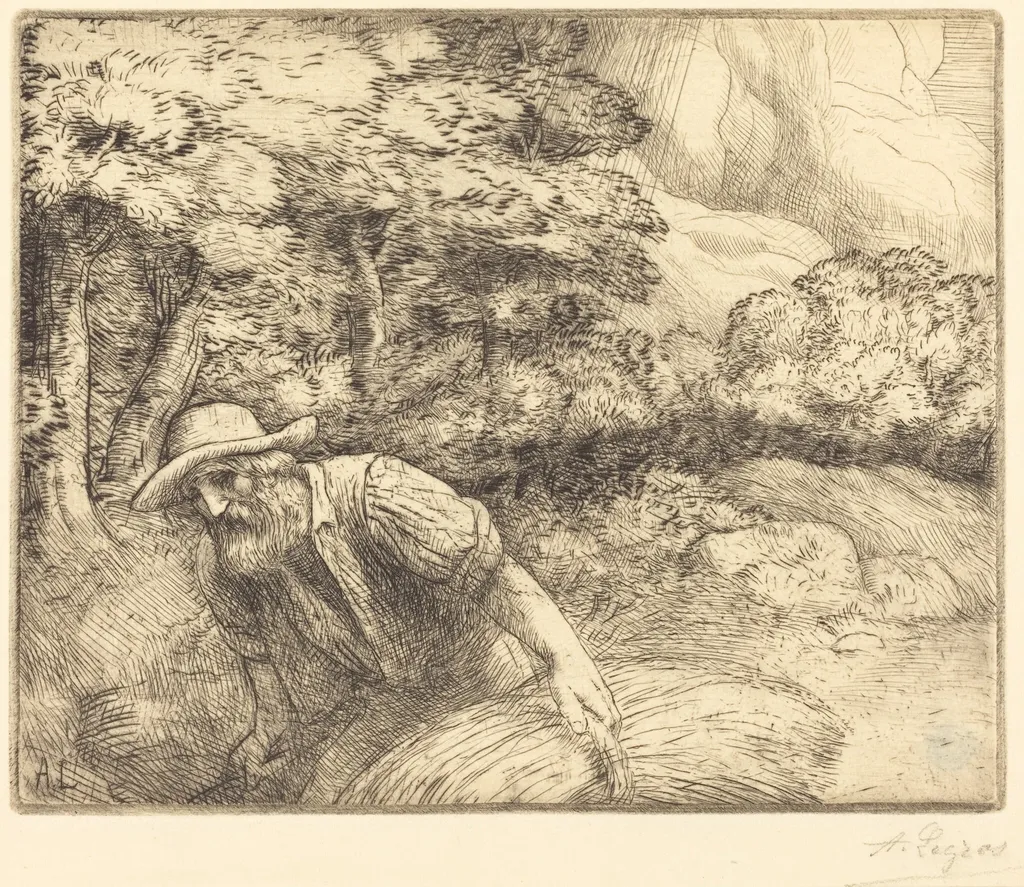
Man Foraging (L'homme au fourrage) is an ink print by the Romanticist artist Alphonse Legros. It dates from 1874 and is held in the collection of the National Gallery of Art.
About this work
Overview
This piece reflects his commitment to expressive draftsmanship and the human condition, rendered through the tactile immediacy of hand-incised lines.
Created in 1874 by Alphonse Legros, a French artist who spent much of his career in Britain, *Man Foraging (L'homme au fourrage)* is an intaglio print combining etching and drypoint. Legros, known for his work across multiple media, was instrumental in revitalizing printmaking in Victorian England. This piece reflects his commitment to expressive draftsmanship and the human condition, rendered through the tactile immediacy of hand-incised lines.
Subject & Meaning
The print portrays a lone rural laborer bent low, gathering fodder from the earth. His posture suggests endurance, the weight of his coat and low-set hat hinting at harsh weather. The act of foraging evokes subsistence and quiet resilience, stripped of romanticism. No narrative context is given—only the immediacy of labor and isolation, aligning with 19th-century realist concerns about rural life and human toil.
Technique & Style
Legros employed drypoint for its rich, velvety lines and etching for controlled detail, creating a dense texture that mimics the roughness of wind-tossed foliage and coarse fabric. The background trees are rendered with agitated, overlapping strokes, suggesting movement and environmental pressure. Shading is built through deliberate scratching, not smooth gradation, giving the scene a raw, tactile energy characteristic of his printmaking approach.
History & Provenance
Produced during Legros’s tenure at the Slade School of Fine Art in London, the print emerged from a period when British artists were re-engaging with European print traditions. Though not widely exhibited at the time, it circulated among collectors and students, reflecting Legros’s influence on a generation of British etchers. Its survival in institutional and private collections attests to its role in the etching revival of the late 19th century.
Context
In the 1870s, European artists increasingly turned to everyday rural life as subject matter, rejecting academic idealism. Legros’s work aligned with this shift, echoing the naturalism of Millet and the expressive line of Japanese prints. His focus on laborers, rendered without sentimentality, resonated with broader social concerns about industrialization’s impact on agrarian communities.
Legacy
Though less known today than his contemporaries, Legros’s prints, including *Man Foraging*, influenced British printmakers by demonstrating how intaglio techniques could convey emotional gravity through direct, unpolished mark-making. His pedagogical role at the Slade ensured that his approach to line and texture became part of the curriculum, shaping the aesthetic of British printmaking into the early 20th century.
Own this work as a print
Artist & collection

Artist
Alphonse Legros (French pronunciation: ; 8 May 1837 – 8 December 1911) was a French, later British, painter, etcher, sculptor, and medallist.

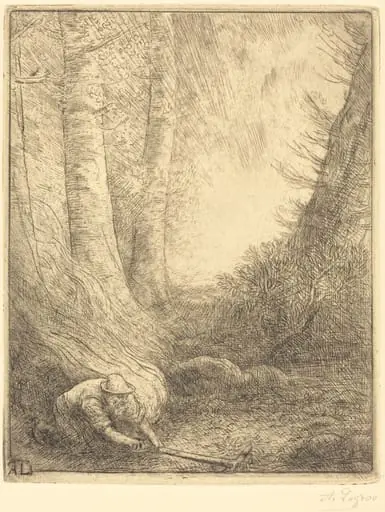 Burning the Grasses (Le bruleur d'herbes)
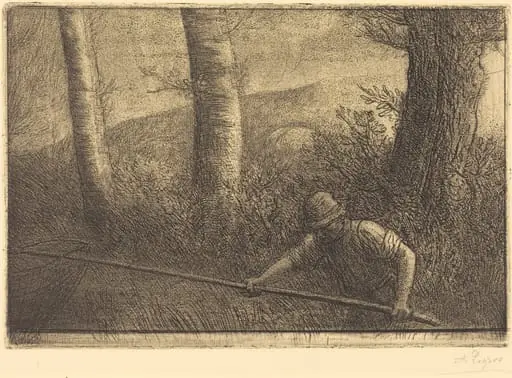 Fisherman with a Hoop-net (La peche a la truble)
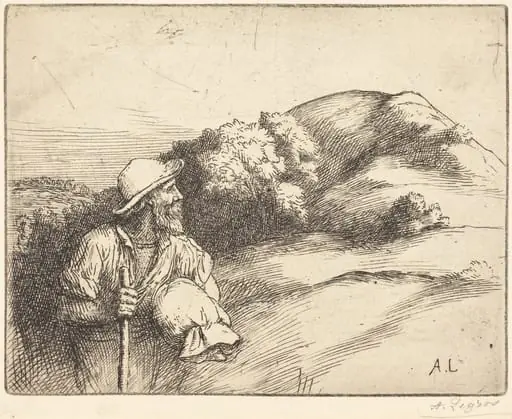 Return from the Fields (Le retour des champs)
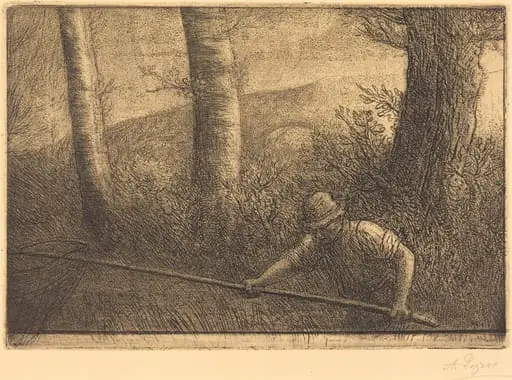 Fisherman with a Hoop-net (La peche a la truble)
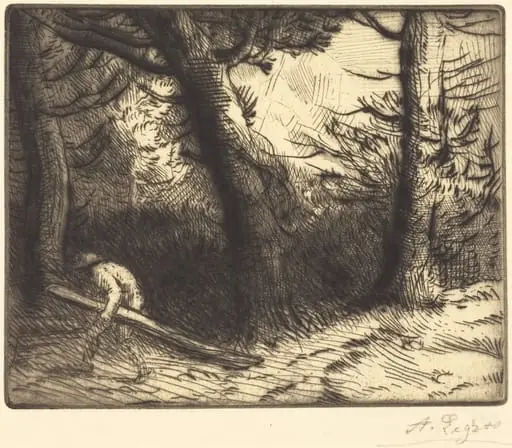 Edge of a Forest in Bourgogne (Un coin de foret en Bourgogne)
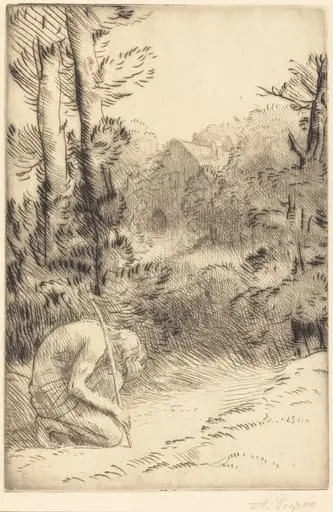 The Prodigal Son, 2nd plate (L'enfant prodigue)
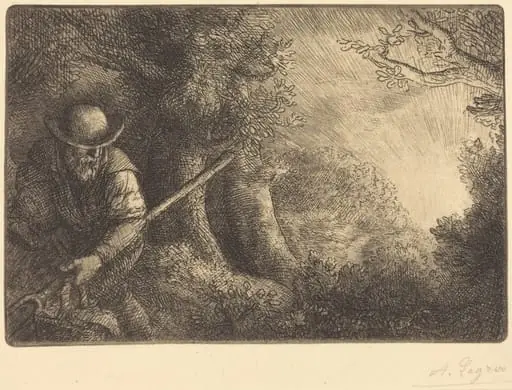 The Gardener (Le jardinier)
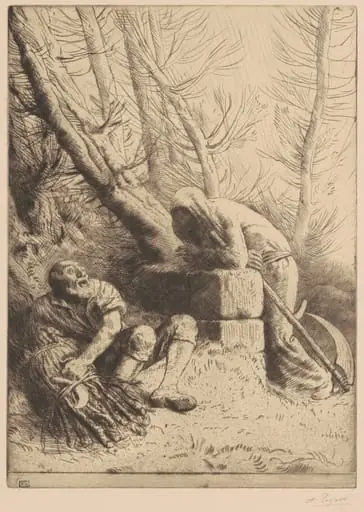 Death and the Woodcutter, 4th plate (La Mort et le bûcheron)
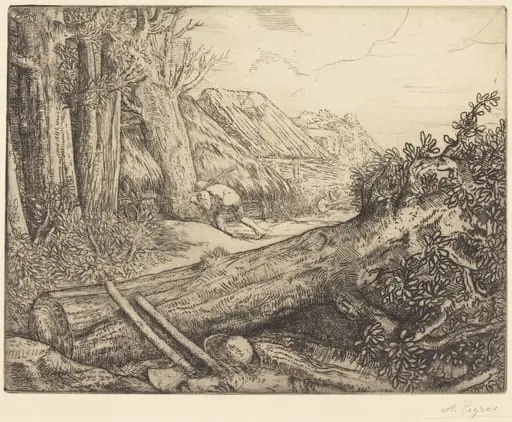 At the Home of the Woodcutters (Chez les bucherons)