Artwork
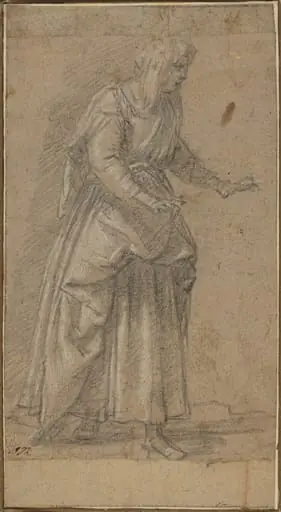
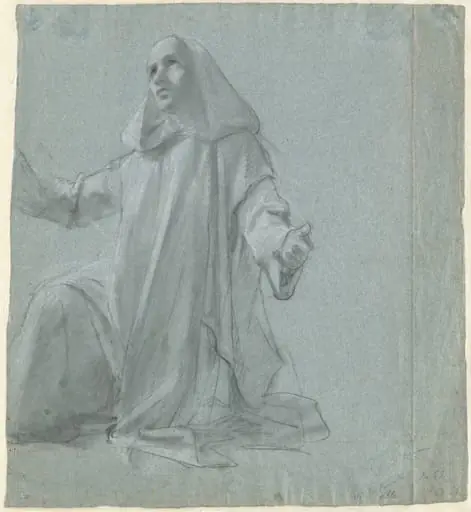
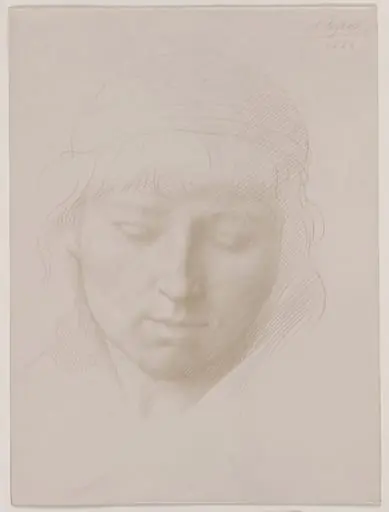
Study of Woman Praying
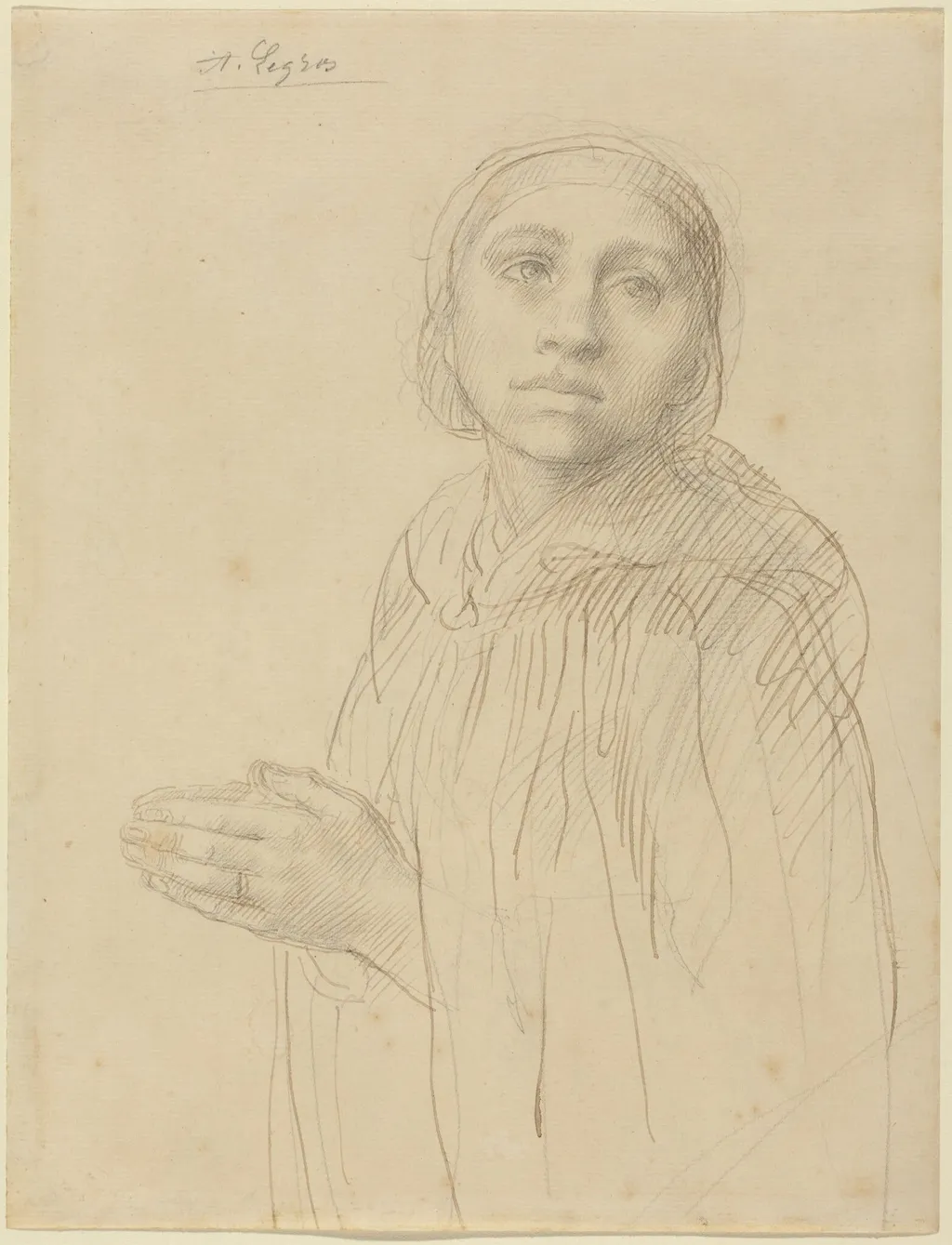
Study of Woman Praying is an ink drawing by the Romanticist artist Alphonse Legros. It dates from 1874 and is held in the collection of the National Gallery of Art.
About this work
Overview
The work reflects his disciplined approach to figure study, emphasizing form and emotional tone through controlled line work rather than elaborate detail.
Created in 1874, this drawing by Alphonse Legros is a study in quiet introspection, executed in pen and brown ink over graphite on laid paper. Though French by birth, Legros had been based in London since 1863, where he contributed to the revival of etching as a serious artistic medium. The work reflects his disciplined approach to figure study, emphasizing form and emotional tone through controlled line work rather than elaborate detail.
Subject & Meaning
The subject is a woman in a moment of private devotion, her posture suggesting humility and concentration. There is no narrative context or symbolic embellishment; the focus lies in the stillness of the gesture and the weight of the figure. This restraint aligns with 19th-century artistic interests in authentic human experience, particularly in moments of solitude and spiritual reflection.
Technique & Style
Legros employed graphite for initial structure, then refined the form with fluid pen strokes in brown ink. The laid paper’s texture subtly interacts with the ink, enhancing the tactile quality of the drawing. His lines vary in weight and density to suggest volume and shadow without modeling, reflecting a preference for linear clarity over atmospheric effects, characteristic of his academic training and interest in draftsmanship.
History & Provenance
The drawing was made during Legros’s tenure at the Slade School of Fine Art in London, where he taught drawing from life. It likely served as a preparatory study for larger works or as an independent exercise in capturing emotional presence. Its survival suggests it was valued by the artist or his circle, though its specific provenance before entering institutional collections remains undocumented.
Context
While often associated with Romanticism for its emotional tone, the work aligns more closely with the realist and academic currents of mid-Victorian Britain. Legros rejected theatricality in favor of observed truth, reflecting broader shifts in artistic priorities away from idealized emotion toward disciplined observation. His role as a teacher further embedded this approach in the British art curriculum of the period.
Legacy
Legros’s drawings, including this one, influenced a generation of British artists through his teaching and emphasis on structural integrity in figure work. Though less celebrated than his etchings or sculptures, such studies underscore his commitment to drawing as a foundational discipline. They remain examples of how quiet, unadorned observation could convey dignity and depth without narrative spectacle.
Artist & collection

Artist
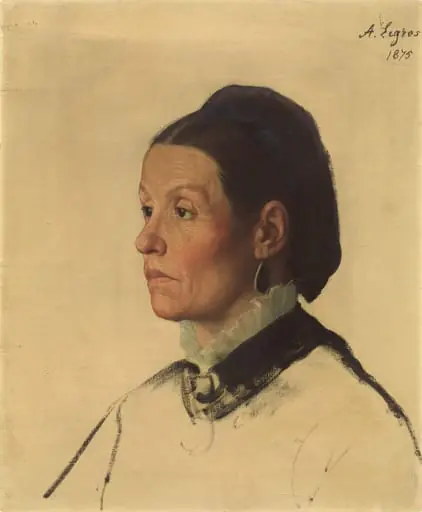
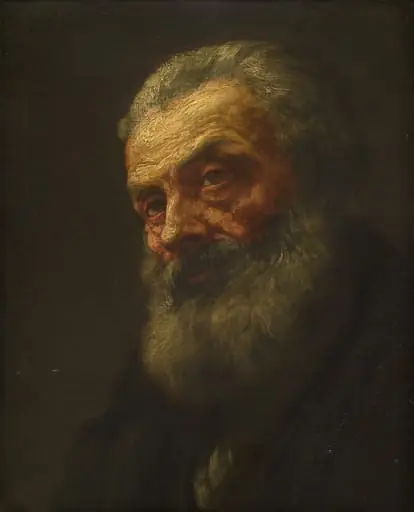
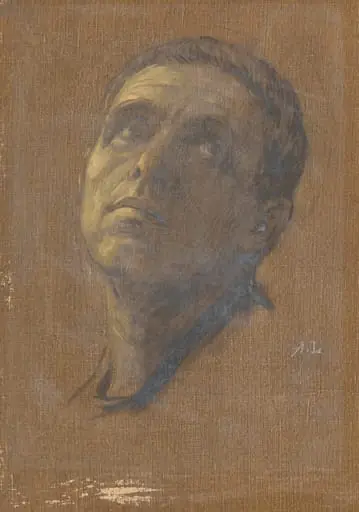
Alphonse Legros (French pronunciation: ; 8 May 1837 – 8 December 1911) was a French, later British, painter, etcher, sculptor, and medallist.

![Seated Draped Man [verso], by Jacopo da Empoli](https://artifactworldgallery.com/img/jacopo-da-empoli--seated-draped-man-verso--e4aec542e44bf41e-w320.webp)
![Prudence [recto], by Cherubino Alberti](https://artifactworldgallery.com/img/cherubino-alberti--prudence-recto--3f44e6d72db5eb8c-w320.webp)