Artwork
Standing Man
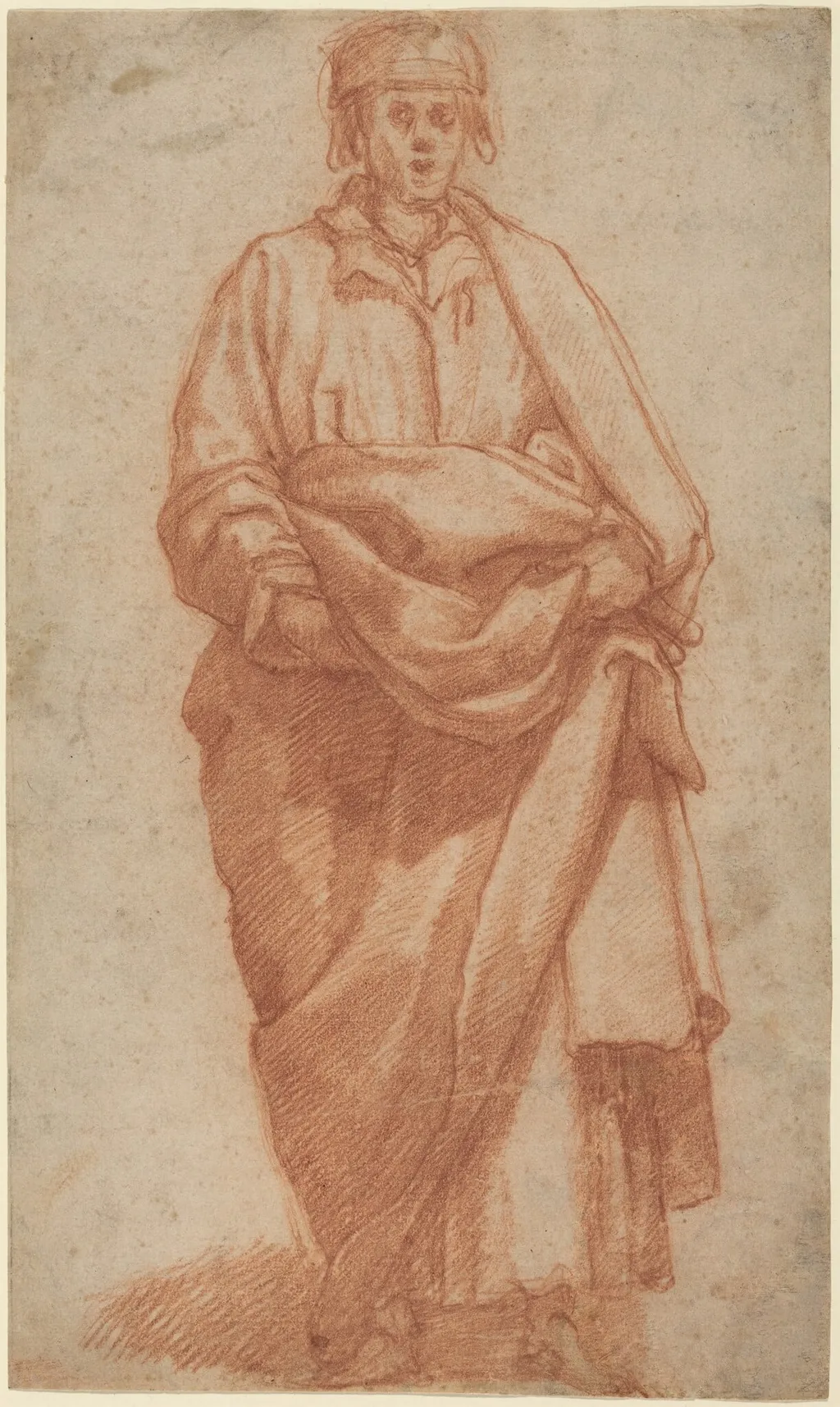
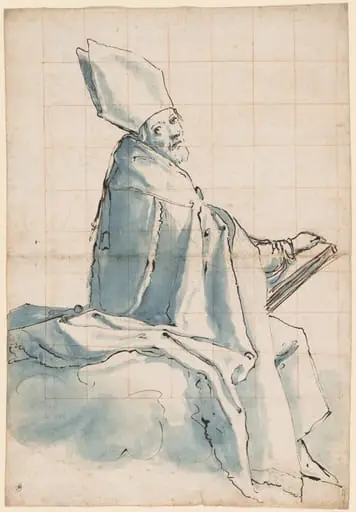
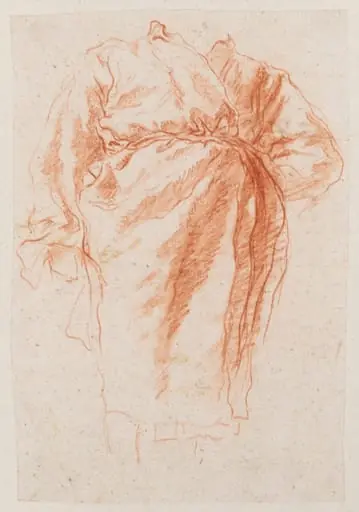
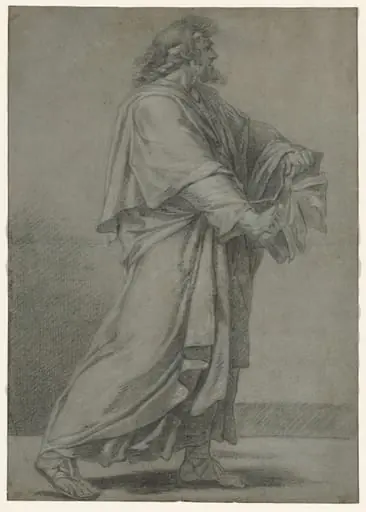
Standing Man is a chalk drawing by the Renaissance artist Jacopo da Empoli. It dates from 1582 and is held in the collection of the National Gallery of Art.
About this work
Overview
Created in 1582 by Jacopo da Empoli, this drawing captures a solitary male figure in red chalk on laid paper. The figure stands still, arms crossed, dressed in a long robe and wide-brimmed hat. The medium’s warmth and the paper’s texture contribute to a quiet, intimate tone. Unlike finished compositions, the work retains the immediacy of a study, emphasizing gesture and presence over detail.
Subject & Meaning
The figure, anonymous and unadorned, conveys introspection rather than narrative. His downward gaze and folded arms suggest inward focus, possibly a moment of reflection or quiet resolve. No attributes or setting anchor him to a specific role, allowing the drawing to function as a study of human stillness. The neutrality of expression invites interpretation without prescription.
Technique & Style
Red chalk, favored for its tonal range and softness, allows subtle gradations to define form and fabric. Loose, fluid strokes model the folds of the robe, suggesting movement without motion. The artist avoids sharp outlines, relying instead on hatching and smudging to model volume. The paper’s laid texture subtly interacts with the medium, enhancing the tactile quality of the surface.
History & Provenance
The drawing originates from Jacopo da Empoli’s practice as a Florentine artist active in the late 16th century. While no early ownership records are widely documented, its preservation suggests it was valued within artistic circles. It likely served as a preparatory study or personal exercise, reflecting the period’s emphasis on observational drawing as a foundational skill.
Context
In late Renaissance Florence, artists routinely used chalk drawings to explore figure composition and anatomy. Empoli, trained in the tradition of Michelangelo and Pontormo, engaged with the human form as both subject and study. This work aligns with contemporaneous practices that prioritized direct observation over idealized representation, even in informal sketches.
Legacy
Though not widely exhibited, the drawing exemplifies the quiet rigor of Mannerist draftsmanship. Its preservation underscores the importance of preparatory work in Renaissance studios. It remains a quiet testament to the artist’s attention to posture and presence, influencing later generations who valued drawing as a means of understanding the human condition.
Artist & collection


![Standing Draped Man [recto], by Jacopo da Empoli](https://artifactworldgallery.com/img/jacopo-da-empoli--standing-draped-man-recto--b3cdc92a1134339d-w320.webp)
![Seated Draped Man [verso], by Jacopo da Empoli](https://artifactworldgallery.com/img/jacopo-da-empoli--seated-draped-man-verso--e4aec542e44bf41e-w320.webp)