Artwork
The Adoration of the Shepherds (L'adoration des bergers)
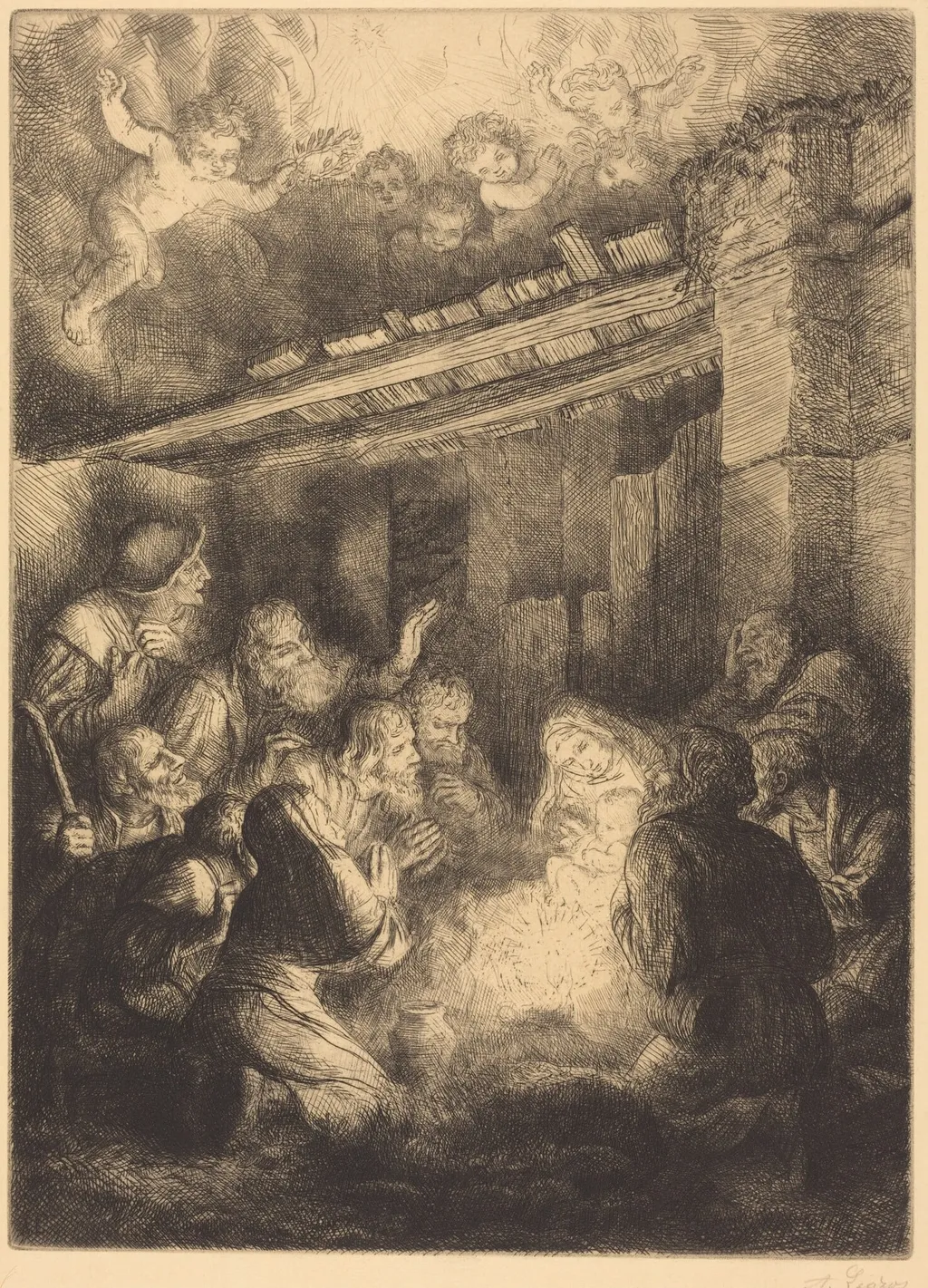
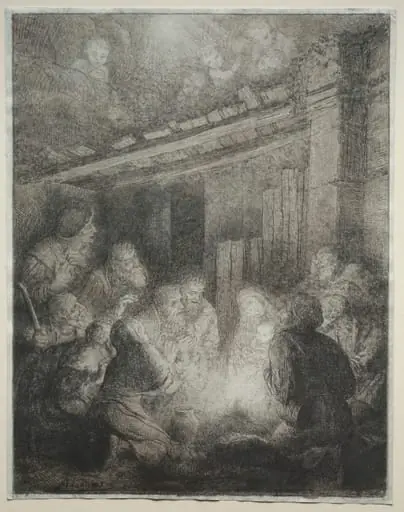
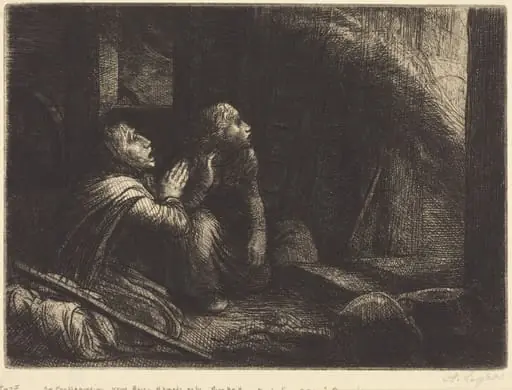
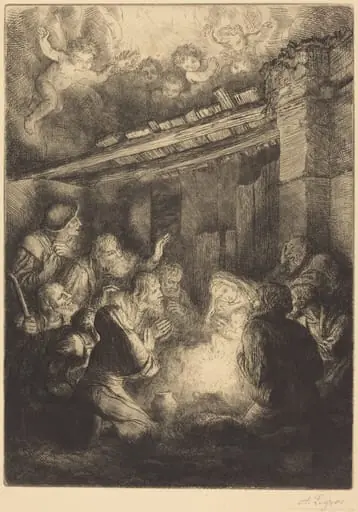
The Adoration of the Shepherds (L'adoration des bergers) is an ink print by the Romanticist artist Alphonse Legros. It dates from 1874 and is held in the collection of the National Gallery of Art.
About this work
Overview
Created in 1874 by Alphonse Legros, this print combines etching and drypoint to depict a quiet, intimate moment from the Nativity. Legros, originally French but based in London since 1863, was a central figure in the British etching revival. His technical precision in intaglio methods allowed for nuanced tonal variation, distinguishing his work within the printmaking community of the time.
Subject & Meaning
The composition avoids grandeur, emphasizing quiet reverence over spectacle, aligning with Legros’s interest in spiritual sincerity.
The scene portrays shepherds gathered around the infant Christ, who lies on the ground, radiating soft light. Their weathered faces and simple garments suggest humility and awe. Above, distant angels hover over a sleeping village, linking the earthly moment to the divine. The composition avoids grandeur, emphasizing quiet reverence over spectacle, aligning with Legros’s interest in spiritual sincerity.
Technique & Style
Legros employed drypoint for rich, velvety lines and etching for finer detail, creating depth through layered textures. The shepherds’ rough clothing, the wooden beam, and the stone walls are rendered with deliberate, tactile strokes. Light emanates solely from the child, casting subtle shadows and drawing focus. The contrast between the dark interior and the faint celestial glow outside enhances the scene’s stillness and mystery.
History & Provenance
Made during Legros’s early years in Britain, the print reflects his transition from French academic training to engagement with British artistic circles. It was likely produced for private collectors or as part of a series exploring religious themes. No major public collection records its early ownership, but it aligns with his broader output in etching during the 1870s, a period of renewed interest in the medium.
Context
In the 1870s, British artists were re-engaging with etching as a serious artistic medium, moving away from reproductive prints. Legros, alongside figures like Samuel Palmer and James McNeill Whistler, helped elevate etching to fine art status. His choice of a humble Nativity scene resonated with contemporary interests in sincerity, rural life, and spiritual quietude over theatrical religious imagery.
Legacy
Though less widely known today, Legros’s prints influenced a generation of British etchers through his emphasis on handcrafted line and emotional restraint. His approach to religious subjects avoided sentimentality, favoring atmospheric depth and tactile realism. This work remains a quiet example of how intaglio techniques could convey profound stillness, contributing to the enduring value of 19th-century printmaking.
Own this work as a print
Artist & collection

Artist
Alphonse Legros (French pronunciation: ; 8 May 1837 – 8 December 1911) was a French, later British, painter, etcher, sculptor, and medallist.