Artwork
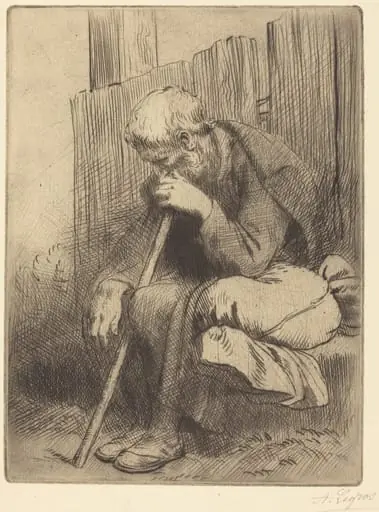
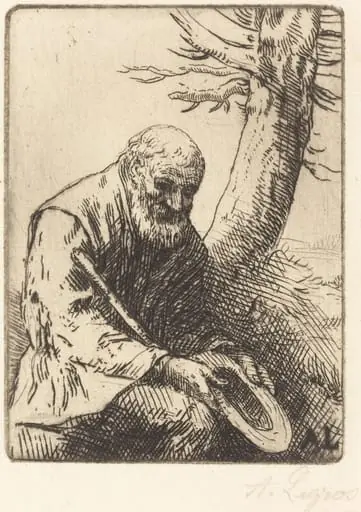
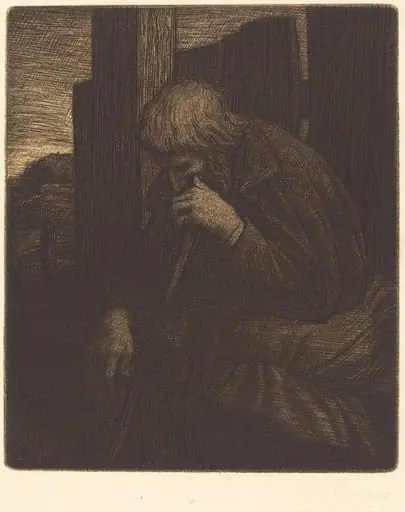
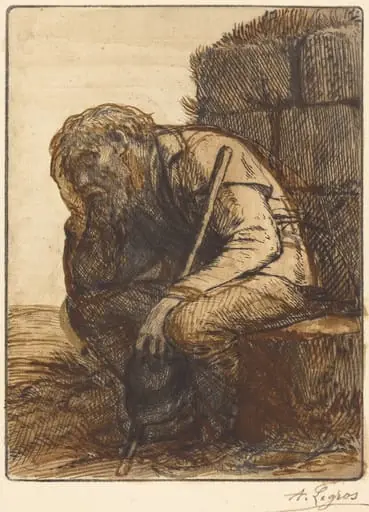
The Prodigal Son, 3rd plate (L'enfant prodigue)
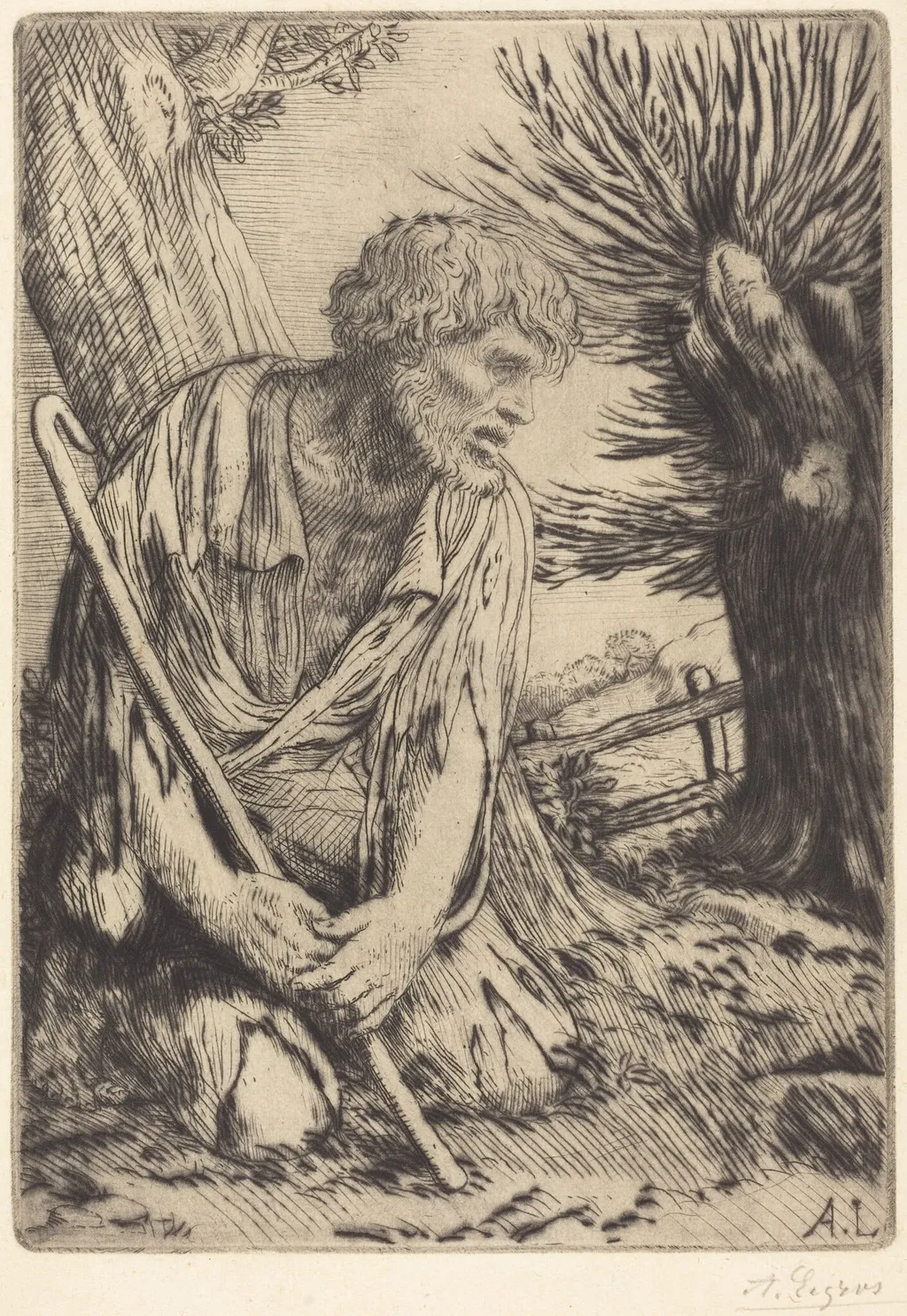
The Prodigal Son, 3rd plate (L'enfant prodigue) is an ink print by the Romanticist artist Alphonse Legros. It dates from 1874 and is held in the collection of the National Gallery of Art.
About this work
Overview
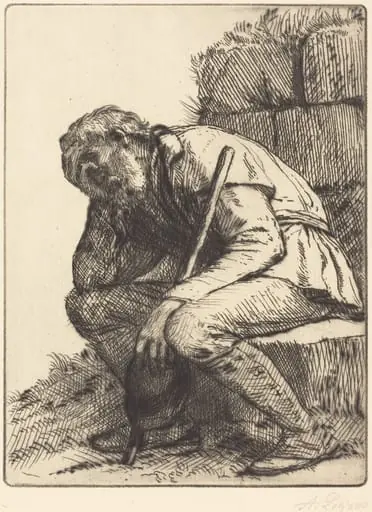
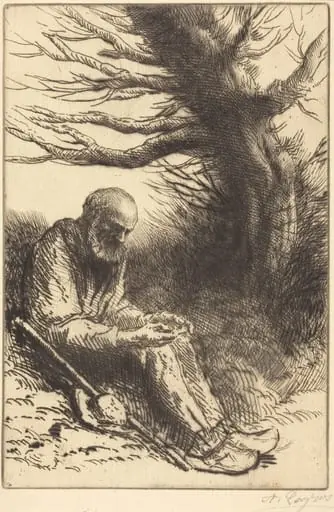
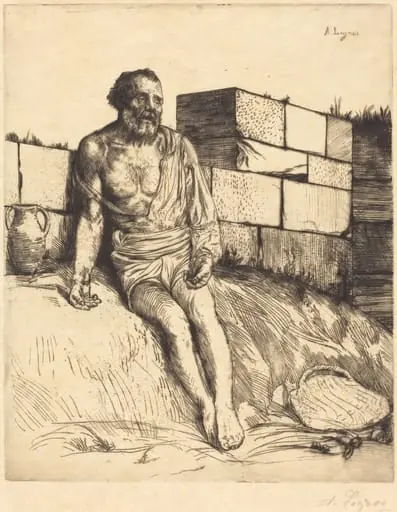
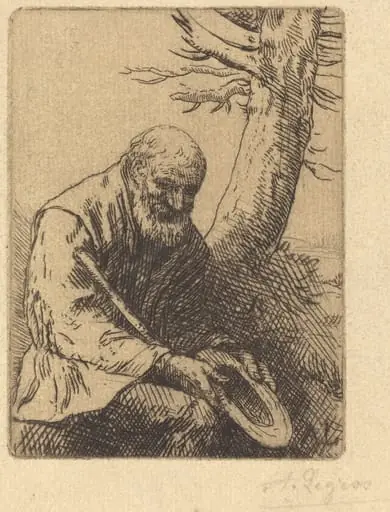
The Prodigal Son, 3rd plate (L'enfant prodigue), created by Alphonse Legros in 1874, is an etching and drypoint print. It represents a pivotal moment in the biblical parable of the Prodigal Son, characteristic of Legros's graphic style.
Subject & Meaning
The print depicts a bearded, kneeling figure in a rugged landscape, clad in loose, flowing attire, with arms outstretched and face uplifted, conveying a sense of longing or exhaustion. The scene captures the parable's themes of penitence and yearning.
Technique & Style
Legros employed etching and drypoint techniques to achieve textured, near-three-dimensional effects, evident in the folds of the figure's clothing and the rocky terrain. Fine, layered lines dominate the composition, highlighting the artist's mastery of graphic expression.
History & Provenance
Created in 1874 by Alphonse Legros, a French-born British artist and key figure in Britain's etching revival through his teaching. The work reflects his versatility across painting, sculpture, and printmaking.
Context
Part of Legros's broader exploration of biblical themes, this print sits within the context of 19th-century artistic revivals and the resurgence of interest in printmaking techniques in Britain during that period.
Artist & collection

Artist
Alphonse Legros (French pronunciation: ; 8 May 1837 – 8 December 1911) was a French, later British, painter, etcher, sculptor, and medallist.