Artwork
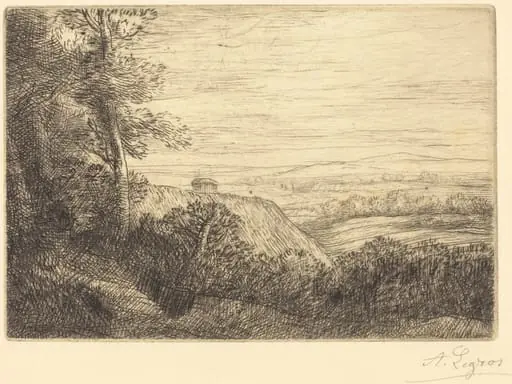
Top of the Hill (Le haut de la colline)
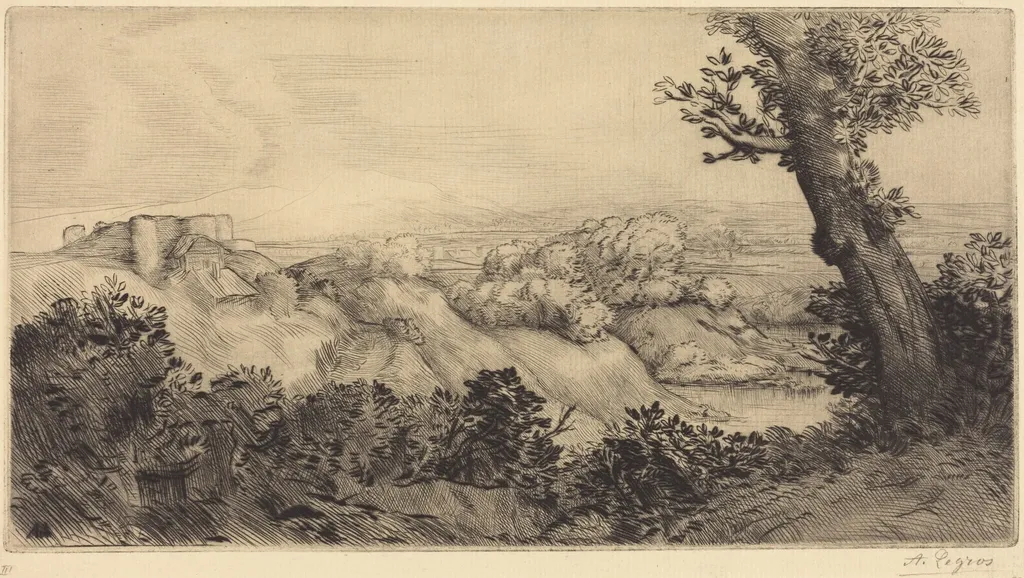
Top of the Hill (Le haut de la colline) is an ink print by the Romanticist artist Alphonse Legros. It dates from 1874 and is held in the collection of the National Gallery of Art.
About this work
Overview
Top of the Hill (Le haut de la colline), created by Alphonse Legros in 1874, is a print that exemplifies the artist's role in the British etching revival. The piece showcases Legros's mastery of capturing nuanced, often subdued, realities through printmaking.
Subject & Meaning
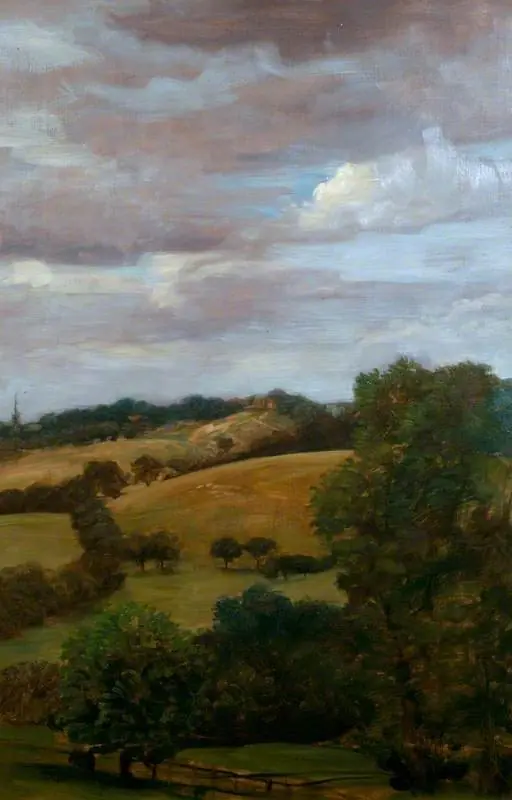
The print depicts a serene, elevated rural landscape, dominated by a prominent tree on the right, amidst bushes, grass, and receding hills. The composition conveys a sense of natural tranquility.
Technique & Style
Legros utilized drypoint, and possibly etching, to achieve the work's characteristic layered textures and deep, scratchy lines. This technique, involving direct carving into a metal plate, lends the piece its distinctive visual depth and somber realism.
History & Provenance
Created in 1874 by Alphonse Legros, a French-born artist naturalized in Britain, the work reflects his influence on the British etching revival of the time. Specific provenance details are not provided.
Context
Emerging from the mid-19th century's printmaking revival in Britain, *Top of the Hill* sits within Legros's broader output of somber, realistically rendered scenes, contributing to the era's aesthetic preferences for detailed, high-contrast prints.
Legacy
As part of Legros's contributions to the British etching revival, *Top of the Hill* helps illustrate the technical and aesthetic innovations of the period, though its individual impact within his oeuvre is not distinctly highlighted.
Artist & collection

Artist
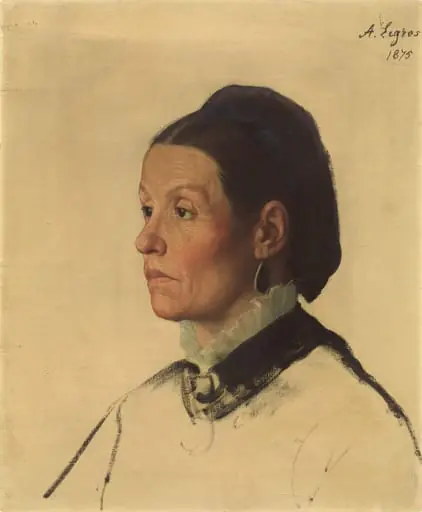
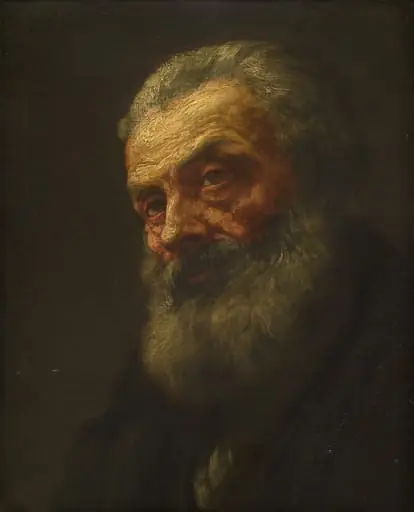
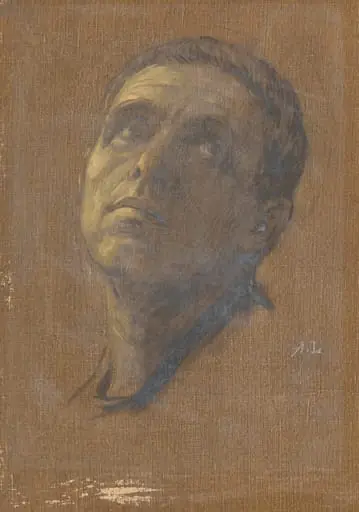
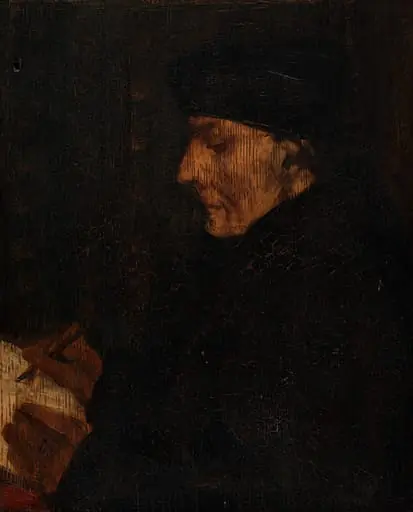
Alphonse Legros (French pronunciation: ; 8 May 1837 – 8 December 1911) was a French, later British, painter, etcher, sculptor, and medallist.