Artwork
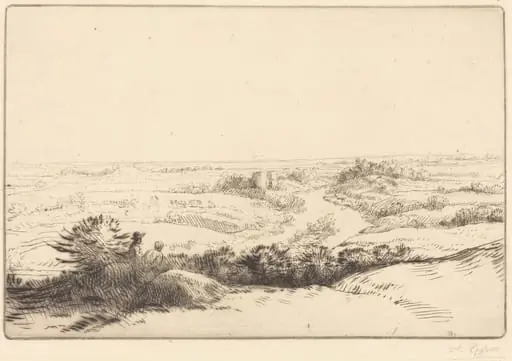
Valley of Veronne (La vallee de Veronne)
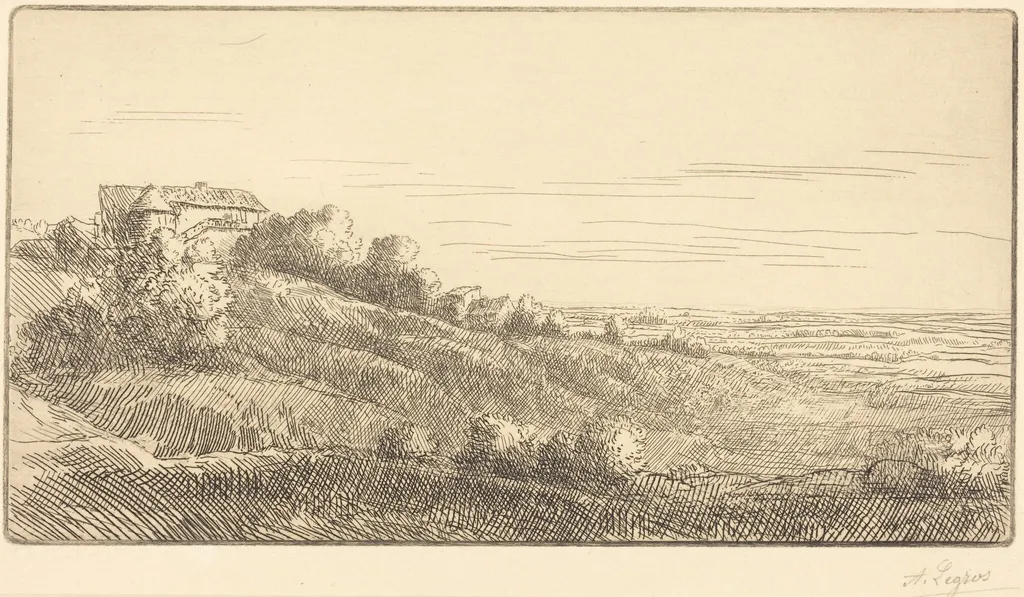
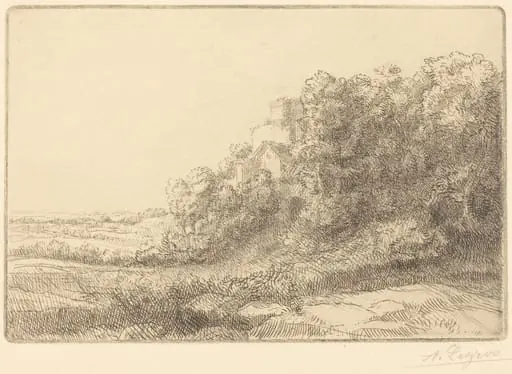
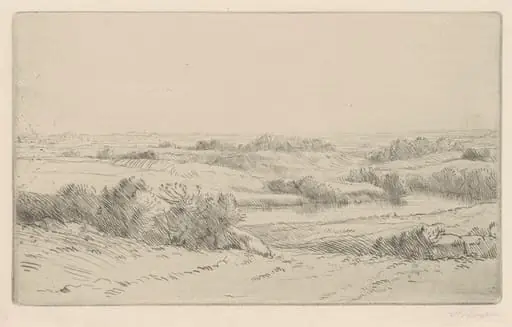
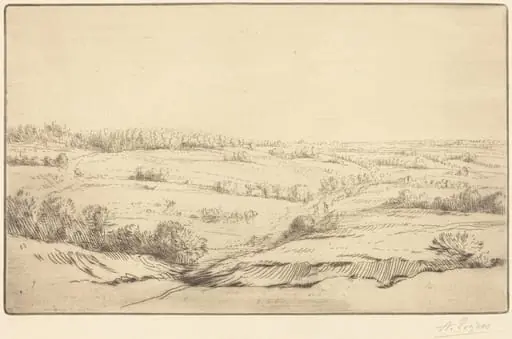
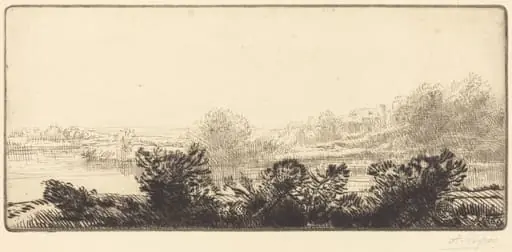
Valley of Veronne (La vallee de Veronne) is an ink print by the Romanticist artist Alphonse Legros. It dates from 1874 and is held in the collection of the National Gallery of Art.
About this work
Overview
Alphonse Legros produced the etching *Valley of Veronne* in 1874. Executed after his move to London, the work exemplifies his interest in landscape subjects and his involvement in the mid‑nineteenth‑century revival of etching as a fine‑art medium.
Subject & Meaning
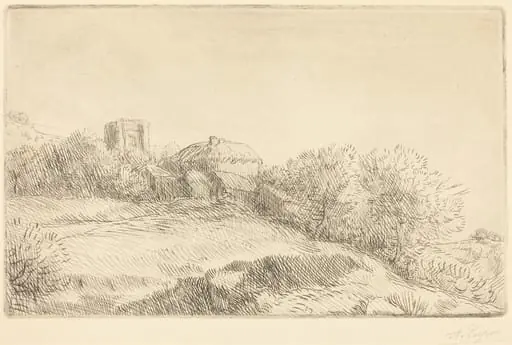
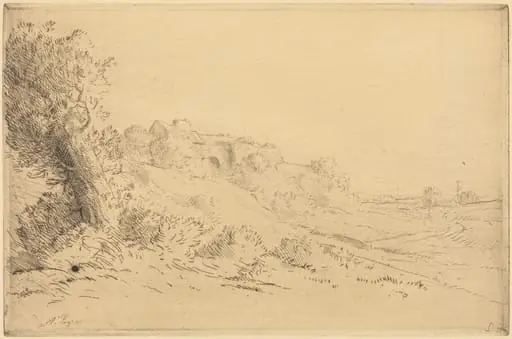
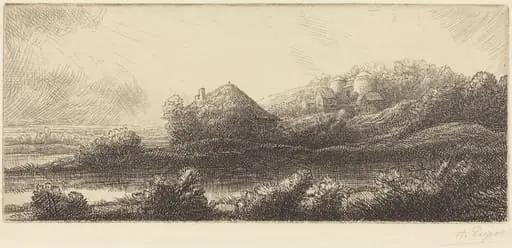
The image depicts a tranquil valley, its gentle hills punctuated by a modest village set among trees. A winding river threads through the scene, while a sparsely rendered sky suggests a fleeting moment captured in the artist’s sketch‑like approach.
Technique & Style
Legros employed traditional copper‑plate etching, allowing ink to remain in the incised lines and producing a textured, slightly rough surface. The marks are loose and scratchy, giving the composition a sense of immediacy rather than polished finish.
History & Provenance
Having settled in Britain in 1863, Legros became a central figure in the British etching revival. *Valley of Veronne* was created during this period of his career, reflecting both his French training and his influence on the London art scene.
Context
The work belongs to a broader nineteenth‑century movement that re‑examined printmaking as an artistic practice rather than merely a reproductive technique. Legros’s landscape etchings contributed to the growing appreciation of the medium among collectors and institutions.
Artist & collection

Artist
Alphonse Legros (French pronunciation: ; 8 May 1837 – 8 December 1911) was a French, later British, painter, etcher, sculptor, and medallist.