Artwork
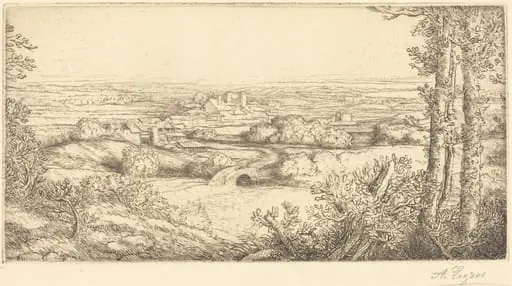
Plain (La plaine)
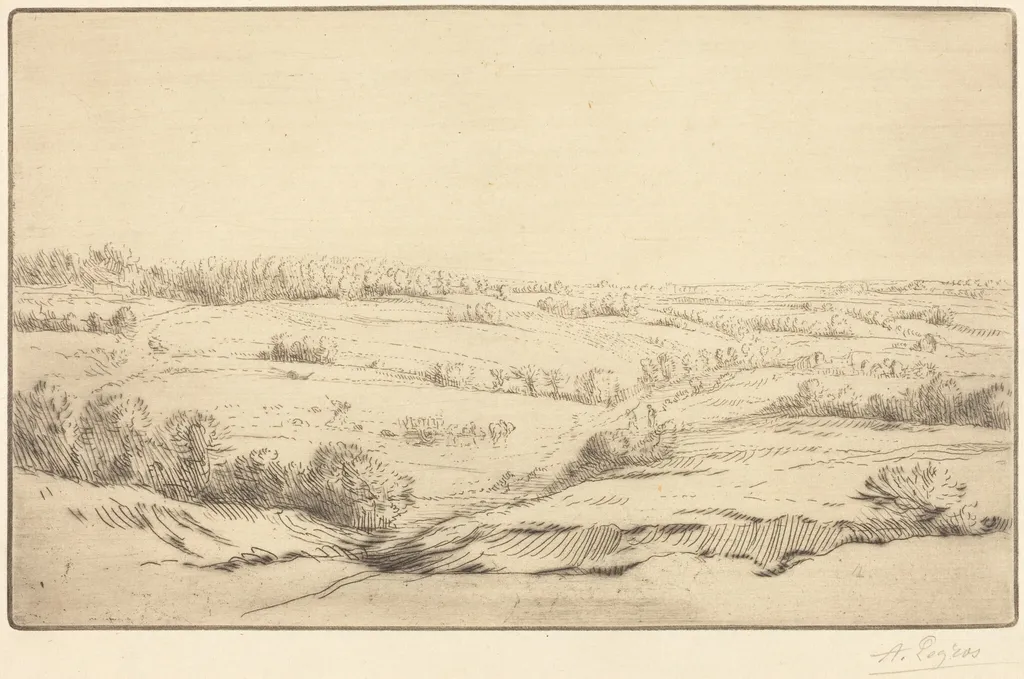
Plain (La plaine) is an ink print by the Romanticist artist Alphonse Legros. It dates from 1874 and is held in the collection of the National Gallery of Art.
About this work
Overview
Plain (La plaine) is an 1874 print by Alphonse Legros, executed through a combination of etching and drypoint. The image presents a broad, unpopulated landscape of low grass and scattered shrubs, rendered in soft, undulating lines that convey a muted atmosphere and a sense of distance.
Technique & Style
Legros employed drypoint to incise fine, burr‑laden lines into a copper plate, then used acid to bite broader areas for the etching. The resulting marks produce a textured surface where the grass appears rough and the sky recedes, while the overall line work remains fluid, suggesting a gentle wind across the scene.
Subject & Meaning
The composition focuses on an empty plain, emphasizing the quiet expanse of the countryside. By limiting detail to minimal vegetation and a subdued tonal range, the work invites contemplation of space and solitude, reflecting a restrained, observational approach to landscape.
History & Provenance
Legros, a French‑born painter, etcher, and sculptor, settled in London in 1863 and became a central figure in the British etching revival. He produced Plain during his early years in Britain, a period marked by his active teaching at the Slade School of Fine Art, where he influenced a generation of printmakers.
Context
The print aligns with the mid‑19th‑century revival of interest in traditional printmaking techniques in Britain. Legros’s work contributed to a broader movement that sought to re‑establish etching and drypoint as fine‑art media, countering the dominance of mechanical reproduction.
Own this work as a print
Artist & collection

Artist
Alphonse Legros (French pronunciation: ; 8 May 1837 – 8 December 1911) was a French, later British, painter, etcher, sculptor, and medallist.

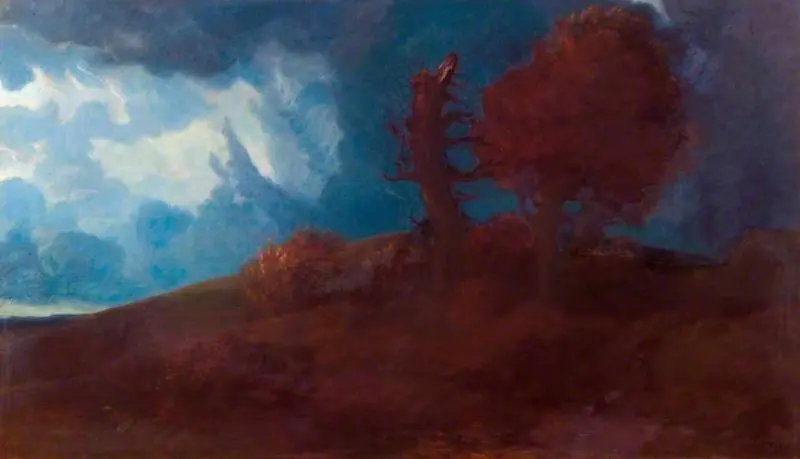
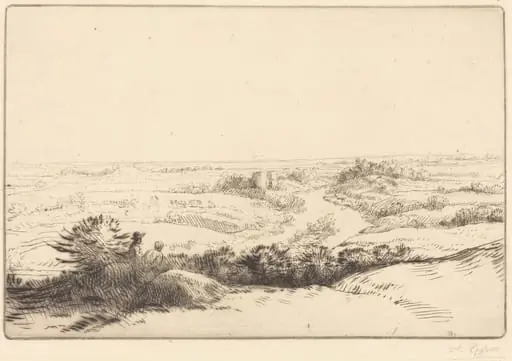 Prospect (Le point de vue)
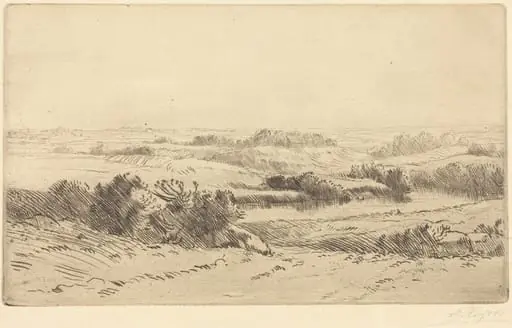 Banks of the Yanne (Les bords de la Yanne)
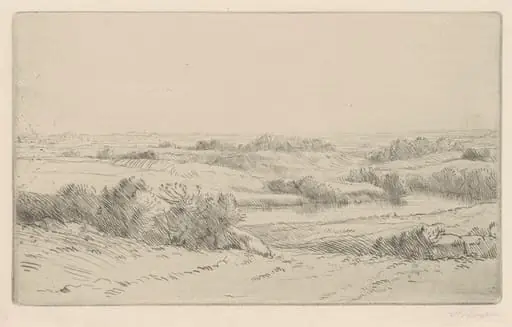 Banks of the Yanne (Les Bord de la Yanne)
 Along the Terne (Sur la terne)
 Landscape with Peat-bog; In the Marsh (Paysage des tourbieres; Dans les marais)
 Old Chateau (Un vieux chateau)
 Valley of Veronne (La vallee de Veronne)
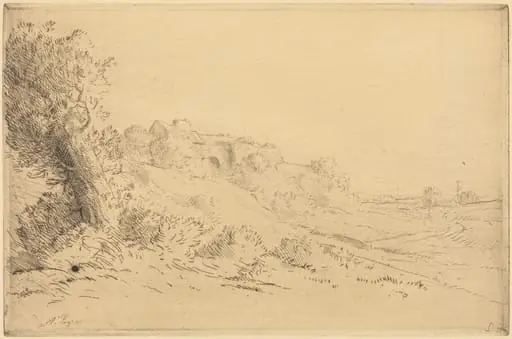 My Farm (Ma ferme)
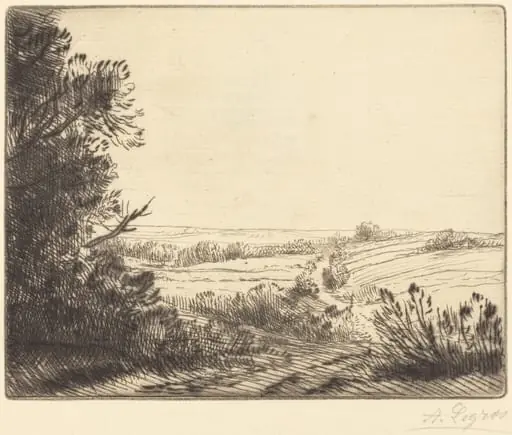 Landscape: Road to Horville (Paysage: Chemin d'Horville)
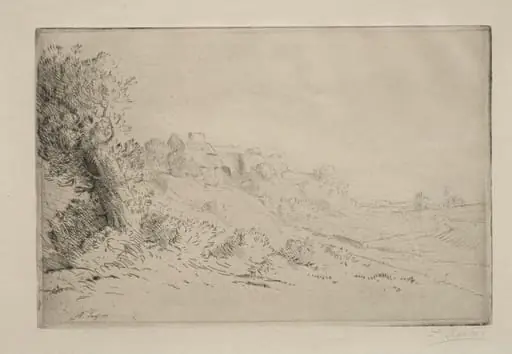 My Farm
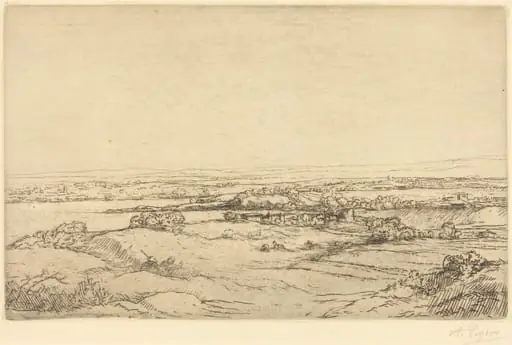 Plain near a Lake (La plaine pres du lac)
 Valley in Bourgogne (Une vallee en Bourgogne)