Artwork
Woodcutter (Le bucheron)
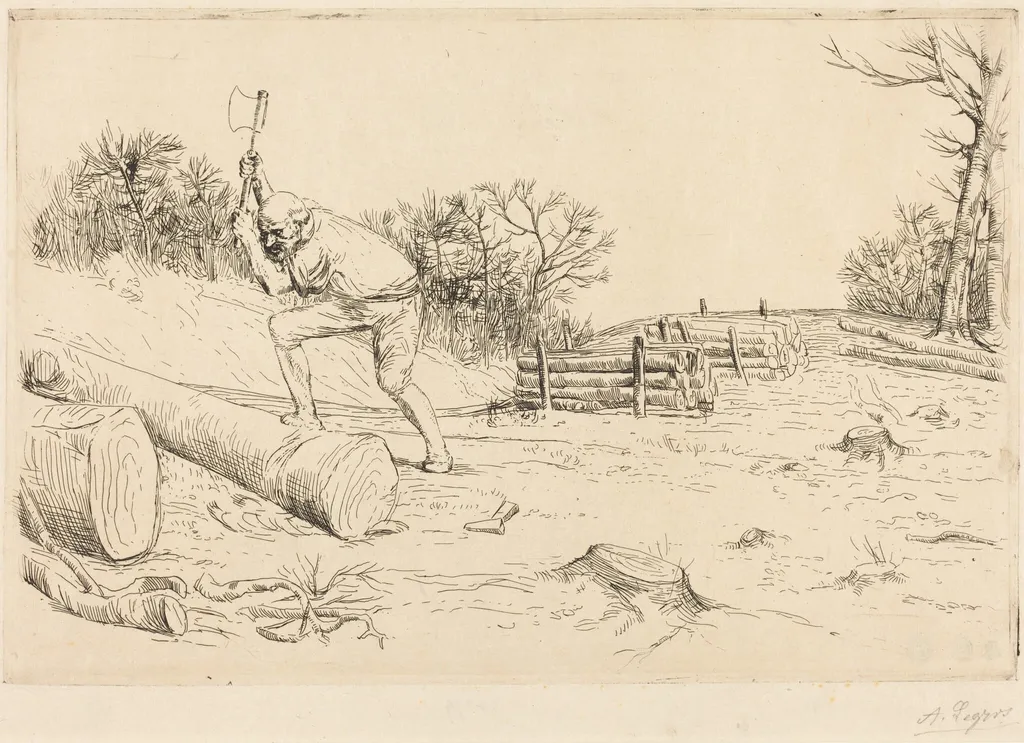
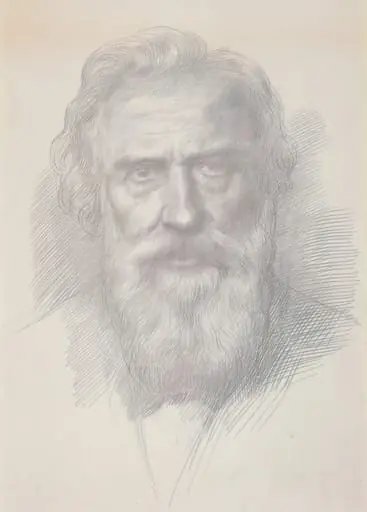
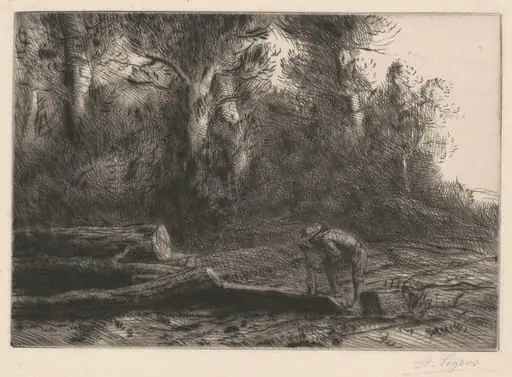
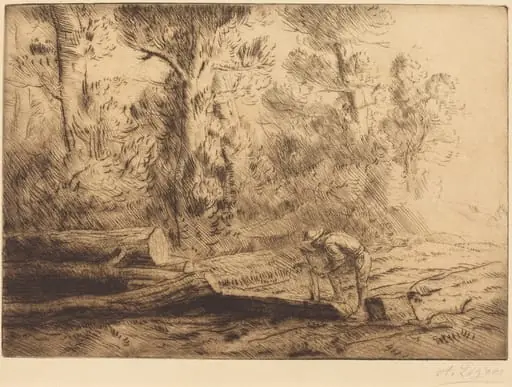
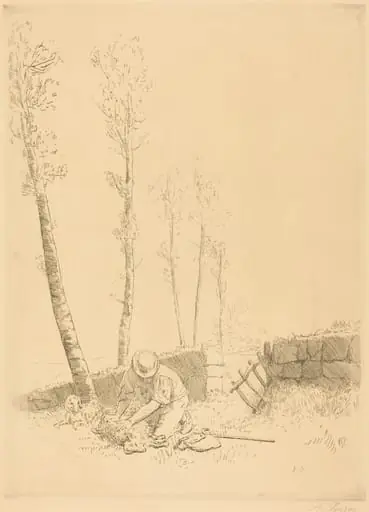
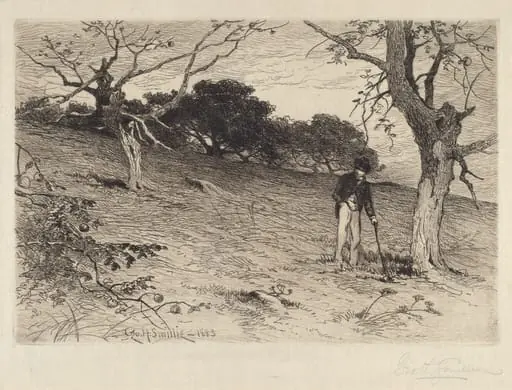
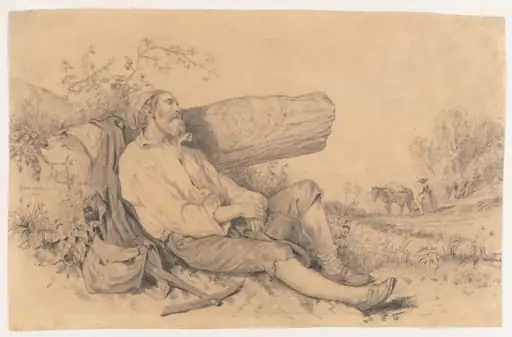
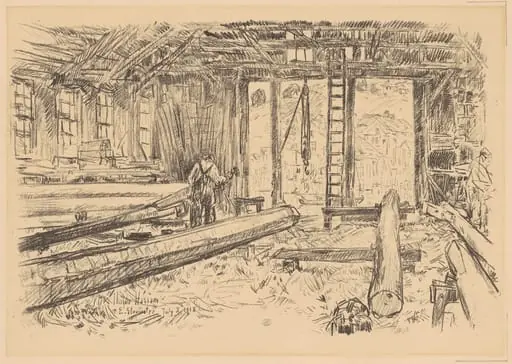
Woodcutter (Le bucheron) is an ink print by the Romanticist artist Alphonse Legros. It dates from 1874 and is held in the collection of the National Gallery of Art.
About this work
Overview
As a key figure in the 19th-century revival of etching as a serious graphic medium, Legros used this technique to explore rural labor with quiet precision.
Alphonse Legros, a French artist who settled in Britain in 1863, produced the etching *Woodcutter (Le bucheron)* in 1874. As a key figure in the 19th-century revival of etching as a serious graphic medium, Legros used this technique to explore rural labor with quiet precision. The work belongs to a body of prints made during his early years in London, reflecting his interest in everyday subjects and tactile surface detail.
Subject & Meaning
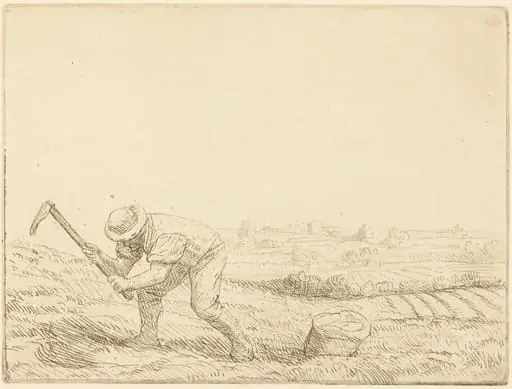
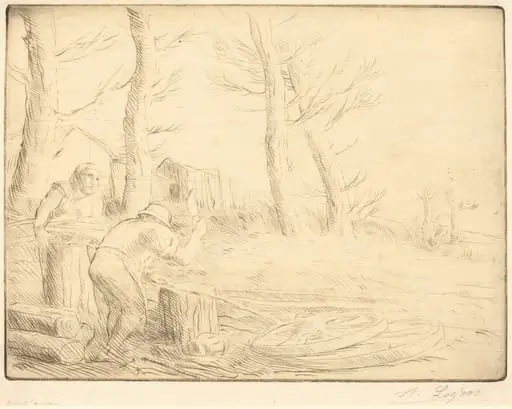
The print depicts a solitary woodcutter in a modest rural setting, absorbed in the act of splitting timber. His posture—bent forward, arms raised—conveys physical exertion without drama. Dressed in plain, worn clothing, he embodies quiet diligence. The absence of narrative or symbolism directs focus to the dignity of manual work, presenting labor not as hardship but as an integral part of natural rhythm.
Technique & Style
Legros employed fine, controlled etching lines to render texture: the grain of the wood, the folds of fabric, and the roughness of bark. The tonal range is restrained, relying on delicate hatching and cross-hatching to suggest depth and shadow. The composition is tightly framed, isolating the figure against a sparse background, enhancing the sense of focused concentration and grounding the scene in tangible reality.
History & Provenance
Created during Legros’s tenure at the Slade School of Art in London, where he taught drawing, the etching emerged from his broader engagement with printmaking as both art and pedagogy. It was likely produced for private circulation or exhibition among British artistic circles. No public record of early ownership exists, but it aligns with the period when Legros’s prints gained recognition for their technical rigor and emotional restraint.
Context
In the 1870s, British art saw renewed interest in etching as an alternative to mass-produced illustrations. Legros, influenced by French Realism and Dutch genre scenes, contributed to this movement by emphasizing honest depiction over sentimentality. His choice of a rural laborer reflected broader European trends toward portraying working-class life with dignity, countering romanticized pastoral ideals.
Legacy
Legros’s *Woodcutter* remains a representative example of his contribution to the etching revival in Britain. It influenced a generation of printmakers who valued craftsmanship and quiet observation over spectacle. Though less widely known today, the work endures in institutional collections as a testament to the expressive potential of line and tone in capturing unadorned human effort.
Artist & collection

Artist
Alphonse Legros (French pronunciation: ; 8 May 1837 – 8 December 1911) was a French, later British, painter, etcher, sculptor, and medallist.