Artwork
Study for "Rêve d'amour"
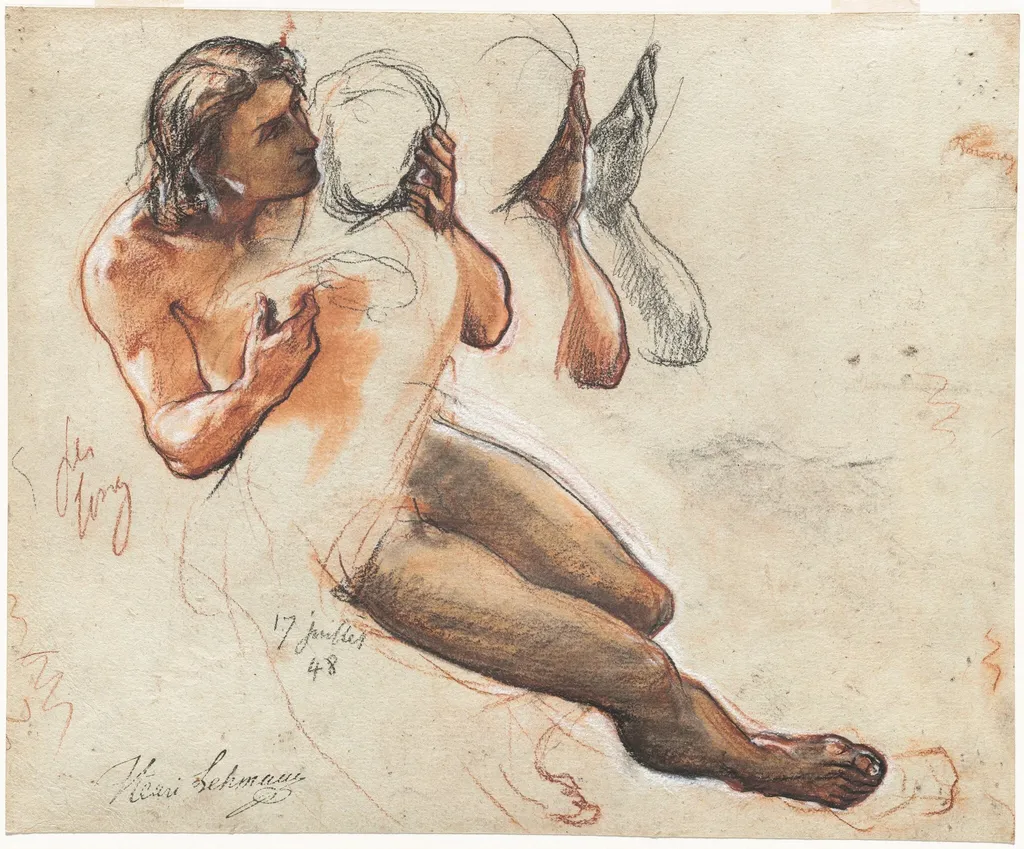
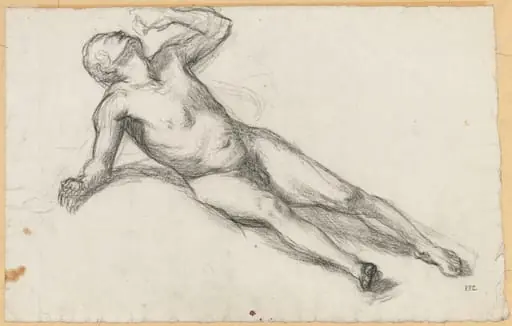
Study for "Rêve d'amour" is a chalk drawing by the Romanticist artist Henri Lehmann. It dates from 1848 and is held in the collection of the National Gallery of Art.
About this work
This sketch shows a reclining nude figure, lying on their side with one arm bent under their head.
This sketch shows a reclining nude figure, lying on their side with one arm bent under their head. The other arm stretches out, fingers curled slightly, while the legs are bent at the knee. The drawing uses soft red and black chalk, with quick, loose lines that leave some areas sketchy.
The artist focused on the body’s curves and shadows, leaving the background blank. The date "1848" is written in the corner, hinting at a moment in time.
Next, check out the technique: chiaroscuro to see how light and shadow create depth.
Overview
Henri Lehmann’s 1848 drawing, a preparatory study for the composition titled “Rêve d’amour,” is executed in red, black and white chalk on laid paper. The work functions as a quick, gestural exploration of the human form, intended to inform a larger painted piece. It is part of the National Gallery of Art’s collection in Washington, D.C.
Subject & Meaning
The sketch depicts a solitary nude figure in a relaxed, side‑lying pose. One arm supports the head while the opposite arm extends outward, fingers loosely curled; the legs are bent at the knee. The absence of any background or narrative elements concentrates attention on the anatomy and the sensual curvature of the body, suggesting an intimate, private moment.
Technique & Style
Lehmann employs a limited chalk palette, layering red and black tones to model volume and suggest chiaroscuro. Stumping—softening the chalk with a cloth—creates subtle gradations of shadow, while the remaining loose lines preserve a sense of immediacy. The drawing’s sketchy quality indicates it was a rapid study rather than a finished work.
History & Provenance
Created in 1848, the drawing remained in the artist’s studio before entering the National Gallery of Art’s holdings, where it is displayed as part of the museum’s European drawings collection. The date is inscribed in the lower corner, confirming its chronological placement within Lehmann’s early career.
Artist & collection

 Study for The War
 Study of a Female Figure
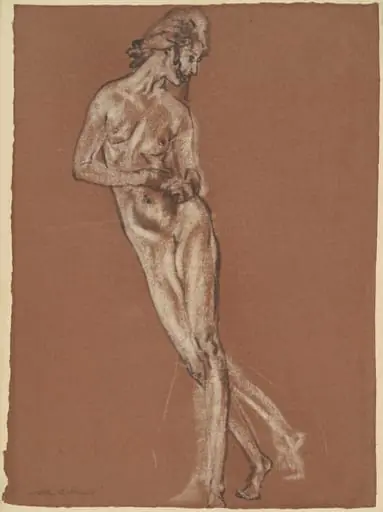 Study for "Stars and Dews and Dreams of Night"
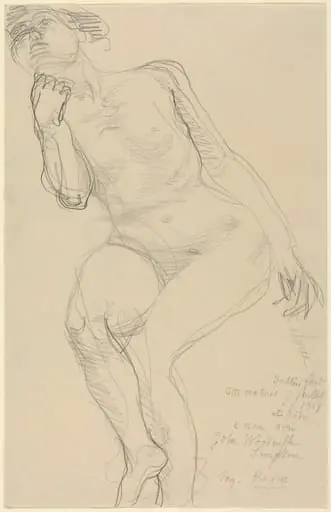 Seated Female Nude Leaning to the Left
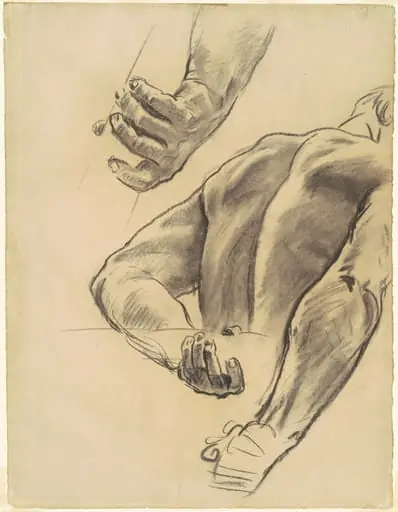 Studies for "Judgment"
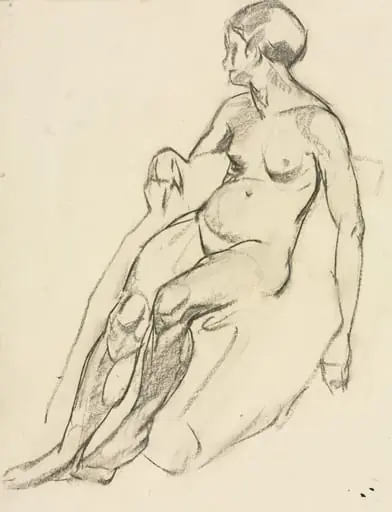 Seated Nude
 Study for Figure above "Music"
 A Standing Male Nude
 Nude Study
 Study of a Male Nude and Other Studies
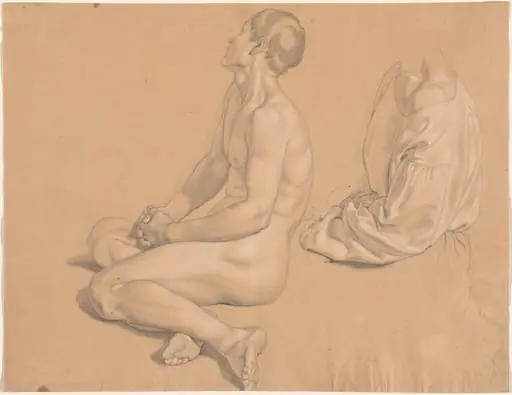 A Seated Man Nude and then Clothed
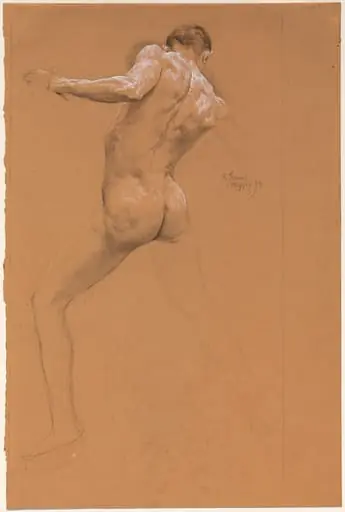 Standing Male Nude from Behind