Artwork
Study of a Male Nude and Other Studies
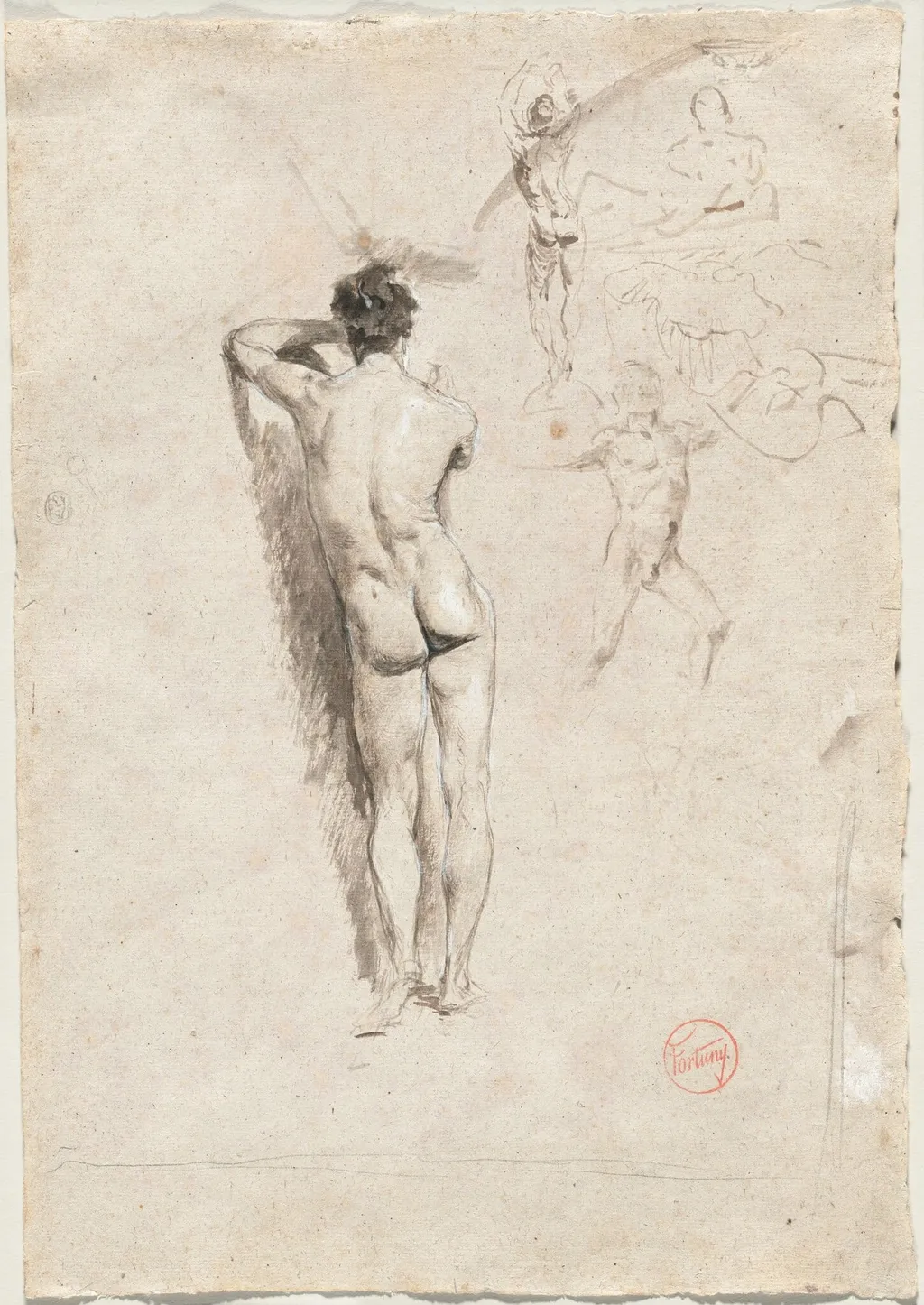
Study of a Male Nude and Other Studies is a gouache drawing by the Impressionist artist Mariano Fortuny Marsal. It dates from 1859 and is held in the collection of the National Gallery of Art.
About this work
Overview
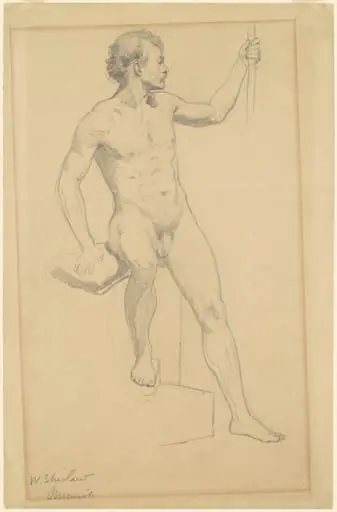
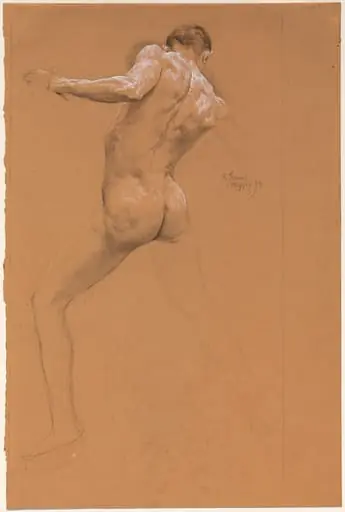
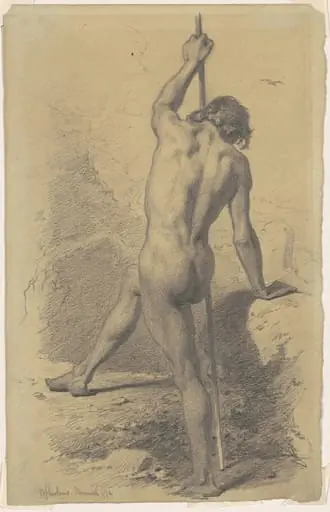
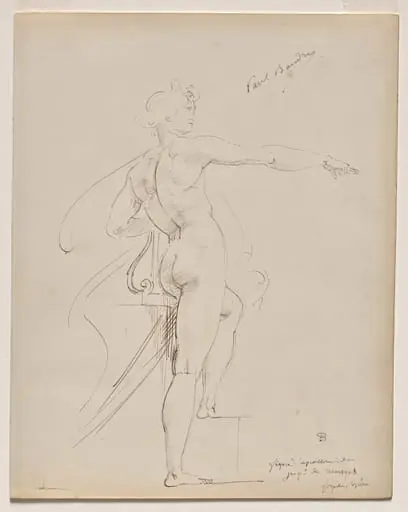
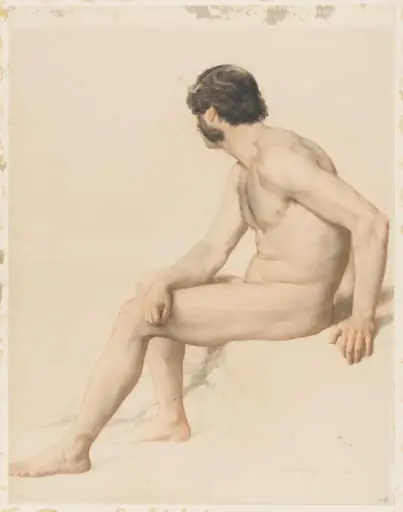
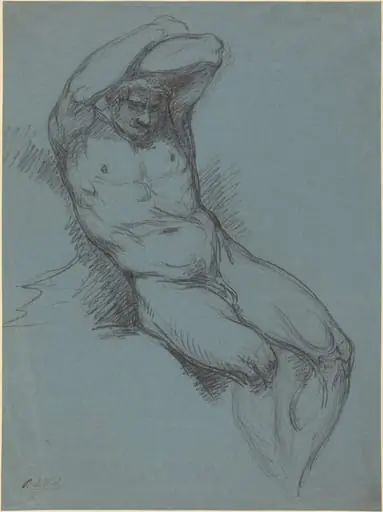
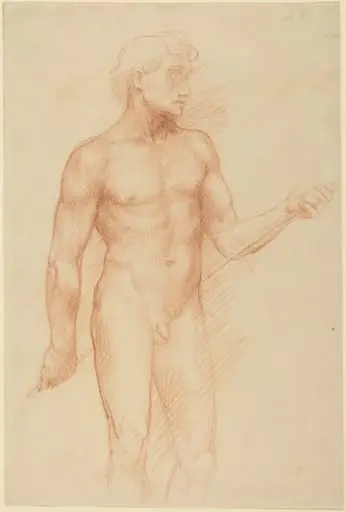
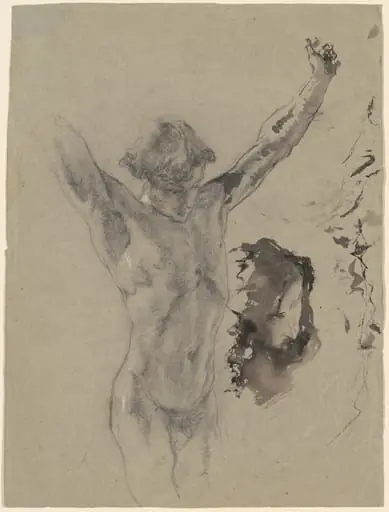
This drawing, dated 1859, is a composite study by Mariano Fortuny Marsal featuring a central male nude alongside smaller figure sketches in the margins.
This drawing, dated 1859, is a composite study by Mariano Fortuny Marsal featuring a central male nude alongside smaller figure sketches in the margins. Executed in pen and brown ink with wash and graphite, it is heightened with white gouache on buff-colored laid paper. The work reflects the artist’s practice of rapid observational sketching, capturing anatomical forms in motion with minimal but deliberate marks.
Subject & Meaning
The central figure stands in a relaxed contrapposto, one arm raised behind the head, while peripheral sketches depict torsos in twisting or reaching poses. These variations suggest an exploration of bodily tension and balance, likely intended as preparatory studies for larger compositions. The absence of narrative context focuses attention on posture, weight distribution, and the physicality of the human form.
Technique & Style
Fortuny employed a layered approach: ink lines define structure, brown wash establishes shadow, and white gouache lifts highlights to suggest volume against the paper’s natural tone. Graphite underdrawing guides the composition, while the rough texture of the laid paper enhances the sketch’s immediacy. The technique balances precision with spontaneity, typical of academic life studies from the period.
History & Provenance
The work entered the collection of the National Gallery of Art in Washington, D.C., as part of a broader acquisition of Fortuny’s drawings. Its survival in relatively intact condition, despite minor smudging and staining, indicates careful handling over time. No documented exhibition history prior to its institutional acquisition is known.
Context
Created during Fortuny’s early years in Rome, this drawing aligns with the 19th-century European tradition of life drawing as foundational training. Artists frequently compiled such studies to refine their understanding of anatomy and movement, often using them as references for paintings. The use of gouache for highlights was uncommon in academic settings, suggesting Fortuny’s personal experimentation.
Legacy
Though not a finished work, this study exemplifies Fortuny’s disciplined approach to figure drawing and his sensitivity to light and form. It remains a representative example of 19th-century Spanish artists engaging with classical academic practices, offering insight into the preparatory processes behind his later, more elaborate compositions.
Artist & collection