Artwork
Figure Studies
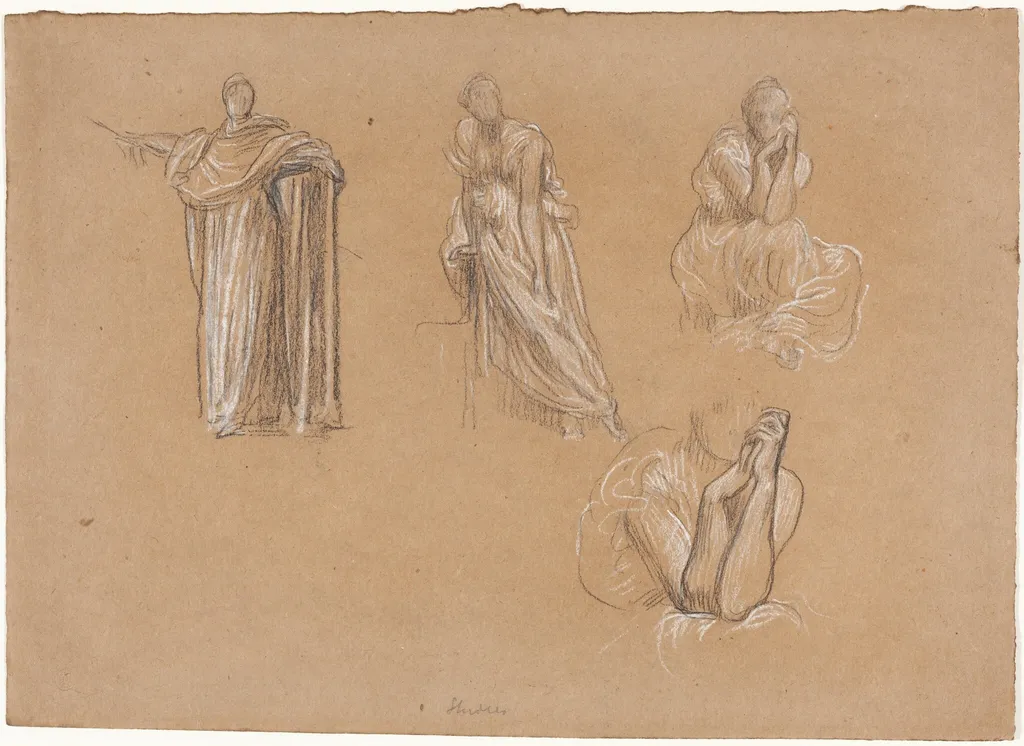
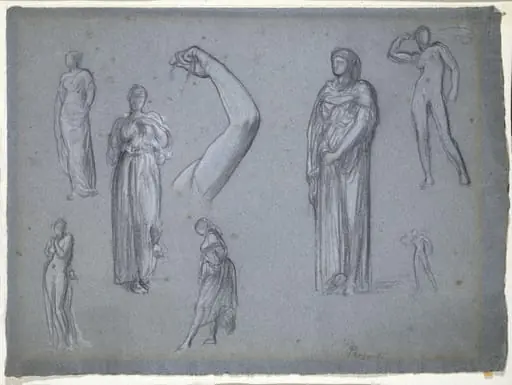
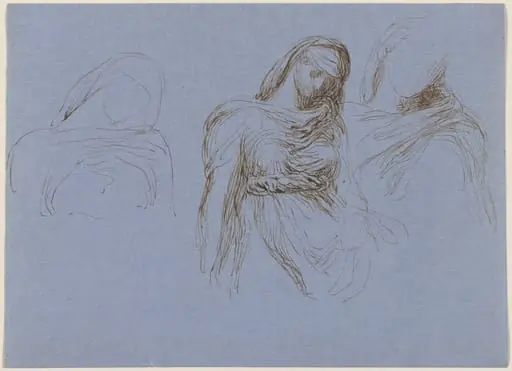
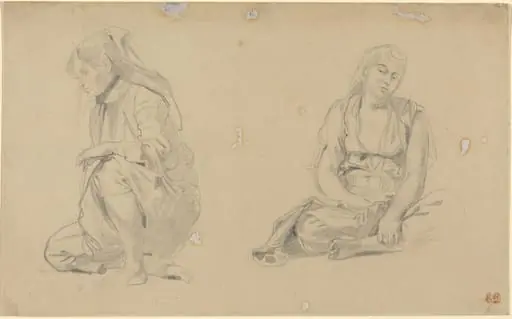
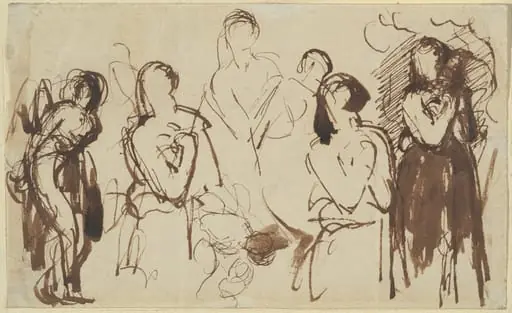
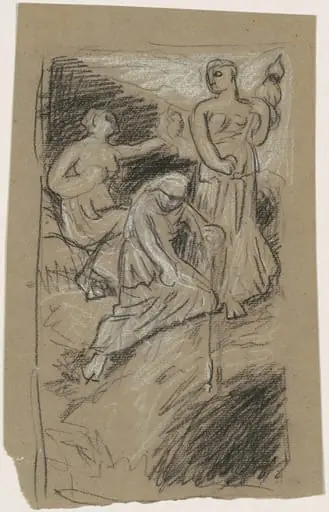
Figure Studies is a chalk drawing by the Romanticist artist Frederic, Lord Leighton. It dates from 1863 and is held in the collection of the National Gallery of Art.
About this work
Overview
The compositions are informal studies rather than finished works, intended to explore the handling of drapery and posture.
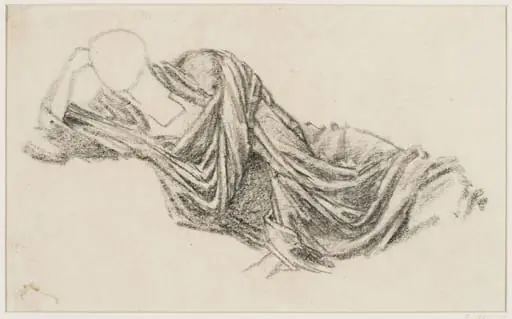
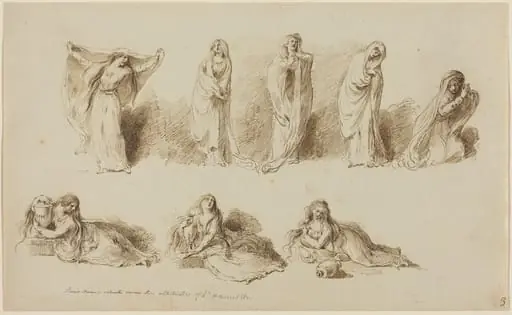
Figure Studies is a charcoal‑like drawing executed in 1863 by Frederic Leighton, later ennobled as Lord Leighton. Rendered on brown wove paper, the sheet contains four separate figure sketches, each rendered in swift, confident strokes of black chalk accented with touches of white. The compositions are informal studies rather than finished works, intended to explore the handling of drapery and posture.
Subject & Meaning
Each of the four figures is clothed in a loosely draped robe, allowing the artist to investigate how fabric folds and reacts to the body’s weight. The poses vary—from a standing figure grasping a staff, to a forward‑leaning stance, a seated figure with clasped hands, and a kneeling figure hugging its knees—offering a comparative study of movement, balance, and the interplay of tension and relaxation within the human form.
Technique & Style
Leighton employed black chalk on a warm brown ground, leaving the background unfilled to emphasize line and form. Subtle white highlights are applied to suggest reflected light on the cloth, creating a modest chiaroscuro effect. The drawing’s economy of line and the immediacy of the marks reveal a practice of rapid observation, focusing on the volumetric qualities of drapery rather than detailed anatomical rendering.
History & Provenance
Created in 1863, the drawing belongs to a period when Leighton was developing his academic style, prior to his later acclaim as a leading figure of the Royal Academy. The work likely served as preparatory material for a larger composition, though the specific project remains unidentified. It has remained within the artist’s oeuvre, documented in catalogues of his drawings and retained in institutional collections.
Artist & collection


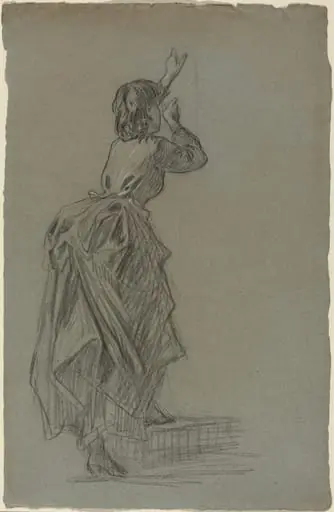
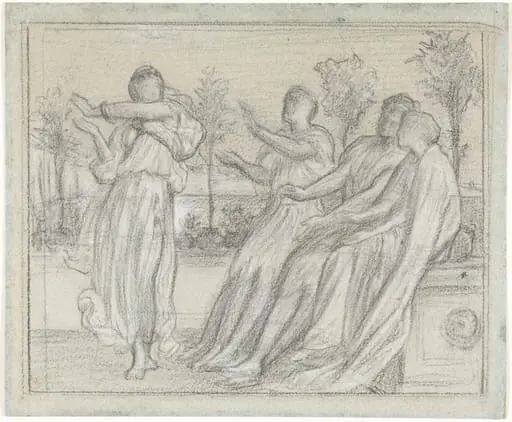 Study for "Greek Girl Dancing"
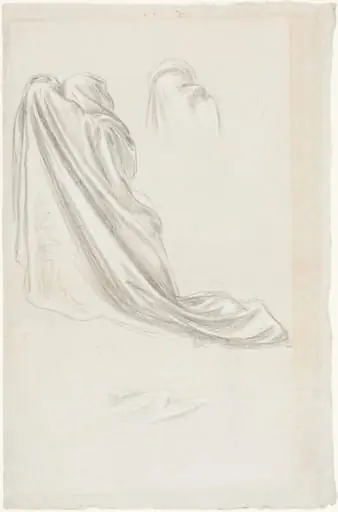 Study for "The Wise and Foolish Virgins"
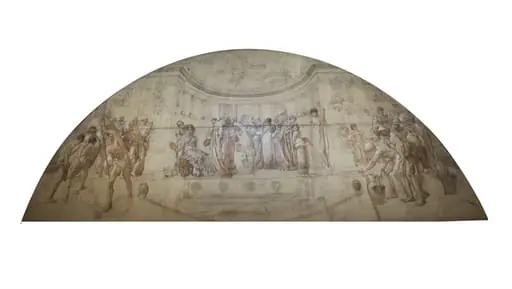 Full-scale monochrome cartoon for 'The Arts of Industry as Applied to Peace'
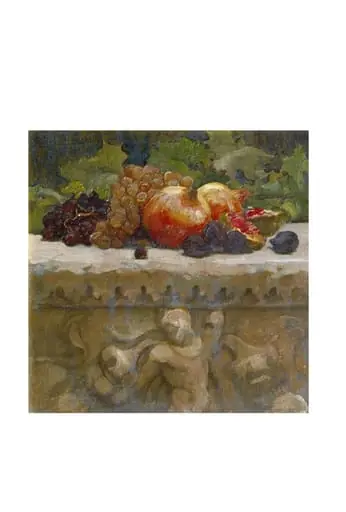 Still-life study of fruit on a marble sarcophagus, used as a preparatory study for <i>Clytie</i>
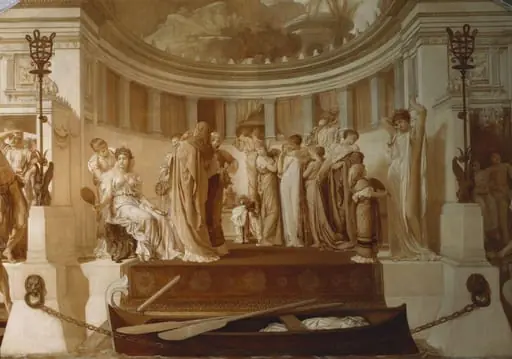 Half-size monochrome cartoon for the spirit fresco 'The Arts of Industry as Applied to Peace'
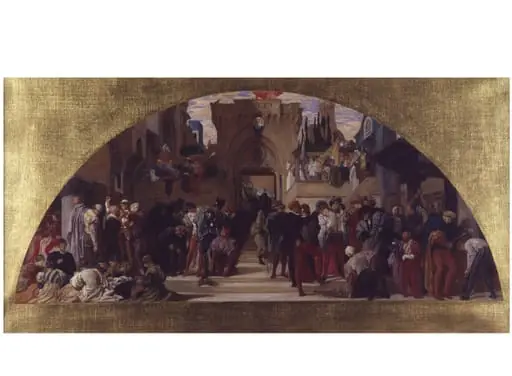 Colour sketch for spirit fresco 'The Arts of Industry as Applied to War'
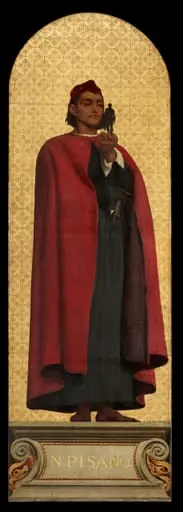 Nicola Pisano: design for a mosaic in the Museum (the 'Kensington Valhalla')
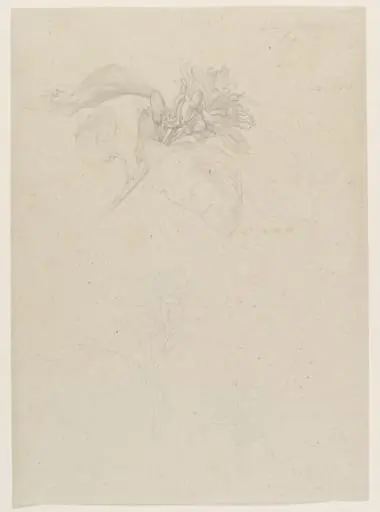 Lemon blossom. Capri