Artwork
Studies of Seven Figures and a Left Arm
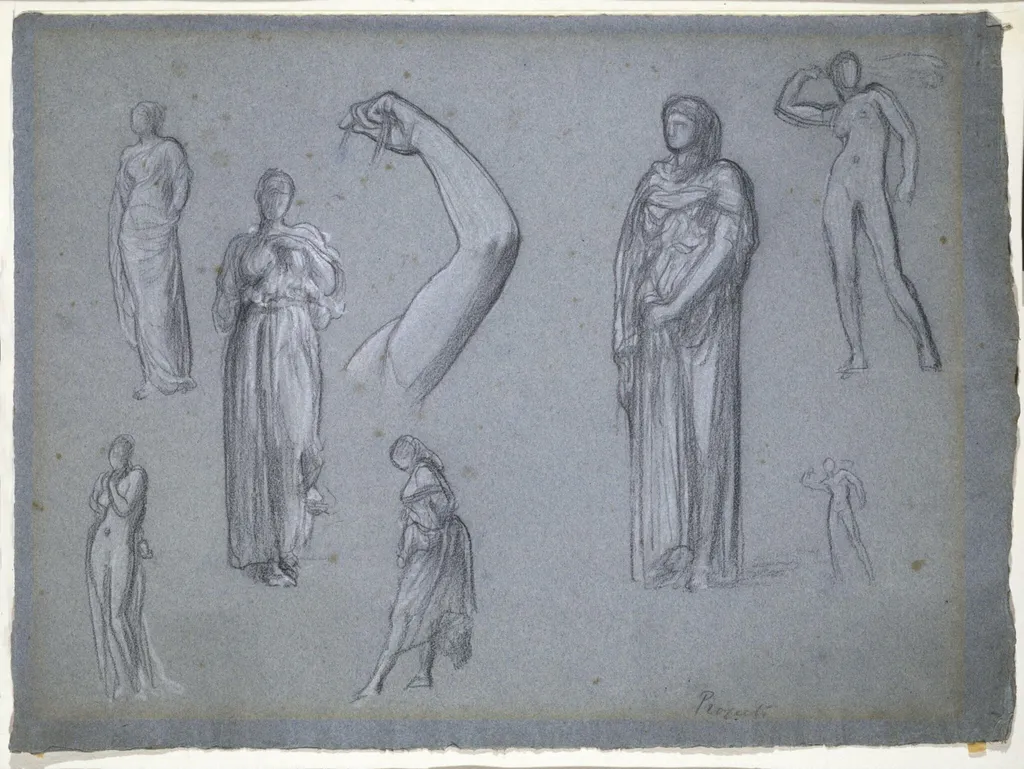
Studies of Seven Figures and a Left Arm is a drawing by Frederic, Lord Leighton. It dates from 1850 and is held in the collection of the Victoria and Albert Museum.
About this work
Overview
Created in 1850, this drawing by Frederic, Lord Leighton consists of seven figure studies and a单独的左臂 rendered in black and white chalk on blue paper. The work is a preparatory exercise, capturing fleeting poses and anatomical observations. Its monochrome palette and textured surface reflect the artist’s focus on form over color, typical of academic training in mid-19th-century Britain.
Subject & Meaning
One holds a cloth over the head, another bends forward, and a third stands with arms crossed—each pose suggests movement or tension.
The figures include both draped and nude subjects, arranged without narrative context. One holds a cloth over the head, another bends forward, and a third stands with arms crossed—each pose suggests movement or tension. The inclusion of clothed and unclothed forms side by side challenges conventional boundaries of propriety, indicating Leighton’s interest in the human body as a subject of structural study rather than moral symbolism.
Technique & Style
Leighton employed light, rapid strokes in chalk to capture gesture and volume. The blue paper provides a mid-tone ground, allowing highlights and shadows to emerge with minimal contrast. Fabric folds are suggested through subtle gradations, revealing his attention to how drapery responds to underlying anatomy. The sketchy quality conveys immediacy, as if the figures were observed in motion and recorded with urgency.
History & Provenance
The drawing was produced during Leighton’s early years in Rome, where he immersed himself in classical sculpture and life drawing. It remained in his personal collection until his death, after which it entered the Victoria and Albert Museum’s holdings. Its preservation reflects its value as a working document, not a finished piece, offering insight into his development as a figure artist.
Context
In mid-19th-century Britain, academic art emphasized rigorous study of the human form, often through isolated figure studies. Leighton’s integration of draped and nude figures in a single sheet diverged from the norm, where such subjects were typically separated by gender or moral context. This approach aligns with continental traditions he encountered in Italy, prioritizing anatomical truth over social convention.
Legacy
This drawing exemplifies Leighton’s commitment to foundational training, influencing later generations of British artists who valued direct observation. Though not exhibited publicly in his lifetime, its survival in the V&A underscores its role as a pedagogical artifact. It remains a quiet testament to the discipline behind his polished final works.
Artist & collection


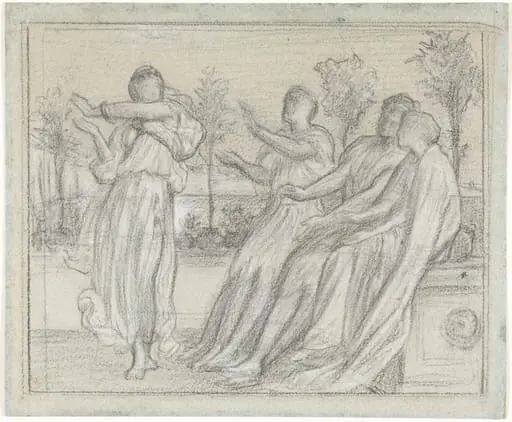 Study for "Greek Girl Dancing"
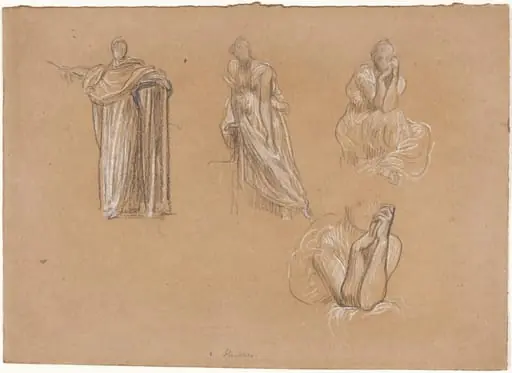 Figure Studies
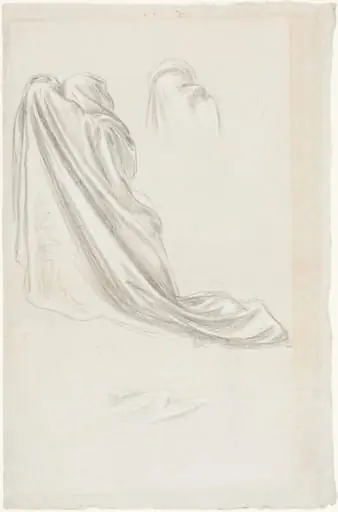 Study for "The Wise and Foolish Virgins"
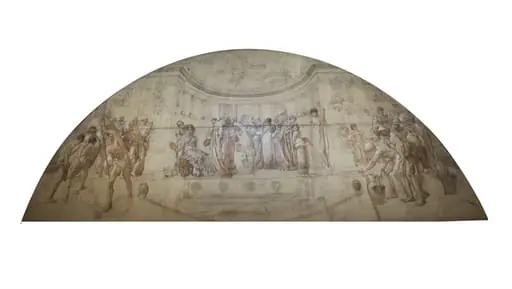 Full-scale monochrome cartoon for 'The Arts of Industry as Applied to Peace'
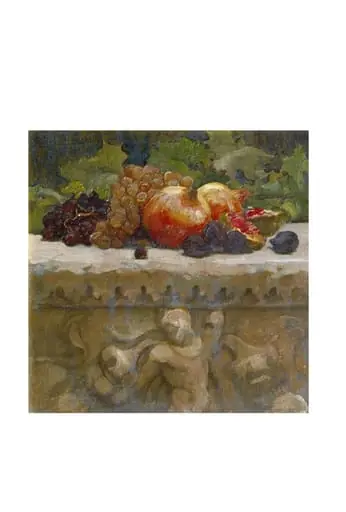 Still-life study of fruit on a marble sarcophagus, used as a preparatory study for <i>Clytie</i>
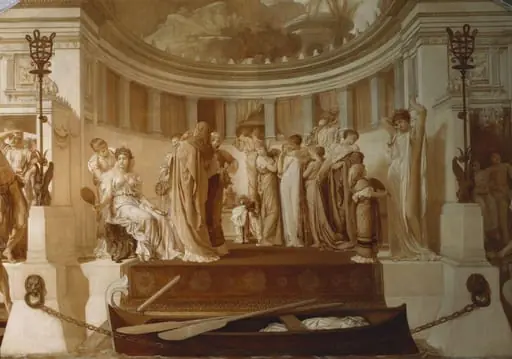 Half-size monochrome cartoon for the spirit fresco 'The Arts of Industry as Applied to Peace'
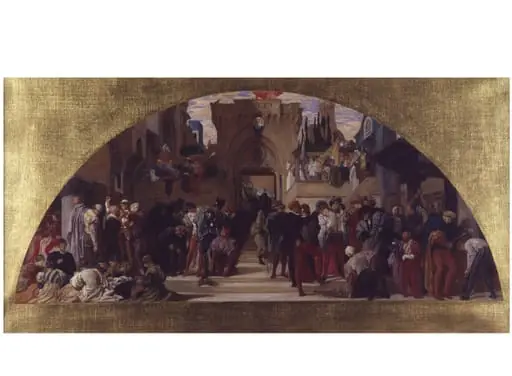 Colour sketch for spirit fresco 'The Arts of Industry as Applied to War'
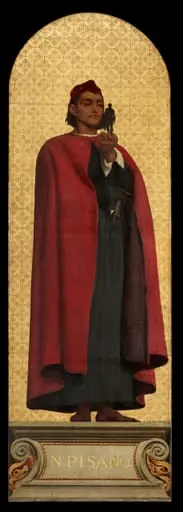 Nicola Pisano: design for a mosaic in the Museum (the 'Kensington Valhalla')
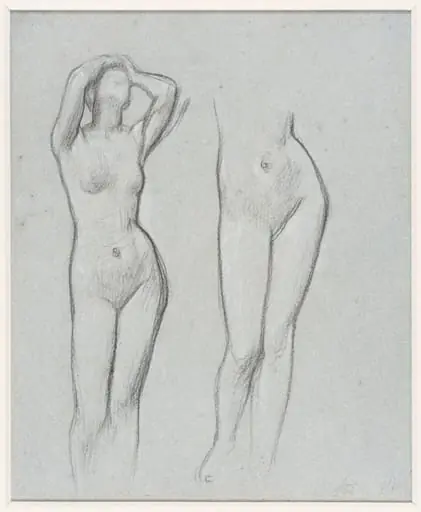 Two studies for 'Electra at the tombo of Agamemnon'
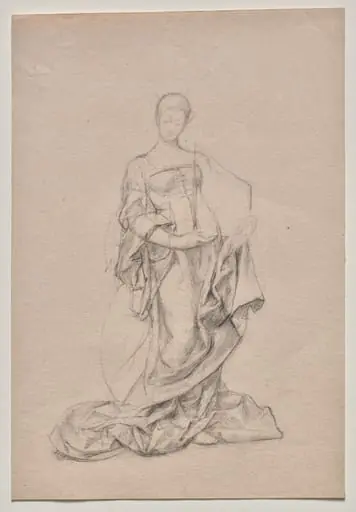 Architecture
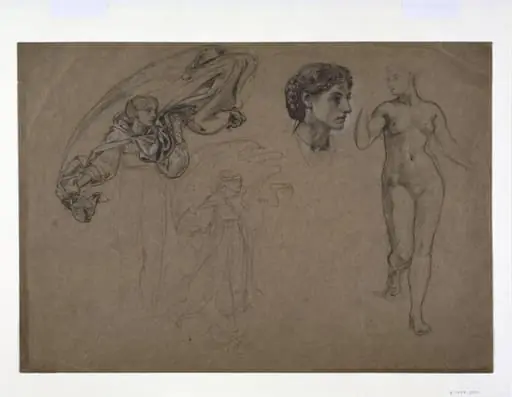 October
![Sheet of Studies, including Warrior with Child [recto and verso], by John Flaxman](https://artifactworldgallery.com/img/john-flaxman--sheet-of-studies-including-warrior-with-child-recto-and-vers--5c5dd1ec083169b5-w320.webp) Sheet of Studies, including Warrior with Child [recto and verso]
Sheet of Studies, including Warrior with Child [recto and verso]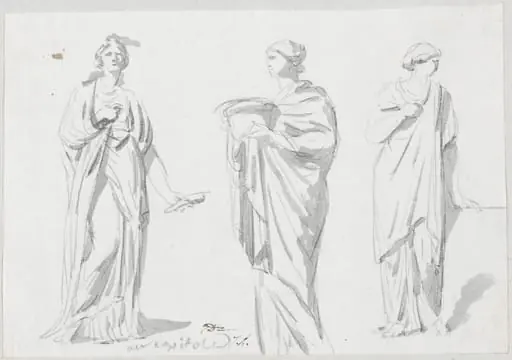 A Muse and Two Female Figures
![Design for a Book Illustration of Circe and Odysseus [recto], by Thomas Stothard](https://artifactworldgallery.com/img/thomas-stothard--design-for-a-book-illustration-of-circe-and-odysseus-recto--5bd59a6f73de4838-w320.webp) Design for a Book Illustration of Circe and Odysseus [recto]
Design for a Book Illustration of Circe and Odysseus [recto]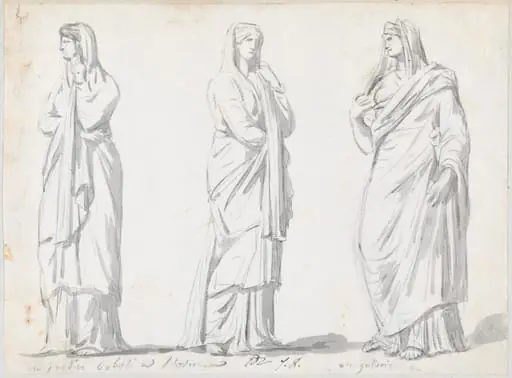 Three Draped Women from the Boboli Gardens and the Uffizi
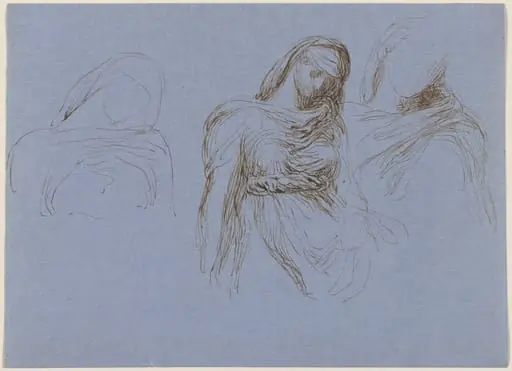 Study of Death for "Time and Death"
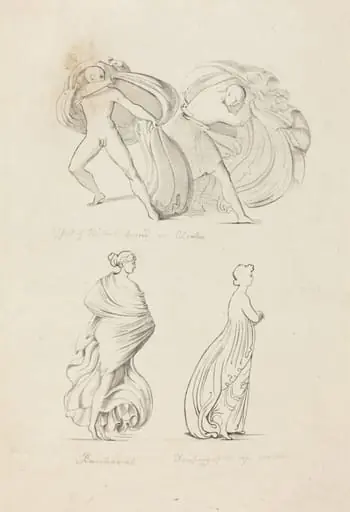 Drapery, Three Figures, a Bacchante and Two From Nature
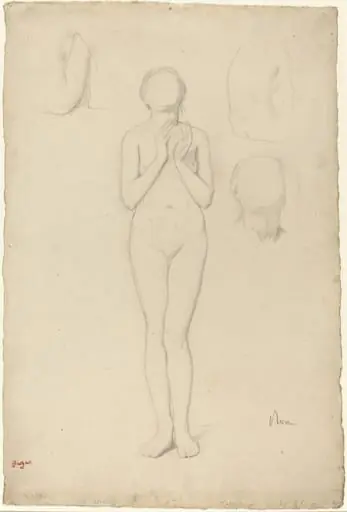 Study of a Female Nude
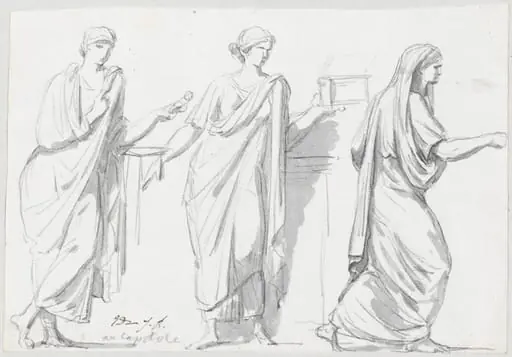 Figures from the Sarcophagus of the Muses