Artwork
Plowing in the Ukraine
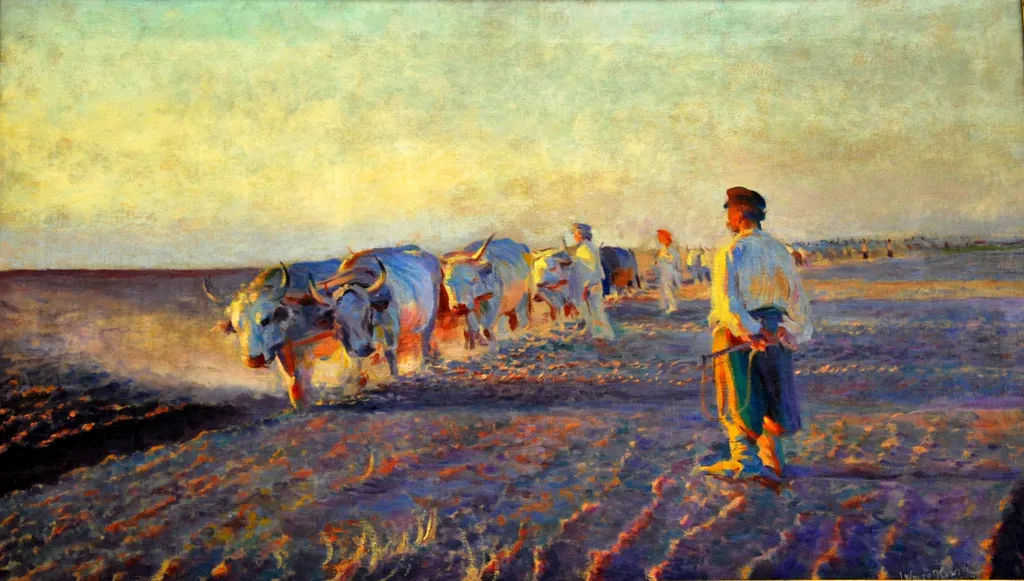
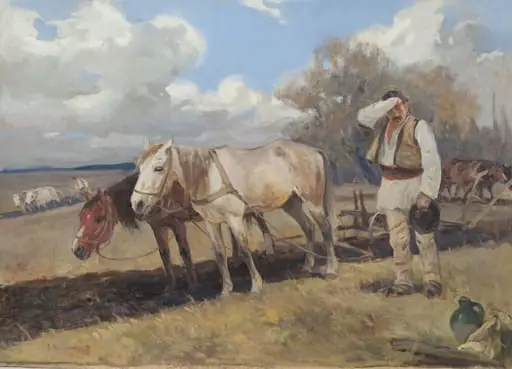
Plowing in the Ukraine is an oil painting by the Impressionist artist Leon Wyczółkowski. It dates from 1896 and is held in the collection of the National Museum in Kraków.
About this work
Overview
The painting resides in the National Museum in Kraków, where it remains a testament to Wyczółkowski’s commitment to documenting the dignity of manual work.
Leon Wyczółkowski’s 1896 oil painting *Plowing in the Ukraine* depicts rural labor in the Ukrainian countryside. Created during a period of intense national cultural renewal in Poland, the work reflects the artist’s engagement with everyday life and landscape. Though linked to broader European trends, its focus on agrarian toil aligns with Polish Realist traditions. The painting resides in the National Museum in Kraków, where it remains a testament to Wyczółkowski’s commitment to documenting the dignity of manual work.
Subject & Meaning
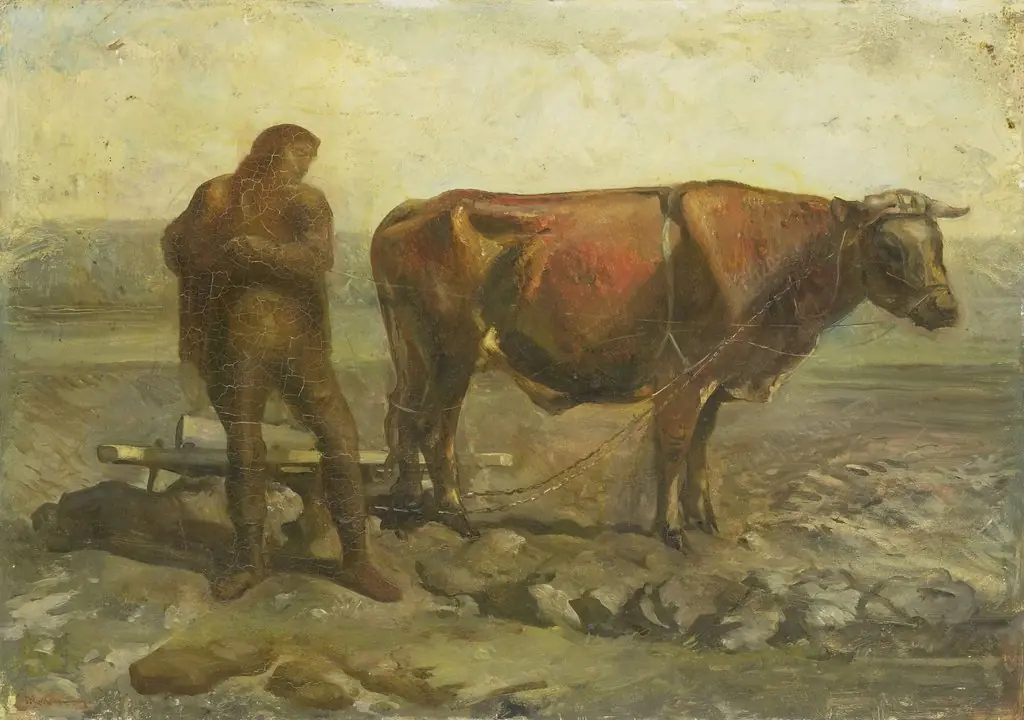
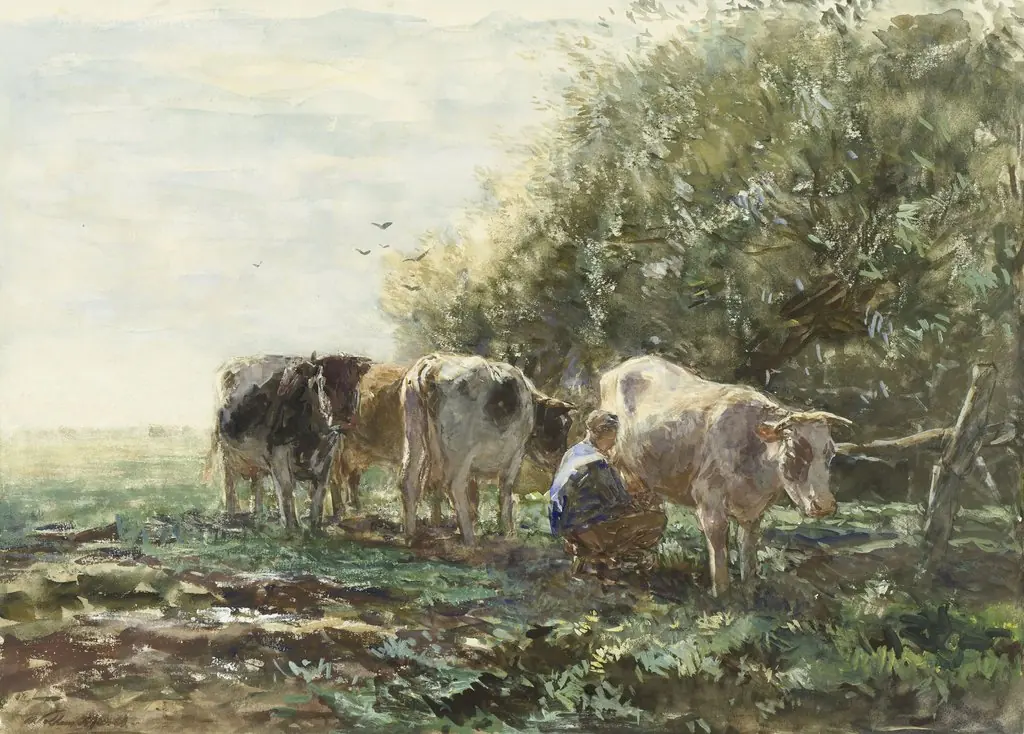
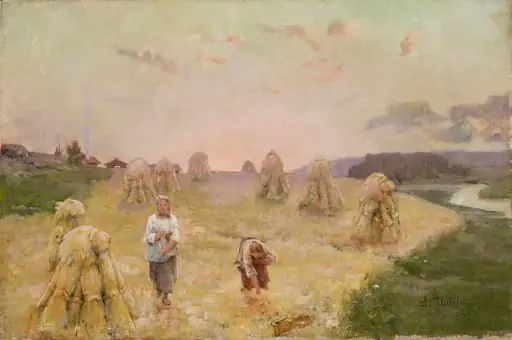
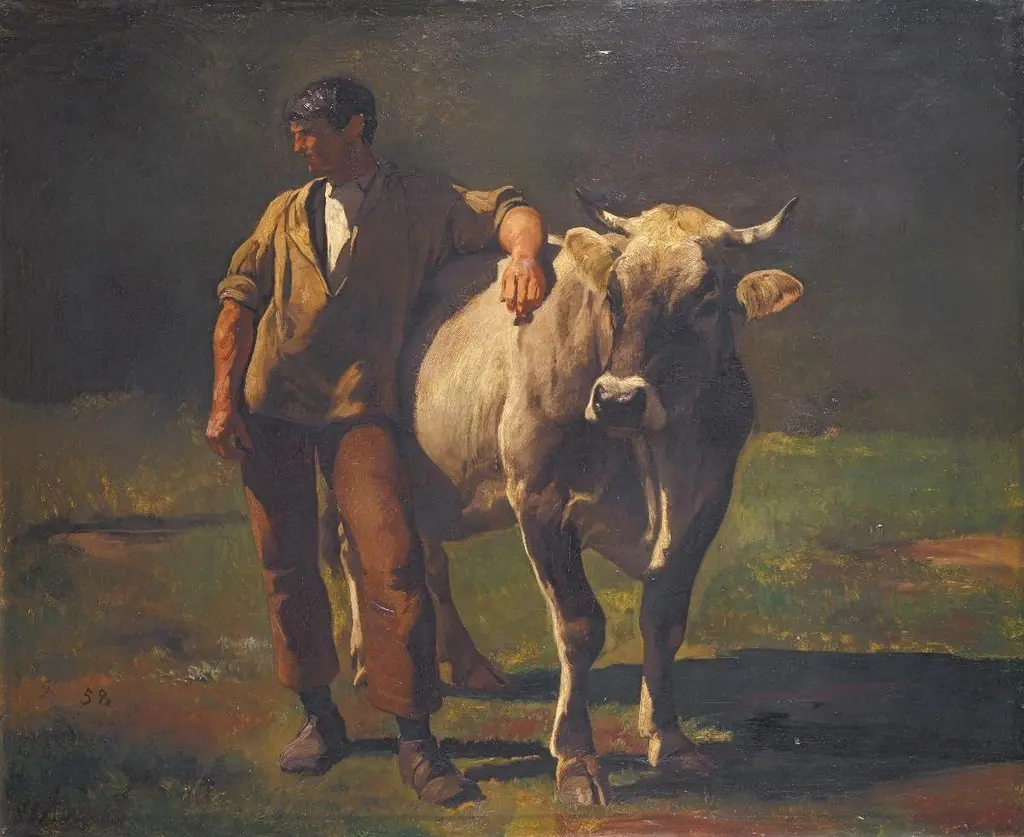
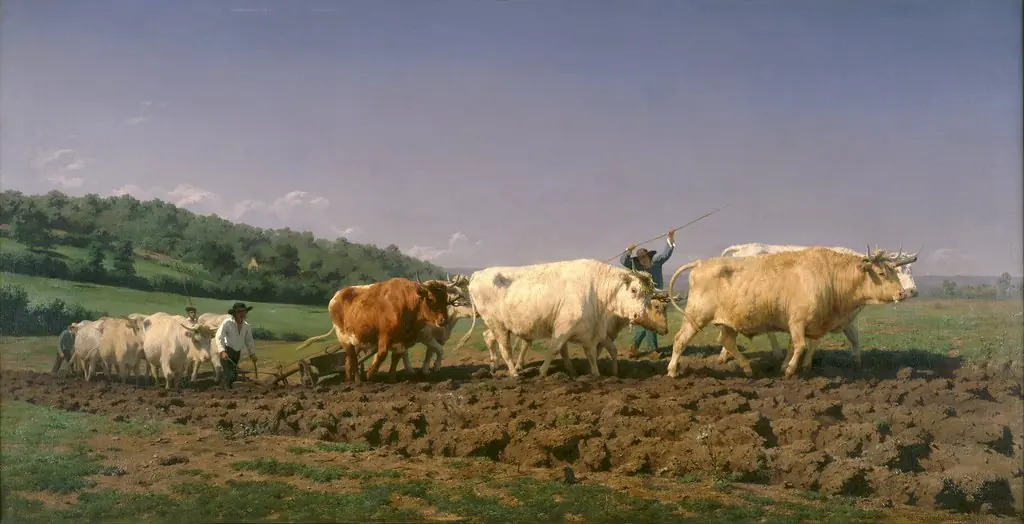
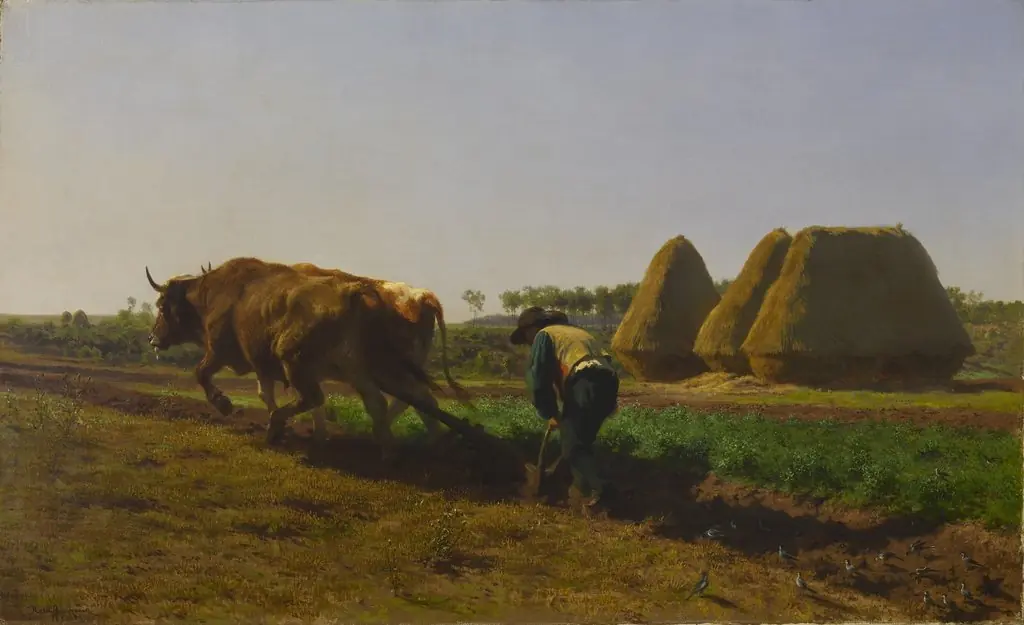
The scene portrays three figures guiding oxen through a dry, plowed field under a pale sky. Their white clothing contrasts with the earthy tones of the land, emphasizing their presence within the landscape. No idealization is present; the figures are absorbed in their labor, their postures conveying endurance rather than drama. The oxen, similarly rendered with quiet intensity, reinforce the theme of sustained effort. The painting avoids sentimentality, instead honoring the quiet persistence of agricultural life.
Technique & Style
Wyczółkowski employs visible, textured brushwork to convey the roughness of soil and the movement of animals. The palette is restrained—browns, greens, and soft blues—grounded in natural observation. Light is rendered diffusely, suggesting an overcast day, while the dry field is built with layered strokes that mimic cracked earth. Though influenced by Impressionist handling of light and surface, the composition remains rooted in detailed realism, prioritizing authenticity over atmospheric effect.
History & Provenance
Painted in 1896, the work emerged during Wyczółkowski’s tenure at the Jan Matejko Academy of Fine Arts in Kraków, where he shaped a generation of Polish artists. It was acquired by the National Museum in Kraków shortly after its creation and has remained in its collection since. The painting reflects the artist’s personal connection to rural Poland and Ukraine, regions he frequently visited and depicted during this phase of his career.
Context
Created during the late 19th century, when Polish identity was shaped under foreign partitions, *Plowing in the Ukraine* resonated as a quiet assertion of cultural continuity. The Young Poland movement sought to revive national consciousness through art rooted in local experience. Wyczółkowski’s focus on peasant labor aligned with this ethos, offering a non-heroic yet deeply human vision of the land and its people, distinct from romanticized or political narratives.
Legacy
The painting stands as a representative example of Polish Realism’s shift toward intimate, unembellished depictions of rural life. Wyczółkowski’s influence extended through his teaching, helping institutionalize this approach in Polish art education. While not widely exhibited internationally, *Plowing in the Ukraine* remains a touchstone in Polish art history for its unadorned portrayal of labor and its technical restraint.
Artist & collection
Artist
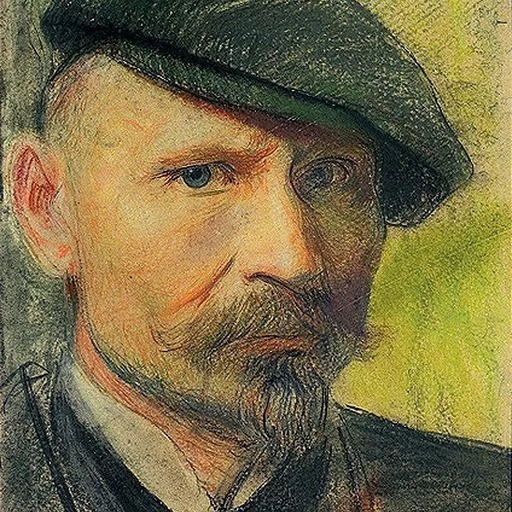
Leon Jan Wyczółkowski (Polish: ; 11 April 1852 – 27 December 1936) was a Polish painter and educator who was one of the leading painters of the Young Poland movement, as well as the principal representative of Polish Realism in art of the…