Artwork
La arat
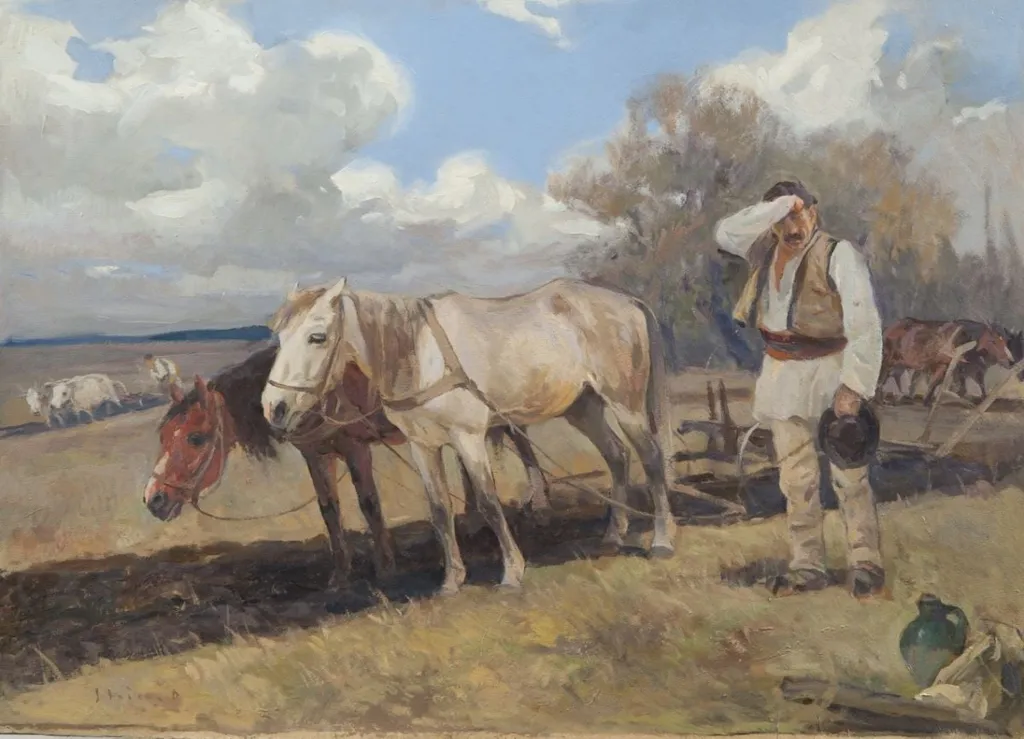
La arat is a print by Ion Stoica Dumitrescu. It dates from 1909 and is held in the collection of the National Museum of Art of Romania.
About this work
Overview
Behind him, two horses pull a plow through open land, while sheep wander near the horizon and trees frame the distant edge of the field.
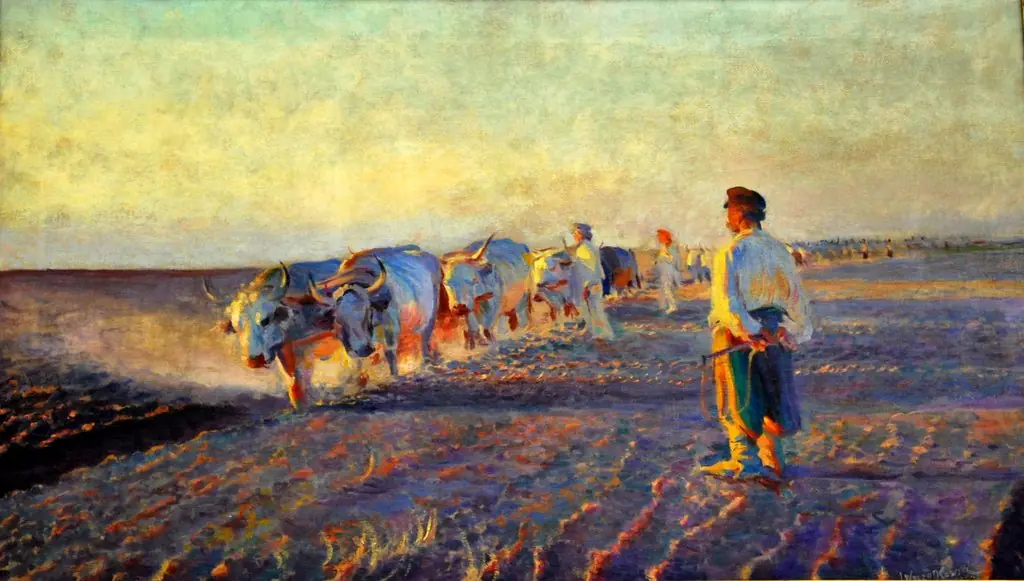
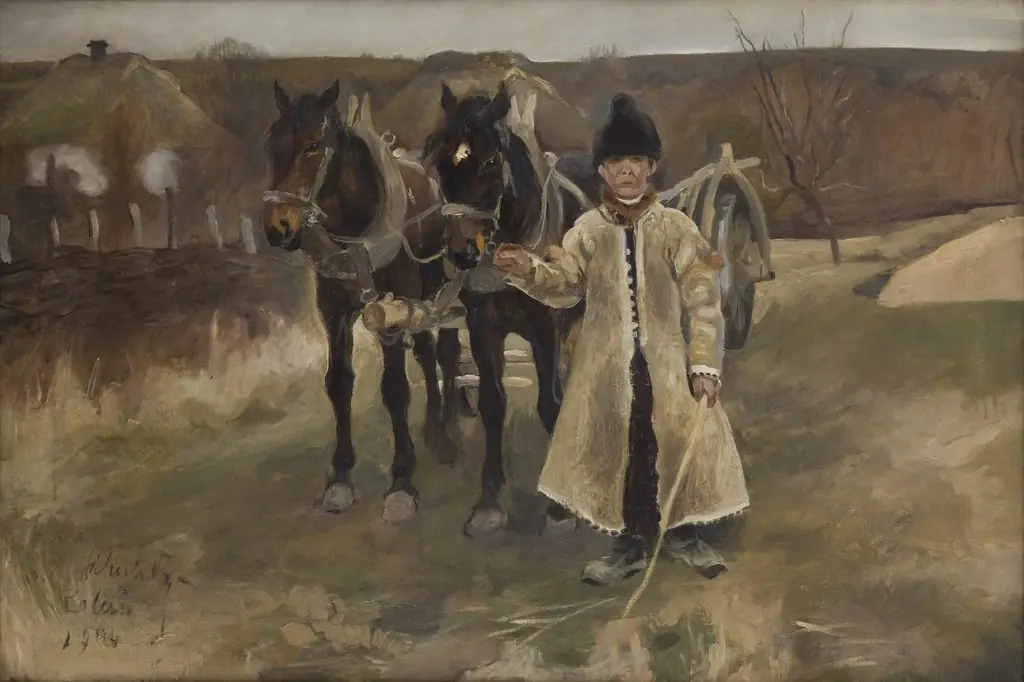
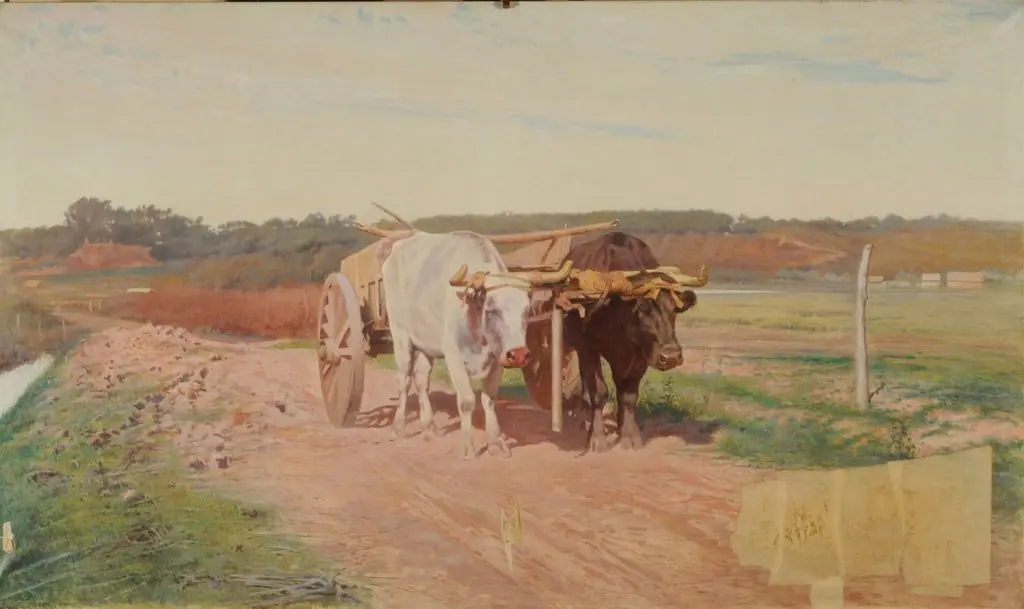
La arat, painted around 1909 by Romanian artist Ion Stoica Dumitrescu, depicts a rural labor scene with quiet realism. The composition centers on a farmer pausing mid-task, his posture suggesting fatigue or contemplation. Behind him, two horses pull a plow through open land, while sheep wander near the horizon and trees frame the distant edge of the field. The work captures a moment of stillness within agricultural labor.
Subject & Meaning
The painting portrays a solitary peasant in a moment of pause, emphasizing the physicality and rhythm of rural life. The absence of dramatic action invites reflection on the quiet endurance of farm labor. The presence of grazing sheep and the expansive sky suggest a harmonious, if demanding, relationship between human effort and the natural environment. The figure’s gesture—scratching his head—adds a touch of human vulnerability to the scene.
Technique & Style
Dumitrescu employs impasto to build texture in key areas: the man’s clothing, the horses’ coats, and the plow’s wooden frame. Thick, visible brushstrokes create a tactile quality, enhancing the sense of weathered fabric and coarse animal fur. The sky and field are rendered with looser, more fluid strokes, contrasting with the heavier application on the figures. This technique draws attention to material presence rather than idealized form.
History & Provenance
Created in the early 20th century, La arat emerged during a period of growing interest in Romanian peasant life among local artists. Though specific ownership records are limited, the work is associated with Dumitrescu’s broader engagement with rural themes during his formative years. It likely circulated in regional exhibitions before entering institutional or private collections, reflecting its status as a representative work of early modern Romanian realism.
Context
In early 1900s Romania, artists increasingly turned to peasant subjects as symbols of national identity, moving away from academic traditions. Dumitrescu’s focus on everyday labor aligns with this trend, influenced by European realist movements and local folk culture. The painting’s unidealized depiction of agriculture reflects a broader cultural shift toward valuing the dignity of rural life, even as modernization began to transform the countryside.
Legacy
La arat remains a quiet but significant example of Romanian realist painting from the pre-WWI era. While not widely reproduced, it is recognized for its honest portrayal of rural labor and its sensitive use of texture. Dumitrescu’s approach influenced later generations of Romanian artists who sought to depict the land and its people without romanticism, anchoring the work within a national artistic lineage focused on authenticity.
Artist & collection
Artist
Ion Stoica Dumitrescu made paintings, prints, and sculpture that look like historical scenes you’d see in old books.