Artwork
Taverna La Fenice, Venice
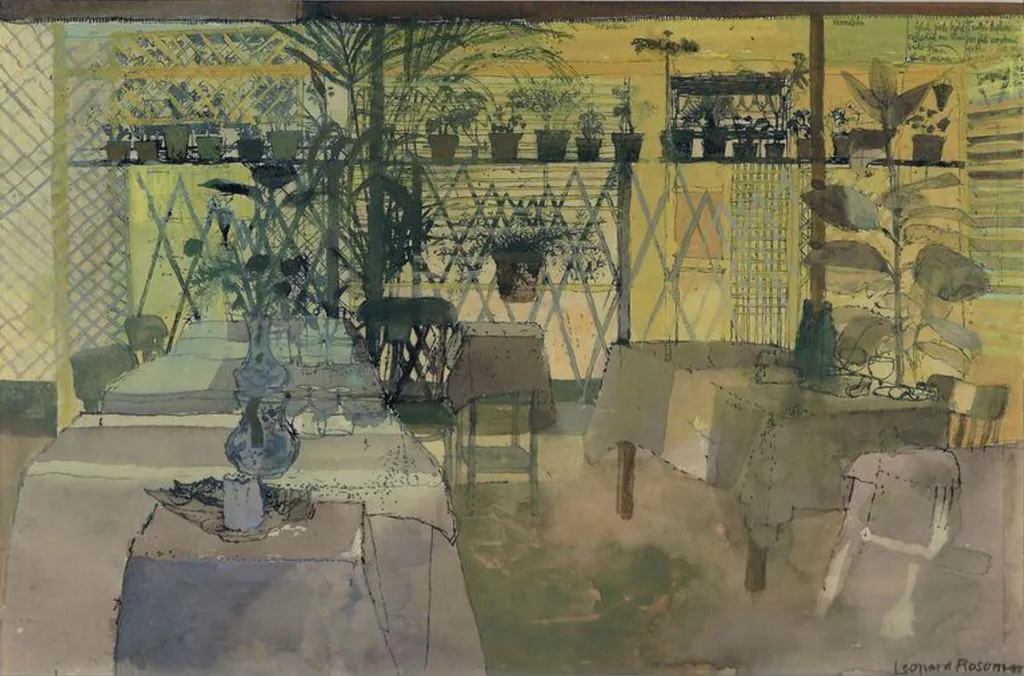
Taverna La Fenice, Venice is a watercolor work on paper by the Post-Impressionist artist Leonard Rosoman. It dates from 1956 and is held in the collection of the Victoria and Albert Museum.
About this work
Overview
Rendered in delicate washes and soft pencil lines, it presents an unidealized view of a modest eating establishment, emphasizing atmosphere over narrative.
Leonard Rosoman created this watercolour in 1956, capturing an interior space in Venice. The work is part of a series documenting everyday environments during his travels. Rendered in delicate washes and soft pencil lines, it presents an unidealized view of a modest eating establishment, emphasizing atmosphere over narrative. The quiet stillness of the scene reflects Rosoman’s interest in ordinary, overlooked spaces.
Subject & Meaning
The painting depicts a dimly lit room that functions as both a taverna and a living quarters. A bed in the corner, draped with a worn cover, suggests the blending of domestic and commercial life. Shelves cluttered with plants and disparate objects imply years of use. The absence of people enhances the sense of solitude, evoking a sense of time suspended rather than a moment of activity.
Technique & Style
Rosoman employed loose, fluid watercolour strokes and restrained tones to convey texture and light. Muted ochres, greys, and pale greens dominate, reinforcing the room’s aged character. Delicate pencil outlines define furniture and objects without sharp detail, while uneven light filtering through a lace curtain creates subtle contrasts. The technique avoids polish, favoring immediacy and a sense of spontaneous observation.
History & Provenance
The painting was completed during Rosoman’s travels in Italy in the mid-1950s. It entered the Victoria and Albert Museum’s collection shortly after its creation, likely acquired directly from the artist. No significant changes in ownership are documented, and it has remained in public institutional care since its acquisition, consistently displayed as an example of postwar British watercolour practice.
Context
In the postwar period, British artists increasingly turned to everyday scenes as subjects, moving away from grand narratives. Rosoman’s work aligns with this trend, reflecting a broader interest in the quiet dignity of mundane spaces. Venice, with its layered history and fading grandeur, offered a rich backdrop for such observations, particularly in its lesser-visited interiors.
Legacy
Taverna La Fenice remains a quiet example of Rosoman’s commitment to documenting unadorned reality. It contributes to a body of work that redefined British watercolour in the 20th century—not through spectacle, but through attentive observation. The painting continues to be referenced in studies of postwar British art for its understated emotional resonance and technical restraint.
Artist & collection

 Interior
 Glastră albastră
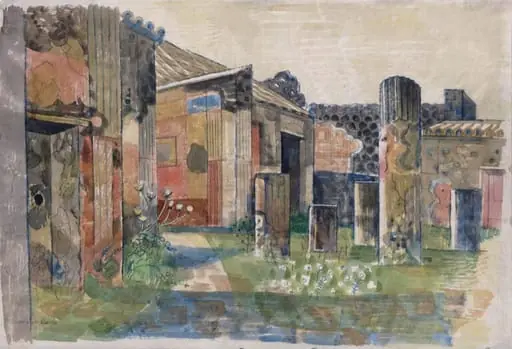 The House of Castor and Pollux, Pompeii
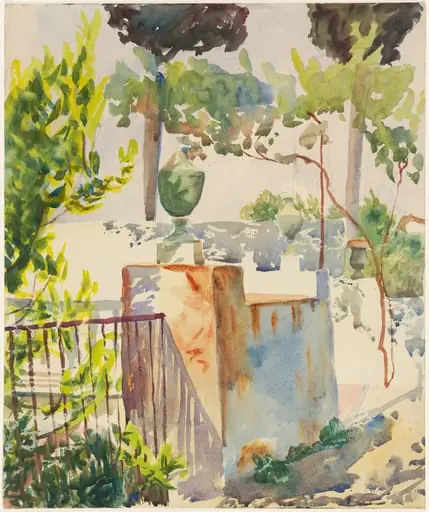 Granada
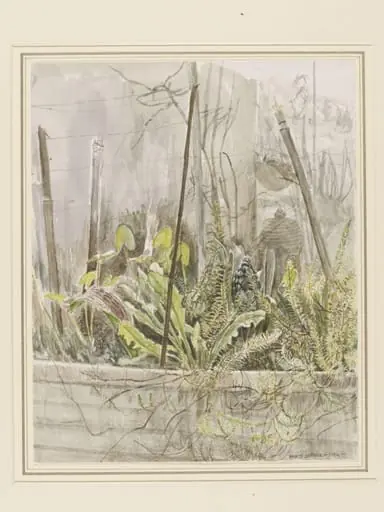 Hyacinth Emerging (the mysteries of the garden no. 5)
 Natură statică cu pere
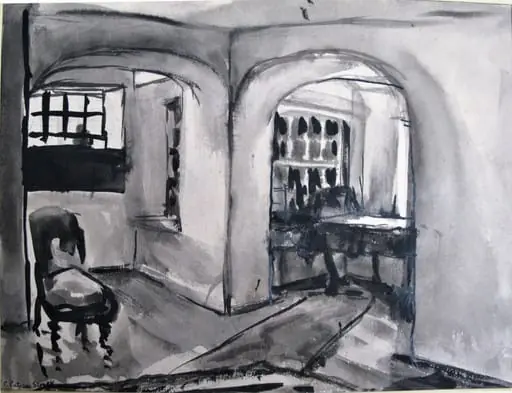 Interior în casa Satmary
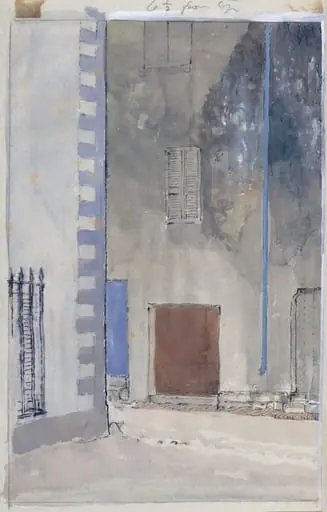 Corner of a street
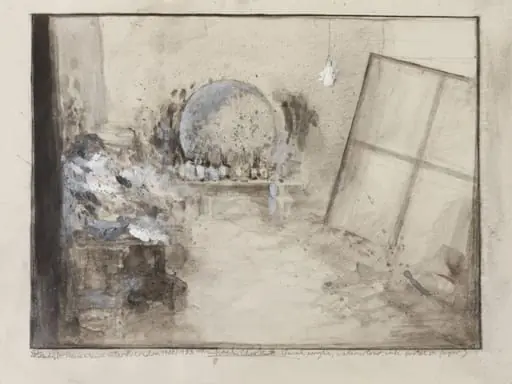 Study for Reece Mews Interior (Francis Bacon's Studio)
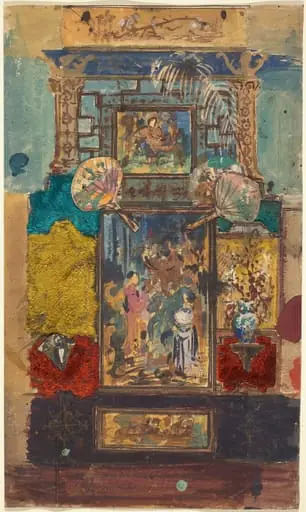 Stage Set Consisting Of Painted Panels, Fabrics, And Fans
 Masa
Masa Flower-piece