Artwork
Masa
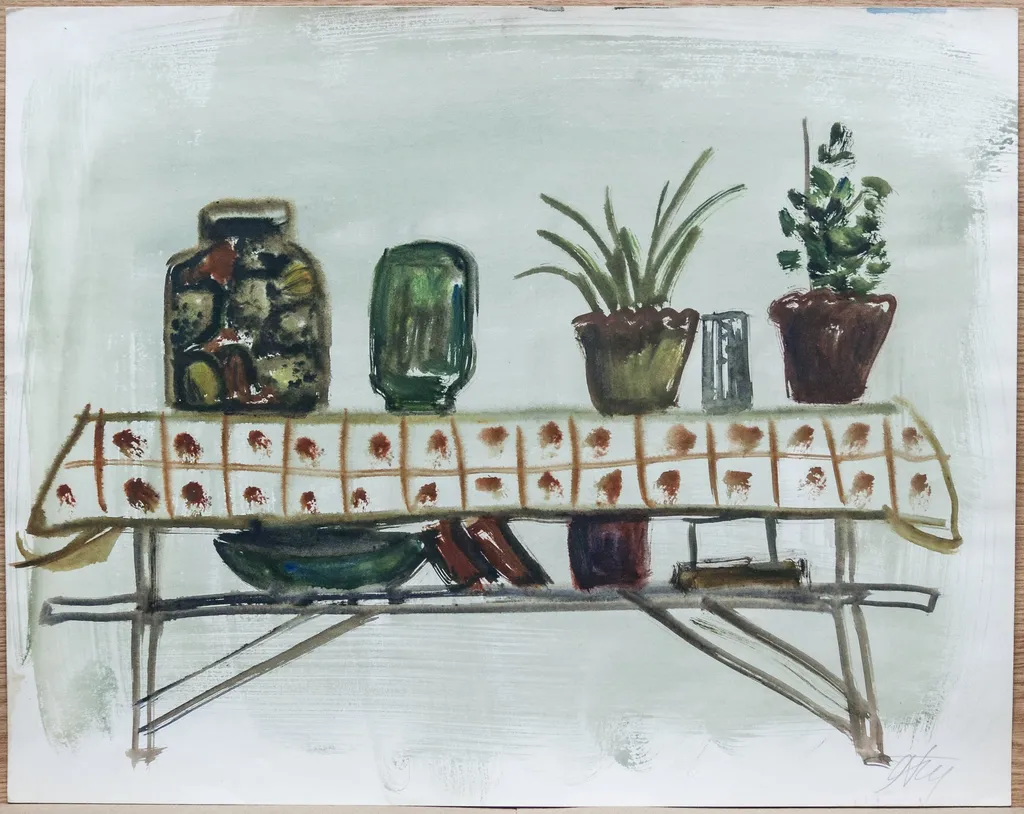
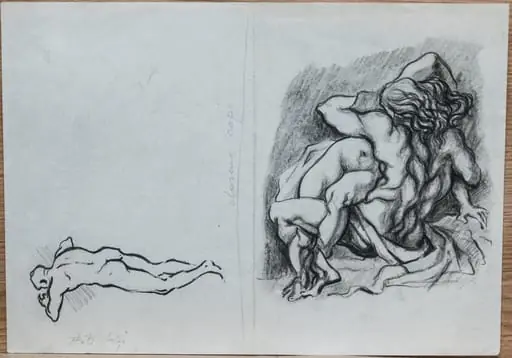
Masa is a print by Teodor Hrib. It dates from 1950 and is held in the collection of the Gavrila Simion Eco-Museum Research Institute Tulcea.
About this work
Overview
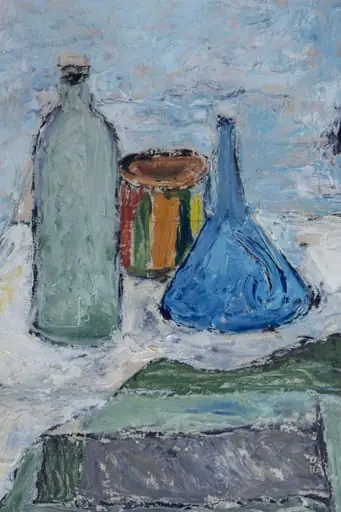
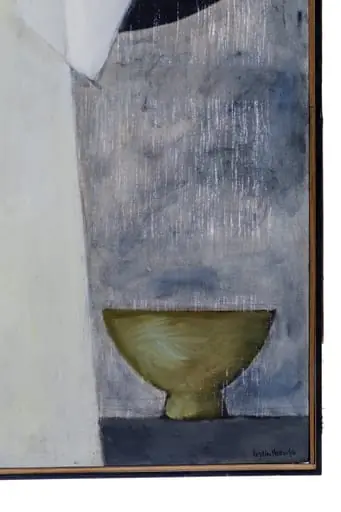
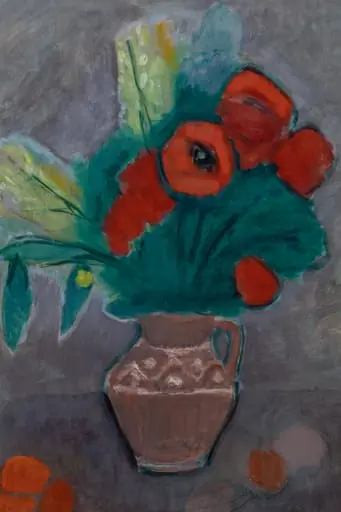
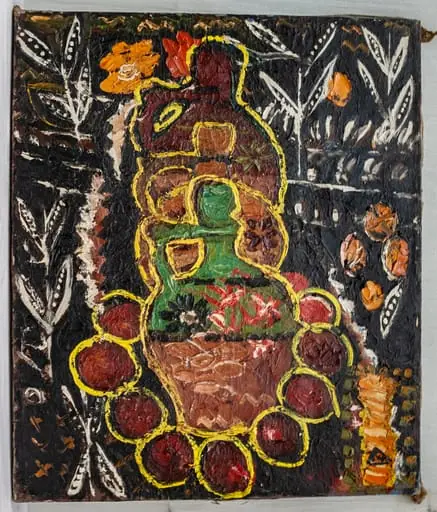
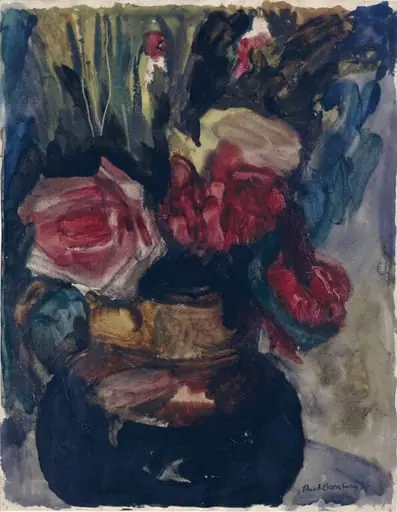
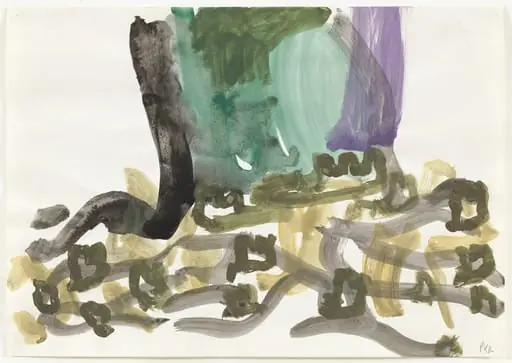
Masa, created around 1950 by Teodor Hrib, is a quiet still-life painting depicting a wooden shelf with four domestic objects. Executed with loose, rapid brushwork, the composition conveys an unembellished observation of ordinary items. The work is part of the collection at the Museum of Ethnography, where it reflects a modest, introspective approach to everyday material culture.
Subject & Meaning
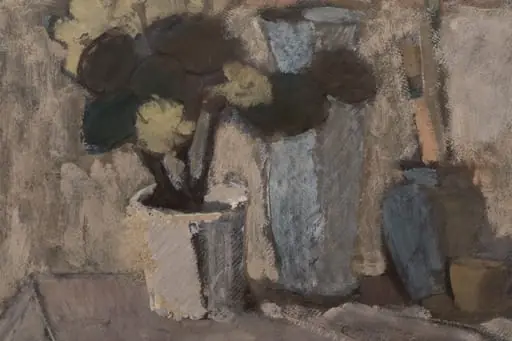
The painting presents a shelf holding a patterned ceramic jar, a small green glass box, and two potted plants—one with spiky foliage, the other with dense, rounded leaves. A cloth with faded red-brown patterning and dark stains lies beneath. These objects, neither ornamental nor symbolic, suggest a lived-in space, inviting contemplation of routine domesticity rather than narrative or allegory.
Technique & Style
The texture of the cloth and the irregularity of the shelf’s surface are rendered with minimal detail, emphasizing immediacy over precision.
Hrib employed swift, unrefined brushstrokes that avoid polish, lending the scene an informal, almost spontaneous quality. The palette is subdued, dominated by earth tones and grays, with the exception of the vivid green glass container, which draws the eye without disrupting the overall restraint. The texture of the cloth and the irregularity of the shelf’s surface are rendered with minimal detail, emphasizing immediacy over precision.
History & Provenance
The painting entered the Museum of Ethnography’s collection shortly after its creation, likely through direct acquisition or donation by the artist. Its placement within an ethnographic institution, rather than a fine arts gallery, suggests an interest in its documentation of ordinary life rather than its aesthetic innovation. No significant exhibition or ownership history beyond the museum is documented.
Context
Created in the early postwar period, Masa aligns with a broader regional tendency toward quiet realism in painting, where artists turned from grand themes to intimate, unadorned subjects. In a time of reconstruction and ideological pressure, such works offered a space for personal observation, subtly resisting monumental narratives by focusing on the persistence of daily routines and humble objects.
Legacy
Masa remains a quiet example of mid-century Eastern European still life, valued for its unpretentiousness and observational honesty. It has not influenced broader art movements but endures as a representative piece within the Museum of Ethnography’s collection, illustrating how ordinary domestic scenes can hold cultural weight through their simplicity and attention to material presence.
Artist & collection
Artist
Teodor Hrib shaped small plaster figures and ink drawings in the 1800s academic tradition.
Museum
Gavrila Simion Eco-Museum Research Institute Tulcea
Continue through works from the same source collection.