Artwork
Myrtle-leaf orange, Citrus myrtifolia
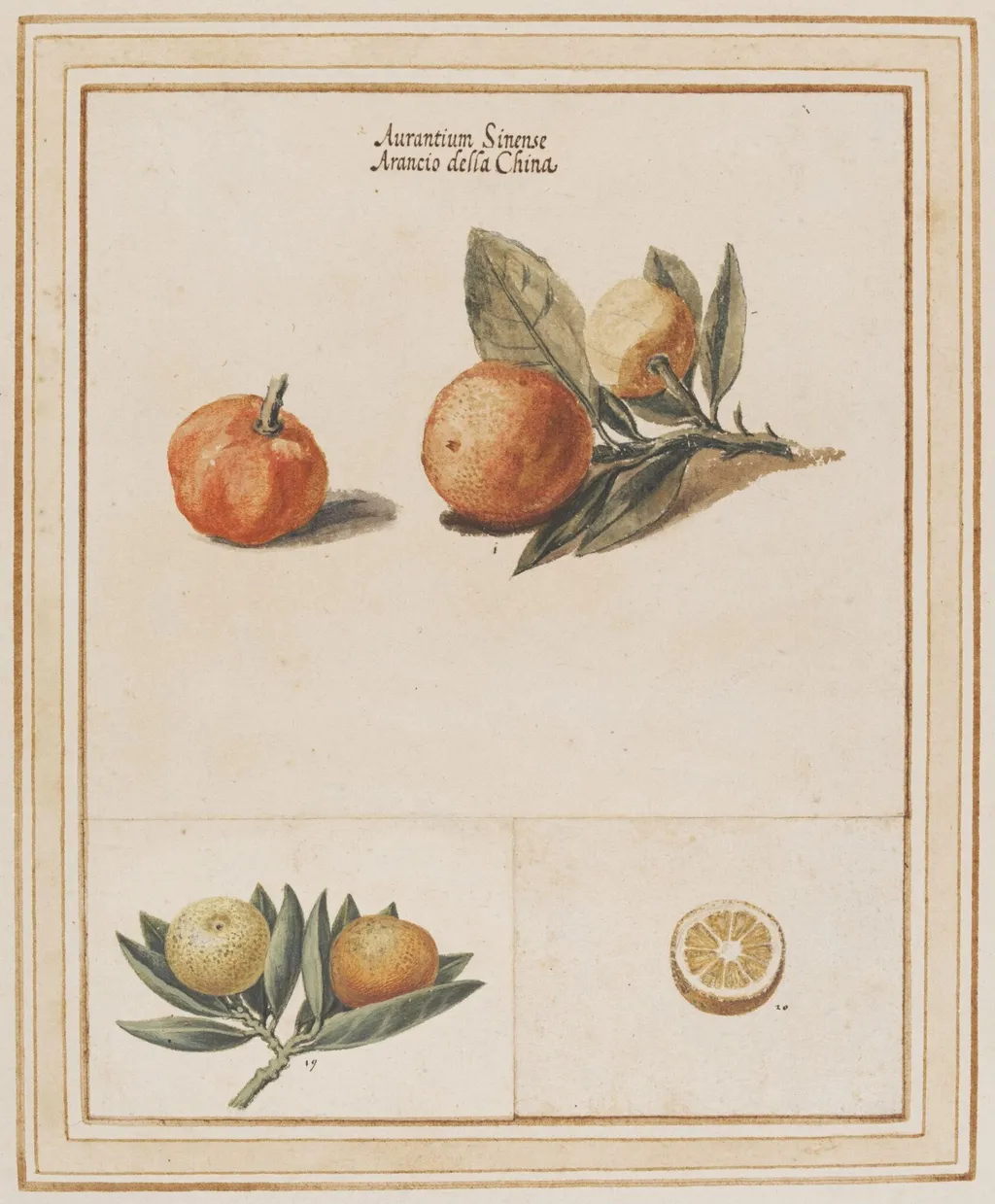
Myrtle-leaf orange, Citrus myrtifolia is a drawing by Vincenzo Leonardi. It dates from 1650 and is held in the collection of the Victoria and Albert Museum.
About this work
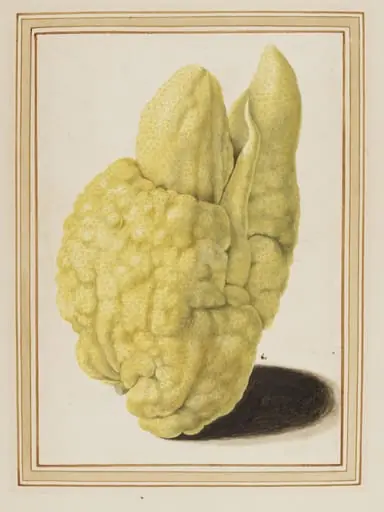
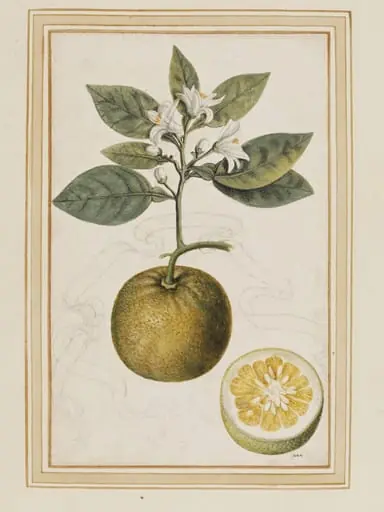
This drawing shows a small citrus fruit called Myrtle-leaf orange. It’s a botanical work in ink on paper by Vincenzo Leonardi.
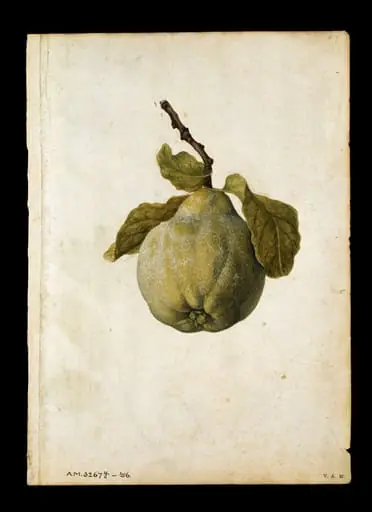
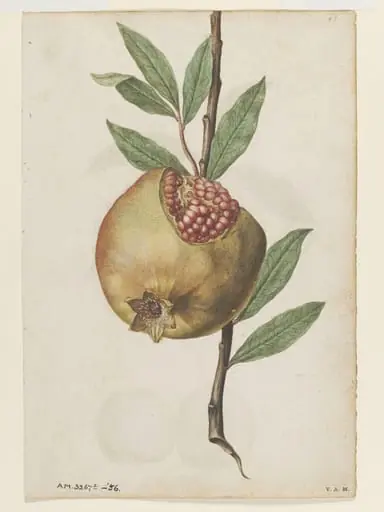
Two of the three drawings here helped make pictures for a 1646 book called Hesperides. That book shows many citrus kinds and garden scenes. The third drawing was done by someone else and didn’t get used.
Look up Leonardi, Vincenzo next.
Overview
It is one of three related botanical studies on the same sheet, two of which served as preparatory models for engravings in J.
This ink drawing on paper depicts the Myrtle-leaf orange, a small citrus variety, executed by Vincenzo Leonardi. It is one of three related botanical studies on the same sheet, two of which served as preparatory models for engravings in J.B. Ferrari’s 1646 publication Hesperides. The third, less refined drawing, is by an unknown hand and was not included in the printed work. All three were once part of Cassiano dal Pozzo’s extensive Paper Museum.
Subject & Meaning
The Myrtle-leaf orange, known for its compact size and fragrant foliage, is rendered with careful attention to botanical accuracy. The drawing functions as a scientific record rather than an ornamental piece, reflecting the 17th-century interest in cataloging cultivated plants. Its inclusion in Hesperides underscores the era’s scholarly focus on documenting citrus varieties, which were prized in Mediterranean horticulture and symbolic of wealth and refinement.
Technique & Style
Leonardi’s technique employs fine, controlled ink lines to define the fruit’s form, texture, and subtle shading. The precision suggests direct observation from life, with minimal embellishment. The composition isolates the specimen against a blank background, emphasizing anatomical clarity over atmospheric context. This restrained aesthetic aligns with the empirical goals of the Paper Museum, prioritizing documentation over artistic flourish.
History & Provenance
The three drawings originated in the collection of Cassiano dal Pozzo, a Roman antiquarian who amassed thousands of natural history sketches known as the Museo Cartaceo. After his death, much of the collection entered the British Royal Library. In the 18th century, some volumes were sold in London; these three were acquired by the V&A in 1949 alongside other citrus and botanical studies from the same original set.
Context
Hesperides, published in Rome in 1646, was a landmark botanical text that illustrated citrus cultivation across southern Europe. Its engravings, based on drawings like Leonardi’s, combined scientific detail with aesthetic presentation. The Paper Museum, which supplied many such images, functioned as an early visual archive, bridging art and natural philosophy during a period when empirical observation was reshaping scientific inquiry.
Legacy
Leonardi’s drawings, though not widely known outside specialized circles, exemplify the transition from decorative naturalism to systematic botanical illustration. Their survival within institutional collections highlights the enduring value placed on observational accuracy in pre-modern science. The V&A’s acquisition preserved a fragment of a larger intellectual project that helped shape early modern botanical taxonomy.
Artist & collection

Artist
Vincenzo Leonardi was an Italian illustrator of natural history, who for some 20 years collaborated with Cassiano dal Pozzo (1588–1657), a prominent member of the Lincean Academy and noted art collector from Turin.