Artwork
Sour orange
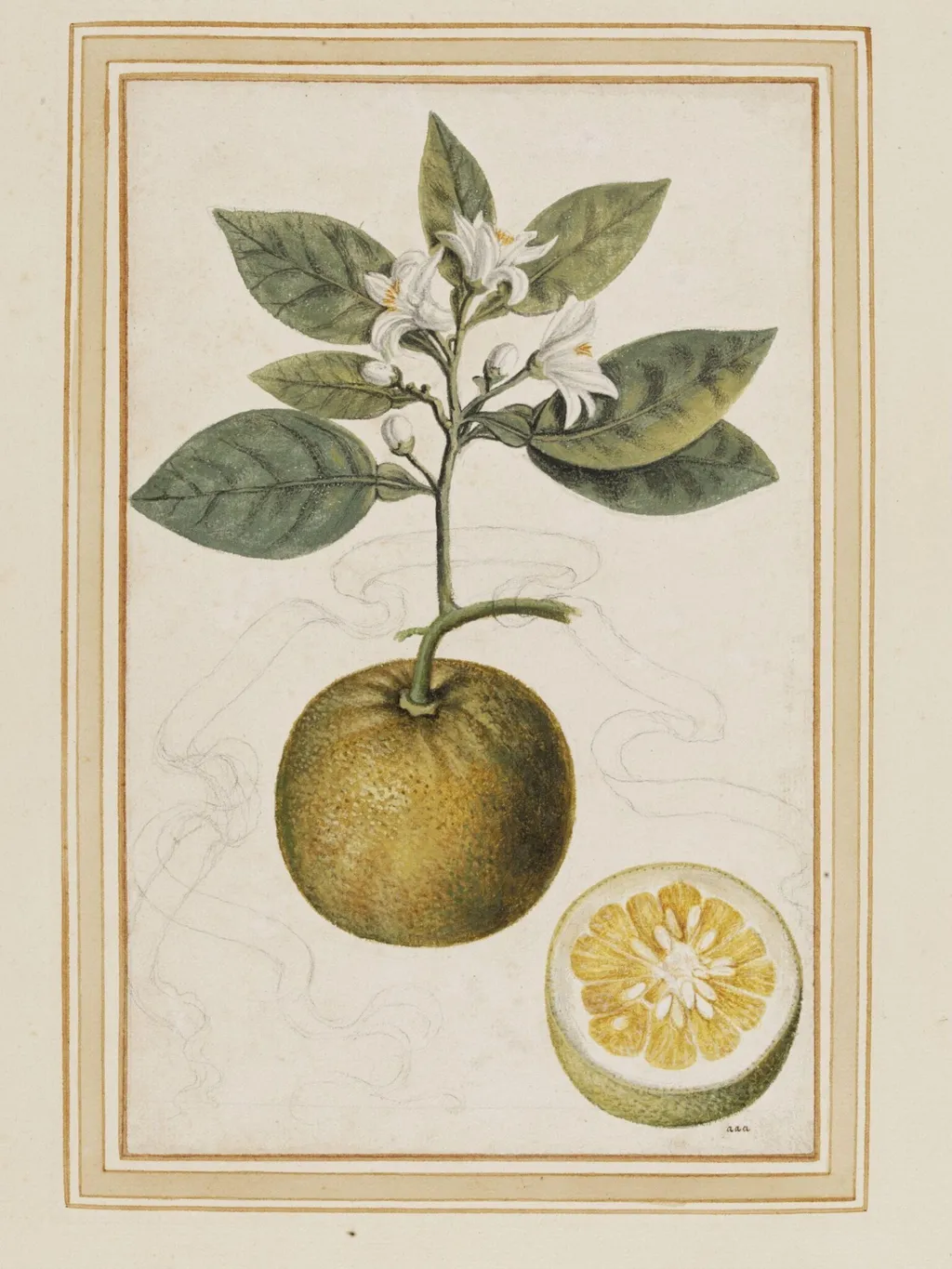
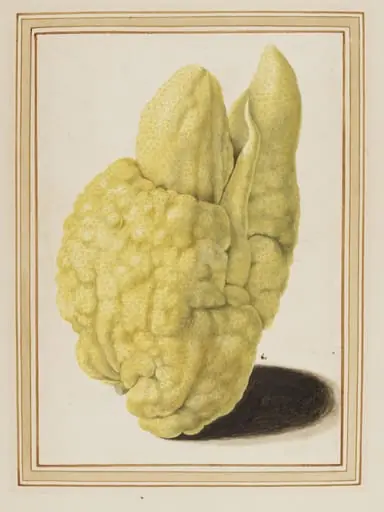
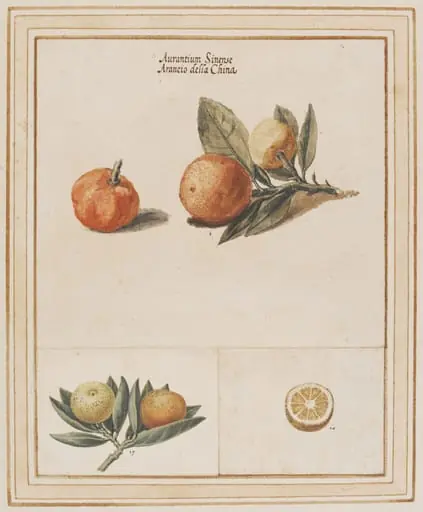
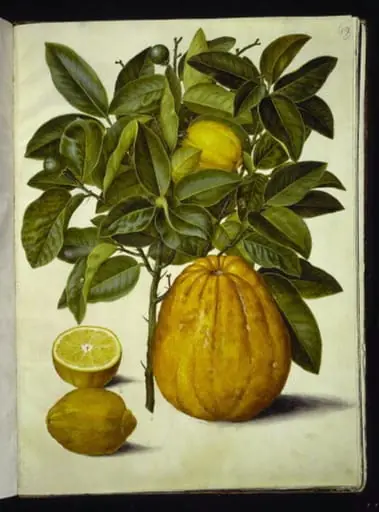
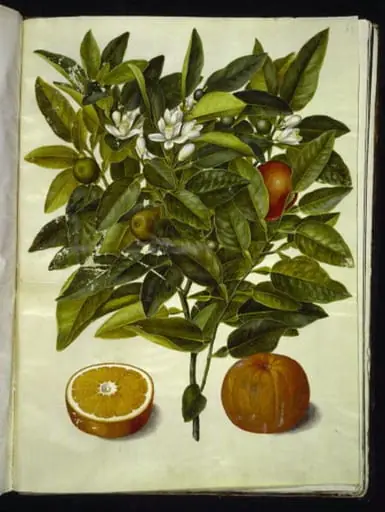
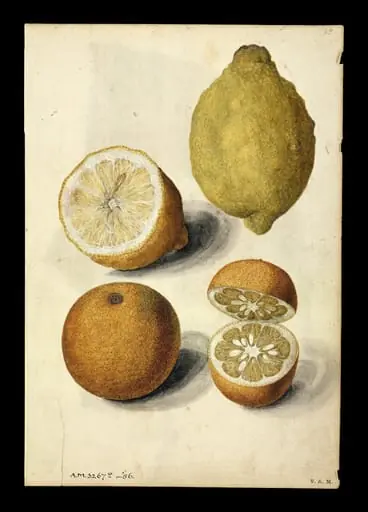
Sour orange is a watercolor work on paper by the Baroque artist Vincenzo Leonardi. It dates from 1640 and is held in the collection of the Victoria and Albert Museum.
About this work
Overview
This watercolour is one of thousands of natural history illustrations compiled by Cassiano dal Pozzo in the early 17th century as part of his 'Paper Museum.
This watercolour is one of thousands of natural history illustrations compiled by Cassiano dal Pozzo in the early 17th century as part of his 'Paper Museum.' Designed as a visual archive of the natural world, the collection prioritized empirical accuracy over artistic flourish. The piece depicts a sour orange, rendered with precision to serve scientific documentation rather than aesthetic display, reflecting the growing emphasis on direct observation in early modern natural philosophy.
Subject & Meaning
The sour orange is shown both intact and halved, a standard method in the Paper Museum to reveal internal structure alongside external form. This dual perspective was not decorative but analytical, intended to aid botanical classification and agricultural study. The fruit’s depiction aligns with the Accademia dei Lincei’s commitment to observable truth, positioning the image as a tool for understanding plant morphology rather than a symbol of abundance or exoticism.
Technique & Style
Executed in watercolour, the drawing employs fine, controlled brushwork to capture texture, color gradation, and anatomical detail. Shadows and highlights are minimized to avoid subjective interpretation. The composition is frontal and symmetrical, isolating the subject against an unmarked background to eliminate distraction. These choices reflect a deliberate effort to produce neutral, reproducible records suitable for scholarly comparison and publication.
History & Provenance
Created for Cassiano dal Pozzo’s private collection, the drawing was likely produced by a commissioned artist, possibly Vincenzo Leonardi, based on stylistic analysis. It was later used as the basis for an engraving published in Giovanni Battista Ferrari’s 1646 treatise on citrus cultivation, linking it to broader scientific discourse. The original survives as part of the Royal Collection at Windsor Castle, preserved as a key component of the Paper Museum’s legacy.
Context
The drawing emerged during a period when visual documentation was becoming central to scientific inquiry. The Accademia dei Lincei, which included Galileo, championed direct observation over textual authority. Cassiano’s project aligned with this ethos, assembling images of flora, fauna, and antiquities as alternatives to written descriptions. Such illustrations formed a visual lexicon for naturalists before photography, bridging art and science in an era of emerging empiricism.
Legacy
The Paper Museum’s approach influenced later scientific illustration practices, setting precedents for objectivity and detail in natural history art. Though the artists remain largely anonymous, their work provided foundational visual records for botany and horticulture. This watercolour, reproduced in a major 17th-century treatise, exemplifies how visual archives contributed to the institutionalization of scientific knowledge in early modern Europe.
Artist & collection

Artist
Vincenzo Leonardi was an Italian illustrator of natural history, who for some 20 years collaborated with Cassiano dal Pozzo (1588–1657), a prominent member of the Lincean Academy and noted art collector from Turin.