Artwork
Sea bay
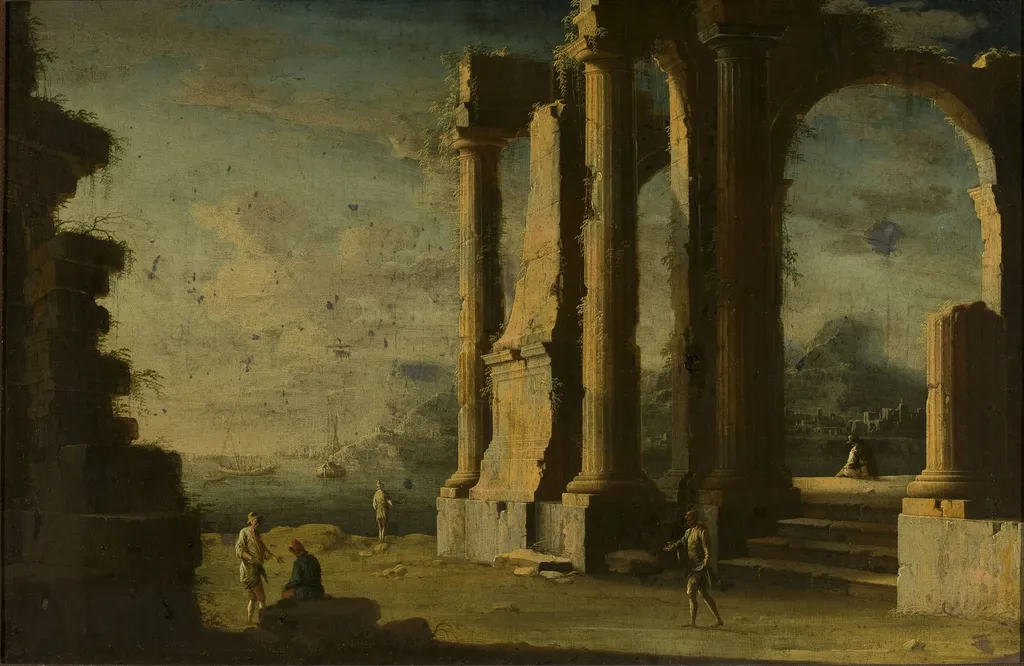
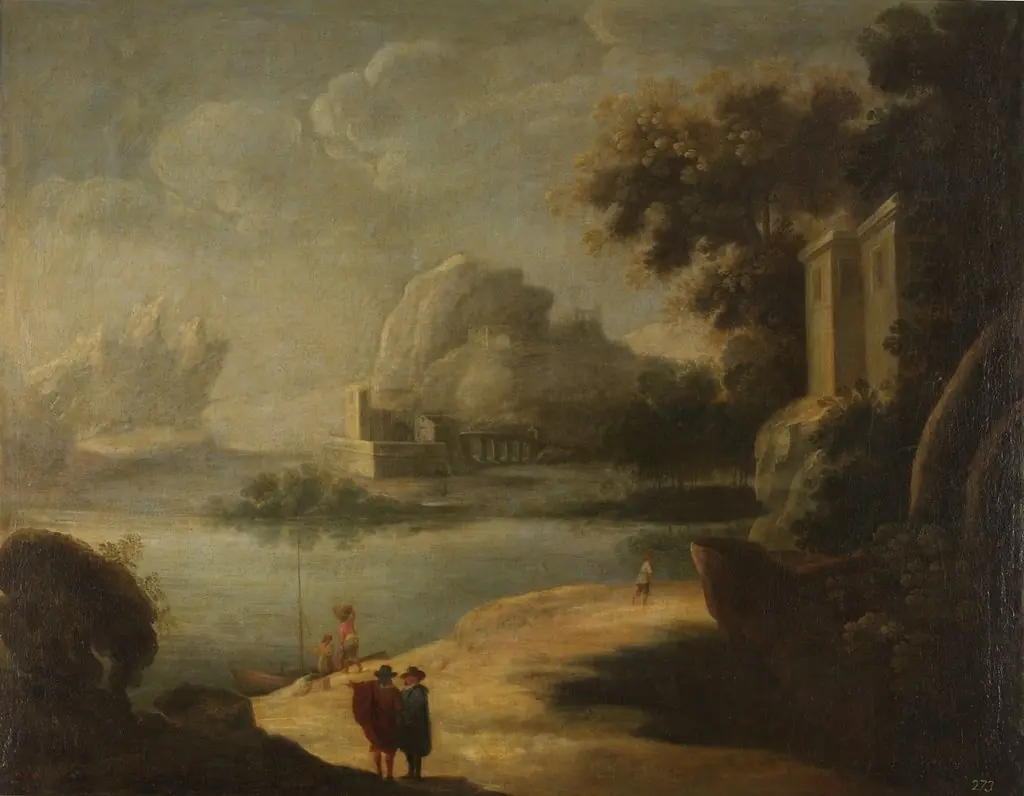
Sea bay is an oil painting by Leonardo Coccorante. It dates from 1725 and is held in the collection of the National Museum in Warsaw.
About this work
Overview
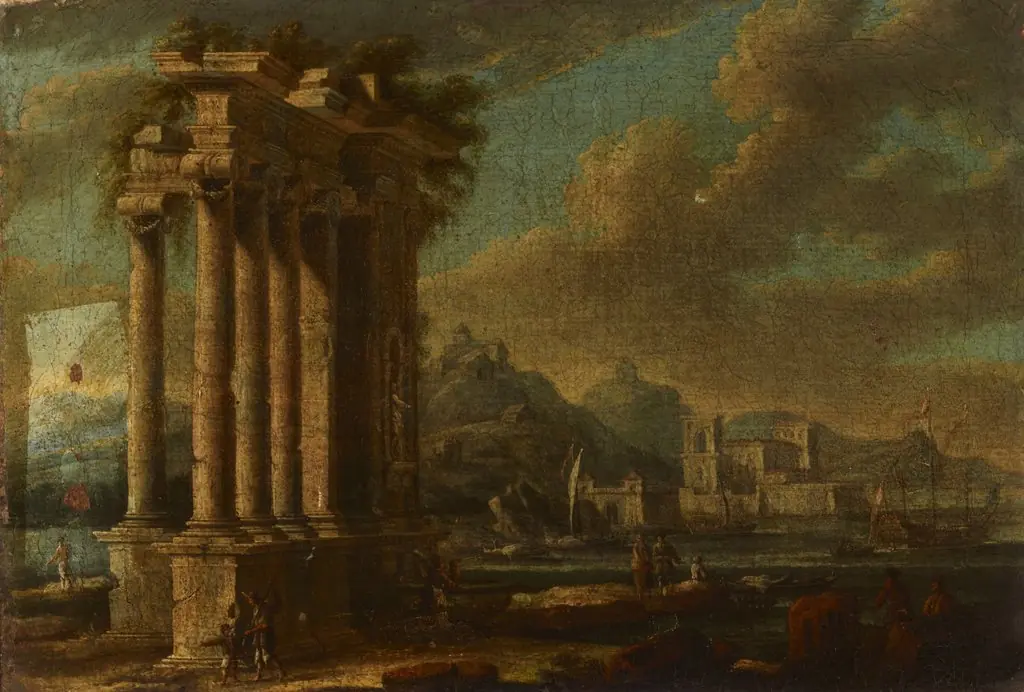
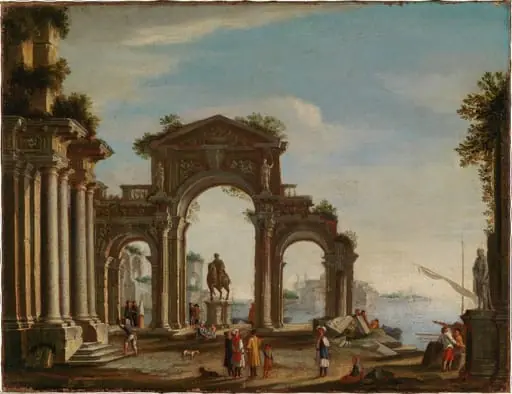
Leonardo Coccorante’s oil painting *Sea Bay*, executed circa 1725, depicts an imagined coastal vista where figures gather on a shore beneath a distant mountain range. The composition merges natural scenery with architectural fragments, creating a harmonious yet fictitious landscape that reflects the artist’s interest in classical ruin motifs.
Subject & Meaning
The foreground shows a small group of people at the water’s edge, suggesting a moment of leisure or contemplation, while the background’s towering mountains convey a sense of timeless grandeur. The juxtaposition of human activity with vast, idealized nature invites reflection on the relationship between civilization and the sublime.
Technique & Style
Coccorante employs oil’s capacity for layered texture, using chiaroscuro to model forms and generate contrast between illuminated surfaces and shadowed depths. This treatment enhances the three‑dimensional illusion of the architectural elements and the rugged terrain, lending the scene both drama and atmospheric depth despite its tranquil subject.
History & Provenance
Created in the early eighteenth century, the work aligns with the period’s fascination with capriccio—a genre that blends real and invented architectural features. *Sea Bay* entered the collection of the National Museum in Warsaw, where it remains part of the institution’s holdings of Italian Baroque landscape painting.
Context
The painting belongs to the Venetian tradition of vedute and capricci, where artists such as Canaletto and Piranesi combined accurate topography with imaginative reconstruction. Coccorante’s focus on classical ruins and dramatic lighting situates the work within a broader European interest in antiquity and the theatrical potential of landscape.
Own this work as a print
Artist & collection
Artist
Leonardo Coccorante (1680–1750) was an Italian painter known for his capricci depicting imaginary landscapes with ruins of classical architecture.