Artwork
Virgin and Child
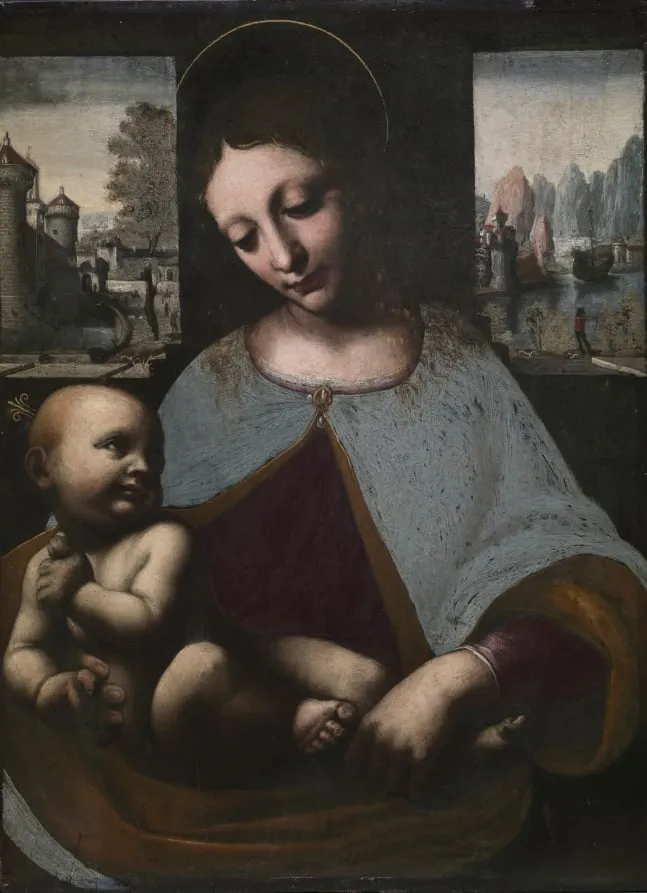
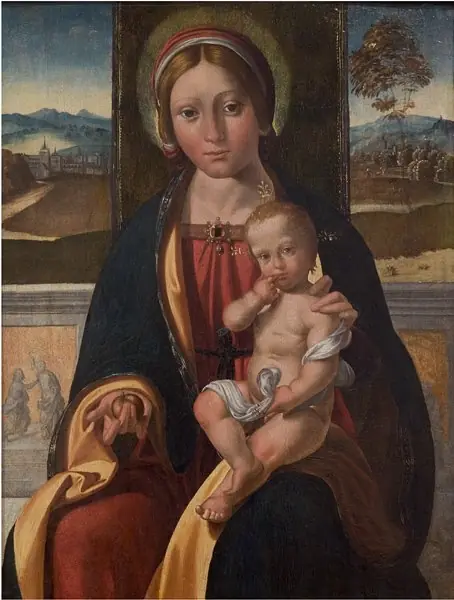
Virgin and Child is an unspecified painting by the High Renaissance artist Leonardo da Vinci. It is held in the collection of the Cleveland Museum of Art.
About this work
Overview
Once attributed to Leonardo da Vinci, the work is now generally linked to an artist within his Milanese circle, though no definitive hand has been established.
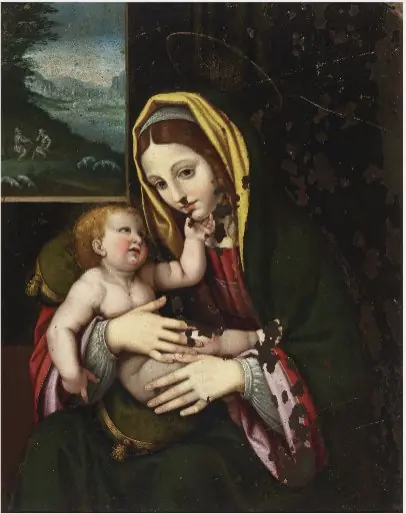
This half-length painting depicts the Virgin Mary seated beside the Christ Child, both framed by a dark interior with a distant view of Sforzesco Castle. Once attributed to Leonardo da Vinci, the work is now generally linked to an artist within his Milanese circle, though no definitive hand has been established. The composition reflects Leonardesque conventions in posture and lighting, yet lacks the refined modeling characteristic of Leonardo’s autograph works.
Subject & Meaning
The Virgin and Child are portrayed in an intimate, domestic setting, emphasizing maternal tenderness. The Child turns his head toward his mother, his body partially obscured in shadow, suggesting a moment of quiet connection rather than formal devotion. The inclusion of the Sforzesco Castle in the background subtly ties the sacred scene to the political and cultural milieu of Renaissance Milan, grounding the divine in a recognizable earthly context.
Technique & Style
The figures are rendered with soft transitions between light and shadow, echoing Leonardo’s sfumato technique. However, the facial features lack the subtle anatomical precision and psychological depth found in his works. The landscape behind them is delicately hinted at, with hazy hills and architectural forms rendered in muted tones, suggesting an apprentice or follower attempting to emulate Leonardo’s atmospheric perspective without fully mastering its nuances.
History & Provenance
Acquired by James Jackson Jarves in the 19th century as a Leonardo, the painting’s attribution shifted after stylistic comparisons were made to works by Francesco Napolitano, a lesser-known associate of Leonardo’s workshop. While Napolitano remains a plausible candidate, the attribution is not universally accepted. The painting’s survival through private collections and its early misattribution reflect the broader 19th-century fascination with Leonardo’s circle and the challenges of attributing workshop productions.
Context
The depiction of the Torre del Filarete in the background provides a key chronological clue: the tower was destroyed by lightning in 1521, meaning the painting must predate that event. Its presence confirms the work was created during the height of Sforza patronage in Milan, likely between 1495 and 1510. This places it within a period when Leonardo’s influence dominated local artistic production, even as his direct involvement in individual works became less frequent.
Legacy
Though no longer considered a Leonardo, the painting remains a significant example of how his stylistic innovations permeated the broader Milanese school. It illustrates the diffusion of his techniques among followers and the difficulty of distinguishing between master and pupil in Renaissance workshops. The work continues to be studied as a bridge between Leonardo’s innovations and the emerging generation of artists who absorbed, but did not fully transform, his visual language.
Artist & collection

![Ginevra de' Benci [obverse], by Leonardo da Vinci](https://artifactworldgallery.com/img/leonardo-da-vinci--ginevra-de-benci-obverse--afb6ec3a3e65f392-w320.webp)
![Wreath of Laurel, Palm, and Juniper with a Scroll inscribed Virtutem Forma Decorat [reverse], by Leonardo da Vinci](https://artifactworldgallery.com/img/leonardo-da-vinci--wreath-of-laurel-palm-and-juniper-with-a-scroll-inscribed-vi--4cdfe8467ad2438a-w320.webp)
 The Virgin and Child
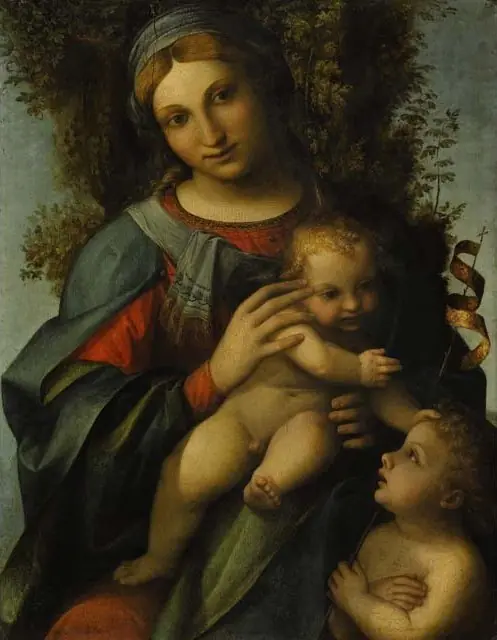 Madonna and Child with infant St John the Baptist
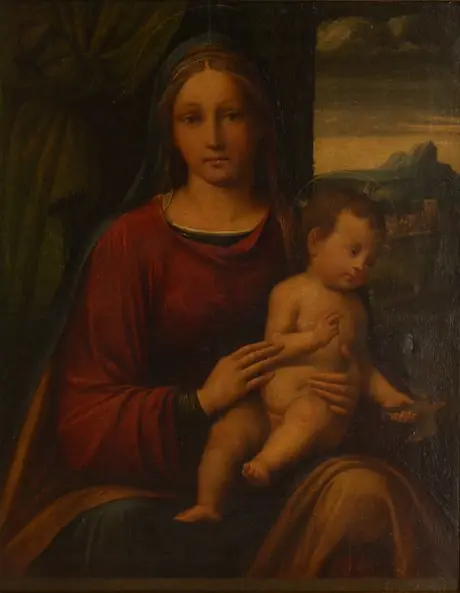 Madonna and Child
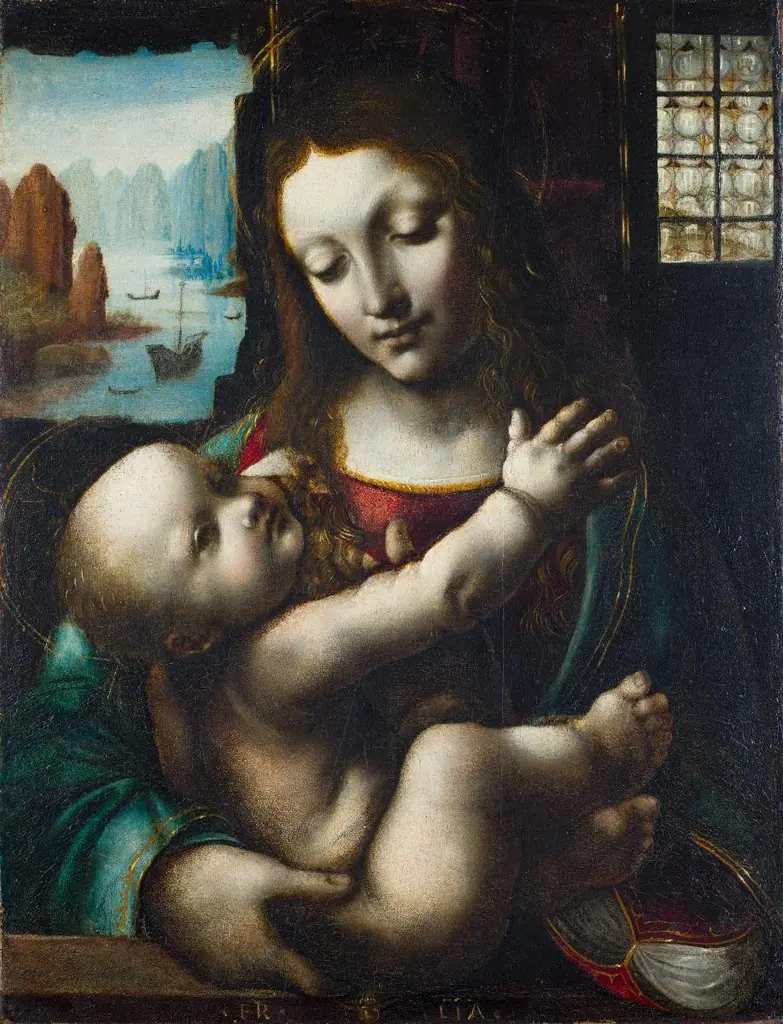 Maria mit Kind
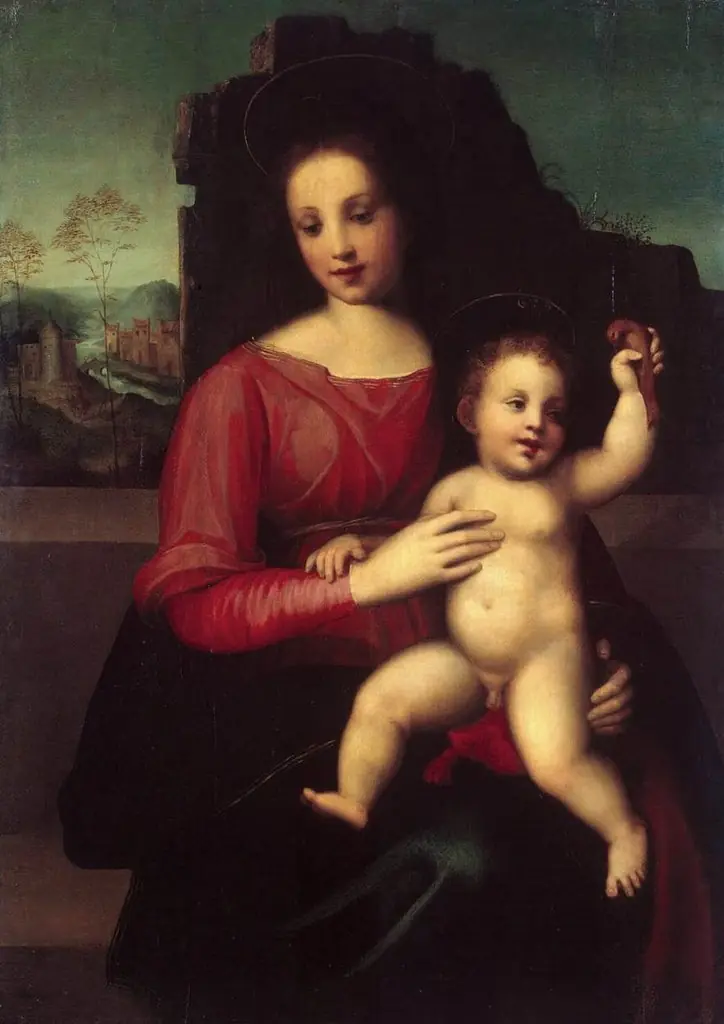 Madonna with Child
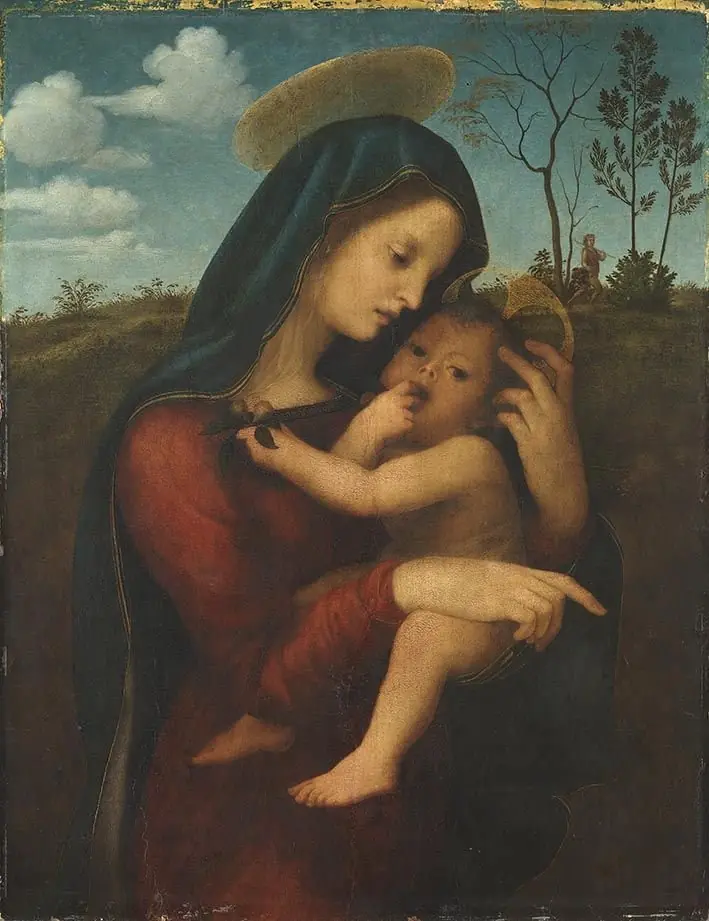 Madonna with Christ-child
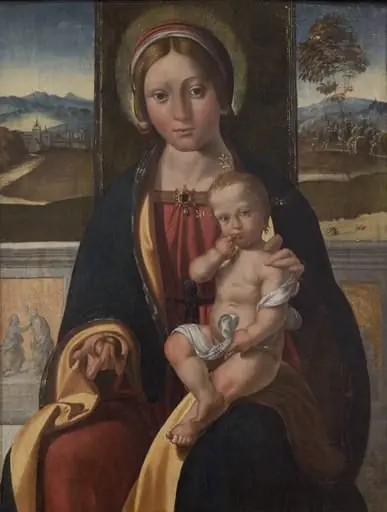 The Virgin and Child
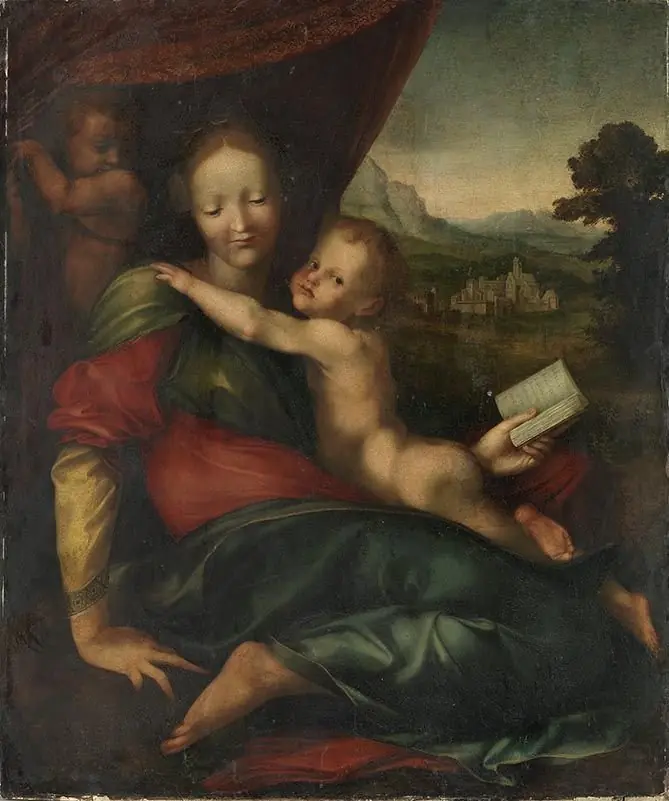 Mary with child and Saint John
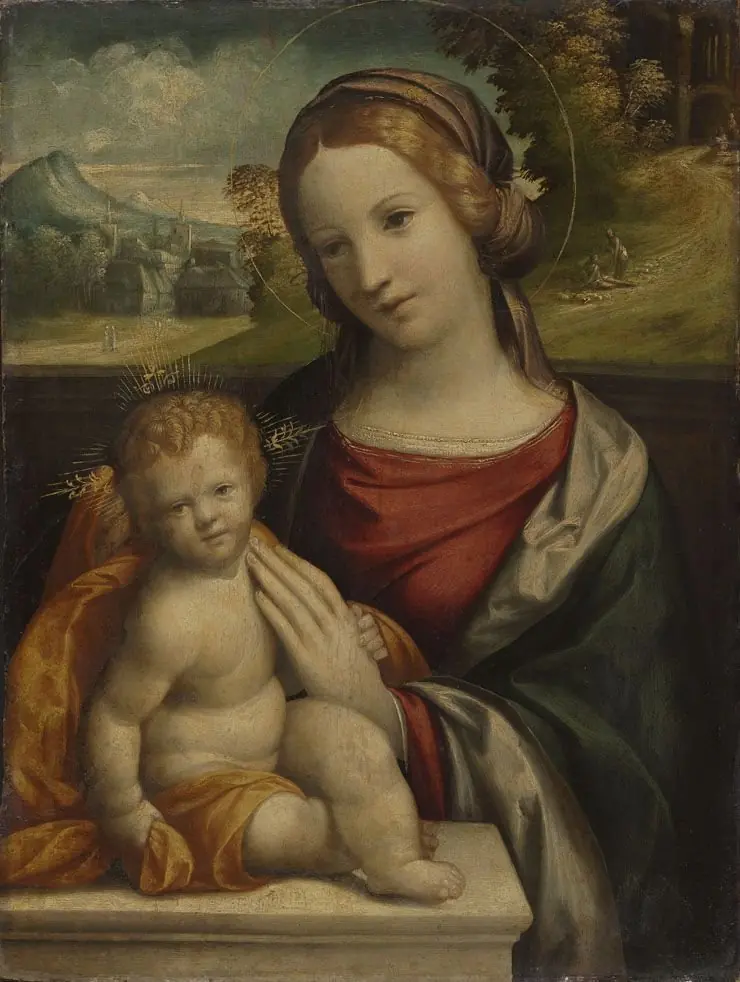 Mary with Child
 The Virgin and Child
 The Virgin and Child with Saint John the Baptist and Angels
 The Virgin and Child