Artwork
Trees
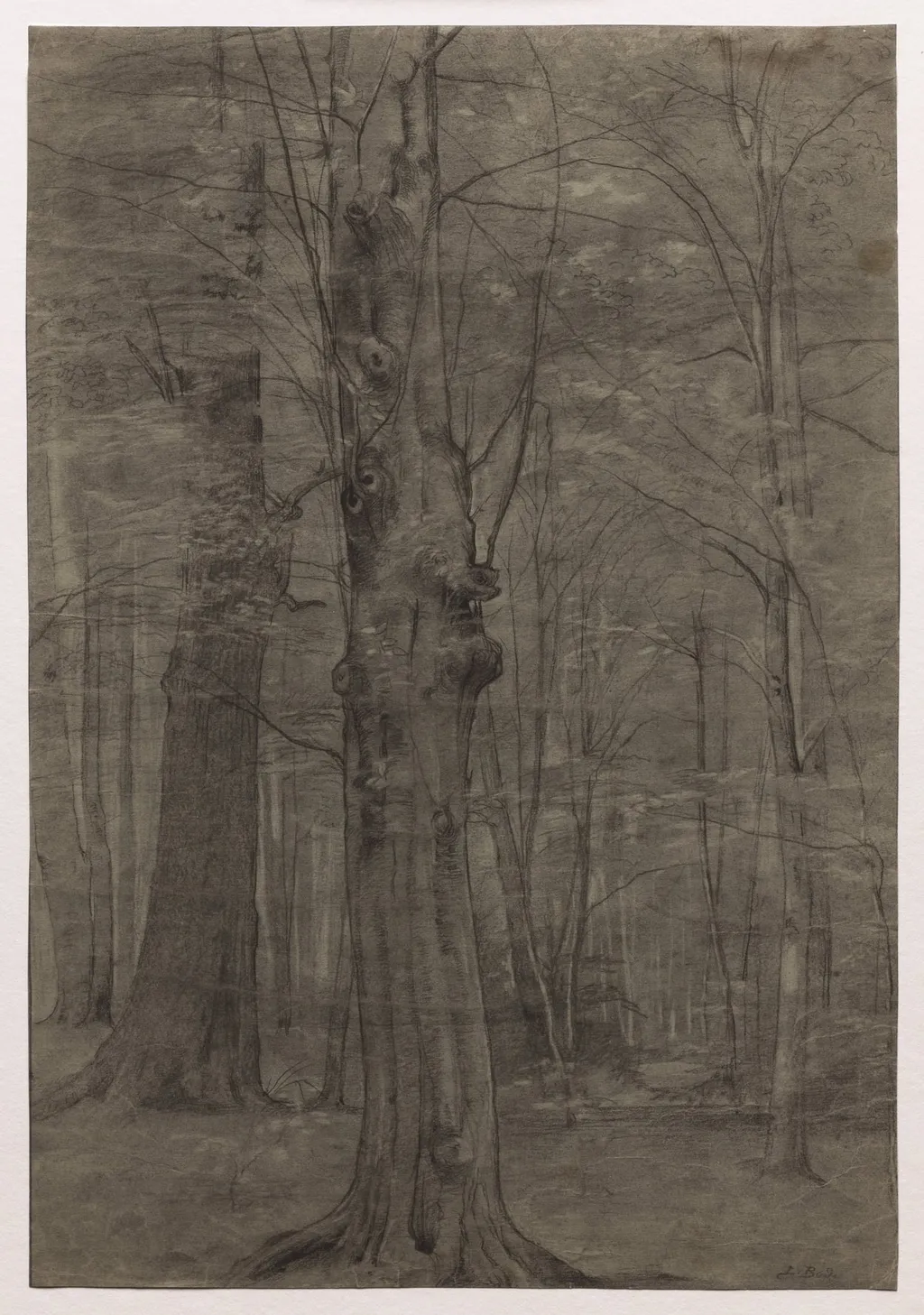
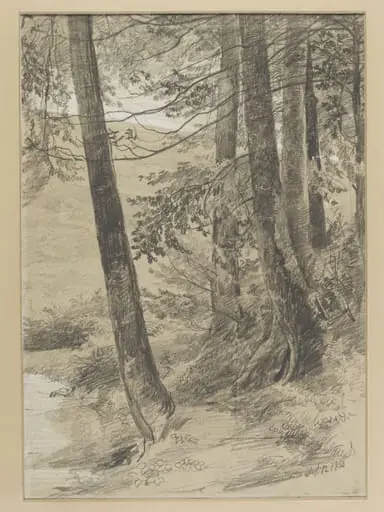
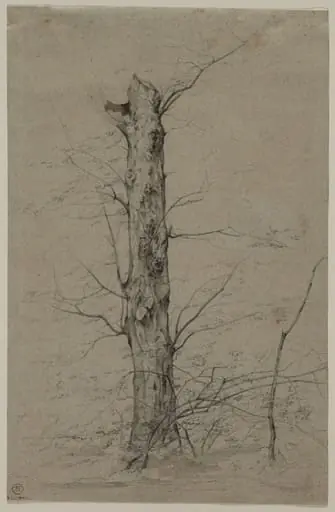
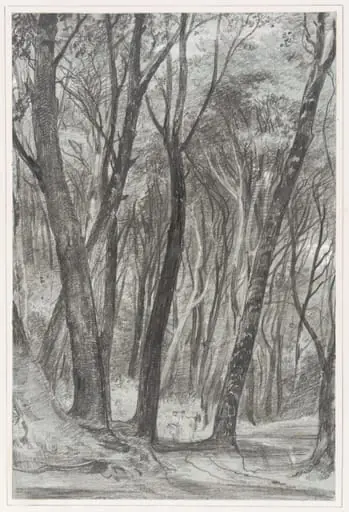
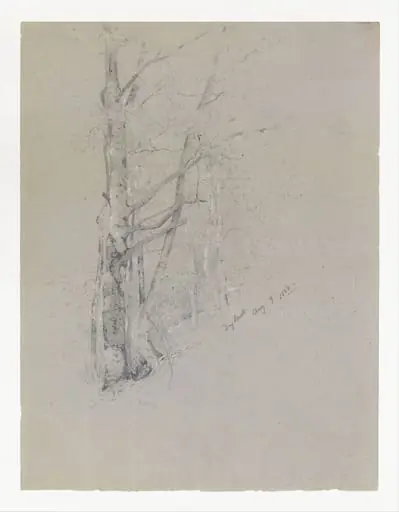
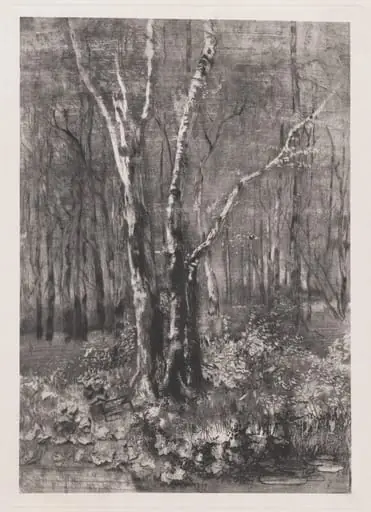
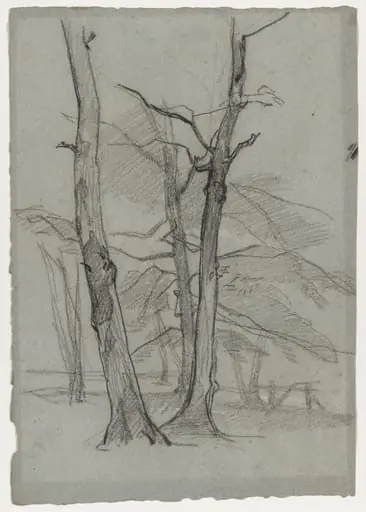
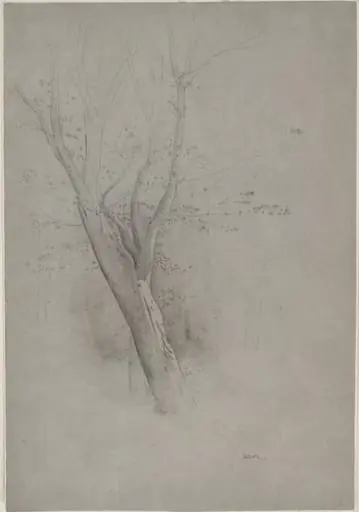
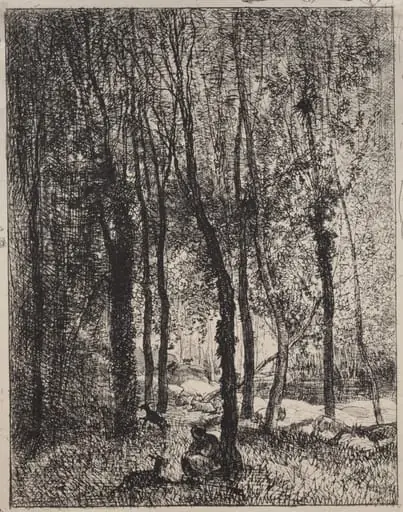
Trees is a drawing by Leopold Bode. It dates from 1878 and is held in the collection of the Cleveland Museum of Art.
About this work
Overview
The composition isolates the trees against a fading background, heightening their presence without narrative context.
Created around 1878 by Leopold Bode, this drawing captures a dense stand of trees in a somber, atmospheric setting. Executed in monochrome, the work belongs to the collection of The Cleveland Museum of Art. Its restrained palette and loose, energetic marks suggest a study from nature, emphasizing mood over detail. The composition isolates the trees against a fading background, heightening their presence without narrative context.
Subject & Meaning
The subject is a cluster of bare, twisted trees in a wooded landscape, rendered without human figures or clear spatial cues. The absence of leaves and the heavy shadows evoke a sense of stillness and isolation. The trees appear both resilient and haunting, their forms suggesting endurance through seasonal change. The work conveys an emotional tone rather than a specific location, inviting contemplation of nature’s quiet persistence.
Technique & Style
Bode employed charcoal or graphite to build tonal depth using only grays and browns. Lines are swift and irregular, capturing the gnarled trunks and angular branches with minimal refinement. The background is softly blurred into darkness, creating contrast that pushes the trees forward. The technique favors immediacy and texture over precision, aligning with 19th-century sketch traditions that valued expressive gesture over finish.
History & Provenance
The drawing was made in the late 1870s, likely during a period when Bode was engaged in landscape studies. It entered the Cleveland Museum of Art’s collection through documented acquisition, though its earlier ownership remains unrecorded. As a work on paper, its preservation reflects careful handling over time, consistent with the museum’s focus on maintaining significant drawings from the German artistic tradition.
Context
Bode worked during a time when German artists increasingly turned to natural subjects with psychological weight, moving beyond idealized landscapes. This drawing reflects a broader trend toward intimate, tonal studies that emphasized atmosphere and emotional resonance. While not part of a major movement, it aligns with contemporaneous practices in northern Europe that valued direct observation and expressive draftsmanship.
Legacy
Though not widely reproduced, the drawing contributes to understanding Bode’s approach to nature as a subject of quiet intensity. It exemplifies how 19th-century draftsmen used minimal means to convey complex moods. Its presence in a major American museum underscores its value as a representative example of German academic drawing that prioritized emotional tone over decorative finish.
Own this work as a print
Artist & collection