Artwork
Dry Brook
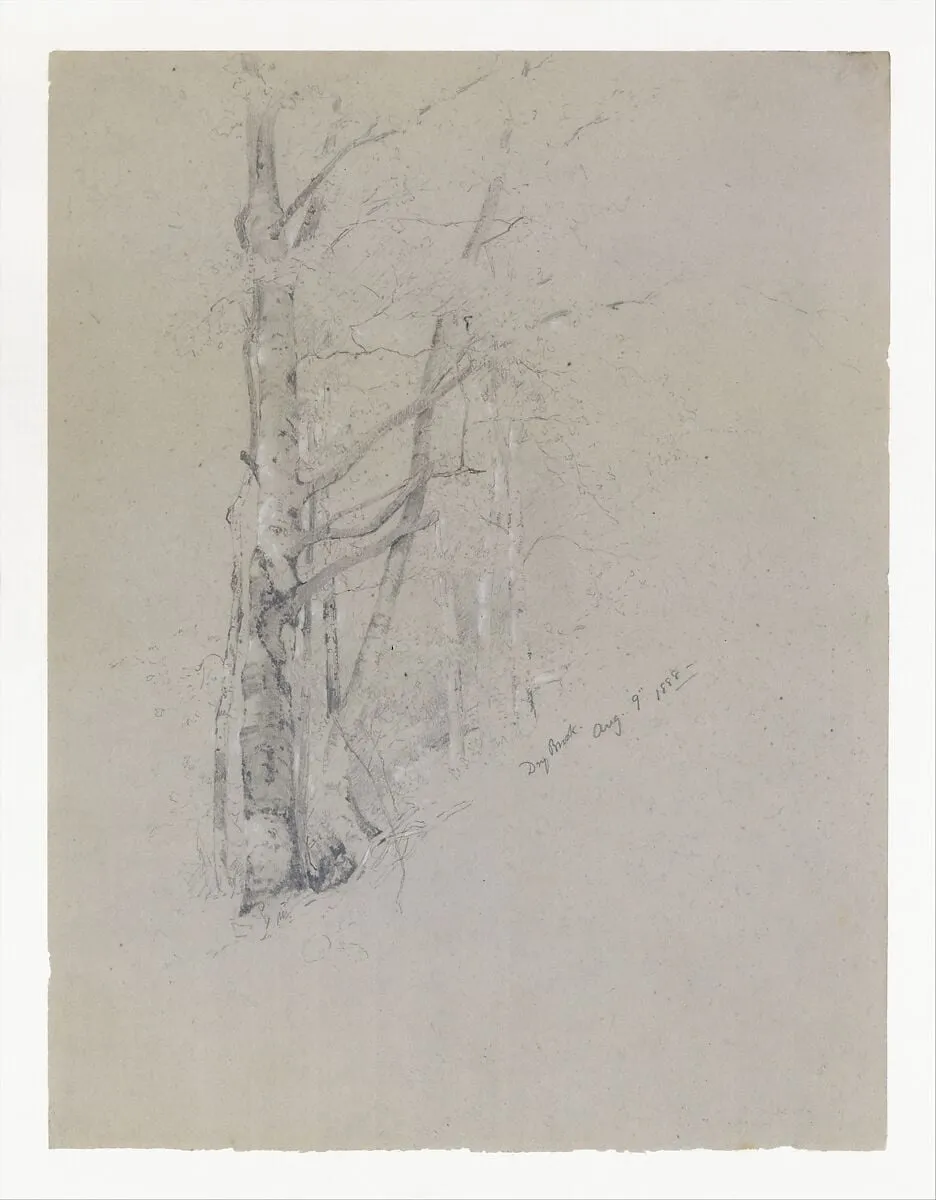
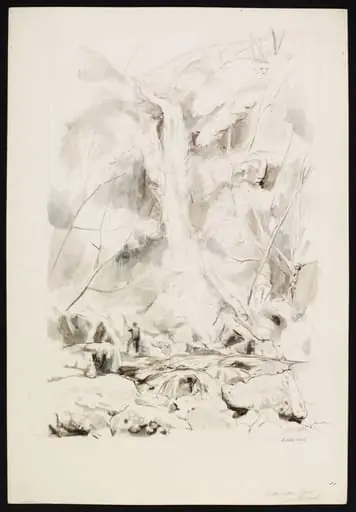
Dry Brook is a gouache drawing by the Impressionist artist Jervis McEntee. It dates from 1888 and is held in the collection of the Metropolitan Museum of Art.
About this work
Overview
The work reflects his habit of working directly from nature, likely completed outdoors in one session, capturing a moment of stillness rather than spectacle.
Created in 1888, *Dry Brook* is a small-scale landscape by Jervis McEntee, executed in graphite and gouache on gray wove paper. Though associated with the Hudson River School, McEntee’s approach diverged from its grandeur, favoring intimate, subdued scenes. The work reflects his habit of working directly from nature, likely completed outdoors in one session, capturing a moment of stillness rather than spectacle.
Subject & Meaning
The scene depicts a dry stream bed in late autumn, lined with bare trees leaning over smooth, gray stones. A single tree stands central, a motif McEntee returned to throughout his career. There is no human presence or narrative drama—only the quiet persistence of nature in repose. The composition invites contemplation of seasonal transition and solitude, not as loss, but as quiet equilibrium.
Technique & Style
McEntee used the gray tone of the paper as a mid-value foundation, enhancing the luminosity of white gouache applied to suggest frost, mist, or filtered light. Graphite lines define branches and rock contours with restrained precision. The medium’s simplicity and directness reflect a sketch-like immediacy, avoiding finish in favor of atmospheric suggestion and tactile texture.
History & Provenance
The work entered the collection of the American Wing through established channels of late 19th-century American art acquisition. While not widely exhibited during McEntee’s lifetime, it aligns with his known body of intimate studies, many of which were retained by the artist or passed to close associates. Its preservation reflects a growing appreciation for his quieter, personal mode of landscape observation.
Context
McEntee operated within the Hudson River School’s orbit but rejected its theatricality. His work emerged during a period when American artists increasingly turned to understated naturalism, influenced by European tonalism and a shift toward introspective observation. *Dry Brook* exemplifies this trend—its calmness resonates with contemporaries like George Inness, yet retains a distinct, personal restraint.
Legacy
Though less celebrated than his peers, McEntee’s focus on quietude influenced later generations of American landscape artists who prioritized mood over monumentality. *Dry Brook* stands as a quiet testament to the value of restraint in depicting nature, offering a counterpoint to the era’s more dramatic visions. Its simplicity continues to invite close looking and reflection.
Artist & collection

Artist
Jervis McEntee (July 14, 1828 – January 27, 1891) was an American painter of the Hudson River School.

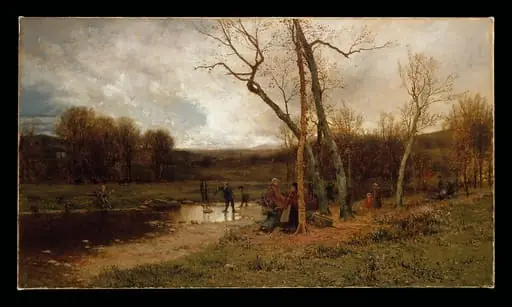 Saturday Afternoon
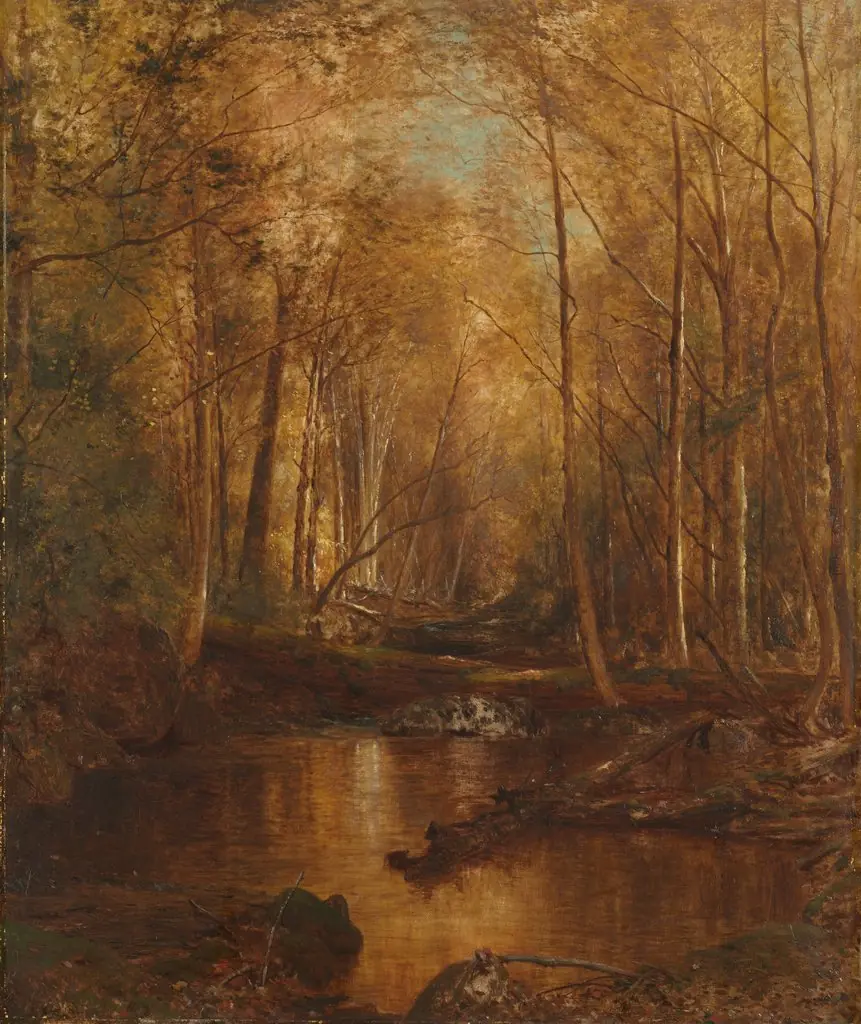 Autumn in the Catskills
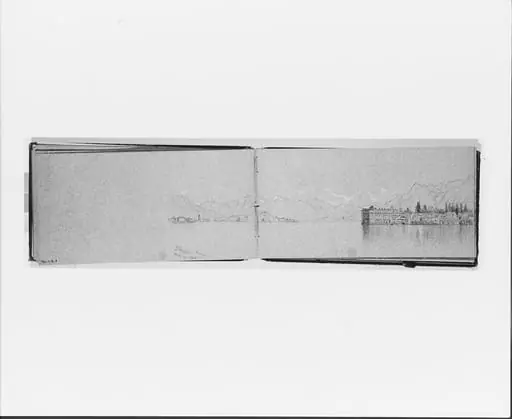 Lake Maggiore May 12 1869 (recto, from sketchbook)
![Village, Mountains, and Lake [Maggiore?] (recto, from sketchbook), by Jervis McEntee](https://artifactworldgallery.com/img/jervis-mcentee--village-mountains-and-lake-maggiore-recto-from-sketchbook--3cfb09e258099ce7-w320.webp) Village, Mountains, and Lake [Maggiore?] (recto, from sketchbook)
Village, Mountains, and Lake [Maggiore?] (recto, from sketchbook)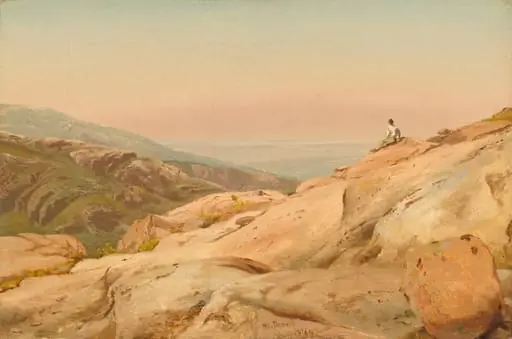 Mount Desert Island, Maine
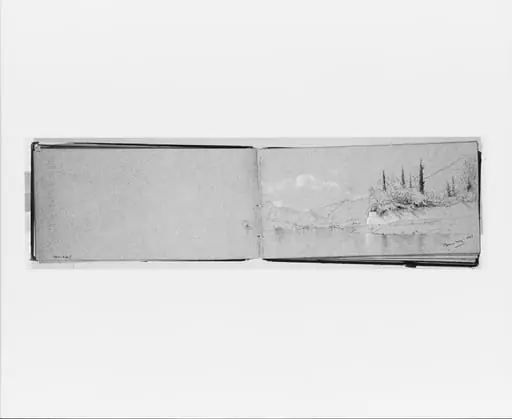 Lake Como, May 1, 1869 (verso, from sketchbook)
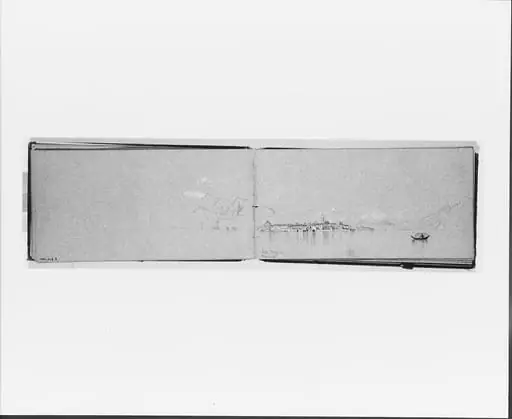 Lake Maggiore, May 11,1869: Village and Landscape (recto, from Sketchbook)
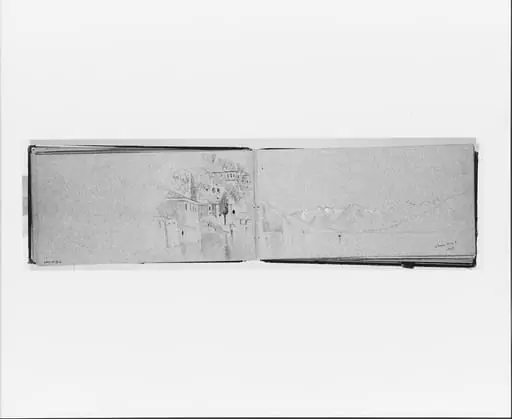 Village on Lake Como: May 1, 1869 (verso, from sketchbook)
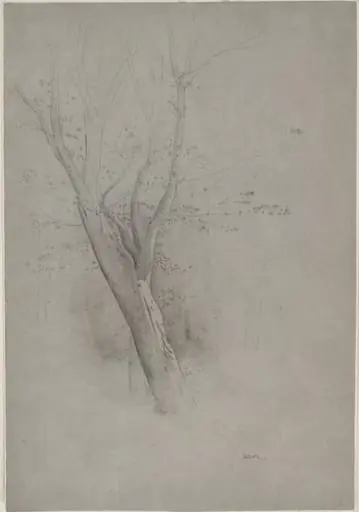
![View through the Trees at Tivoli [recto], by Jasper Francis Cropsey](https://artifactworldgallery.com/img/jasper-francis-cropsey--view-through-the-trees-at-tivoli-recto--982b0e365e4ea403-w320.webp)