Artwork
Die letzte Tagesmühe
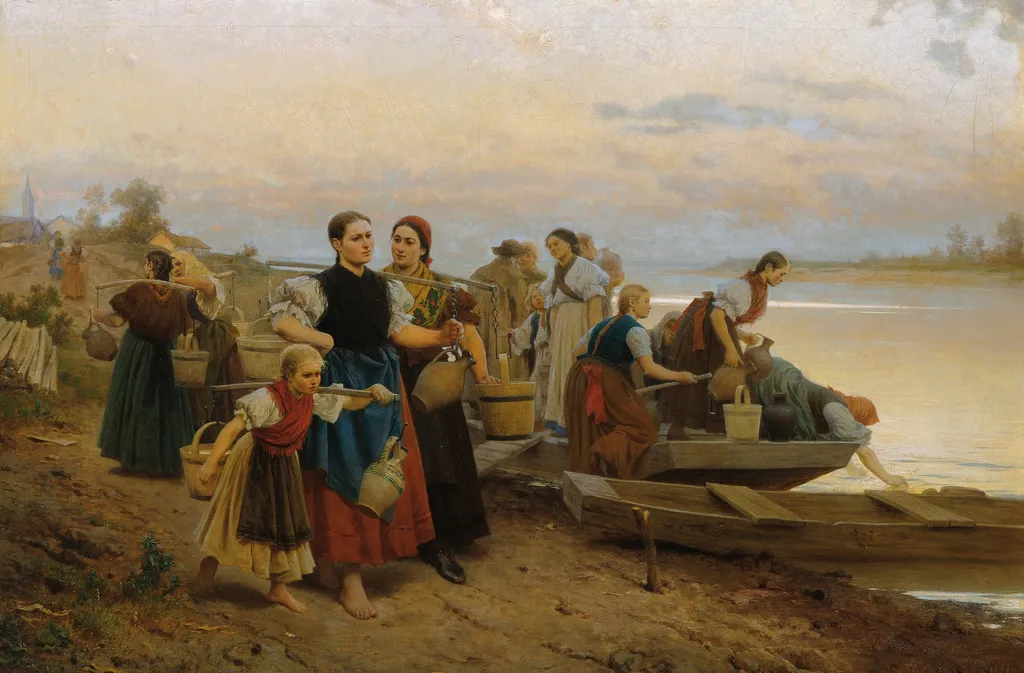
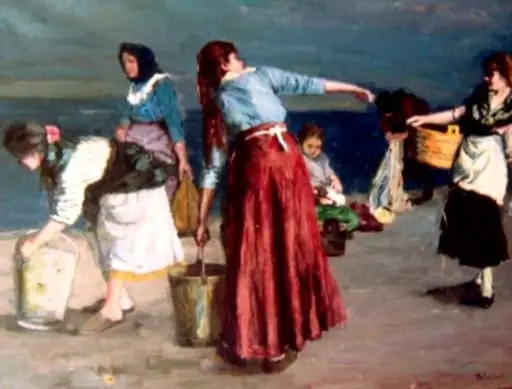
Die letzte Tagesmühe is an oil painting by the Realist artist Leopold Carl Müller. It dates from 1871 and is held in the collection of the Kunsthistorisches Museum.
About this work
Overview
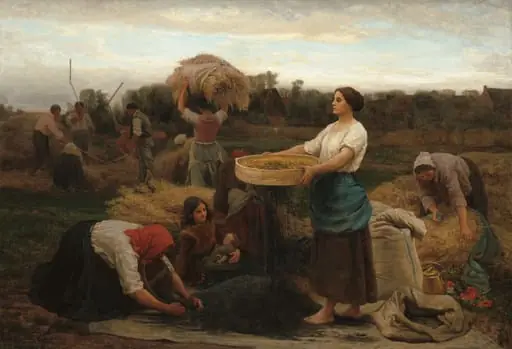
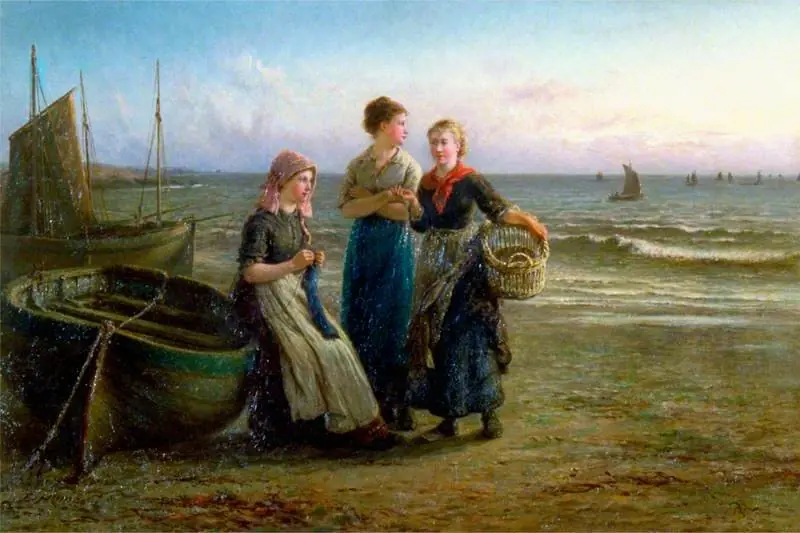
The scene captures a group of individuals near a body of water at day’s end, their stillness suggesting the conclusion of daily toil.
Painted in 1871 by Leopold Carl Müller, Die letzte Tagesmühe is an oil on canvas work depicting a quiet moment of rural labor. It resides in the collection of the Kunsthistorisches Museum in Vienna. The scene captures a group of individuals near a body of water at day’s end, their stillness suggesting the conclusion of daily toil. The composition centers on a woman holding a large jug, anchoring the narrative with quiet dignity.
Subject & Meaning
The painting portrays a moment of rest after labor, emphasizing the rhythm of everyday life in a rural setting. The central woman, burdened by her vessel, embodies endurance, while others on shore and in a nearby boat suggest communal activity. No overt drama is present; instead, the work conveys the unremarkable gravity of routine existence, framed by the fading light of dusk.
Technique & Style
Müller employs chiaroscuro to model forms with subtle shifts between light and shadow, lending volume to figures and fabric. The cloudy sky and reflective water create a muted tonal range, enhancing the somber mood. Brushwork is restrained, favoring atmospheric cohesion over detail, aligning the work with 19th-century realist traditions that prioritize emotional resonance over theatricality.
History & Provenance
Completed in 1871, the painting entered the Kunsthistorisches Museum’s collection shortly after its creation. It has remained in Austrian public ownership since, with no documented changes in custody. Its preservation reflects institutional interest in genre scenes from the period, though it has never been widely exhibited outside Vienna.
Context
In the late 19th century, European artists increasingly turned to everyday rural life as subject matter, moving away from historical or mythological themes. Müller, influenced by his travels in North Africa and the Balkans, brought a documentary sensibility to his depictions of peasant labor. This work aligns with broader trends in Austrian realism, valuing observation over idealization.
Legacy
Die letzte Tagesmühe remains a quiet example of Austrian genre painting from the post-romantic era. While not widely known beyond museum circles, it contributes to the understanding of how 19th-century artists rendered the dignity of labor without sentimentality. Its endurance in the Kunsthistorisches Museum underscores its role as a representative work of its time and place.
Own this work as a print
Artist & collection