Artwork
Coast Scene
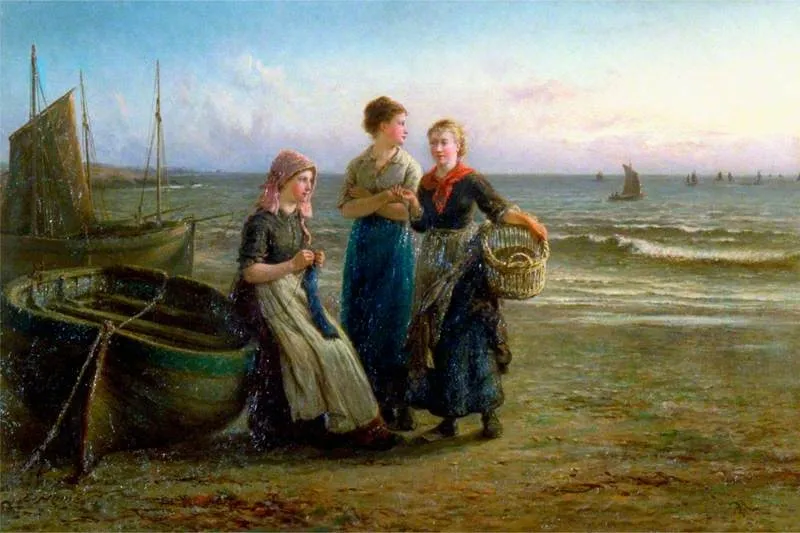
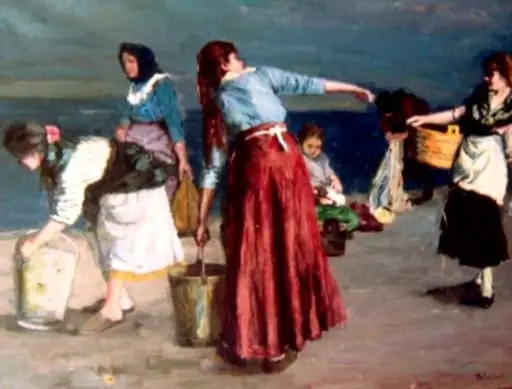
Coast Scene is an oil painting by Edith Hume. It dates from 1884 and is held in the collection of the Victoria and Albert Museum.
About this work
Overview
The work reflects her engagement with Dutch coastal life, particularly in the fishing villages of Katwijk and Scheveningen.
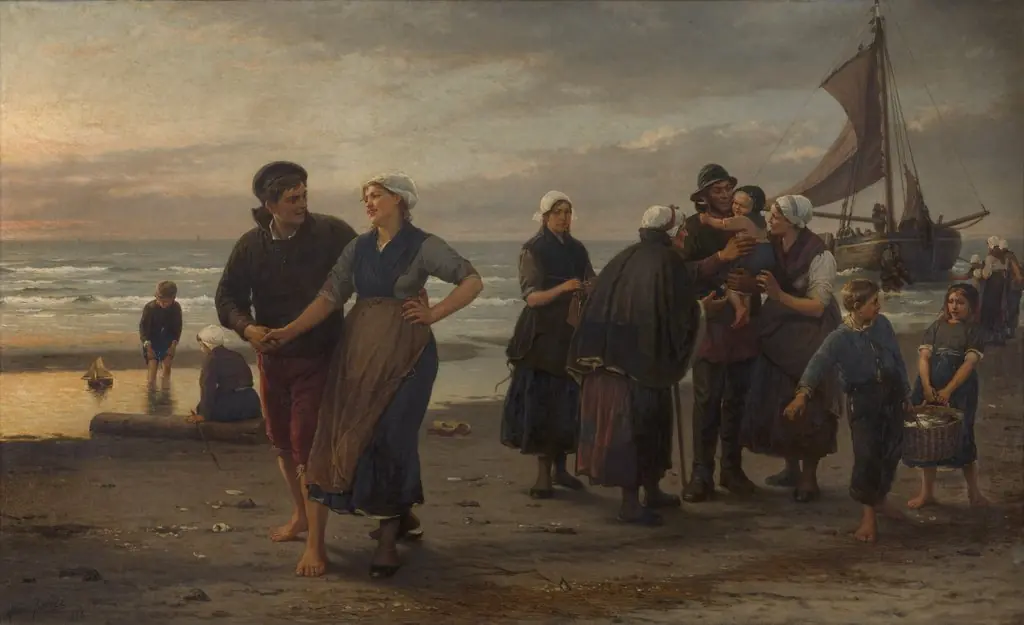
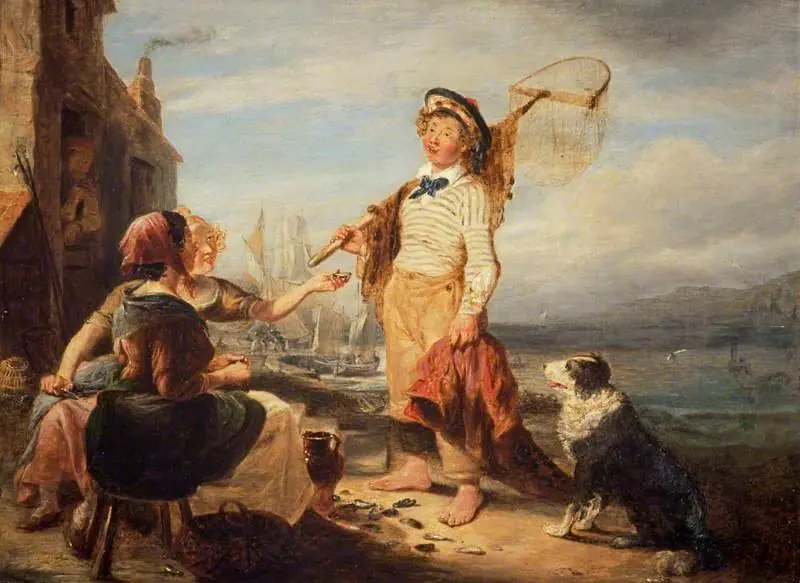
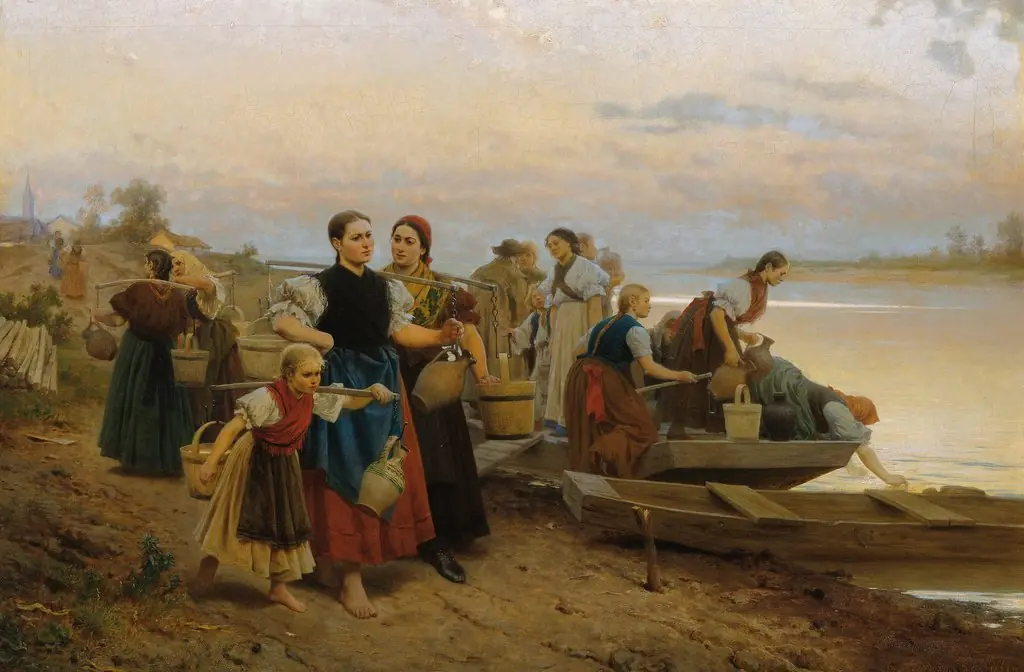
Edith Hume, a British artist active in the Netherlands between 1878 and 1906, painted *Coast Scene* around 1884 in oil. The work reflects her engagement with Dutch coastal life, particularly in the fishing villages of Katwijk and Scheveningen. As a member of the Hague School’s circle, she focused on quiet, everyday moments by the sea. The painting is now held in the Victoria and Albert Museum’s collection.
Subject & Meaning
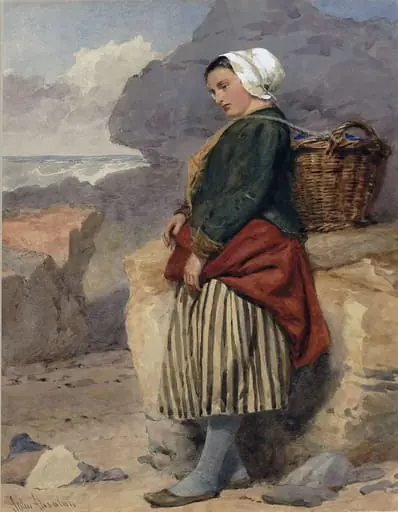
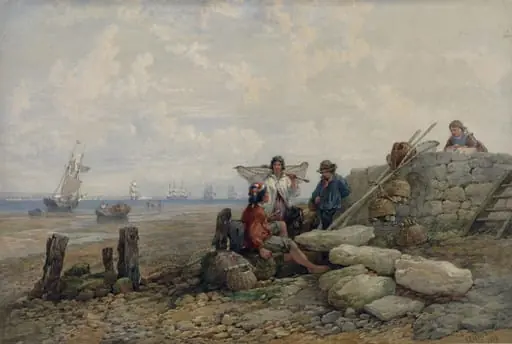
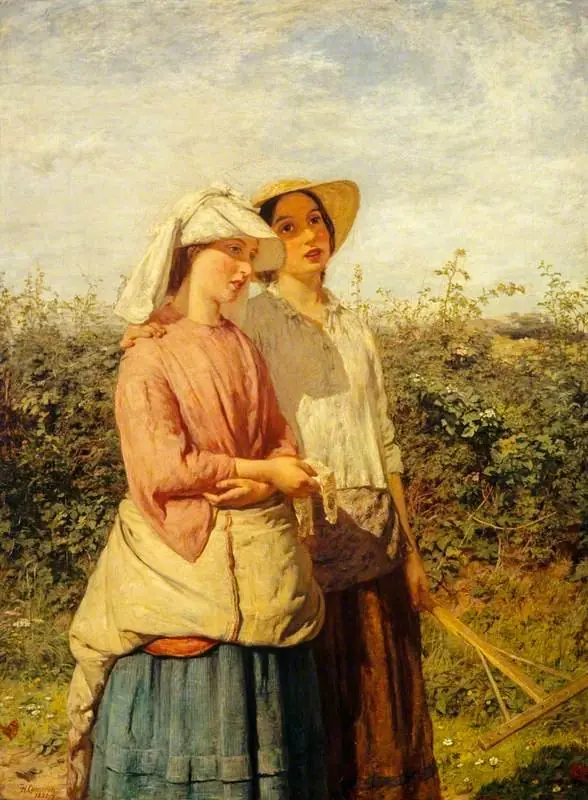
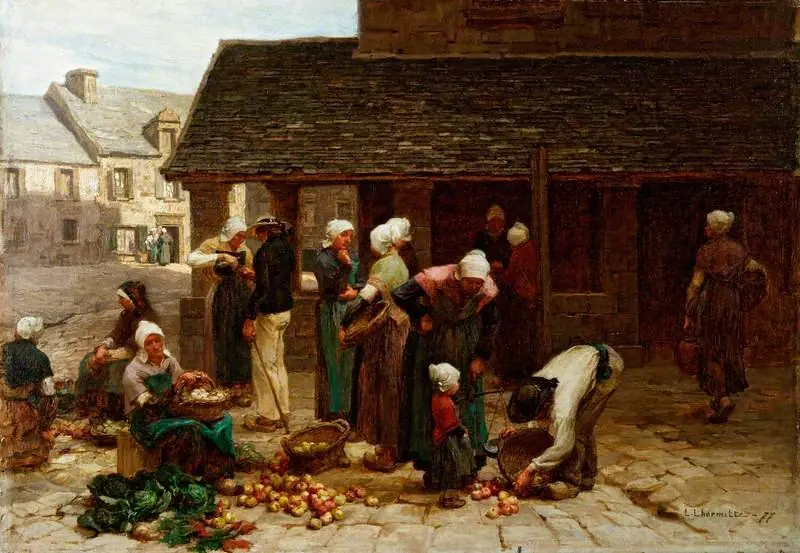
Three women stand on a sandy shore, their postures and attire suggesting labor and routine. One holds a blue object, possibly a net or tool; another carries a heavy basket. Their clothing—long skirts, blouses, and headscarves—indicates local dress and working conditions. The presence of boats nearby implies a connection to fishing, yet the scene avoids drama, emphasizing stillness and endurance over narrative.
Technique & Style
Hume employed oil paint to capture subtle shifts in light and atmosphere, characteristic of the Hague School’s naturalism. Soft tonal transitions between sky, sea, and sand create depth without sharp detail. The brushwork is restrained, favoring mood over precision. Colors are muted—ochres, grays, and pale blues—reinforcing the quiet, overcast quality of the coastal environment.
History & Provenance
Born Edith Dunn, she married fellow artist Thomas O. Hume and moved to the Netherlands, where she developed her subject matter. Her brother, Henry Treffry Dunn, was associated with the Pre-Raphaelites, though her work diverged stylistically. *Coast Scene* entered the Victoria and Albert Museum’s collection as part of its broader interest in 19th-century British and European decorative and fine art.
Context
Hume worked during a period when British artists increasingly traveled to the Netherlands to study its landscape traditions. The Hague School’s emphasis on rural and coastal realism resonated with her. Unlike romanticized seascapes, her work documented the daily rhythms of fishing communities, aligning with broader European trends toward social observation in art.
Legacy
Though not widely known today, Hume’s paintings contribute to the understanding of women artists in the Hague School and the transnational exchange of artistic practices in late 19th-century Europe. Her focus on ordinary figures in coastal settings offers a quiet counterpoint to more celebrated contemporaries, preserving a record of labor and place often overlooked in art history.
Artist & collection
Artist
Edith Hume (1843–1906) was a British painter and illustrator. She was born Edith Dunn and married the painter Thomas O. Hume. She was active in the Netherlands during the years 1878–1906, creating beach scenes of Dutch…