Artwork
Untitled
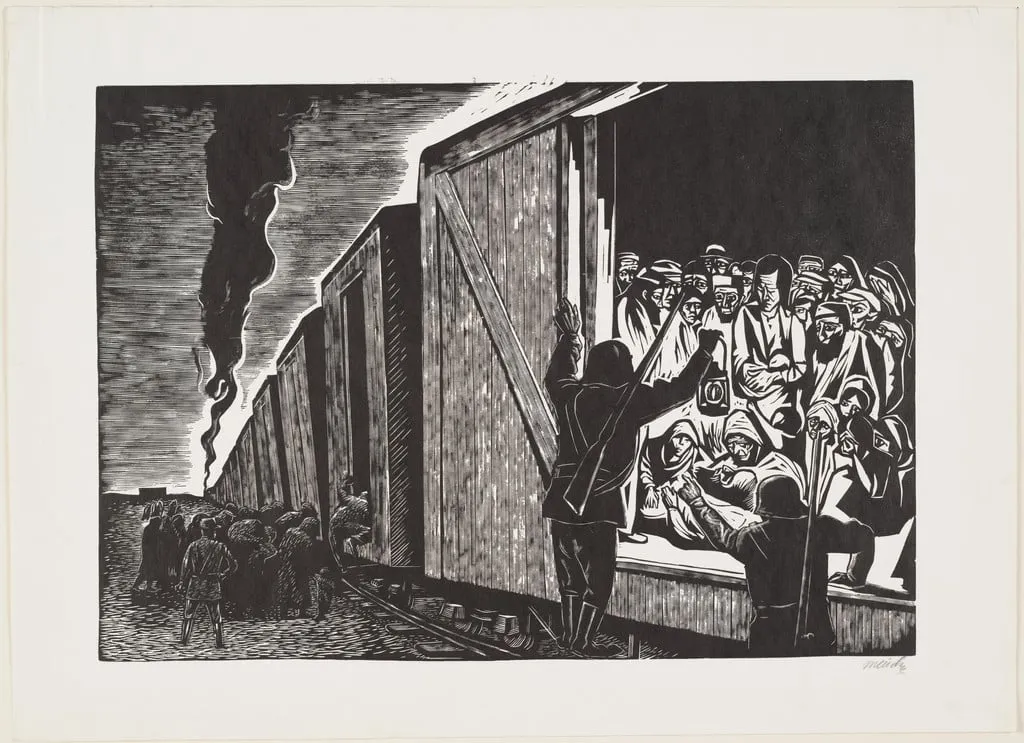
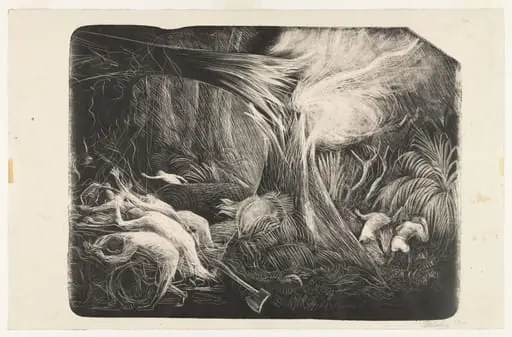
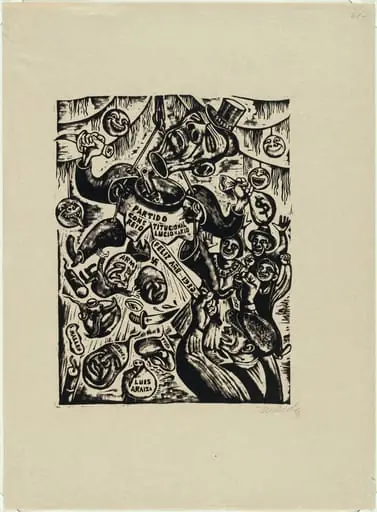
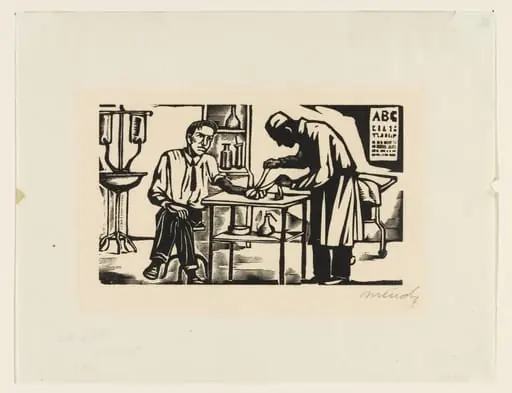
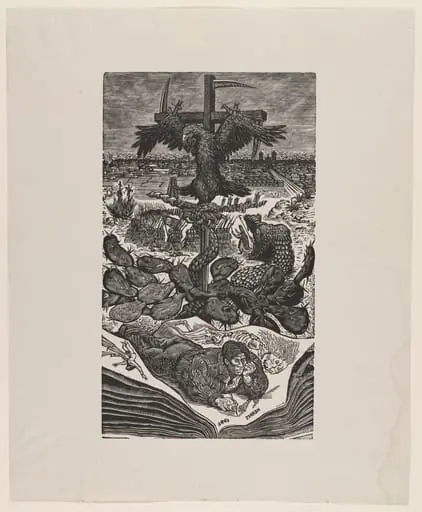
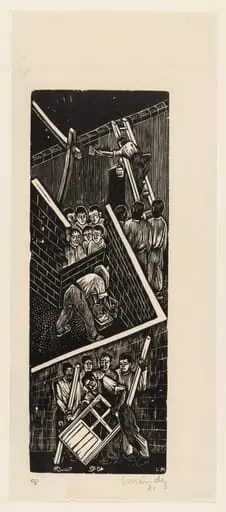
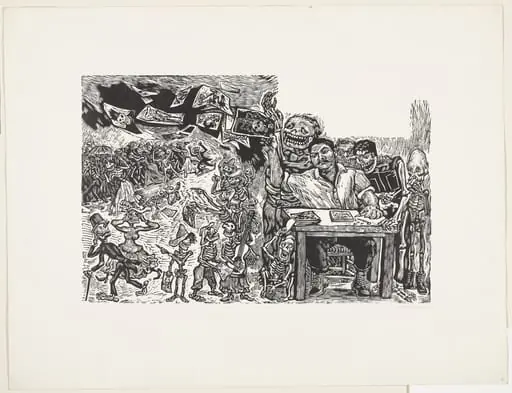
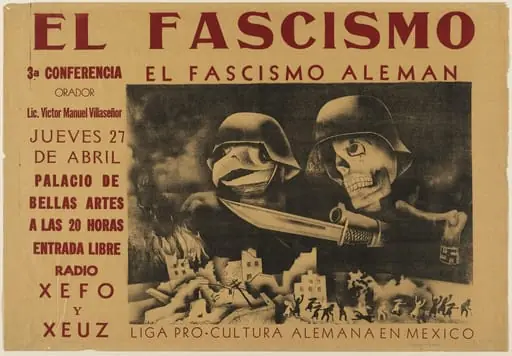
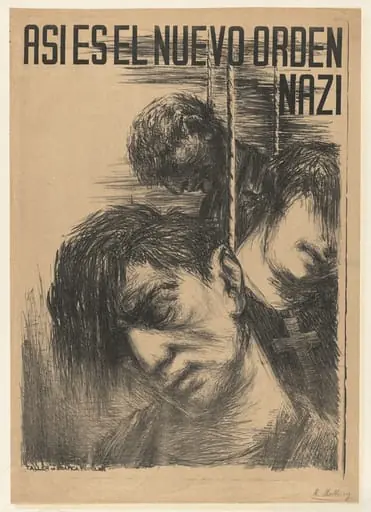
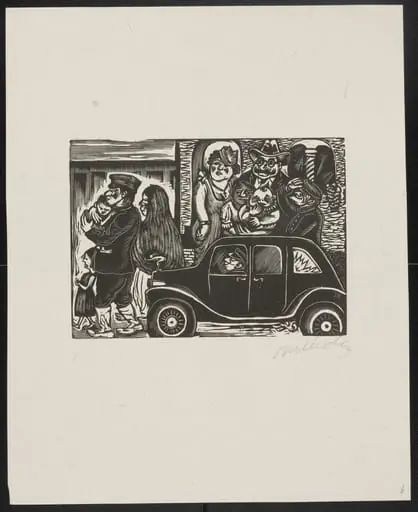
Untitled is a print by Leopoldo Méndez. It dates from 1942 and is held in the collection of the Museum of Modern Art.
About this work
Overview
Created in 1942, this linoleum cut by Leopoldo Méndez is part of his broader commitment to printmaking as a tool for social commentary.
Created in 1942, this linoleum cut by Leopoldo Méndez is part of his broader commitment to printmaking as a tool for social commentary. Working within the Taller de Gráfica Popular, Méndez favored accessible, reproducible techniques to reach broad audiences. The work’s stark black-and-white composition reflects his dedication to clarity and impact, aligning with the collective’s mission to visualize collective struggle and public concern.
Subject & Meaning
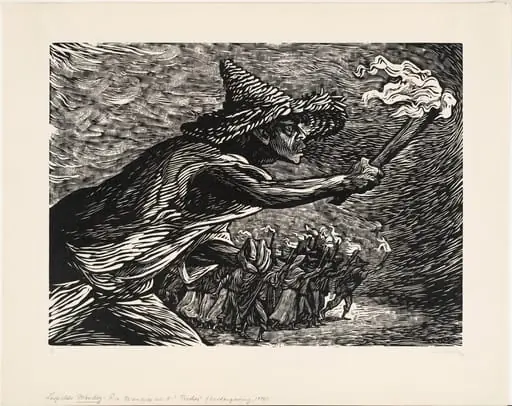
The scene depicts a nocturnal gathering around a building with open doors, figures in traditional attire clustered in apparent urgency. A wagon with sheep nearby suggests rural life intruding into urban space. Rising smoke or steam implies disturbance or activity within. The composition evokes communal tension—possibly referencing displacement, protest, or emergency—without naming a specific event, allowing the image to resonate as a generalized symbol of social unrest.
Technique & Style
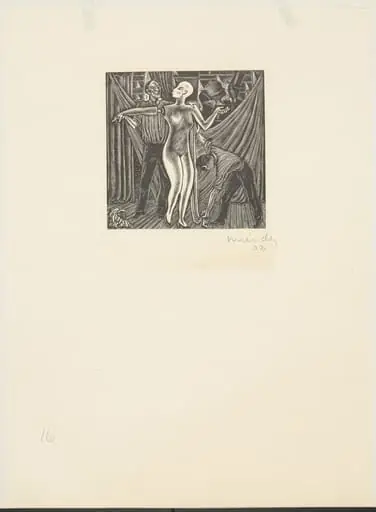
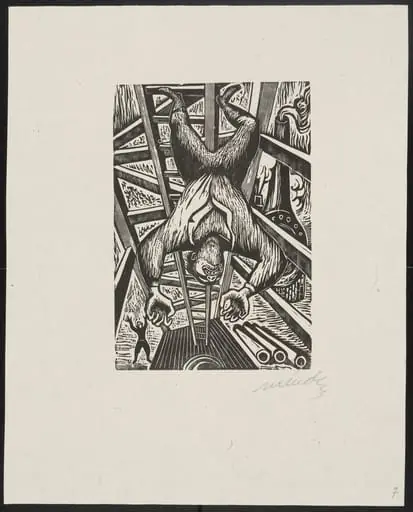
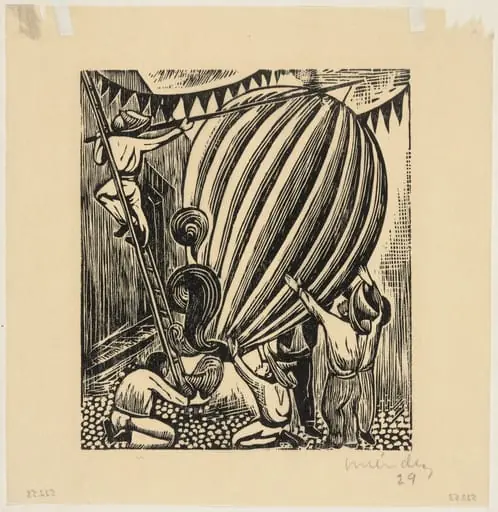
Méndez employed sharp, angular lines and high-contrast shading to define forms with precision. The linoleum cut allowed for bold, unmodulated areas of black and white, enhancing readability and emotional intensity. Figures and structures are simplified yet dynamically arranged, using chiaroscuro to direct visual movement. The absence of gradation reinforces the graphic immediacy suited to mass reproduction and public dissemination.
History & Provenance
Produced during Méndez’s active years with the Taller de Gráfica Popular, this print emerged from a collaborative workshop dedicated to politically motivated art. Though untitled, it aligns with the group’s output of prints distributed through unions, schools, and leftist publications. Its survival in institutional collections reflects its recognition as a representative example of Mexican printmaking’s social engagement in the mid-20th century.
Context
In early 1940s Mexico, artists like Méndez responded to national debates over land reform, labor rights, and indigenous identity. The Taller de Gráfica Popular, co-founded in 1937, positioned printmaking as a democratic medium, rejecting elite art markets. This work fits within that framework—using visual economy to communicate complex social conditions to audiences beyond galleries, often in pamphlets or posters.
Legacy
Méndez’s approach influenced generations of Latin American printmakers who prioritized political clarity over aesthetic refinement. His use of linoleum cut as a vehicle for collective narratives helped establish printmaking as a legitimate form of public discourse. Though this particular work lacks a title, its formal rigor and thematic focus continue to be studied as exemplars of socially committed graphic art.
Artist & collection

Artist
Leopoldo Méndez (June 30, 1902 – February 8, 1969) was one of Mexico's most important graphic artists and one of that country's most important artists from the 20th century.