Artwork
Untitled
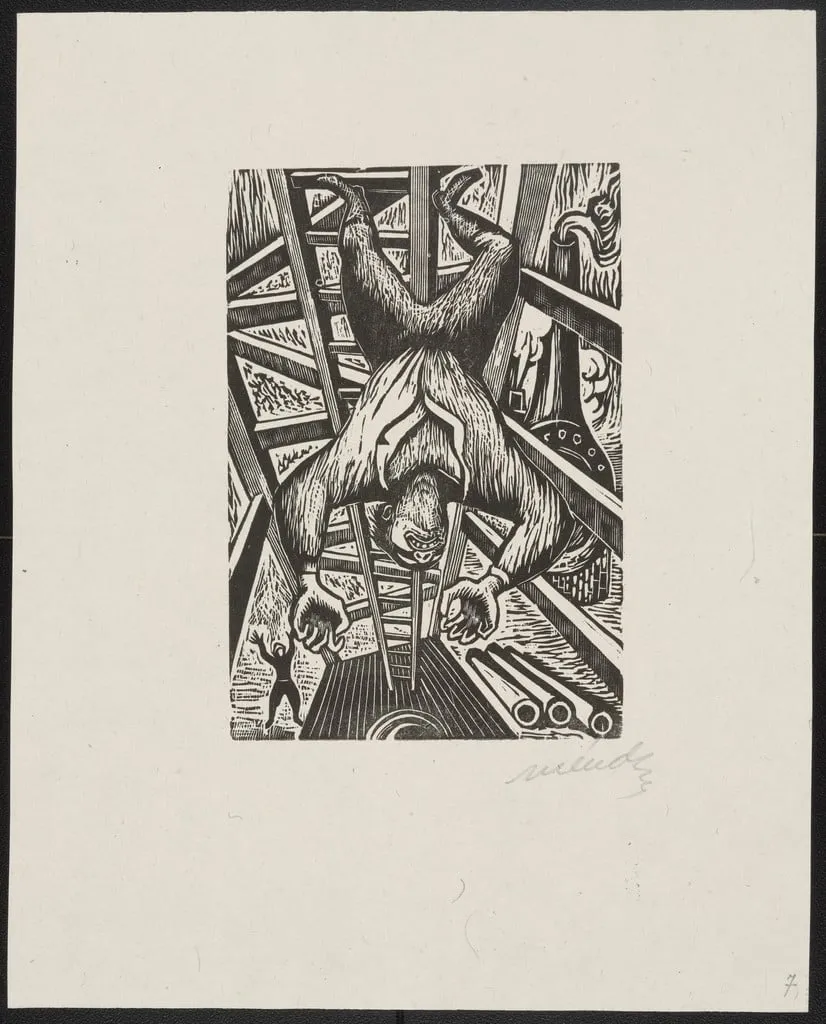
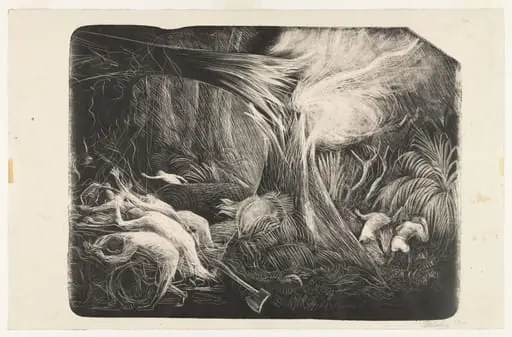
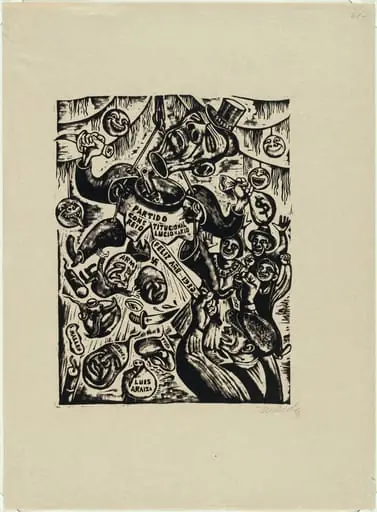
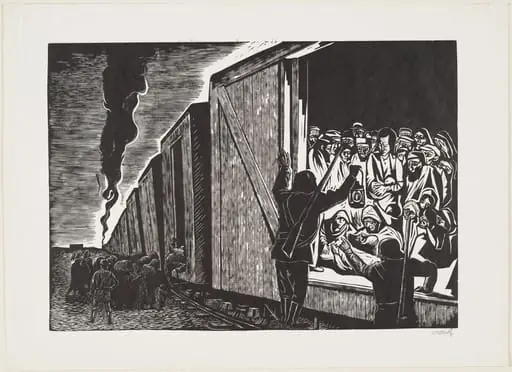
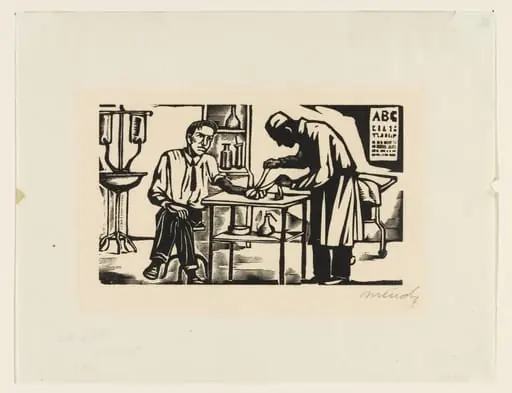
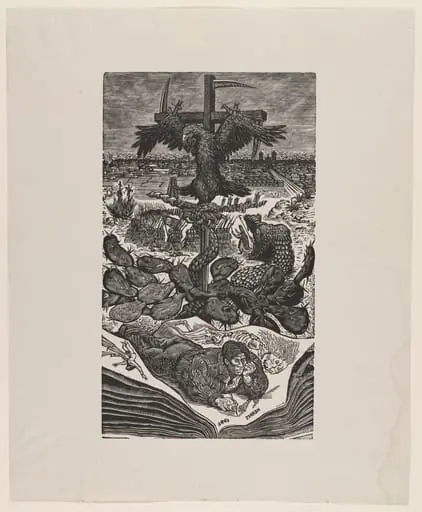
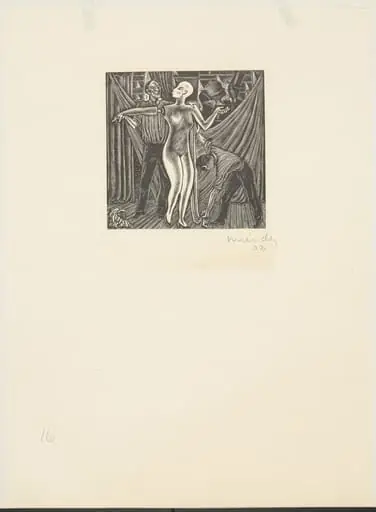
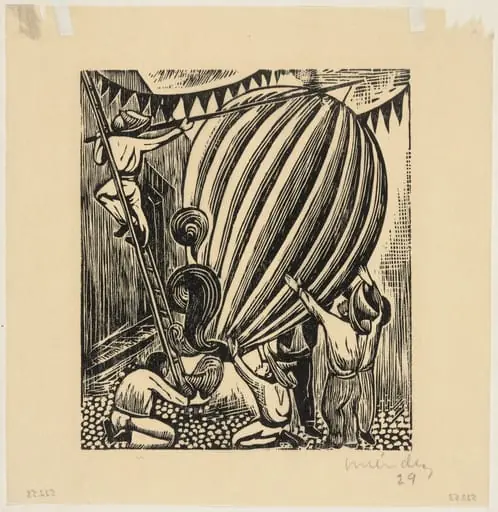
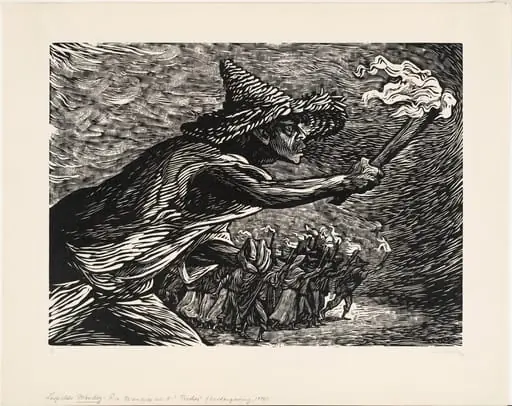
Untitled is an ink print by Leopoldo Méndez. It dates from 1934 and is held in the collection of the Museum of Modern Art.
About this work
Overview
Méndez favored woodcut for its directness and capacity for mass reproduction, aligning with his commitment to public engagement over private aesthetics.
Created in 1934, this woodcut is one of twenty-five prints in a portfolio by Leopoldo Méndez, a central figure in Mexican political printmaking. Executed in black and white, the work belongs to a series designed to communicate social critique through accessible imagery. Méndez favored woodcut for its directness and capacity for mass reproduction, aligning with his commitment to public engagement over private aesthetics.
Subject & Meaning
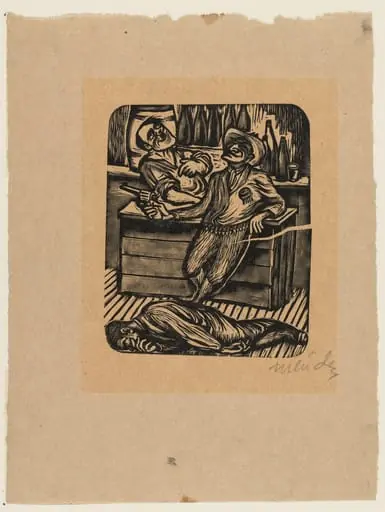
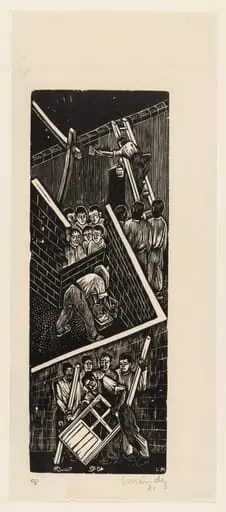
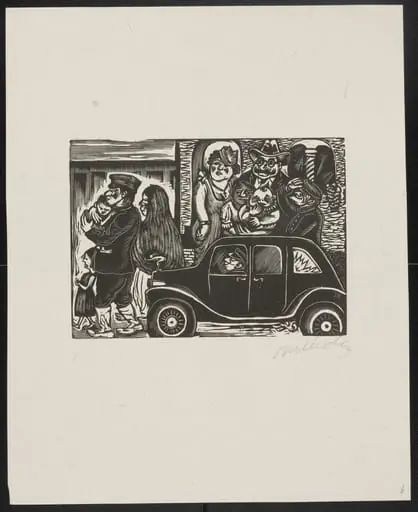
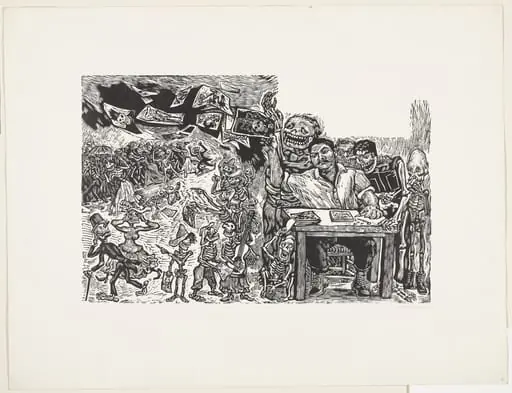
The scene depicts a figure suspended upside down in a confined space, arms outstretched, while another reaches upward. Surrounding walls are cluttered with mechanical and anthropomorphic forms—gears, distorted faces, tools—suggesting a system of oppression. The stark lighting intensifies the tension, implying a moment of struggle within an impersonal, mechanized structure. The image evokes institutional violence and the desperation of resistance.
Technique & Style
Méndez carved the design directly into a woodblock, using simple tools to create bold, angular lines and high-contrast tonal shifts. The roughness of the cuts and the absence of gradation emphasize urgency and emotional intensity. The style draws from traditional printmaking methods but is stripped of ornamentation, prioritizing clarity and impact over refinement, consistent with the aesthetic of activist print collectives of the era.
History & Provenance
The print originated in a portfolio produced during Méndez’s active years with the Taller de Gráfica Popular, a collective founded in 1937 but preceded by similar collaborative efforts in the early 1930s. Though the portfolio’s exact distribution is undocumented, its circulation was tied to labor and leftist movements. The work remained within activist networks, later entering institutional collections as part of broader recognition of Mexican graphic art’s political role.
Context
In mid-1930s Mexico, artists increasingly used printmaking to respond to the unresolved promises of the Revolution and the rise of global fascism. Méndez’s work emerged alongside other socially committed printmakers who rejected elite art institutions in favor of public outreach. This piece reflects a broader effort to visualize class struggle, state repression, and the dehumanizing effects of industrialization through accessible, reproducible imagery.
Legacy
Méndez’s woodcuts, including this untitled work, helped define a visual language for political activism in Latin America. His emphasis on collective production and public accessibility influenced generations of printmakers. Though not widely exhibited during his lifetime, his prints are now studied as key documents of 20th-century social art, valued for their unflinching clarity and commitment to justice over aesthetic novelty.
Artist & collection

Artist
Leopoldo Méndez (June 30, 1902 – February 8, 1969) was one of Mexico's most important graphic artists and one of that country's most important artists from the 20th century.