Artwork
Eighteenth-Century Colonist Preaching to Indians
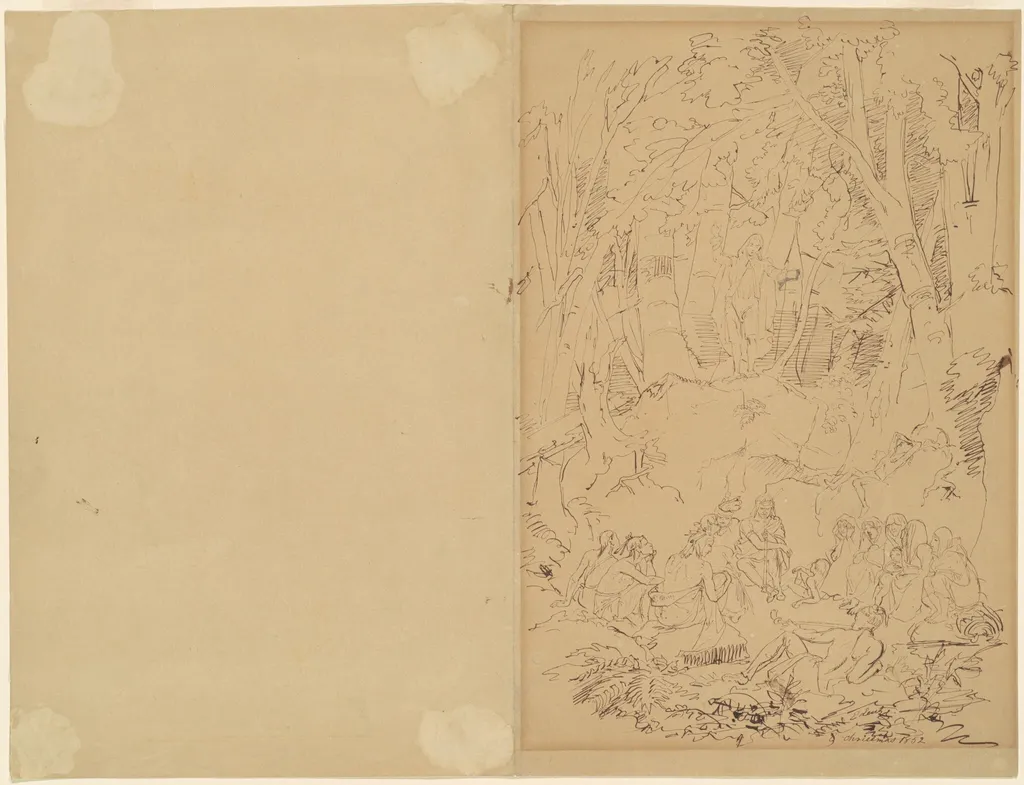
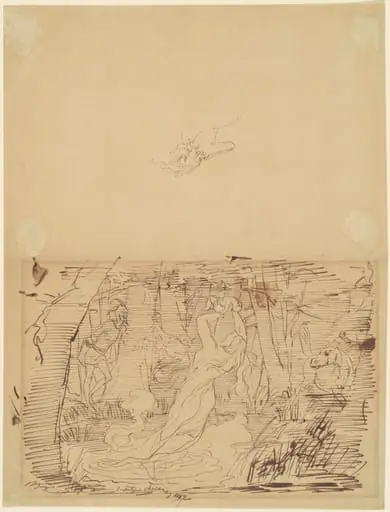
Eighteenth-Century Colonist Preaching to Indians is an ink drawing by the Impressionist artist Emanuel Leutze. It dates from 1852 and is held in the collection of the National Gallery of Art.
About this work
Overview
Emanuel Gottlieb Leutze, a German‑born artist who worked in the United States, produced the drawing *Eighteenth‑Century Colonist Preaching to Indians* in 1852.
Emanuel Gottlieb Leutze, a German‑born artist who worked in the United States, produced the drawing *Eighteenth‑Century Colonist Preaching to Indians* in 1852. Executed with pen, brown ink and graphite on wove paper, the work records a fleeting scene of a colonial figure addressing a group of Native individuals in a forested setting. The composition captures a moment of cross‑cultural encounter rendered in a rapid, preparatory manner.
Subject & Meaning
The image depicts a mixed assembly of figures gathered among trees, rocks and distant structures. Some participants sit, others stand or kneel, while a central figure appears to be speaking, suggesting a sermon or instruction. The grouping reflects 19th‑century American interest in early colonial encounters, portraying the colonist as a moral authority addressing indigenous peoples within a natural landscape.
Technique & Style
Leutze employed loose, gestural lines to outline foliage, terrain and architecture, allowing the ink’s varying thickness to create contrast and suggest depth. Graphite accents reinforce shading, while cross‑hatching builds shadow in darker zones. The sketch’s unfinished quality indicates it served as a study for a larger composition, emphasizing composition and narrative over detailed finish.
Context
Created during a period when American artists frequently turned to historic and frontier subjects, the drawing aligns with Leutze’s broader oeuvre of dramatic historical scenes. The Düsseldorf school’s influence is evident in the disciplined yet expressive handling of line, reflecting the artist’s training in German academic traditions before his relocation to the United States.
History & Provenance
The work remains attributed to Leutze and is catalogued as a drawing dated 1852. It is held in a public collection that documents the artist’s early explorations of colonial themes, providing insight into his preparatory process prior to the execution of larger oil paintings on similar subjects.
Artist & collection

Artist
Emanuel Leutze grew up in America but moved to Germany as a teen, where he studied art in Düsseldorf.

![Study of Half-Length Figure with Pole [verso], by Emanuel Leutze](https://artifactworldgallery.com/img/emanuel-leutze--study-of-half-length-figure-with-pole-verso--13a43a492f70c459-w320.webp)
![Landscape [verso], by William E. Winner](https://artifactworldgallery.com/img/william-e-winner--landscape-verso--6418bb204aa0ca79-w320.webp) Landscape [verso]
Landscape [verso] Views of Monte Pellegrino
![View through the Trees at Tivoli [recto], by Jasper Francis Cropsey](https://artifactworldgallery.com/img/jasper-francis-cropsey--view-through-the-trees-at-tivoli-recto--982b0e365e4ea403-w320.webp) View through the Trees at Tivoli [recto]
View through the Trees at Tivoli [recto] Landscape with Man Fishing, Conway, New Hampshire
 Fields and trees, with the city of Macau in the distance
 A pig lying on its side
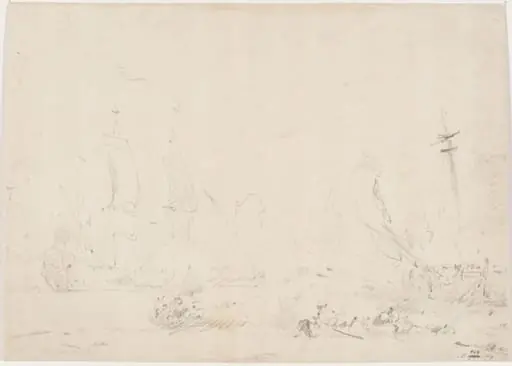 A sea fight
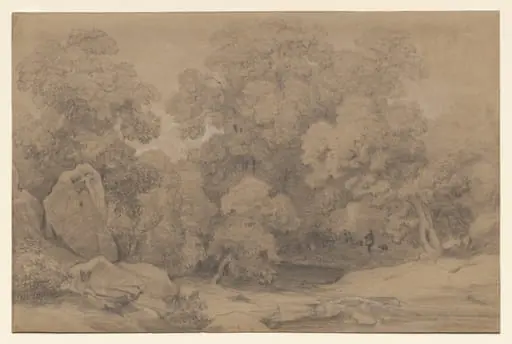 Landscape
![Sheet of Studies [recto and verso], by John Flaxman](https://artifactworldgallery.com/img/john-flaxman--sheet-of-studies-recto-and-verso--af59e52d5279d768-w320.webp) Sheet of Studies [recto and verso]
Sheet of Studies [recto and verso]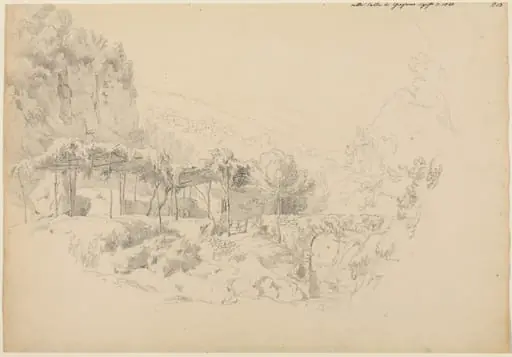 A Shady Arbor in the Valley of Gragnano
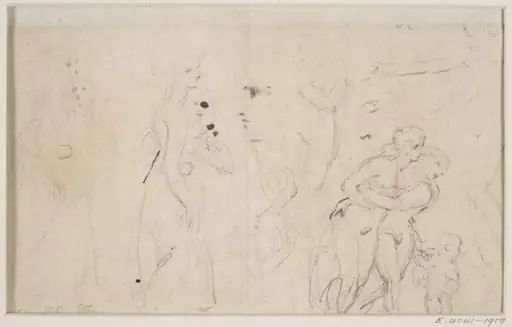 Untitled
 Gretchen Murdering Her Child